


Six months procurement roadmap





Try Before you Buy Download Free Sample Product
 Impress Your
 Audience
 100%
100% Editable
 Save Hours
 of Time


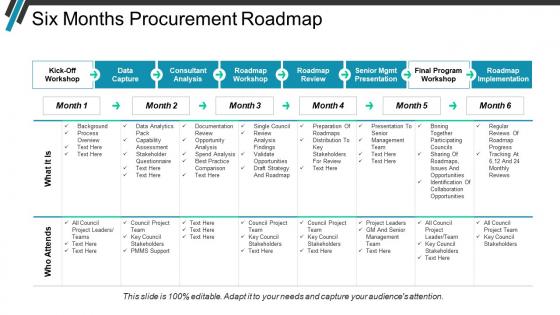
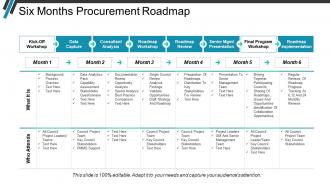
Are you looking for a presentation template layout that assists you in representing the six months procurement plan? Download our predesigned six months procurement roadmap PowerPoint template slide layout that has been crafted keeping the client requirements in mind. We understand how difficult it could be for you to plan a PPT that can make the audience understand the concept of the presentation and leave a noteworthy influence on them. Visuals of a roadmap and checklist have been utilized to prepare this editable six months procurement roadmap PowerPoint slide layout. You can use this six months procurement roadmap presentation slide layout to represent monthly purchasing plans. This purchasing process management PPT slide represents various steps which are data capture, consultant analyses, roadmap workshop, roadmap review, senior management presentation, final work program, and roadmap implementation. Incorporate this six months purchase timeline template layout in your presentation to showcase the idea of supply chain management, procurement outsourcing, competitive bidding process, and acquisition process. Hurry up and download this six months procurement timeline presentation slide. Our Six Months Procurement Roadmap are extremely courteous. Your gallantry will come to the fore.
People who downloaded this PowerPoint presentation also viewed the following :
Six months procurement roadmap with all 5 slides:
Our Six Months Procurement Roadmap won't leave you half baked. They carry you through the entire gamut.

FAQs for Six
So here's the deal with procurement roadmaps - there are basically four phases. Start with assessment to see where you're at right now and what's missing. Strategy development comes next (honestly, this is where teams usually spin their wheels forever). Then implementation - getting your processes, tools, and vendor stuff actually working. Optimization wraps it up where you keep tweaking things. Don't rush that first part though. I've seen people skip ahead and their whole plan falls apart because they didn't really understand their starting point. Take your time there, it's worth it.
Start with a full capability assessment of your procurement - spend analysis, supplier management, contracts, tech, and team skills. Use a maturity model to see where you stack up against best practices. Most companies are honestly shocked at how many gaps they find (we certainly were). Check your processes AND people - are workflows even documented? Right talent and tools? Don't forget to survey internal customers since they're living with your service daily. Map out where you currently stand first. That gives you a solid baseline for building your roadmap.
Cost savings is the big one obviously - everyone's gonna ask about that. But don't sleep on supplier stuff like delivery times and quality scores. Contract compliance too. How long it takes from "hey we need this" to actually getting it matters more than people think. Risk metrics are smart - like how spread out your suppliers are geographically, because putting all your eggs in one basket is asking for trouble. Oh and definitely get feedback from the people actually using your services internally. Honestly though, stick to maybe 6-7 metrics tops or you'll just confuse yourself with too much data.
Honestly, tech integration is a game-changer for procurement workflows. It automates all those tedious manual tasks and gives you way better visibility into your data. E-procurement platforms are clutch, along with automated approvals and spend analytics - the time you'll save is ridiculous. Everything being digital means you can actually track if you're hitting your procurement goals instead of just winging it. These systems catch bottlenecks early too, which is huge. Oh and supplier collaboration gets so much smoother. I'd start by mapping out which manual processes are eating up most of your time right now.
Look, supplier relationships are literally what make or break your procurement plans. Without solid partnerships, all those cost savings and innovation targets you mapped out? They're just wishful thinking on paper. Here's how I see it - figure out which suppliers are mission-critical for each phase of your roadmap first. Those are where you dump most of your relationship energy. Whether you're consolidating vendors or developing new ones, the connections you're building now determine if you'll actually hit those future goals. It's honestly pretty straightforward once you think about it that way. Map it out and prioritize accordingly.
Honestly, start thinking about what could go wrong way before you actually need anything. Like supplier issues, crazy price swings, late deliveries - all that stuff. We got burned last year when our main vendor just vanished (still not sure what happened there). Have backup suppliers ready to go and build extra time into your schedules. Don't wait until something breaks to figure out Plan B. Set up regular check-ins so you can catch problems early. Trust me, it's so much easier to prevent disasters than clean them up after.
So first thing - get your leadership on board or you're basically screwed when things get tough. Pick like 3-5 solid objectives that actually tie to what the business cares about. Cost savings, supplier diversity, whatever makes sense for you guys. Don't try to boil the ocean here. Make them SMART goals (yeah I know, buzzword city but it works). Get finance and ops involved early - I've watched so many procurement teams crash and burn because they thought they could go it alone. Track everything with real KPIs, not just fluffy metrics. Oh and make sure you've got baseline data to measure against!
Honestly, get everyone together from day one - procurement, finance, IT, all of them. Don't let anyone feel blindsided later because that's where roadmaps die. Run cross-functional workshops so people can actually voice their concerns upfront. Map out who makes decisions vs. who just needs updates (there's a difference). Monthly check-ins work well for sharing progress and getting feedback. The trick is making people feel genuinely heard, not just like you're going through the motions. Oh, and whatever communication schedule you pick? Stick to it religiously or people will tune out.
Honestly, the worst thing you can do is make your timeline too rigid - stuff always changes. Get stakeholders on board early or you'll be fighting uphill battles later. Don't go crazy with details either, because the second priorities shift (and they always do), your roadmap becomes useless. I've seen people focus only on the big purchases and totally miss smaller things that end up screwing everything up. Vendor evaluations take forever, especially once legal starts poking around. Build in buffer time and review quarterly. Your future self will thank you when you're not scrambling to explain why everything's behind schedule.
Honestly, just bake green requirements right into your vendor scorecards from day one. Energy efficiency, recycled content, carbon limits - whatever matters most. Figure out which spending categories are doing the most environmental damage first (usually pretty obvious). Then add sustainability metrics alongside your usual cost and quality stuff. Setting transition timelines for switching suppliers helps too. The trick is making it standard process, not something you bolt on later when you remember. Way less painful that way. Once you get the rhythm down, it becomes second nature.
Okay so three main things you're gonna need: good procurement training, change management help, and decent project management stuff. Basic training first - contracts, sourcing, vendor management, all that. Change management is honestly huge here because people hate transitions more than they admit. Then get your teams solid project templates and communication tools, maybe someone dedicated to keep things moving. Oh and don't make the mistake everyone makes - thinking people will just wing it. They won't. Spend money on proper training upfront or you'll be putting out fires constantly later.
Look, quarterly reviews are the bare minimum but honestly? Every 2-3 months works way better if you're in a crazy fast environment. Everything changes so damn quickly - suppliers, market conditions, your internal priorities. Major updates though - those need to happen at least twice yearly. Budget season, contract renewals, whenever your strategy does a 180. But here's the thing: don't wait for scheduled reviews if something big hits. Just set a recurring reminder and actually follow through. Otherwise it becomes another useless doc collecting digital dust.
Microsoft Project or Smartsheet are your best bet if you need the heavy-duty stuff - Gantt charts, milestone tracking, all that. But honestly? Half my old team just used Excel because everyone knows it already. Gets chaotic though when you've got tons of people jumping in. Asana and Monday.com hit that sweet spot - visual dashboards but not overwhelming. If you're juggling vendor stuff too, maybe check out Coupa or SAP Ariba for the full package. Real talk: whatever tool your team will actually open every day wins. I've seen so many fancy systems just sit there unused.
Honestly, most people hate change because they're scared of looking stupid with new processes. Get your key stakeholders involved from day one - like, actually ask their opinions, don't just tell them what's happening. Find those natural influencers in each department who can sell the idea for you. I'd map out who's getting hit hardest by these changes first. Then create messaging that speaks to their actual problems, not just fancy features. Good training is huge - people won't resist if they feel confident. Oh, and communicate the real benefits early. Start small, celebrate wins.
Honestly, start with business impact - what's gonna save the most money or fix your biggest headaches? Quick wins are gold too since they keep everyone happy early on. Don't plan anything crazy if you're short on people or budget though, that's just setting yourself up to fail. Stakeholder pressure is real - if your boss is obsessing over something specific, that probably needs to move up the list. I'd map all this stuff out against your potential projects and rank them. Makes it way easier to defend your choices later when people start questioning priorities.
-
It saves your time and decrease your efforts in half.
-
Professional and unique presentations.