


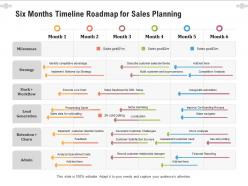
Six months timeline roadmap for sales planning





Try Before you Buy Download Free Sample Product
 Impress Your
 Audience
 100%
100% Editable
 Save Hours
 of Time


The success rate of business plans is hugely dependent on the plan of action, and this editable Six Months Timeline Roadmap For Sales Planning rightly serves the purpose. Encapsulate all the information related to the project in a well structured manner to obtain maximum efficiency by incorporating our stunning PowerPoint theme. State the critical deliverable, steps involved, time frame, workforce allocation, and lots more in an easy to understand manner by utilizing this pre designed roadmap PowerPoint layout. You can also prioritize your tasks and discuss the problem areas with your colleagues by incorporating this tailor made PPT layout. Empower your work plan by employing this professionally designed PPT theme. Entrepreneurs can download Six Months Timeline Roadmap For Sales Planning as a beneficial communication tool that facilitates in collaborating with different tasks and achieve targets.
People who downloaded this PowerPoint presentation also viewed the following :
Six months timeline roadmap for sales planning with all 2 slides:
Use our Six Months Timeline Roadmap For Sales Planning to effectively help you save your valuable time. They are readymade to fit into any presentation structure.

FAQs for Six months timeline roadmap
Okay so five main things for your sales roadmap. Revenue targets with deadlines - be specific here. Know your target market and ideal customers inside and out. Map your sales process from first contact to closing. Don't forget resource planning - who's doing what, tools you need, budget stuff. Oh and metrics to track progress (I always space on this one initially). Honestly, quarterly check-ins are clutch so you can pivot when needed. Also sketch out potential problems and backup plans now rather than scrambling later. Keep it detailed enough to actually guide decisions but not so rigid it breaks when reality hits.
Okay so short-term stuff is basically your next 30-90 days - quotas, pipeline work, closing specific deals. Long-term is more like 6-18 months out. Market expansion, building relationships, going after those whale accounts. Here's what I've learned though - you gotta start with the big picture first, then figure out what you actually need to do this quarter to get there. Otherwise you're just spinning your wheels on random tasks that don't connect to anything meaningful. The tricky part? Making sure those daily actions actually move you toward the bigger goals. Sounds obvious but it's harder than you'd think.
Track both what's happening now and what predicts what's coming. Conversion rates, deal size, sales cycle length - the usual suspects. But honestly, activity metrics like calls and meetings are where the magic happens because they tell you what revenue will look like next month. Customer acquisition cost vs lifetime value is huge too, otherwise you're just burning money. Win rates against specific competitors? That's gold. Oh and pipeline value obviously. Start with maybe 3-4 that actually matter for where you're at right now. Weekly reviews keep everyone honest.
Honestly, you can't use the same approach for every industry - they're way too different. B2B tech takes forever because of all those approval layers, but retail moves fast and revolves around seasons. Healthcare is its own nightmare with compliance stuff everywhere. Financial services? They want you to prove you're trustworthy before anything else. What I'd do is pick 2-3 industries you actually want to go after. Then dig into how long their sales cycles usually are, who makes the decisions, and what keeps them up at night. Once you know that, tweak your timeline and messaging to match. Makes way more sense than trying to be everything to everyone.
Honestly, market research is what separates the winners from the people burning through cash for no reason. You need to know who you're selling to and what actually keeps them up at night. I always tell people to start with customer interviews - way more valuable than you'd think. Then grab some industry reports to see the bigger picture. This stuff directly impacts everything: your pricing, who you target, how big the opportunity really is. Without it, you're basically throwing darts blindfolded. The competitive landscape alone will save you from making dumb mistakes. Trust me, do the research first, then build your sales strategy around what you find.
Think of a sales roadmap as your new hire's cheat sheet - shows them the whole deal flow from start to finish. Way better than just tossing them on calls and crossing your fingers! Walk them through some actual deals you've closed using the roadmap. They'll get how each stage connects and what winning looks like at every step. Honestly, it beats any boring training manual because they can see the real process in action. Plus they'll know exactly where they fit in and what activities matter when. Makes the whole onboarding thing way less overwhelming.
For sales roadmaps, I'd go with Miro or Mural first - they're amazing for visual stuff and your whole team can jump in and collaborate. Monday.com works well if you need more structure with deadlines and who's doing what. Lucidchart's solid too, especially if you like flowcharts better than timelines. My buddy's team swears by Asana's timeline view, though I haven't tried it myself. Honestly, the biggest thing is just picking one everyone will actually use. Grab free trials for a couple and test them out - you'll know pretty quickly which one feels right.
Honestly, you gotta tie your sales targets directly to whatever the company's trying to achieve. Like if they're pushing into new markets, focus your prospecting there. I totally screwed this up once - my team was killing it on volume but we completely whiffed on our strategic accounts because I wasn't paying attention to the bigger picture. Check in on your roadmap every quarter since priorities change constantly. Your team needs to see how their numbers actually connect to company goals. Otherwise they're just chasing random targets that don't really matter, which is frustrating for everyone.
Oh man, biggest mistake? Being way too ambitious with timing. I've watched so many teams crash and burn on that one. Also, talk to your actual sales reps first - they're the ones dealing with real customers daily. Keep it flexible too because markets change fast and rigid roadmaps become paperweights. Set up milestones you can actually measure, otherwise you're flying blind. Don't build this thing alone either. Loop in marketing and customer success from the start. Trust me, isolation kills these projects faster than anything else.
Honestly? Monthly check-ins work way better than quarterly ones. Things move too fast now - customer priorities shift, competitors do weird stuff, and suddenly your team's chasing goals that made sense three months ago but are totally off now. I mean, I've seen teams waste entire quarters this way. Do quick monthly reviews to catch problems early, then go deeper every quarter to actually change your timelines and approach. Oh, and put it on your calendar right now or you'll keep putting it off when deadlines hit.
Your sales team is out there talking to prospects every single day - they know where deals are dying. They'll straight up tell you what features customers actually want (not what we think they want), and honestly? They're usually spot-on about market timing too. I'd set up monthly feedback sessions to hear about competitor responses, pricing pushback, and which roadmap items would help close deals. They're seeing patterns across tons of conversations that you miss sitting at your desk. Just listen to them - their input can totally flip your priorities and make your roadmap actually useful for real customers.
Get everyone together right from the start - marketing, product, customer success, finance. They need to see your sales targets so they can plan around them. Weekly check-ins work way better than monthly ones, trust me on this. Set up dashboards everyone can actually see and use the same definitions for stuff like qualified leads. Otherwise you'll have marketing celebrating while sales is panicking because you're measuring totally different things. Oh, and that first planning meeting? Just schedule it already - waiting for the "perfect time" never works.
Customer personas are huge for your sales roadmap - they literally decide who you're targeting and how. Map out which market segments to hit first, what sales channels work, and how long your process should take. No point doing a 6-month enterprise cycle if you're selling to small biz owners who want to click "buy now" and be done, you know? They also shape what tools your team needs and help set realistic conversion goals. I'd start by matching each persona to your roadmap milestones first. Makes everything else way clearer.
Walk them through customer journey scenarios - like actually tell the story of how your roadmap fixes their pain points. Those swim lane diagrams showing parallel work? Chef's kiss. Mock press releases for big wins make everything feel real somehow. Day-in-the-life presentations from different user perspectives work too, or get stakeholders to roleplay as customers (sounds cheesy but it hits different). Static slides are boring as hell. You want people emotionally hooked on what you're building, not just checking boxes.
Build flexibility into your roadmap from day one. Set up quarterly reviews where you can shift tactics based on whatever pops up - customer complaints, competitor launches, market changes. COVID taught me this lesson the hard way when everything flipped overnight! Keep your main goals steady but make tactics flexible. Monthly team check-ins help you figure out what's actually working (spoiler: it's usually not what you expect). Buffer time for testing is crucial. Update your metrics dashboard regularly so you catch trends before they smack you in the face. Then just adjust next quarter based on what you learned.
No Reviews