


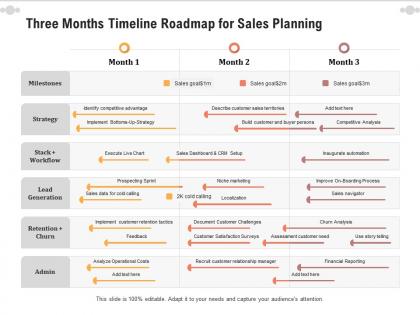
Three months timeline roadmap for sales planning




Try Before you Buy Download Free Sample Product
 Impress Your
 Audience
 100%
100% Editable
 Save Hours
 of Time


The success rate of business plans is hugely dependent on the plan of action, and this editable Three Months Timeline Roadmap For Sales Planning rightly serves the purpose. Encapsulate all the information related to the project in a well structured manner to obtain maximum efficiency by incorporating our stunning PowerPoint theme. State the critical deliverable, steps involved, time frame, workforce allocation, and lots more in an easy to understand manner by utilizing this pre designed roadmap PowerPoint layout. You can also prioritize your tasks and discuss the problem areas with your colleagues by incorporating this tailor made PPT layout. Empower your work plan by employing this professionally designed PPT theme. Entrepreneurs can download Three Months Timeline Roadmap For Sales Planning as a beneficial communication tool that facilitates in collaborating with different tasks and achieve targets.
People who downloaded this PowerPoint presentation also viewed the following :
Three months timeline roadmap for sales planning with all 2 slides:
Give your audience a fulfilling experience. They will find our Three Months Timeline Roadmap For Sales Planning elevating.
FAQs for Three months timeline roadmap
So you'll need revenue targets, customer segments, and tactics for each sales stage - plus realistic timelines. Most roadmaps crash because they're way too vague or ridiculously ambitious, honestly. Map out your team's capacity and what tools you need. I'd start with quarterly goals then work backwards to monthly/weekly actions. Oh, and build in regular check-ins to track progress. The smart move is identifying roadblocks upfront - like seasonal slowdowns or when competitors might launch something. That part saves you from scrambling later when things go sideways.
Look, market research is basically your cheat sheet for everything. It shows you which customers to go after first and what actually makes them buy. You're just shooting in the dark without it, honestly. Research helps you figure out when to launch products, set goals that aren't totally unrealistic, and decide which markets make sense now vs later. Plus it catches problems early - like if competitors are about to mess with your plans or buyers are changing what they want. I learned this the hard way, but you've gotta weave those insights into every roadmap call you make.
Customer feedback is your reality check for sales strategy - without it, you're basically guessing. I've watched teams build gorgeous roadmaps that totally flopped because they ignored what customers actually wanted. The gap between what we think they need versus reality? Huge. Feedback shows you if your messaging hits, if pricing makes sense, if you're targeting the right people. Use it to tweak your value props and figure out which features to push first. Oh, and make reviewing this stuff a monthly thing - quarterly's too slow these days. Trust me, your numbers will thank you.
At minimum, check it quarterly - but monthly is way better if you can swing it. Markets move crazy fast these days. Big product launch coming? Pipeline looking weird? Don't wait around - update that thing right away. For the quarterly deep dives, get your whole team involved. They'll catch stuff you missed. Honestly, I'd just throw a monthly 30-minute review on the calendar now and call it done. Way less painful than those "oh crap, we're completely lost" moments later. Trust me on this one.
Dude, start with scenario planning - map out different revenue targets for when shit hits the fan or when things go amazing. Set quarterly check-ins so you can pivot fast. The smartest teams I've seen actually expect everything to change instead of getting blindsided. Buffer time for lead gen is huge, and don't put all your eggs in one customer segment basket. Build campaigns in chunks you can easily scale up or down. Oh, and figure out your "oh crap" triggers ahead of time - like what signals mean it's time to completely switch gears. Way better than panicking later when markets go sideways.
Honestly, your sales roadmap has to tie into whatever the company's trying to achieve overall. Map out your sales milestones against the big stuff - revenue targets, new customer goals, product launches. I've watched sales teams work in complete isolation and it's a mess every time. Touch base with leadership regularly so you know when priorities shift (and they always do). Don't treat your roadmap like some set-in-stone quarterly thing either. It needs to be flexible and change as the business changes. Otherwise you'll be hitting targets that don't even matter anymore.
Focus on pipeline growth, conversion rates, and deal velocity first - those tell the real story. Sales cycle length matters tons too. Faster deals = your roadmap's actually working. Activity stuff like outreach volume can help, but honestly half the time it's just busy work that looks good on paper. Customer acquisition cost and lifetime value show whether you're making money or just spinning wheels. Pick maybe 4-5 metrics max and check them weekly with the team. That way you can change course fast when things aren't clicking.
Dude, get a solid CRM first - it'll track your leads automatically so you're not doing spreadsheet hell anymore. Analytics tools are clutch because they show you exactly where deals die (usually further down than you think). I'd grab a sales enablement platform too since your team can pull the right content without hunting around. Forecasting tools help you spot problems early, which honestly saves your ass more than you'd expect. The time savings alone are worth it - we're talking hours back each week. Just audit what you have now and see where your process is most broken. That's where to throw money first.
Dude, the worst thing teams do is make their roadmaps stupidly aggressive - like they think bigger numbers will magically impress people. You're setting yourself up to crash and burn if your goals don't match what's actually happening with your pipeline. Don't build this thing alone either. Get your team involved from the start or they'll never actually care about hitting the targets. Markets shift constantly, so being too rigid is death. I learned this the hard way at my last company tbh. Build in some buffer time and do quarterly check-ins to fix what's broken.
Look at your conversion data first - see where people are dropping off. B2B takes forever because you're dealing with committees and budgets, so build in way more touchpoints for relationship stuff. B2C is totally different though. People buy on impulse or emotion, so your funnel should be quick and simple. I learned this the hard way when I tried using the same approach for both! Map out where each type of customer actually hangs out online. Then design your roadmap around fixing those specific friction points where you're losing them.
Honestly, sales and marketing alignment is a game changer for roadmaps. You'll get way better at targeting the right customers and your messaging won't be all over the place. Marketing shares lead data that shows which segments actually convert, while sales tells you what's working in real conversations (spoiler: it's usually not what we think). The timing piece is huge too - you can coordinate launches with campaigns instead of stepping on each other. I learned this the hard way when our teams were basically contradicting each other to prospects. Super awkward. Start with monthly sync meetings to align on pipeline goals and messaging. Trust me on this one.
Honestly, visuals are a game-changer for sales roadmaps. Nobody wants to read through paragraphs when they can just glance at a timeline and get it instantly. Templates are clutch too - they keep your team aligned and you won't forget stuff like revenue goals or major milestones. Timeline charts work great, or even basic color-coding for different phases. Executives eat this stuff up in presentations, by the way. Way more engaging than bullet points. Start with a simple template and tweak it for whatever you're trying to accomplish. Trust me, it's worth the extra effort upfront.
Dude, this actually works really well. Your sales team stops making promises that engineering can't keep - those awkward prospect calls disappear. Marketing gets a heads up on what's coming so they can plan campaigns. Customer success knows what support issues might pop up. Yeah, it's chaos at first because everyone has opinions (product managers especially lol). But monthly reviews with product, marketing, and CS catch problems early. Way better than scrambling later when something goes sideways.
Honestly, a sales roadmap is a game-changer for new hires. Think of it like giving them a map instead of just throwing them into the wilderness with random training stuff. You can walk them through each step - prospecting, nurturing leads, closing deals - without it feeling totally overwhelming. Each phase shows what they'll actually be doing, which tools to use, and what good performance looks like. Way better than the old "figure it out as you go" approach, which never worked anyway. New people ramp up so much faster when they can see the whole process laid out. Use it as your go-to foundation for training sessions.
Don't just show people your roadmap when it's done - that's backwards. Interview folks from sales, marketing, product, leadership first to get their actual priorities. Then build it WITH them. People buy into what they help create, it's just human nature. Back everything up with data and be super clear about timelines and what resources you'll need. Oh, and set up regular check-ins from the start so you can pivot when things inevitably change. Honestly, the biggest mistake is waiting too long to loop everyone in. Start those conversations now while you're still figuring things out.
No Reviews