


Six months digital marketing roadmap template





Try Before you Buy Download Free Sample Product
 Impress Your
 Audience
 100%
100% Editable
 Save Hours
 of Time


Visualize your work plan and communicate your ideas impactfully with our pre designed Six Months Digital Marketing Roadmap Template. Showcase the detailed overview of the project, the key deliverables, and the milestones to be achieved with the help of our fully customizable PowerPoint layout. You can easily emphasize on the project goals and discuss all the activities involved in an easy to comprehend manner by utilizing our professionally designed PPT theme. This roadmap PowerPoint layout is a perfect strategic planning tool that can help in keeping the project on track. With our attractive PowerPoint theme, you can articulate the workflow, track the work progress, and have a clear vision of the goal to be achieved. Download this versatile Six Months Digital Marketing Roadmap Template and save your hours of work.
People who downloaded this PowerPoint presentation also viewed the following :
Content of this Powerpoint Presentation
The internet has taken the world by storm. Digital communication through email, social media, and web-based advertising has become critical in creating brand awareness for businesses. Over 89% of Americans, according to studies, use the internet at least once a day, and 31% do so continuously. This encourages businesses to seek out new ways to advertise online.
Digital marketing, often known as online marketing, links businesses with potential clients using the internet and other digital communication channels. This necessitates an understanding of how each digital marketing strategy contributes to corporate goals. It requires a digital marketing roadmap to show how firms reach and engage with their intended audience.
Browse and download this step-by-step digital marketing strategy.
The digital marketing roadmap will act as a guide as you implement and evaluate your strategy’s performance. This blog will help you put your plan into action. The digital marketing roadmap will act as a guide as you implement and evaluate your strategy’s performance. This blog helps you put your plan into action. It includes a 100% editable and customizable PPT Template on six-month digital marketing roadmap to navigate the ever-changing digital landscape and propel your business forward.
Need a clear marketing strategy? Discover SlideTeam’s strategic plan for digital marketing success.
Template 1: Six-Month Digital Marketing Roadmap
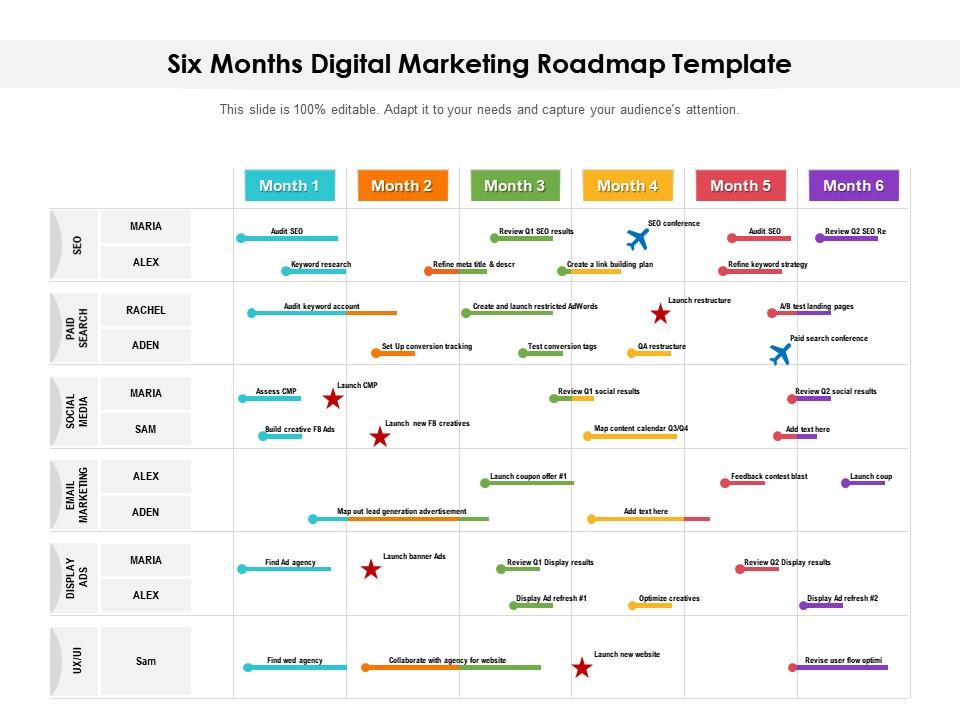
A digital marketing roadmap gives you clear direction for your online marketing operations. Use this PowerPoint Template to visualize activities and timeline for your digital marketing campaign. It includes a detailed project summary, essential deliverables, and milestones to develop a blueprint for progress. This six-month roadmap serves as a strategic tool to allocate resources, and track progress.
Paving the Way for Strategic Growth.
This digital marketing roadmap is the ideal strategy for increasing your company’s digital marketing activities. Use SlideTeam’s PPT Template to align your business aims and accomplish growth.
P.S. Explore our pre-designed Quarterly Digital Marketing Transformation Roadmap to obtain a better understanding of what digital activities can help your organization succeed.
Six months digital marketing roadmap template with all 2 slides:
Use our Six Months Digital Marketing Roadmap Template to effectively help you save your valuable time. They are readymade to fit into any presentation structure.
FAQs for Six months digital
Hey! So for a solid digital marketing roadmap, you'll need five main things: clear business goals, knowing your target audience, picking your channels, content strategy, and KPIs to track progress. Map out the customer journey too - seriously, people skip this and it's huge. Set SMART goals tied to revenue first. Then figure out where your audience actually spends time online (not where you think they should be). Focus on 2-3 channels instead of doing everything badly. Build in check-ins every month or so to tweak things. I'd start with a 90-day test run to see what actually moves the needle.
Honestly, dive into your existing customer data first - demographics, what they're buying, how they engage with you. Build detailed buyer personas from that, including their pain points and where they hang out online. Social media insights are amazing for this stuff, seriously underrated. Survey your current customers if possible, and peek at your competitors' targeting strategies. Here's the thing though - don't just assume you're right about everything. Test small campaigns to validate your hunches before spending big. Way too many people try targeting "everyone" and wonder why their ads don't convert.
Dude, content marketing is what makes everything else actually work. Your blog posts and videos feed your SEO, give you stuff to post on social, and help move people through your sales funnel. I totally used to think it was just fluff, but it's literally what powers your email campaigns, social posts, paid ads - all of it. Without good content, you're just shouting into the void honestly. Plus it builds your credibility in whatever industry you're in. Start by figuring out what content themes match where your customers are in their buying journey.
Honestly, just pick 2-3 platforms where your people actually are. Don't get distracted by whatever new app is trending this week - I've seen too many businesses burn out trying to be everywhere. Post stuff that's genuinely useful. Educational content works great, or show what happens behind the scenes. Reply to comments fast and talk to people like they're human beings, not potential dollar signs. Oh, and being consistent trumps having perfect posts every time. Check out what your competitors are doing first though. See where they're getting engagement and steal their best ideas (legally, obviously).
Honestly, focus on conversion rate first - that's people actually doing what you want them to do. Then track your cost per acquisition and return on ad spend. Click-through rates matter too. Skip the follower count stuff though, it's just fluff that makes you feel good but doesn't mean much for your bottom line. I'd also watch engagement rates and website traffic quality. Oh, and lifetime customer value if you're feeling ambitious. Here's the thing - pick like 3-5 metrics max that actually connect to making money. Otherwise you'll drown in data and still have no clue what's working.
Don't treat SEO like some afterthought you'll get to later - it needs to be baked in from the start. Do your keyword research first, then let that guide your content strategy and site structure. Here's the thing: your SEO data actually makes your other campaigns way better too. PPC gets cheaper when you know which keywords convert, and your social posts hit different when they're built around what people are actually searching for. Track everything together so you can see the full picture. Oh, and fix the technical stuff early - nobody wants to deal with that mess later when you're trying to scale.
Okay so first grab Google Analytics 4 for tracking your numbers. For social stuff, Hootsuite or Buffer work great for scheduling posts. You'll also want an email platform - I like Mailchimp but ConvertKit's solid too. SEO tools like SEMrush or Ahrefs are game changers for keywords and rankings. Oh, and get a CRM like HubSpot to keep your leads organized (trust me on this one). The whole tool landscape is honestly pretty nuts with how many options exist. Start with free versions first though - you can always upgrade once you figure out what you actually need versus what looks shiny.
Honestly, you've gotta stay on top of your audience data like it's your job (because it literally is). Check your analytics monthly - minimum. Look for shifts in how people engage, which channels they're actually using, stuff like that. Social listening tools are clutch for spotting trends early. Don't go making massive changes right away though. Test small tweaks first when you see patterns forming. Build some flexibility into your strategy from day one so you're not panicking when things shift. Oh, and track leading indicators too, not just conversions at the end.
Honestly, start with segmentation - split your list by how people actually behave, not just random demographics. Personalization goes way beyond the whole "Hi Sarah" thing too. Set up those automated sequences for different situations, like when someone signs up or buys something. Subject lines are weirdly important, so test different ones along with send times. Quick tangent - I learned this the hard way, but every email needs to give people something useful, not just sell stuff constantly. Check which segments are opening your emails most and build from there first.
So PPC is like having a fast pass for digital marketing - you get instant visibility while everything else slowly builds up. I'd test different messages there first, then use what works for your SEO stuff. Also great for retargeting people who already visited your site. Honestly, seeing those quick results can get pretty addictive! The cool part is taking that PPC data and mixing it with your email lists or using it to boost content that's already doing well. Just figure out where your organic traffic is weak and fill those gaps with paid ads while you're learning what actually works.
First thing - get your tracking set up with UTM parameters and conversion tracking. Google Analytics will save your life here. Don't just look at traffic volume (biggest rookie mistake IMO). Focus on cost per acquisition, lifetime value, and which channels actually bring quality leads. I'd review monthly and cut anything that's not working - no point throwing money away. Test one thing at a time though, otherwise you won't know what moved the needle. Oh, and do quarterly reviews to adjust your whole strategy based on the data.
Dude, you HAVE to prioritize mobile optimization - like, it's not even optional anymore. Over half of web traffic is mobile now, plus Google ranks mobile-friendly sites higher in search results. Without it, your conversion rates tank and users bounce immediately. Honestly, I've seen businesses lose so much money just from having crappy mobile sites. People will literally leave and find a competitor instead of dealing with a site that doesn't work on their phone. Run a mobile test on your current site first, then fix whatever's broken before you launch anything new.
Honestly, you gotta get on AI personalization and voice search optimization ASAP. Privacy-first marketing is huge now too since cookies are basically dead. AR filters and shoppable videos aren't even cool anymore - they're just expected at this point. Zero-party data collection is your lifeline here. Oh, and don't sleep on sustainable messaging. Gen Z eats that stuff up. Short sentences work. But you'll also want longer strategies that can pivot when Meta inevitably changes everything again next month. Start with an audit of where you're at, then focus on whatever matches your audience best.
Dude, you'd be shocked how much better your campaigns work when marketing and sales actually coordinate. Your sales team hears all the real objections on calls - that intel is gold for creating content that hits. Meanwhile, marketing can feed sales way better leads once they understand what "sales-ready" actually looks like. Most companies are terrible at this btw. But get those weekly 15-minute check-ins going and watch what happens. Your messaging gets sharper, lead quality improves, conversions go up. It's honestly one of those simple fixes that makes a huge difference.
Dude, the worst thing you can do is set crazy timelines and try tackling everything at once. Your team will hate you. Make sure you're actually talking to sales and customer service first - they know what customers actually want, not just what we think they want. Oh, and don't be that person who sticks to the plan when all the data's screaming to change direction. Most teams also forget to leave room for testing stuff, which honestly makes or breaks everything. I'd say pick maybe 2-3 things max and actually do them right instead of half-assing ten different projects.
-
Excellent design and quick turnaround.
-
Really like the color and design of the presentation.
-
Easily Editable.
-
Use of different colors is good. It's simple and attractive.
-
Graphics are very appealing to eyes.