


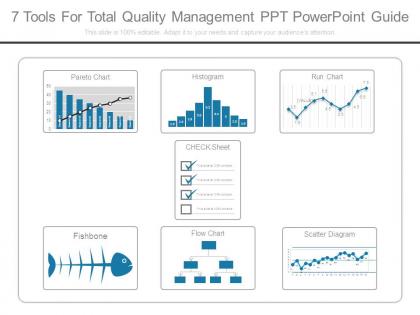
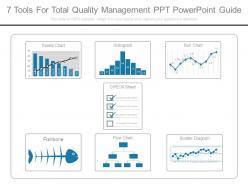
7 tools for total quality management ppt powerpoint guide




Try Before you Buy Download Free Sample Product
 Impress Your
 Audience
 100%
100% Editable
 Save Hours
 of Time


Our 7 Tools For Total Quality Management Ppt Powerpoint Guide are conversant with any fresh changes. They allow you to gather greater expertise.
People who downloaded this PowerPoint presentation also viewed the following :
7 tools for total quality management ppt powerpoint guide with all 4 slides:
Do not despair, help is at hand. Our 7 Tools For Total Quality Management Ppt Powerpoint Guide will come to your aid.
FAQs for 7 tools for total quality management
So TQM is basically about putting customers first, constantly improving stuff, getting everyone involved, and thinking in terms of processes. It totally flips your company culture from just reacting to problems to actually preventing them. Instead of only the quality control people caring about quality, suddenly everyone does - which honestly should've been obvious from the start. Teams collaborate way more and actually give a damn about results. Plus you stop playing the blame game when things mess up and start using actual data instead. Oh, and make sure your managers walk the walk first before expecting everyone else to buy in.
So TQM tools basically help you give customers what they actually want, which keeps them happy. Customer surveys and process mapping catch issues early - way better than dealing with complaints later, trust me. Fishbone diagrams are great for figuring out why stuff goes wrong, and control charts keep your quality steady. The real win? Happy customers come back. That's where you make your money. Oh, and statistical quality control sounds fancy but it's just using data to stay consistent. Start with simple feedback collection first - easiest way to see quick results.
Honestly, TQM lives or dies by leadership commitment. I've watched so many programs crash because execs talked a big game but didn't actually follow through. Your leaders have to visibly champion it, give people resources, and model what they're preaching. The other huge thing? Employees need to feel safe calling out problems without getting blamed. Psychological safety isn't just buzzword stuff - it actually matters. People won't speak up if they think they'll get thrown under the bus. If your leadership team isn't genuinely all-in and showing it daily, honestly just skip the whole thing. You'll save everyone time and frustration.
So first things first - get your baseline numbers down before you change anything, or you'll have no clue if stuff actually worked. Track the obvious stuff like defect rates and cycle times, plus customer satisfaction scores. Don't forget about whether people are even using the tools though - that's huge. Employee engagement matters too, honestly more than most companies realize. I'd just make a basic dashboard with maybe 3-5 key metrics instead of going crazy tracking everything. Watch how things change over time. Oh, and definitely check if people are actually following the new processes consistently.
Start with flowcharts - they're perfect for seeing how work actually moves through your processes. Value stream mapping is huge too, shows you exactly where you're wasting time and effort. SIPOC diagrams help with the big picture (Supplier, Input, Process, Output, Customer). Control charts track performance over time, which is super useful. Honestly? I'm probably obsessed with flowcharts at this point, but they're just so good at catching bottlenecks you didn't even know existed. Just map out your current process first - you'll be shocked what becomes obvious once it's visual.
Honestly, I'd map what you're already doing against TQM principles first - see where things overlap or fall short. Don't try replacing everything at once though, that's a recipe for chaos. Instead, find spots where TQM tools like statistical process control can actually boost your current processes. Training comes first - your team needs to get both systems before you throw new tools at them. Maybe pilot one TQM method in a single department? Once that's working, expand from there. Oh, and document how everything connects so auditors aren't confused. Start with a gap analysis next week.
So basically, TQM tools are just individual techniques you can pull out whenever - stuff like fishbone diagrams or Pareto charts. Six Sigma though? That's a whole structured system with phases like DMAIC and all those belt certifications (which honestly can get pretty intense). Six Sigma is super data-heavy and methodical. With TQM tools, you've got way more flexibility. Need a quick cause-and-effect diagram? Just grab it. I'd probably start with the basic TQM tools first - they're easier to pick up - then see if you actually need that full Six Sigma framework later.
PDCA is honestly a game-changer for quality stuff. Plan what you want to improve, do it small-scale first, check if it actually worked, then act on what you learned. Works for defects, processes, training - whatever. Most teams mess up by skipping the check part though, which is so dumb because that's where you figure out if your idea was trash or not. The whole thing sounds basic but it's weirdly effective when you stick with it. I'd try it on something small first so you don't overthink it. Once you get the rhythm down, you'll probably use it everywhere.
You know what's crazy? TQM tools basically make all your hidden waste problems impossible to ignore. Start with value stream mapping - seriously, map out your worst process and you'll see bottlenecks you didn't even know existed. Statistical process control is clutch because it catches issues before they become real problems. When something does go wrong, fishbone diagrams help you find the actual cause instead of just slapping a band-aid on it. Oh, and 5S keeps everything organized so you're not wasting time looking for stuff. Honestly, just pick your biggest headache process first.
Honestly, the worst part is dealing with people who just hate change - even when the new way is obviously better, which drives me nuts. Leadership needs to actually back you up, not just give lip service. Don't try to implement everything at once though. Pick one tool like fishbone diagrams, get everyone trained properly on it first. Otherwise people will mess it up and blame the system. Make sure you explain WHY you're doing this upfront - nobody wants to feel like change is being forced on them for no reason. Start small, then build from there once people see it working.
Honestly, data analytics just makes your TQM tools way smarter. Instead of manually tracking everything, you'll catch patterns you'd never spot otherwise - like one shift consistently having more defects. I've seen companies waste months guessing at problems when the data would've shown the answer immediately. You can combine statistical analysis with your usual control charts and fishbone diagrams to get actual root causes instead of hunches. My advice? Start simple - digitize whatever quality data you're already collecting, then add some basic trend analysis on top. The results speak for themselves.
Yeah, you're totally right to ask about this - training is huge when rolling out TQM tools. Without proper training, you just end up with expensive software that nobody actually uses. People need to get why these tools matter, not just how to click buttons. I've watched companies blow money on fancy dashboards that nobody touches because the training sucked. When your team is actually engaged and knows what they're doing, they'll spot patterns and use real data to make decisions. Oh, and make sure the training shows how it affects their actual day-to-day work - that's what makes it stick.
So TQM tools are basically your best friend when auditors come knocking. Process maps, control charts, root cause analysis - they give you all that documentation auditors want to see for ISO or FDA stuff. Honestly, I've seen companies scramble last minute and it's not pretty. These tools help you spot problems early instead of dealing with compliance disasters later. Just pick ones that actually fit your regulations (don't just grab random tools). Use them consistently and you'll have that continuous improvement story auditors love. Way less stressful than winging it.
You've probably heard about Toyota's lean manufacturing thing - it totally changed how cars get made. Virginia Mason Medical Center cut patient wait times in half using TQM stuff. Pretty impressive honestly. Motorola saved billions with their Six Sigma approach (sounds scary but apparently works great). Southwest Airlines keeps their flights on time using similar methods. Oh, and if you want examples for your specific field, just search "[your industry] + TQM case studies" - way easier than digging through random examples that don't really apply to what you're doing.
Start with PDCA cycles - plan, do, check, act. Your team plans changes, tests them, measures what happens, then adjusts based on results. Control charts and fishbone diagrams are solid for spotting patterns and root causes. Don't wait for disasters to give feedback though - that's backwards thinking. Daily huddles work better than weekly meetings honestly, but pick whatever fits your schedule. When problems pop up, use root cause analysis to learn instead of pointing fingers. The whole thing becomes automatic once you make it routine. Just don't overthink it.
-
Content of slide is easy to understand and edit.
-
Best Representation of topics, really appreciable.