

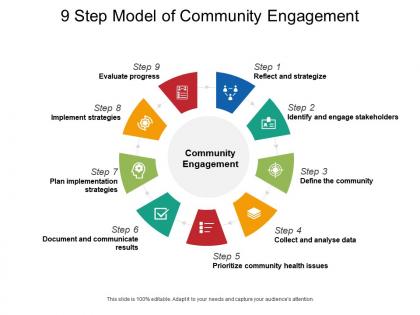
9 step model of community engagement




Try Before you Buy Download Free Sample Product
 Impress Your
 Audience
 100%
100% Editable
 Save Hours
 of Time


Lubricate your thoughts with our 9 Step Model Of Community Engagement. The will flow smoothly on.
People who downloaded this PowerPoint presentation also viewed the following :
9 step model of community engagement with all 5 slides:
Test our 9 Step Model Of Community Engagement team with the most stringent of specifications. They will match your every requirement.


FAQs for 9 step model
Honestly? Community engagement is a total game-changer. You'll build way more trust, and your programs will actually work better because people are invested instead of just... there. Plus you get more funding and volunteers when the community's behind you. The feedback alone saves you from making dumb mistakes - I've seen so many orgs waste money on stuff nobody wanted. Your job gets more interesting too when you're not just sitting behind a desk all day. Start simple though - monthly coffee chats or drop by their existing meetings. No need to reinvent the wheel right away.
Honestly, going digital is a game-changer for getting people involved. Facebook groups and Nextdoor are solid choices - WhatsApp works too if your community's smaller. Most folks would rather click a poll than sit through some endless town hall meeting, which makes total sense. You could try Discord or Slack for ongoing stuff, though that might be overkill depending on your crowd. My advice? Pick whatever platform people already use (don't make them download something new) and just focus on posting useful updates regularly. Oh, and surveys are clutch for collecting opinions from the people who never speak up otherwise.
You can't just expect people to show up - go to them instead. Build real connections with community leaders who already work with these groups. They'll tell you what the actual barriers are. Meet at community centers, not some sterile government building. Offer childcare and translators, and honestly? Pay people for their time. Skip the PowerPoint full of bureaucratic buzzwords - that stuff is the worst. Oh, and here's the big one: actually do something with their feedback. Nothing pisses people off more than sharing their thoughts and then watching nothing happen.
You'll want to track both the hard numbers (attendance, survey scores, participation) and the softer stuff - stories, testimonials, behavior changes. Honestly, those personal stories usually pack more punch than spreadsheets when you're trying to show real impact. Get your baseline measurements before you launch anything, then stay consistent with monitoring. Most places mix surveys, focus groups, and just watching what happens. Oh, and measure what actually matters for YOUR goals, not just what's easiest to count. Set this whole thing up early so you're not panicking later trying to prove it worked.
Look, social media is basically your digital town square where real relationships happen. People want that back-and-forth conversation, not just announcements being thrown at them. Share behind-the-scenes stuff! Celebrate wins with your community. Respond when people have concerns - honestly, this real-time interaction is what builds stronger connections. The authentic approach beats broadcasting every single time. My advice? Pick one platform where your people already hang out and focus there first. Don't spread yourself too thin trying to be everywhere at once.
Stories are everything - find real examples where community stuff actually changed people's lives in your area. Faces beat statistics every time (though toss in a few good numbers). Before/after photos work great, or those simple charts showing how one action ripples out. Here's the thing though - figure out what YOUR audience gives a damn about first. Don't just assume they care about the same stuff you do. Oh, and end with something super concrete they can do right after your talk. Like, literally walk out and do it that day.
Honestly, the worst part is when people just don't show up at all. Or they're dealing with work/life chaos so your meeting feels like another burden. But here's what really kills me - when folks think you're just going through the motions and won't actually listen to them. So here's what works: go to them instead of expecting them to come to you. Use their usual hangout spots and communication styles. Tell them upfront exactly how you'll use their feedback, then actually do it where they can see. Oh, and ask for input early when you can still change things, not when everything's basically decided already.
Look for groups that people already trust - nonprofits, local businesses, churches, schools, whatever makes sense in your area. Partner up with them for events or just ask for intros to people they know. Way easier than starting from zero, trust me. Find organizations where your missions kinda overlap (doesn't have to be perfect). I'd honestly just pick 2-3 and reach out this week with something small to see how it goes. Sometimes the best partnerships come from unexpected places anyway.
Honestly, surveys are probably your easiest starting point - Google Forms or even Instagram polls work fine. Focus groups give you way better insights but they're such a pain to organize. I'd also try posting in local Facebook groups or community forums, though people can go off on random tangents there. Town halls are old school but they actually work really well for building trust with folks. Oh, and don't overlook just chatting with people at farmers markets or school events - sometimes the best feedback comes from casual conversations. Mix a few of these and you'll get a good range of opinions.
Your community's cultural background totally changes how people want to get involved. Some cultures spend ages building consensus - takes forever but everyone's actually on board afterward. Others jump straight into action with individual leaders taking charge. Latin communities often mix family stuff with civic participation in really interesting ways. Honestly, the biggest mistake is assuming what worked in one place will work everywhere. Partner with local cultural leaders first. Do some research on customs before you start anything. Oh, and definitely adapt your approach instead of using the same strategy everywhere - that never works out well.
Honestly, micro-volunteering is where it's at - like 15-minute neighborhood cleanups or letting people use their actual job skills to help nonprofits. Gamification sounds cheesy but totally works! Volunteer passport programs where you collect stamps from different orgs are surprisingly popular. Everyone's obsessed with social media challenges right now too. The trick is meeting people where they are instead of forcing them into rigid volunteer schedules. Oh, and definitely survey your community first about barriers they face. Bet you'll find it's scheduling conflicts, not lack of interest, that's killing participation.
Honestly, you've gotta bake this stuff in from the start - can't just slap sustainability on later. Get 2-3 people who actually care about this and make them your core team. Regular meetings help, but rotate who's running things so one person doesn't burn out (I've seen that happen way too many times). Small wins matter more than you'd think - people bail when they don't see progress. Oh, and make it easy for busy folks to jump in. Clear communication channels are clutch. Basically, if participating feels like a huge time suck, you're toast.
Honestly, just listen to people first - like actually listen. Do surveys or whatever, but also just have real conversations about what they need. Then figure out what you can actually pull off with your resources. There's usually more overlap than you'd think! Be upfront about what you can't do (nobody likes empty promises), but stay open to tweaking your approach. I'd set up regular check-ins too since priorities shift. The whole thing works better when you're flexible but realistic about your limits.
Oh man, this stuff is actually harder than it looks! I'd start with Mighty Networks or Circle - they're solid for building your own community space. Eventbrite works great for organizing meetups too. Buffer and Hootsuite will save your sanity when it comes to staying consistent on social media (and trust me, consistency matters way more than being clever). The Community Roundtable has some really good frameworks you can steal... I mean adapt. Also worth checking out local nonprofits - they're usually pros at grassroots stuff. Don't try to do everything at once though. Pick one platform first and actually get good at it.
Honestly, stories beat data dumps every single time. People zone out when you're just rattling off statistics, but throw in a real resident's experience? Suddenly everyone's paying attention. I always grab quotes and little anecdotes from community work - like this one guy who told me how the new bus route literally changed his job prospects. That stuff sticks with people way longer than pie charts ever will. Personal stories help folks see themselves in the situation too. Oh, and they make boring policy stuff actually digestible. Start collecting those authentic moments now so you've got material ready to go.
No Reviews