

About me slide for self introduction example of ppt





Try Before you Buy Download Free Sample Product
 Impress Your
 Audience
 100%
100% Editable
 Save Hours
 of Time


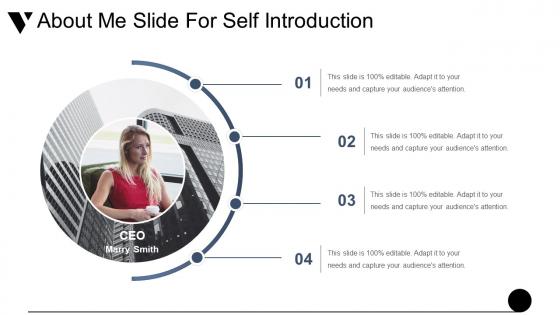
About me slide for the self-introduction – an encouragement for every individual who wishes to create the first impression. Ideally, this about yourself PowerPoint slide is used for a job interview, group meeting, work-related seminar or motivational seminars in schools and casual events too. This introduce yourself PowerPoint slide graphic template is a detail work presentation of an individual along with his/ her profile. Text space bifurcated into four sections can be used to show the objectives, credentials and other personal things. The users can use this who am I PPT presentation visual to familiarize the viewers with his/her personal and professional background. Such slides also help the audience as they are able to concentrate more on the seminar. The self introduction ppt template assists the presenter to demonstrate their own set of skills and capabilities. It provides an infographic layout in impressive color theme. You can explain your agenda, bio, quote, mission and vision, key skills, education, career path, contact information and so much more as per the needs of the audience and the situation. By use of about me slide template, the users can demonstrate his persona in a clear and vivid style, and thus reap career benefits. Finally, such a slide can be used for self-introduction within and outside the organization at the time of the new product launch and other business meetings. Acquaint folks with the details of your calculations with our About Me Slide For Self Introduction Example Of Ppt. Elaborate on the facts and figures.
People who downloaded this PowerPoint presentation also viewed the following :
About me slide for self introduction example of ppt with all 5 slides:
Folks genuinely believe you care due to our About Me Slide For Self Introduction Example Of Ppt. Be able to express intangible emotions.
FAQs for About me slide for self introduction
Look, just cover the basics: name, what you do now, and what you're hoping to get out of being there. People way overthink this stuff. Throw in one or two skills that actually matter for whatever situation you're in. The key thing? Tell them why you showed up - gives them something to grab onto for conversation. I'd practice a quick 30-second version so you don't end up rambling about your college internship from five years ago. Trust me, keeping it simple works way better than some perfect elevator pitch.
Okay so visual aids are honestly a game changer for introductions. People need something to look at besides your face the whole time - saves everyone from that weird staring contest vibe. Throw in some slides with your best work stuff, project photos, maybe graphics that show what you're about. It reinforces everything you're saying and makes info way easier to follow. I learned this the hard way after bombing a few presentations, but trust me it works. Just don't go overboard with fancy animations or whatever. Keep it simple so they remember you, not your questionable design choices.
Keep it short - like 30-60 seconds tops because people zone out fast. Don't overshare personal stuff (your cat stories can wait lol). Practice a quick version beforehand so you don't ramble. Actually listen when they're talking instead of planning your next words. I hate when people do that fake humble "I'm just a..." thing, but don't oversell yourself either. Oh and try to remember their name - I'm terrible at this but it's worth the effort. The whole thing should feel natural, not like you're giving a presentation.
Honestly, skip the boring job title stuff and tell a quick story instead. Like that weird internship that changed everything or the project where you had that lightbulb moment - you know? Pick something that actually shows who you are. I'm talking 30-60 seconds max though, not your entire autobiography lol. The trick is choosing stories that connect to why you're there or what makes you different. Oh, and definitely practice one solid go-to story beforehand that highlights something you want people to remember. Trust me, it beats the usual "I've been doing X for Y years" intro every time.
Dude, your body language can totally make or break you - sometimes it matters more than your actual words. I've watched people give solid intros but look super awkward because they're hunched over or staring at the floor. Really kills the vibe. Stand up straight, make eye contact (not creepy staring though lol), and use open gestures. Match your energy too - if you're saying you're excited about something, actually look excited! Quick tip: practice in front of a mirror first. You'll catch weird stuff you didn't even realize you were doing.
Honestly, it's all about reading the room and giving people what they actually want to hear. Networking events? Jump straight into your job title and how you solve problems - nobody has time for your life story there. Job interviews are obvious - stick to achievements and relevant experience. But social stuff? Totally different vibe. Just be normal and talk about what you're into outside work. With coworkers, I always focus on team projects and shared wins since that's what bonds you. The energy thing matters too - some crowds want you polished and structured, others just want real stories. Quick tip: always think "what does THIS specific group actually care about?" before you open your mouth.
Okay so first thing - don't do the whole "My name is..." thing, it's boring as hell. Jump in with something unexpected instead. Maybe a weird fact about yourself or ask the room a question. Eye contact is huge, bounce around to different people. Oh and practice that opening line until you're not stumbling over it. Once you nail that part, the rest can just be conversational. Pauses work too - they make people lean in. Share something kinda personal but still work-appropriate that explains why you're there. The energy thing matters more than you'd think.
Virtual presentations are tricky because you lose that in-person energy. I always start by mentioning we're all online - just a quick "good to see everyone on screen." Talk slower than normal and pause more since there's usually audio lag. This sounds super awkward, but look at your camera when speaking, not your screen. Trust me on this one. Your intro should be shorter too - people zone out faster online. Oh, and definitely end with something interactive like having people drop their location in chat. It actually helps keep them engaged throughout.
Oh man, cultural context changes everything with introductions! Some places you mention family first, others want your job title right away. Japanese folks are super formal with business cards, Americans just jump into handshakes and first names. I totally bombed this at a conference once - learned my lesson there. Research beforehand if you can, but honestly? Just watch how others do it first, then copy their vibe and formality level. Works way better than guessing.
Just be specific with numbers instead of saying you're "amazing" at stuff - like "I boosted sales 30%" hits way harder. When you can, frame big wins as team things where you had a key role: "we launched three products and I handled all the design work." Oh, and here's what most people miss - connect your past wins to their actual problems. Don't just list accomplishments like a resume. Honestly though? You're probably underselling yourself more than you think. Most people do. Let your results do the talking and show them how you'll fix what's broken for them.
Try opening with something weird that actually happened to you - like "I got lost in my own neighborhood for two hours, which basically sums up my approach to problem-solving." Questions work too. "Guess what the most dangerous part of my job is?" Then hit them with something they won't see coming. Those cheesy one-liners? Yeah, they usually bomb. I love the contradiction thing - "I'm an introvert who actually loves public speaking" or whatever fits you. Just make it real, not some fake clever thing you found online. Test out a few different versions and see which one doesn't make you cringe when you practice it.
Okay so this might sound super weird, but practicing in front of a mirror actually helps? I thought it was total BS until I tried it. You'll spot all those awkward pauses you don't even realize you're doing. Record yourself on your phone too - listening back is painful but worth it. Most intros should be like 30-60 seconds tops, so time yourself. Get your friends or family to watch and give you real feedback about how you sound and look. The goal is making it feel natural, not like you're reciting lines. Oh, and start practicing a few days early - don't wait until the last second or you'll be stressed.
Honestly, it's all about reading the situation. Networking events? 30-60 seconds max - nobody wants to get trapped in a long conversation when they're trying to work the room. Job interviews are different though, you can stretch to 1-2 minutes since they actually asked and want the details. Elevator pitches should literally fit an elevator ride, so like 30 seconds. I learned that the hard way once! Conference intros might give you 2-3 minutes if you're the featured speaker. Short sentences work better than rambling. Just match whatever vibe the room has going.
Dude, get feedback from people you trust - it's a game changer. You literally can't see yourself the way others do. I thought I seemed confident until my coworker was like "you looked like you wanted to run away" lol. They'll spot stuff you miss - talking too fast, saying "um" constantly, weird body language. What really helps is asking specific people for real feedback, not just "was that okay?" Record yourself practicing with them if you can. They'll tell you what actually stuck with them and what bombed.
Honestly, YouTube's been a game-changer for me - check out Toastmasters channels or any communication coaches who break down techniques. LinkedIn Learning has decent courses on elevator pitches too. I know this sounds weird, but record yourself on your phone. You'll catch annoying habits you didn't even realize you had (I used to say "um" literally every three words). Books like "How to Win Friends and Influence People" give you solid frameworks. Local Toastmasters clubs are great for practicing with real people. Don't try to consume everything at once though - pick one thing and actually practice it daily.
-
Understandable and informative presentation.
-
Design layout is very impressive.
-
Design layout is very impressive.
-
Qualitative and comprehensive slides.