


Achieving Product Market Fit Powerpoint Presentation Slides





Try Before you Buy Download Free Sample Product
 Impress Your
 Audience
 100%
100% Editable
 Save Hours
 of Time


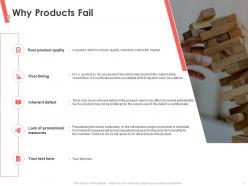
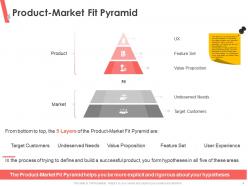
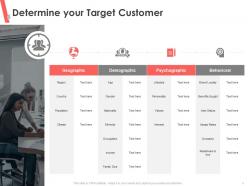
Introducing Achieving Product Market Fit PowerPoint Presentation Slides. The presentation highlights the reasons for the product failing such as poor product quality, poor timing, inherent defect, lack of promotional measures, etc. Take advantage of these visually appealing PowerPoint themes and describe the product-market fit pyramid which helps you to be more explicit and rigorous about your hypothesis. Determine your target customers by showcasing demographic, geographic, psychographic, and behavior. It also helps to identify underserved customer’s needs. Easily define your value proposition by taking the assistance of a market fit PPT slide design. The presentation also discusses the processes to improve the product-market fit. Depict the method to test your MVP with customers such as customer interviews, landing, ad campaigns, a/b test. Discuss the ways to improve the product-market fit by using a readily available PPT slideshow. Thus, download our ready-to-use product-market fit PPT slideshow, and help to build a successful venture.
People who downloaded this PowerPoint presentation also viewed the following :
Content of this Powerpoint Presentation
Slide 1: This title slide introduces Achieving Product-Market Fit. Add the name of your company here.
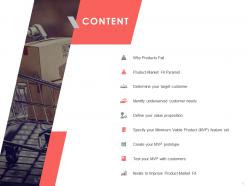
Slide 2: This slide contains the CONTENT. It includes - Why Products Fail, Product-Market Fit Pyramid, Determines your target customer, etc.
Slide 3: This slide presents Why Products Fail. A product, which is of poor quality, cannot be sold in the market.
Slide 4: This slide presents the Product-Market Fit Pyramid.
Slide 5: This slide presents Determine your Target Customer.
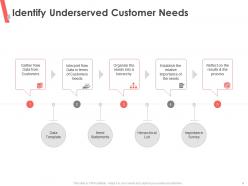
Slide 6: This slide presents Identify Underserved Customer Needs.
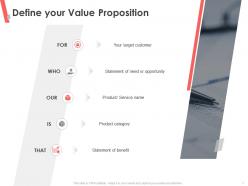
Slide 7: This slide presents Define your Value Proposition.
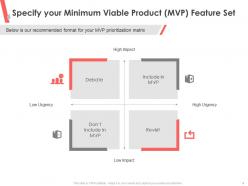
Slide 8: This slide presents Specify your Minimum Viable Product (MVP) Feature Set.
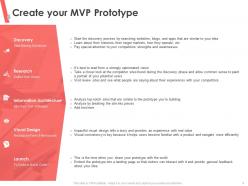
Slide 9: This slide presents Create your MVP Prototype.
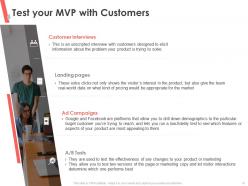
Slide 10: This slide presents Test your MVP with Customers.
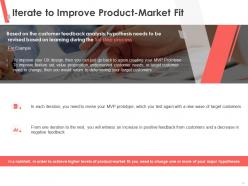
Slide 11: This slide presents Iterate to Improve Product-Market Fit.
Slide 12: This is the Achieving Product-Market Fit Icons Slide.
Slide 13: This slide introduces the Additional Slides.
Slide 14: This slide provides the Mission for the entire company. This includes the vision, the mission, and the goal.
Slide 15: This slide shows the members of the company team with their name, designation, and photo.
Slide 16: This slide contains the information about the company aka the ‘About Us’ section. This includes Creative, Talented, and Professional.
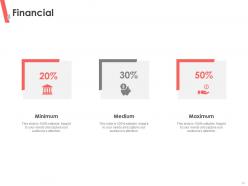
Slide 17: This slide presents the Financial with a data’s numbers at minimum, medium, and maximum percentage.
Slide 18: This slide presents Our Goal.
Slide 19: This slide is a Timeline template to showcase the progress of the steps of a project with time.
Slide 20: This is the Quotes slide.
Slide 21: This is a Thank You slide where details such as the address, contact number, email address are added.
Achieving Product Market Fit Powerpoint Presentation Slides with all 21 slides:
Use our Achieving Product Market Fit Powerpoint Presentation Slides to effectively help you save your valuable time. They are readymade to fit into any presentation structure.






FAQs for Achieving Product Market Fit
Product Market Fit is when you've built something people actually need and will pay for. Honestly, you'll feel it when customers start getting genuinely annoyed if they can't access your product - that's the sweet spot. Most startups crash because they build stuff nobody wants (harsh reality). Without PMF, you're basically throwing money at trying to force people to care. But once you nail it? Growth gets so much easier since you're not fighting uphill anymore. Don't scale anything until you find this first. I learned that one the hard way with my last project.
Dude, check your Net Promoter Score first - if people aren't recommending you, that's bad news. Retention rates matter too (are users actually staying?). Revenue growth is cool but honestly, the vibe check is huge. Like, are you constantly chasing customers or are they coming to you? If you're doing all the convincing and pushing, you're probably not there yet. Oh and ask users how bummed they'd be if your product vanished tomorrow. That question hits different than most surveys. The whole "pull vs push" thing is weirdly telling about where you really stand.
Dude, the biggest tell is when customers start begging for your product instead of you chasing them down. Like, they'd genuinely be pissed if you disappeared tomorrow. Word-of-mouth kicks in naturally, and suddenly sales calls don't feel like pulling teeth anymore. Your retention numbers actually look decent for once. Acquisition costs drop while customer lifetime value climbs - honestly that combo is *chef's kiss*. But here's the real kicker: you're scrambling to meet demand instead of desperately trying to create it. Track these things religiously though, or you'll miss the shift completely.
Dude, customer feedback is like your GPS for product-market fit. Talk to real users first - they'll tell you if you're solving an actual problem or just building something cool but useless. Don't ask "do you like this?" Ask "how do you handle this now?" Way more useful. Market research helps you understand the big picture, but honestly nothing beats sitting down with someone who's actually dealing with the problem you think you're fixing. I learned this the hard way on my last project - should've talked to users way earlier.
Start with customer interviews and surveys before you build anything crazy complicated. I'd make some landing pages or mockups first - seriously, so many founders I know skipped this and wished they hadn't. Test small MVPs with specific users, then watch your engagement numbers like a hawk. A/B test your messaging too. The real trick is getting honest feedback from actual potential customers, not your mom who thinks everything you do is brilliant. Also measure retention rates closely since that tells you if people actually stick around. Just start testing this week, don't wait.
Honestly, pivoting is like your safety net when customers just aren't feeling what you're selling. You can switch up your target audience, tweak the main features, change how you make money, or completely rethink what problem you're solving. Way better than beating a dead horse with something that's obviously not clicking. Each time you pivot, you get fresh data about what people actually need - not what you assumed they'd want. Just make sure you're basing these moves on real feedback, not gut feelings or whatever sounds cool. Oh, and definitely keep an eye on your numbers afterward to see if you're getting warmer or colder.
Honestly, trying to make everyone happy is a recipe for disaster. Different users want totally different things, so you'll just end up with something bland that nobody loves. I made this exact mistake before - spread ourselves way too thin. Pick your most passionate users first. Figure out what makes them tick and nail that experience. Those are the people who'll actually evangelize your product. Once you've got them completely hooked, then you can think about expanding. Way easier to grow from a solid foundation than trying to be everything to everyone from day one.
Honestly, competitor research is pretty key for PMF. It shows you the gaps and proves there's actual demand out there. Check what they're nailing vs where they suck - customer reviews are goldmines for this stuff. Zero competition is usually a red flag, not some amazing untapped market (learned that one the hard way lol). Look at their pricing, features, what people are still bitching about in reviews. Then you can position around those specific gaps instead of just building another me-too product. Way better than shooting in the dark.
So here's the deal - churn rate and CAC together give you the real PMF picture. When churn drops below 5% monthly (for B2B anyway), people are actually sticking around because they find value. CAC should fall as you hit PMF since word-of-mouth starts working and your messaging gets dialed in. I swear, most founders get distracted by flashy vanity metrics instead. The sweet spot? Low churn while you're ramping up new customers - that's your gold mine right there. Track both weekly and focus on trends, not just random data points. Oh, and don't get discouraged if it takes a few months to see the pattern emerge.
Dude, you'll just hemorrhage money trying to push something nobody really wants. Scaling too early means you're basically pouring gas on a broken engine - bigger budgets, more hires, all that overhead, but you're still not getting real traction because the product itself isn't clicking with people. It's like... why would you try filling a bucket with massive holes in it? Plus you end up chasing fake metrics just to show "progress" to investors or whatever. Way better to get the product right with a small group first. The scaling part honestly becomes way easier once you actually have something people care about.
Honestly, staying close to your customers gets harder as you grow but it's crucial. Their needs change and new customer groups want completely different things. I've watched companies crash because they thought their original success would automatically work for new products - big mistake. Talk to different customer segments regularly and obsess over your engagement numbers. Test everything with small groups first. Each new product line? Treat it like its own startup that has to prove itself. Map out which customers you're targeting for each thing and validate your assumptions super early. Don't just wing it.
The Sean Ellis test is your best bet - if 40% of users would be "very disappointed" without your product, you're probably hitting PMF. Super straightforward. Rahul Vohra's PMF Stack breaks things into target customer, underserved needs, and value prop alignment (though honestly it can feel a bit academic). I'd also watch organic growth, retention cohorts, and NPS. Superhuman's framework is solid if you want more structure. But honestly? Just start with the Sean Ellis survey. It's quick, gives you a clear number to hit, and you'll know pretty fast where you stand.
Dude, this bit me hard when our "simple" interface totally confused users overseas. What crushes it in Silicon Valley can bomb elsewhere - pricing, features, even basic assumptions about how people behave online. Payment preferences are wildly different, plus cultural stuff around privacy and sharing varies like crazy. Honestly, some markets just think about business relationships in completely opposite ways. Regulatory requirements will also mess with you. Before you assume your product works everywhere, actually talk to real users in each region first. Could save you months of headaches (learned that one the expensive way).
Dude, so many big companies completely changed direction. Slack was making games but their team chat tool was way better than whatever game they were building. Twitter started as some podcasting thing called Odeo - weird right? Instagram used to be this messy app called Burbn until they stripped it down to just photos. Airbnb struggled for years before they figured out how to make hosts and guests actually trust each other. Point is, if your users keep asking for something totally different, maybe listen to them? Sometimes the thing you accidentally built is better than your original idea.
Honestly, check your PMF every quarter minimum - even when things are going great. Markets change stupid fast. I keep an eye on the key stuff monthly though: retention, NPS, how people actually use the product, feedback patterns. If anything starts looking wonky or new competitors pop up, dive in right away. Here's the thing - PMF isn't permanent like people think. It's actually pretty fragile. Too many startups get their first win and then just... coast. Big mistake. Set up regular customer surveys and make data review a habit. Way better to catch problems early than scramble later.
-
Informative design.