


Agile methodology in it powerpoint presentation slides




Try Before you Buy Download Free Sample Product
 Impress Your
 Audience
 100%
100% Editable
 Save Hours
 of Time


Agile software management refers to software development methodologies that are based on the concept of iterative development. Check out our competently designed template on Agile Methodology in IT that showcases a way of project management that divides a project into stages. The template includes continuing cooperation with stakeholders and continuous development at each point. The proposal covers the collaboration of self organizing cross functional teams, which leads to the evolution of criteria and solutions. Scrum and Kanban are two of the most common Agile methodologies used in this template. Further, the proposal provides information on Agile Methodologys phases and goals. Additionally, our template covers details on Agile techniques and scaling agile transformation model along with Agile Diagram Software Design Thinking and Lean Startup Phases, etc. Our IT proposal also covers information on the Agile driven approach for software development. Further, this module provides details on the Agile lifecycle, the role of the Agile team, and learning oriented techniques for the Agile Team. It also highlights Agile performance evaluation metrics and Agile enterprise developed architecture Post Implementation attributes. Making changes in the template is as easy as a piece of cake. Download this 100 percent editable template and customize it based on your specific needs. Get access now.
People who downloaded this PowerPoint presentation also viewed the following :
Content of this Powerpoint Presentation
Slide 1: This slide displays title i.e. 'Agile Methodology In (IT)' and your Company Name.
Slide 2: This slide presents agenda.
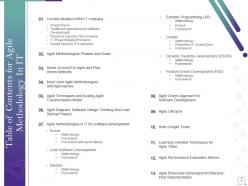
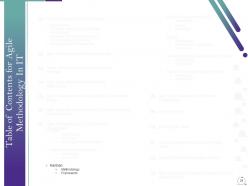
Slide 3: This slide exhibits table of contents.
Slide 4: This slide shows title for 'Current situation of the IT company'.
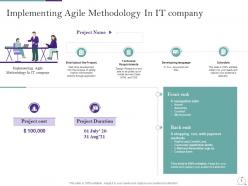
Slide 5: This slide depicts Implementation of agile methodology in IT company.
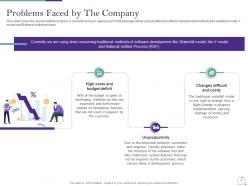
Slide 6: This slide covers traditional approach as a problem to software development for the I.T organization
Slide 7: This slide covers the problems that company is currently facing in agile project methodologies.
Slide 8: This slide covers the problems related to the IT projects of the company and reasons to implement agile methodologies in IT department/company.
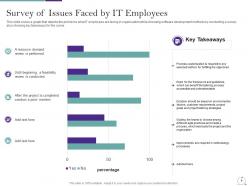
Slide 9: This slide covers a graph that depicts the problems what IT employees are facing in organisation.
Slide 10: This slide depicts title for 'Agile Methodologies phases & goals'.
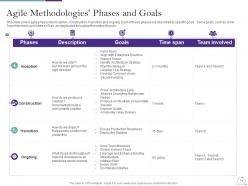
Slide 11: This slide covers agile phases like Inception, Construction, Transition and ongoing.
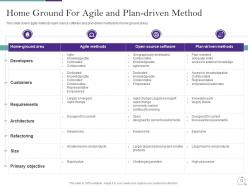
Slide 12: This slide covers agile methods open source software and plan driven methods for home ground areas.
Slide 13: This slide displays title for 'Most used agile methodologies and approaches.
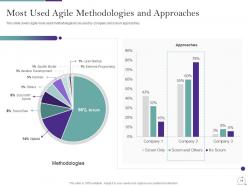
Slide 14: This slide covers agile most used methodologies to be used by company and scrum approaches.
Slide 15: This slide covers agile most used techniques and scaling transformation model for the organization to use.
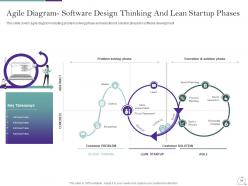
Slide 16: This slide covers agile diagram including problem solving phase and execution & solution phase for software development.
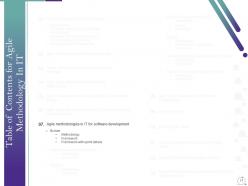
Slide 17: This slide presents title for 'Agile methodologies in IT for software development'.
Slide 18: This slide covers details description about agile scrum methodology.
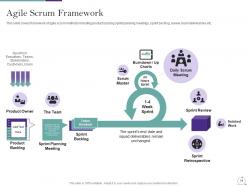
Slide 19: This slide covers framework of agile scrum methods including product backlog sprint planning meetings, etc.
Slide 20: This slide covers the adaption of an Iterative-Incremental development, where each sprint will be of three weeks.
Slide 21: This slide exhibits title for 'Lean software development'.
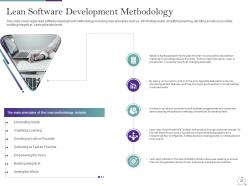
Slide 22: This slide covers agile lean software development methodology including lean principles.
Slide 23: This slide covers agile lean software development framework including phases, teams, desired outcomes, timings etc.
Slide 24: This slide shows title for 'Lean software development framework'.
Slide 25: This slide covers Kanban agile methodology including basic principles of Kanban.
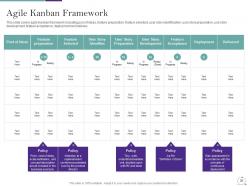
Slide 26: This slide covers agile Kanban framework including pool of ideas, feature preparation, etc.
Slide 27: This slide depicts title for 'Extreme programming'.
Slide 28: This slide covers agile extreme programming methodology including supporting practices.
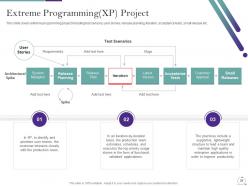
Slide 29: This slide covers extreme programming project including test sensors, user stories, etc.
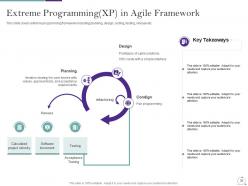
Slide 30: This slide covers extreme programming framework including planning, design, coding, testing, release etc.
Slide 31: This slide displays title for 'Crystal'.
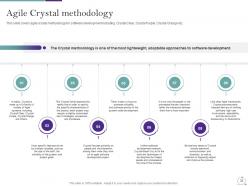
Slide 32: This slide covers agile crystal methodology for software development.
Slide 33: This slide covers properties of crystal clear programming.
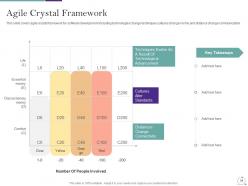
Slide 34: This slide covers agile crystal framework for software development.
Slide 35: This slide presents title for 'Dynamic systems development'.
Slide 36: This slide covers agile dynamic system development methodology.
Slide 37: This slide covers agile Dynamic Systems Development Method framework.
Slide 38: This slide exhibits title for 'Feature driven development'.
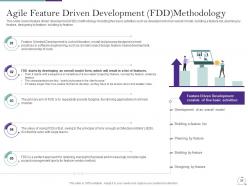
Slide 39: This slide covers feature driven development (FDD) methodology.
Slide 40: This slide covers feature driven development (FDD) agile framework.
Slide 41: This slide shows title for 'Agile lifecycle'.
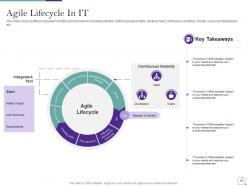
Slide 42: This slide covers agile driven approach framework transformed from the traditional approach of the software development.
Slide 43: This slide covers software development lifecycle framework.
Slide 44: This slide depicts title for 'Role of agile team'.
Slide 45: This slide covers the roles and description of the work that has been started by project manager and continued by other team members.
Slide 46: This slide covers some of the activities that are performed by project owner.
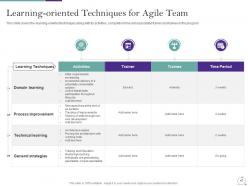
Slide 47: This slide covers the learning-oriented techniques.
Slide 48: This slide displays title for 'Agile performance evaluation metrics'.
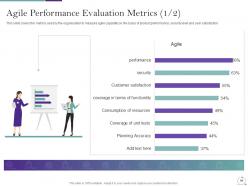
Slide 49: This slide covers the metrics used by the organisation to measure agile capability.
Slide 50: This slide covers the agile delivery metrics for measuring quality.
Slide 51: This slide depicts the architecture of enterprise divided into three phases.
Slide 52: This is the icons slide.
Slide 53: This slide presents title for additional slides.
Slide 54: This slide exhibits quarterly sales bar charts for different products. The charts are linked to Excel.
Slide 55: This slide presents your company's vision, mission and goals.
Slide 56: This slide shows about your company, target audience and its client's values.
Slide 57: This slide displays Venn.
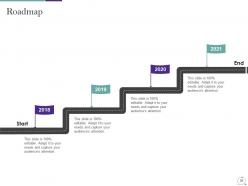
Slide 58: This slide shows roadmap.
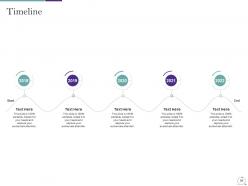
Slide 59: This slide exhibits yearly timeline.
Slide 60: This slide exhibits ideas generated.
Slide 61: This is thank you slide & contains contact details of company like office address, phone no., etc.
Agile methodology in it powerpoint presentation slides with all 61 slides:
Use our Agile Methodology In IT Powerpoint Presentation Slides to effectively help you save your valuable time. They are readymade to fit into any presentation structure.























FAQs for Agile methodology in it
So Agile is basically about putting people first instead of rigid processes, and you're constantly shipping working features rather than drowning in documentation. You work in these short 2-4 week sprints, get feedback fast, and actually collaborate with customers instead of hiding behind contracts. Honestly? Once you stop freaking out about changing requirements, it's way better than waterfall. Requirements WILL change - that's just reality. Break your project into tiny pieces you can actually deliver, then tackle whatever gives users the most value first. Oh, and embrace the chaos a bit - fighting change just makes everything harder.
So Agile basically forces people to stop hiding in their departments and actually work together. Daily standups are game-changers - suddenly your developers and designers are talking instead of just passing stuff back and forth like hot potato. Less documentation, more real collaboration on actual working software. Retrospectives are honestly kind of genius because teams can figure out what's not working and fix it. I'd say start with those 15-minute daily check-ins first - you'll see people start collaborating way better almost immediately. It's wild how much changes when everyone's just... talking to each other regularly.
So basically, Agile chops everything into short sprints where you're constantly getting feedback. Waterfall? You do each phase completely before moving on - super rigid. Once you commit to the waterfall plan, you're pretty much stuck with it (learned that the hard way). Agile lets you pivot when things change, and trust me, they always do. You're involving clients throughout instead of this big reveal at the end. Working software gets delivered way faster with Agile, though you'll be collaborating constantly. If requirements are fuzzy or likely to shift, go Agile for sure.
So basically, Scrum locks you into these 2-4 week sprints with all the meetings - planning, dailies, retros, the whole thing. Pretty structured. Kanban's just a board where you move stuff along and try not to take on too much at once. Way more chill. Honestly? Go with Scrum if you need predictable deadlines and your team likes clear roles. But if you're constantly getting pulled in different directions or just want something simple to start with, Kanban's probably your best bet. I've seen teams get overwhelmed trying to do "proper" Scrum right off the bat.
So the Product Owner sits between your dev team and all the business people. They decide what features to build and in what order - basically managing that never-ending backlog of user stories. When you're mid-sprint and confused about requirements? That's your person to ask. Honestly, a good PO can make or break your project velocity. They're supposed to be the "customer voice" making sure you build stuff people actually want. My advice - nail down their vision early in the process. Otherwise you'll spend half your time in clarification meetings instead of actually coding. Trust me on that one.
Dude, agile is way better for keeping customers happy. Instead of going radio silent for months like those old waterfall projects, you're showing them actual working stuff every few weeks. They can see what you've built and tell you "hey this is perfect" or "nah, that's not what I meant at all." Honestly, clients love feeling like they're actually part of the team instead of just... waiting around hoping you read their mind correctly. The sprint reviews are clutch - that's where you really listen and make changes. Way less chance of delivering something they hate at the end.
Honestly, start with velocity - track story points your team knocks out each sprint. Burndown charts show if you're on track mid-sprint, which is clutch. Cycle time matters too (how long from start to done). I'm weird about this, but team happiness scores are gold - miserable devs write crappy code. Lead time and throughput give you the pipeline flow picture. Don't forget defect rates and customer satisfaction. But seriously, pick like 3-4 that actually fit your team. I've seen people go metric-crazy and it's useless. Start simple, add more once you've got the rhythm down.
Honestly, the biggest pain points are cultural pushback and teams trying to go too fast. People get stuck in that old-school planning mindset instead of embracing the iterative stuff. Management hates giving up control too - classic power struggle. Oh and here's what kills me - companies will literally just rename their meetings "stand-ups" and think they're agile now. Doesn't work that way! You'll see dev teams change while everyone else stays waterfall, which creates this weird disconnect. Start with one team that's actually excited about it, get some wins, then slowly expand with real training.
Yeah dude, Agile's actually perfect for remote work since it's all about constant communication anyway. Just move your standups and planning sessions to Zoom - easy. Though honestly, I do miss being able to just walk over and bug someone with a quick question lol. The trick is being way more deliberate about staying connected. Slack becomes your lifeline, and you'll want digital boards for everything. Stick to your sprint schedule religiously, especially if people are in different time zones. Maybe throw in extra check-ins too. Set up those communication rules early and don't let them slide.
Honestly, iterative cycles are what make Agile actually work. Instead of building everything at once (nightmare scenario), you ship working software every few weeks. Super manageable chunks. Your users can mess around with real features and tell you what sucks before you've wasted months. The feedback loop is everything - way better than those theoretical requirement docs nobody reads anyway. When priorities change or something's clearly not working, you can pivot fast. I always think of each iteration like its own mini-project with specific goals. Game changer, seriously.
So your Product Owner basically runs the show on prioritization - they rank stuff by business value and what users actually need. Most teams do MoSCoW or story points during backlog grooming (honestly, those sessions can drag on forever). Sprint planning's where you actually commit to what you're building based on your team's capacity. The thing is, priorities change constantly, so we review our backlog every week or two. My advice? Get your user stories and acceptance criteria sorted first. Makes those prioritization arguments way less painful. Dependencies always throw a wrench in things too, but that's just how it goes.
Oh man, this decision paralyzed my last team for like a month! Jira's the classic choice - handles all the sprint stuff perfectly but yeah, it's kind of a beast to learn. If you're already using Microsoft stuff, Azure DevOps makes sense. Trello's way simpler and honestly? Sometimes simple wins, especially with smaller teams. I've watched so many groups obsess over finding the "perfect" tool instead of just picking one and getting started. Whatever you choose, just make sure everyone will actually use it consistently - that matters way more than having every possible feature.
Yeah, Agile definitely works outside software! We've had good luck with network upgrades - hit one building at a time instead of everything at once. Break stuff into short sprints and do daily check-ins. Your stakeholders will actually give you useful feedback when they see progress every couple weeks vs waiting months for some massive rollout. Help desk workflows are perfect for this too, honestly. When priorities inevitably change (and they will), you won't be stuck with some rigid plan. Pick something that's been driving your team crazy and try two-week sprints.
Dude, the worst myth is thinking Agile means zero planning - like you just show up and improvise everything. Total BS. You're constantly planning, just in smaller chunks instead of these massive upfront docs that nobody reads anyway. People also assume it kills all documentation, but honestly? You still document stuff, just the actually useful parts. And yeah, your manager probably thinks it means everything gets done faster, but it's more about building the right features through feedback loops. Structure definitely still matters - it's just way more adaptable than traditional methods.
So Agile basically forces you to improve constantly through those retrospective meetings where everyone talks about what's broken. Yeah, there's gonna be a ton of meetings - fair warning. But here's the thing: short sprints mean you can actually fix stuff fast instead of waiting forever. You're getting user feedback constantly too, which beats guessing what people want. My old team used to try changing everything at once and it was a disaster. Start small with fixes. The whole point is those quick feedback loops let you pivot when real data shows you're off track.
-
Great quality slides in rapid time.