

Agile testing process flow example of ppt




Try Before you Buy Download Free Sample Product
 Impress Your
 Audience
 100%
100% Editable
 Save Hours
 of Time


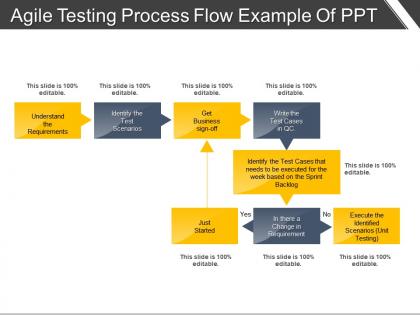
The agile test strategy PowerPoint slide is suitable for explaining an agile environment, where a team works in short sprints or iterations and each sprint basically focused on only a few requirements, so it is natural that documentation has very fewer chances to become extensive, in both terms i.e. number and content. Our agile methodology diagram PPT slide is beneficial in many ways for a user. The presenter can use this agile testing process flow presentation template describe the seamless display of development process for employees and customers. The Agile process flow diagram slide assists in creating an illustrative analysis of project procedures. The agile design template for PowerPoint act as a professional summary of business processes. You can use this flow chart design presentation slide to demonstrate explainable units for educational purposes. The agile process flow chart diagram template contains illustration of logical flow and highlighting segments. The agile test strategy slide act as the document which lists best practices and some form of structure that the teams can follow. Giving a world class presentation can help take your presentation to the next level. Our carefully crafted Agile Testing Process Flow Example Of Ppt are ready to help you get there.
People who downloaded this PowerPoint presentation also viewed the following :
Agile testing process flow example of ppt with all 5 slides:
Our Agile Testing Process Flow Example Of Ppt enhance global endorsement. Your conduct will be appropriate everywhere.



FAQs for Agile testing process flow
Honestly, agile testing is just way more collaborative than traditional stuff. Instead of waiting till the end to test, you're working alongside devs the whole time - standups, sprint planning, all that. Test early, automate what you can, get feedback super quick. Way less paperwork too, which is nice. Focus shifts to preventing bugs instead of just finding them later. The relationship building with your dev team is huge - probably the most important part if I'm being real. Start small with automation though, don't try to boil the ocean right away.
So instead of testing at the very end, you're doing it constantly while devs are coding. Unit tests, integration tests, acceptance tests - they all run during each sprint alongside the actual development. Way less stressful than the old days when you'd just pray everything worked after throwing code over the fence. Testers and developers work together daily, which means you catch bugs early when they don't cost a fortune to fix. Oh, and automate everything you can - seriously, the faster feedback loop will save your sanity. Testing starts from sprint day one, not as an afterthought.
Dude, agile completely changes how you work as a tester. Instead of getting stuff thrown at you at the end, you're actually part of the whole process from day one. Daily standups, pairing with devs, testing while they're still coding - it's night and day compared to waterfall. You'll help write acceptance criteria upfront too, which is clutch. Honestly, the hardest part was realizing I wasn't just the "bug finder" anymore. Now you're more like a quality coach for everyone. Oh and definitely start pairing with developers more - that's seriously where you'll learn the most.
Agile testing metrics are totally different - forget those old pass/fail counts. Track defect discovery rates within each sprint instead. Bug resolution speed matters way more now. Also watch if your automated coverage keeps up with new features (this one's huge). I used to stress about documentation metrics but honestly? Pretty useless in agile. Focus on stuff that actually supports continuous delivery - deployment frequency, how fast you fix things, team confidence levels. Oh and sprint-level quality trends beat waiting for those giant end-of-project reports every time.
Oh man, there's tons of stuff out there. Jira and Azure DevOps are pretty standard for test management - they play nice with dev workflows. TestRail's good if you want something more focused. Selenium still rules web automation, but Cypress is honestly way faster and less painful to work with. Postman rocks for API testing. Jenkins handles the CI/CD automation side of things. The whole ecosystem is kind of nuts though - so many options. I'd just pick whatever meshes with your current setup first. Makes life easier when everything actually talks to each other.
CI completely changes how you test in agile - like, in the best way possible. Your tests fire off automatically every time someone commits code, which means you're finding bugs in minutes instead of waiting around for weeks. No more massive regression cycles either, which honestly used to drive me crazy. You get to focus on the fun stuff like exploratory testing. Just make sure your test suite actually runs fast though - I've seen teams where it takes forever and then nobody wants to use it. Small code changes get validated constantly, so everything stays way more stable.
Honestly, the trick is making your user stories testable right from the start. Write clear acceptance criteria - like what inputs you're expecting, what should happen, edge cases, all that stuff. Don't forget the scenarios where things go wrong either, that's where most bugs pop up. Keep each story focused on just one thing instead of cramming everything together. Oh, and definitely get your testers involved early! They catch stuff you'd never think of. I learned this the hard way on my last project. Small stories plus early collaboration = way less headache later.
Here's how I'd tackle test automation prioritization - start with your critical path stuff that would completely wreck your release if it broke. Those regression tests you're running every single sprint? Automate those next since you're doing them constantly anyway. Unit tests should be your foundation (though honestly, getting devs to write good ones is like pulling teeth sometimes). API testing gives you the most value - they're fast and way more reliable than UI tests. Speaking of UI automation, save that headache for last since those tests break if you sneeze wrong. Just pick your most annoying manual tests first and grow from there.
Mix automated unit tests with integration tests and some hands-on exploratory stuff - that covers most bases. Get clear acceptance criteria upfront with your product owner (saves so much headache later). TDD works great when you can swing it. Don't save testing for sprint end though, that's a recipe for disaster. Get everyone involved, not just QA people. Oh and definitely build testing into your definition of done. We review coverage in retros to catch anything we missed. Honestly, the whole team approach makes such a difference.
So basically, Scrum testing happens in those sprint cycles - you know, with all the ceremonies and deadlines. Kanban's way more chill though. You just test stuff as it moves through the pipeline based on your WIP limits. No crazy sprint pressure, which honestly saved my sanity on my last project. The actual testing techniques are pretty much the same - TDD, automation, exploratory testing, all that. Scrum just bunches everything into sprints while Kanban keeps things flowing continuously. Really depends if your team likes structure or prefers that steady delivery vibe.
Honestly, the worst part is when requirements keep changing mid-sprint and everyone's scrambling. Tight deadlines don't help either. Getting your team to ditch that "we'll test everything later" approach takes forever too. My advice? Don't try automating everything right away - I've seen teams burn out hard doing that. Start with getting devs and testers actually talking to each other first. Then pick your most critical stuff to automate and build from there. Each sprint, add a little more. The whole "quality is everyone's job" thing sounds cheesy but it's true.
Honestly, agile testing is impossible without solid teamwork. Daily standups are clutch - that's where you catch problems before they blow up. I've watched teams completely fall apart when testers and developers don't talk to each other. Pair testing sessions work really well too, plus you need those quick feedback loops happening constantly. Product owners should be in the mix so everyone's actually building the same thing. The whole agile thing falls apart without those collaborative moments built right into your sprints. Oh, and don't let people work in silos - that's a disaster waiting to happen.
Dude, exploratory testing is perfect for agile - you get to be like a detective hunting for bugs in spots your regular scripts totally miss. Requirements change constantly anyway, so you're learning the system while testing it. Honestly way more fun than running the same test cases over and over. I usually block out time each sprint for it, then document the weird stuff I discover. Those random findings? They become your best regression tests later. Oh and don't feel guilty about "just clicking around" - that's literally the point when devs build something different than planned.
Honestly, you gotta tighten up those feedback loops - daily standups, sprint reviews, bug reports right away instead of waiting weeks. Get the right people talking when it matters. I've watched teams completely blow it by only syncing at sprint end (such a waste!). Actually listen to your testers, devs, and stakeholders, then move fast on what they're telling you. Set up automated alerts for the critical stuff. Track how long bugs take from discovery to fix - that's where you'll spot the breakdowns. Oh, and create clear channels for different feedback types so nothing gets lost in the shuffle.
Honestly, adaptability is your best friend here - agile changes direction constantly. Communication matters just as much since you're in daily standups giving quick updates. Automation skills are non-negotiable too. You'll be writing tests while devs are still coding, which is actually pretty cool once you get used to it. Forget the old "find bugs and toss them over the wall" approach. Now you're collaborating directly with developers and product owners every day. Get comfortable with exploratory testing since there's no time for those massive test case documents. Oh, and learn some risk-based thinking. Pick a test automation framework and start practicing - that's probably the most concrete first step.
-
Perfect template with attractive color combination.
-
Top Quality presentations that are easily editable.