Agile methodology testing sprint review powerpoint show
Try Before you Buy Download Free Sample Product
Audience
Editable
of Time
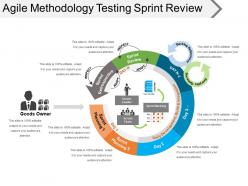
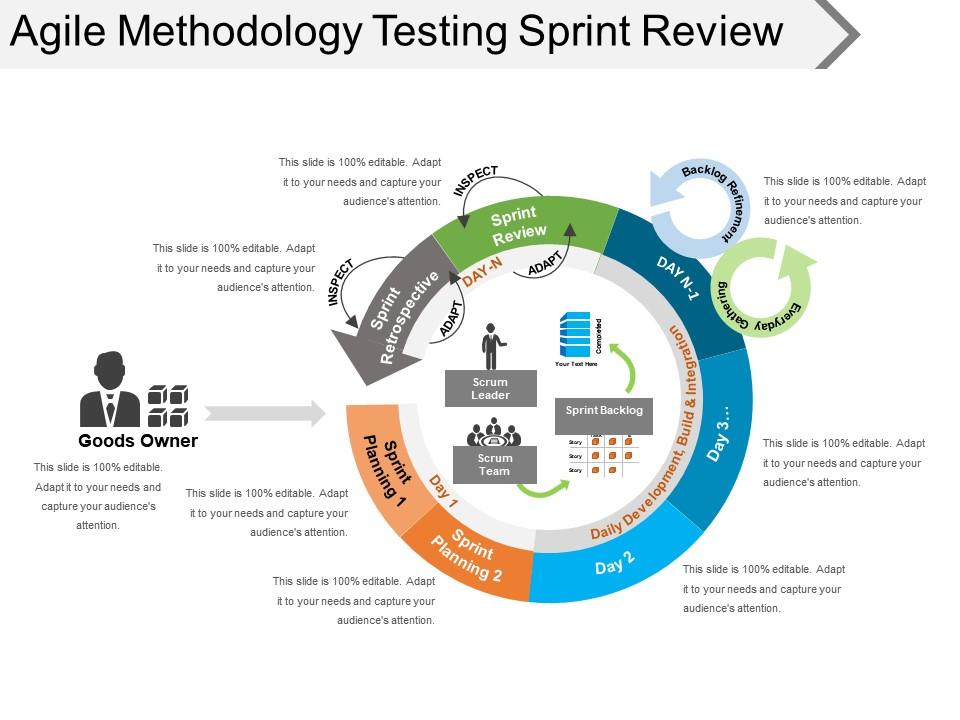
Agile methodology provides a rapid response to change in any organization. Highlight this concept with our agile methodology testing sprint review PPT template. This agile methodology testing Presentation slideshow has been crafted with the graphic of a circular scrum process which aligns project and product development with requirements of the customer and overall company goals. It is a methodology based on iterative development. Agile methodology enables both the customer and the stake holders to gain feedback on latest iterations and new features sooner than later. This highly intuitive and adaptive agile methodology PPT visual allows you to align your specific processes to your overall business goals. This gives your team the visual ability to clarify the complex, understand the problems and identify the key roles and processes for a more efficient and ultimately cost saving process improvement system. You just need to download and save it to enjoy complete access on its modification. Demonstrate your empathy with your team. Display your understanding with our Agile Methodology Testing Sprint Review Powerpoint Show.
People who downloaded this PowerPoint presentation also viewed the following :
Agile methodology testing sprint review powerpoint show with all 5 slides:
Explain the jargon with our Agile Methodology Testing Sprint Review Powerpoint Show. Get folks to comprehend what the expression indicates.
FAQs for Agile methodology testing sprint
So basically agile testing means you're testing stuff as you build it, not waiting until everything's done like the old waterfall way. Way smarter if you ask me - you catch bugs when they're still easy to fix instead of becoming massive headaches later. Everyone on the team gets involved in testing too, which actually works better than having one lonely tester doing everything. Oh, and you test the most important user features first rather than following some strict checklist. My advice? Start writing test cases while you're coding and get the whole team thinking about quality from the start.
Honestly, just throw your testers right into the dev teams instead of keeping them separate - those handoffs are such a pain. Write test cases while you're planning stories, not after. Your Definition of Done should have testing baked in so nothing gets through without coverage. Get everyone thinking about testing, not just the QA folks. TDD works great for new features if you can swing it. Oh, and definitely set up CI pipelines that run tests on every commit - catching bugs early saves you so much headache later when they're way harder to track down.
So instead of testing at the very end, you're actually working alongside developers every single day. Write acceptance criteria with them, test stuff as they build it, catch problems right away. Way better than the old days when we'd just get handed broken code to "fix." Daily standups become your thing too - honestly, those meetings are where you can actually influence what gets built. You're basically preventing issues during the sprint rather than playing cleanup crew afterward. The whole vibe is more collaborative since your input shapes everything from planning to retrospectives.
So feedback is basically the heart of Agile testing, right? You're constantly getting input from devs, users, stakeholders, plus all your automated tests. Instead of being stuck with some plan that might suck, you can actually pivot your testing strategy when needed. Think of it like GPS rerouting around traffic jams. Early issue detection becomes way easier this way. Plus you end up prioritizing tests that users actually care about instead of random stuff. Oh, and definitely start weaving feedback into your standups and sprint reviews if you're not doing that already - game changer.
Honestly, the hardest part is just keeping up without letting quality tank. Your team's gonna struggle with testing on the fly and those half-baked requirements that keep changing. Pick one automation framework first and train everyone on it - trust me on this one. Get your testers involved from day one of each story, automate whatever makes sense, and talk to devs constantly. Also push hard for clear acceptance criteria upfront. Oh, and make testing part of your "done" definition or people will try to skip it when things get crazy. Short bursts work better than trying to automate everything at once.
Look, automated testing is a game changer for Agile teams. It handles all the boring repetitive stuff while you focus on actually interesting exploratory work. Set up CI pipelines to run tests every time someone pushes code - catches issues right away. Regression testing is where it really shines though. Nobody has time to manually test the same flows every single sprint, and honestly it's mind-numbing work anyway. This gives you bandwidth for complex scenarios that need real human insight. My advice? Start small with your most critical user paths first, then build from there.
So with agile testing, you basically put QA right in the middle of everything from the start. No more tossing code over to them later and hoping for the best. Your devs and testers are actually working together daily - pairing up on test cases, talking through what needs to happen. Honestly, it's so much better when you catch bugs early rather than at the end when everything's a mess. Everyone owns quality together, which sounds cheesy but actually works. Oh, and get your QA people in those sprint planning meetings if they're not already there. That's where you'll see the real difference.
Here's the thing - agile testing catches bugs while they're still tiny, so you're not scrambling to fix massive problems later. Your team can pivot fast when requirements change (and they always do). Instead of waiting months for some big product launch that might flop, customers actually see working features regularly. Testing happens constantly throughout development, not just at the end. The feedback loop between users, testers, and developers is honestly pretty sweet - you end up building stuff people actually want. Try adding user feedback sessions to your sprint reviews. You'll see what I mean.
Look at defect escape rate first - that's the big one. How many bugs slip through to production vs what you catch? Test automation coverage matters too, plus execution time since nobody wants to wait forever for feedback. Honestly? Teams obsess over test case counts but it's kinda pointless if those tests aren't catching real problems. Customer satisfaction and bug resolution time are way more useful. Oh, and keep it simple - pick like 3 metrics max. We tried tracking everything once and it was a mess. Review them in retros to see what's trending.
TDD works great with Agile - write the test first, code to pass it, then clean up. Short sprints mean you're constantly validating stuff, which catches problems early. The red-green-refactor thing keeps momentum going. Honestly, writing tests first felt weird at first, but it makes you think through requirements upfront. Your code turns out cleaner too. I'd say start with something simple on your next story to get the hang of it. Once you nail the rhythm, tackling bigger features becomes way less stressful.
Oh nice timing - just dealt with this! Write test cases in normal language everyone gets, not just the testers. Base them on user stories instead of those monster detailed scripts (seriously, who reads those?). Get your devs and product folks involved when writing them - they'll spot weird edge cases you missed. Automate the boring repetitive stuff. Here's the thing though: treat them like living docs that change every sprint. Don't get precious about them. Focus testing on the risky areas and what users actually care about. You'll save tons of time.
Your agile testing needs to change when your project does. Scope gets bigger or smaller? Adjust your test coverage and automation. Team shuffles around with new people or goes remote? Time to rethink how you're collaborating. Honestly, I've watched so many teams just... stick with what they've always done even when it makes zero sense anymore. Run regular retrospectives - but actually USE them to figure out if your testing approach still works. Oh, and don't overthink it. Just grab one thing that feels wonky and try something different next sprint.
Honestly, communication is probably the biggest one - you're always talking to devs, product people, stakeholders during sprints. The technical stuff matters a lot too though. Get comfortable with automation tools, basic coding, APIs, database queries. Agile moves fast so you need to roll with changing requirements (sometimes they shift like every other day, I swear). Being able to quickly analyze user stories and spot weird edge cases is clutch. Oh and when deadlines are tight, you gotta know how to triage what actually needs testing vs what can wait. I'd start with whatever feels like your weakest area.
Get everyone talking about what "done" actually means for testing first - that conversation will expose so much misalignment it's not even funny. During sprint planning, spend a few minutes explicitly going over testing priorities and acceptance criteria. Don't bury your testing strategy in some document no one opens. Quick check-ins during retros work well too. The whole thing needs to be ongoing, not just a one-time setup. I've seen teams think they're aligned until they actually sit down and hash out the details together.
Honestly, the key is getting everyone to own quality, not dumping it all on testers. Get your whole team writing acceptance criteria together - when everyone defines "done" from the start, you're already ahead. Pair programming sessions are surprisingly fun once people stop being weird about it. Your devs should be writing unit tests (obviously), and automate whatever you can. Oh, and make your build pipeline super visible so everyone sees breaks immediately. The game-changer though? Celebrate catching bugs early instead of playing the blame game when stuff breaks.
-
Excellent Designs.
-
Easy to edit slides with easy to understand instructions.