

Agriculture Farm Business Organizational Structure Crop Farming Business Plan BP SS




Try Before you Buy Download Free Sample Product
 Impress Your
 Audience
 100%
100% Editable
 Save Hours
 of Time


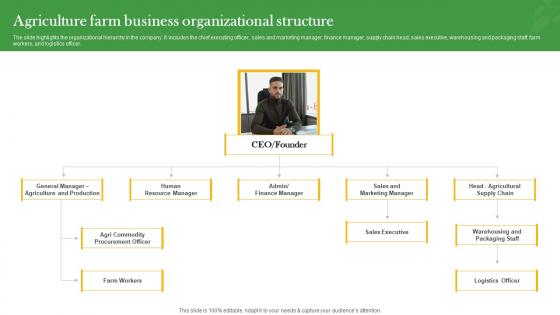
The slide highlights the organizational hierarchy in the company. It includes the chief executing officer, sales and marketing manager, finance manager, supply chain head, sales executive, warehousing and packaging staff, farm workers, and logistics officer.
People who downloaded this PowerPoint presentation also viewed the following :
Agriculture Farm Business Organizational Structure Crop Farming Business Plan BP SS with all 9 slides:
Use our Agriculture Farm Business Organizational Structure Crop Farming Business Plan BP SS to effectively help you save your valuable time. They are readymade to fit into any presentation structure.








FAQs for Agriculture Farm Business Organizational Structure Crop Farming Business
Honestly, you just need five main things for your ag business plan to not suck. Market analysis comes first - figure out who's actually buying your stuff and what they'll pay. Production planning is next (land, equipment, labor, all that). Financial projections are super boring but you've got to do them - startup costs, expenses, revenue estimates. Marketing strategy matters too - farmers markets, distributors, whatever works for your situation. Oh, and definitely add risk management because weather and disease will mess with you eventually. I'd start with just one page first, then build it out once you know what you're doing.
First thing - figure out what's actually selling around you and for how much. Hit up grocery stores, farmers markets, restaurants to see what's moving. Honestly, I spend way too much time lurking in produce sections but whatever works lol. Population growth stuff matters too since more people = more hungry mouths. Check out your competition and see what gaps they're missing. But here's the real trick - actually talk to the people who'd buy from you. Distributors, chefs, regular customers. They'll tell you what they want instead of you just guessing.
So you'll need cash flow projections - do monthly for the first year, then quarterly after that. Startup costs and revenue forecasts too, broken down by what you're actually selling. Agriculture's crazy cyclical so don't ignore seasonal stuff. Your expenses should cover seeds, equipment, labor, insurance, all of it really. Break-even analysis is key - when will you actually make money? Weather can totally screw you over, so run best and worst case scenarios. Oh and financing needs plus loan payback plans. Honestly, lowball your revenue estimates at first. Better to surprise yourself than come up short.
Break it down into four sections: what you're good at (solid soil, decent equipment), what you suck at (maybe cash flow or experience), opportunities you could grab (new markets, grants), and threats that could screw you over. Agriculture's honestly way messier than regular businesses - weather alone can tank everything. Don't lie to yourself about the weak spots or pretend droughts won't happen. I'd probably focus on the biggest threats first since those can kill you fastest. Once you map it all out, pick like two things max to tackle right away. Otherwise you'll spread yourself too thin.
Look, sustainability isn't optional anymore if you want your ag business to actually work. Banks won't even look at you without it. Your plan needs real stuff - crop rotation schedules, water management, maybe some solar panels if that makes sense. Honestly, the whole "doing good for the planet" angle is nice, but buyers and investors care way more about risk management these days. Don't just tack on a sustainability section at the end either. Work it into everything - your operations, finances, marketing. Oh and integrated pest management is huge right now. Makes you look legit.
Start with your biggest headaches first - what's killing you right now? GPS tractors and soil sensors are game changers for precision farming. Drones help with crop monitoring too. You'll need boring management software to track costs and yields (trust me on this one). IoT stuff can handle irrigation automatically and watch your livestock, which honestly saves insane amounts of time. Oh, and definitely run the numbers on ROI before buying anything. Don't just grab the shiniest tech - focus on what actually solves your problems.
Dude, start with your state ag programs - they've got hidden gems like grants nobody talks about. Banks are super conservative with farm stuff unless you have solid collateral. USDA's FSA loans are clutch though, way better terms than regular business loans. VCs are actually getting into agtech now if you're doing anything with sustainability or precision farming (which is kinda wild to me). Crowdfunding works too if your product appeals to consumers. Angel investors are another route. Honestly the state programs should be your first stop - saved my cousin like $15k in interest when he started his operation.
First thing - figure out who you're actually selling to. Wholesalers? Restaurants? Direct to people? Each one's totally different. Check out what competitors are doing, then nail down what makes yours special - maybe it's organic or some unique variety. Honestly, most ag buyers still love doing business the old-school way, so don't go all-in on just digital marketing. Pricing and distribution come next. Oh, and timing is everything with crops obviously. My advice? Pick one sales channel first and get really good at it. You can always expand later once you've got that figured out.
Definitely get your business structure sorted first - LLC or corp, whatever works. Zoning is absolutely critical though, I can't stress this enough. My cousin almost got screwed because he didn't check land use rules properly. Water rights and EPA stuff will bite you if you ignore them. Labor laws matter once you start hiring people. Food safety regs are a thing if you're selling direct to consumers. Oh, and insurance obviously. Honestly? Just find an ag lawyer to look everything over before you commit. Way cheaper than fixing mistakes later.
Look, farming's risky as hell and you need backup plans. Futures contracts help when crop prices tank unexpectedly. Diversifying what you grow spreads the risk around - don't put all your eggs in one basket, literally. Get decent insurance for weather disasters because climate's getting weirder every year. Also, manage your cash flow since income's so seasonal in this business. Honestly, I'd start small though. Pick your three biggest worries first, then find one solution for each. Way less overwhelming than trying to fix everything at once.
You definitely want relationships with multiple suppliers - can't stress that enough. Local sources are clutch when possible since the materials are fresher and shipping costs way less. Plus you're helping your community which is honestly pretty cool. Always check their quality certs and visit their facilities yourself. Lock in decent prices through contracts but make sure there's wiggle room for seasonal stuff. Oh and don't put everything with one supplier - spread it across different regions so weather or transport issues don't screw you over. I'd start building that network now and keep backups ready.
So first things first - soil quality, climate, and water access are absolutely critical. Don't mess around with those. Transportation costs will eat you alive if you're too far from suppliers and markets, trust me on that one. Labor availability matters too, especially for seasonal stuff. Oh, and zoning laws - boring but they'll bite you if you skip the research. Honestly, I'd make a simple scoring sheet for your top spots instead of just winging it. Way easier to compare apples to apples that way.
Honestly, cash flow is the big one that'll stress you out if it goes sideways. Track your profit margins and cost per unit too. Yield per acre matters obviously, plus input costs like seeds and fertilizer. Quality grades affect your prices so watch those. Market timing's huge - knowing when to sell can make or break your season. Price trends are worth following even if they're kinda unpredictable. Don't go crazy tracking everything though, maybe pick like 3-5 metrics that actually move the needle for your setup. The rest is just noise.
Dude, partnerships are a game changer for farm businesses. You can team up with other farmers to buy supplies in bulk - way cheaper that way. Or partner with distributors to get your stuff to more customers. Tech companies are great too if you need better equipment but can't afford it solo. Research institutions will hook you up with the latest techniques, which honestly saves so much trial and error. The networking aspect is huge - I can't stress that enough. Just figure out what you're weakest at first. Then find businesses or organizations that are strong in those exact areas and reach out.
Honestly, you can't ignore the tech stuff anymore - GPS tractors and soil sensors are pretty much expected now. Climate change is pushing everyone toward drought-resistant crops and better irrigation systems. Labor's a nightmare right now, so automation is happening way faster than anyone predicted. The direct-to-consumer thing is killing it though - farmers markets, online sales, cutting out all those middlemen. People are obsessed with organic and non-GMO stuff too, and they'll actually pay extra for it. Oh, and precision ag costs add up quick, so budget for that. Really depends what you're growing though - research which trends hit your specific operation hardest first.
-
They guys always go the extra mile to meet the expectations of their customers. Almost a year has been associated with them.
-
The information is visually stunning and easy to understand, making it perfect for any business person. So I would highly recommend you purchase this PPT design now!