

Catering Service Company Organizational Structure Food Catering Business Plan BP SS




Try Before you Buy Download Free Sample Product
 Impress Your
 Audience
 100%
100% Editable
 Save Hours
 of Time


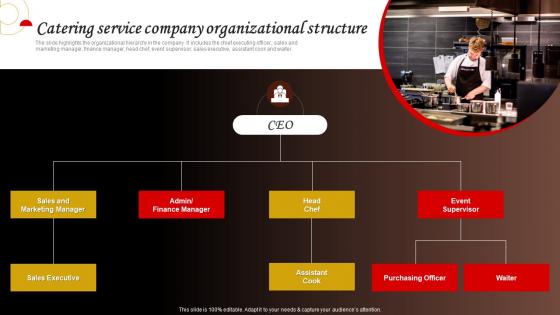
The slide highlights the organizational hierarchy in the company. It includes the chief executing officer, sales and marketing manager, finance manager, head chef, event supervisor, sales executive, assistant cook and waiter.
People who downloaded this PowerPoint presentation also viewed the following :
Catering Service Company Organizational Structure Food Catering Business Plan BP SS with all 9 slides:
Use our Catering Service Company Organizational Structure Food Catering Business Plan BP SS to effectively help you save your valuable time. They are readymade to fit into any presentation structure.








FAQs for Catering Service Company Organizational Structure Food Catering Business
Honestly, start with your vendor relationships - that's gonna save you so much stress later. Get reliable suppliers locked down and make sure your team can handle the chaos. Menu and food quality are obvious, but customer service is what actually makes people come back. Be super clear with clients upfront about what they want, dietary stuff, timing - all that. Your pricing needs to cover costs but stay competitive (don't sell yourself short though). Oh and always have backup plans because I swear something random always goes wrong at events. Equipment matters too obviously, but yeah - nail those vendor connections first.
Honestly, find what makes you different and go all-in on it. Maybe you're the eco-friendly place that gets everything local, or you nail dietary stuff that others totally screw up. One terrible corporate event will absolutely wreck your reputation - I've seen it happen. So consistency is everything. Your customer service needs to be insane though, like having three backup plans ready. Oh, and don't sleep on building solid relationships with venues and event planners. They'll send you the most business. Look at what you're already crushing compared to competitors, then just lean way harder into that.
Dude, menu customization is literally what makes or breaks catering businesses. You gotta be able to switch things up for dietary restrictions, cultural stuff, whatever the client needs. Nobody wants angry coworkers who can't eat anything at the office party - that's a nightmare for whoever planned it. Honestly, being flexible with your menu is how you justify charging more too. You're not just dropping off sandwiches, you're solving their specific headaches. The trick is building a base menu you can tweak without totally screwing up your kitchen workflow. Oh, and it keeps you way ahead of those cookie-cutter catering places.
Dude, you NEED to get online - seriously, it's everything now. People Google caterers before calling anyone. Get some killer food photos up and make sure your pricing's clear. Social media's perfect for this stuff since everyone's obsessed with food pics anyway. Oh, and Google reviews are like gold - I can't stress that enough. Most event planners won't even consider you without seeing your work online first. Start with a simple website that shows off your best dishes and maybe some happy client testimonials. Trust me, it's worth the hassle.
Get super specific when clients book - ask for "celiac disease" instead of just "gluten-free" so you'll know cross-contamination matters. Label everything at events and drill your staff to actually read them (servers mess this up constantly, honestly). During prep and service, keep allergen-free stuff totally separate. Make sure your chef or manager's around to field questions directly. Oh, and over-communicate like crazy - way better than dealing with someone having a reaction. Trust me on that one. Clear tracking system from booking through service is key.
Honestly, start with inventory software - it'll save you from those "oh crap, we're out of salmon" moments. Online ordering is huge too since clients can just handle their own menu tweaks instead of calling you constantly. Staff scheduling apps are lifesavers for managing who's working what event. POS systems at events obviously speed things up, but the real gold mine is the data you get afterward - like realizing you sell way more vegetarian options on Sundays or whatever. CRM platforms track client preferences automatically. My advice? Pick whichever system fixes your biggest headache first, then build from there.
So I'd say start sourcing local, seasonal stuff - cuts down transport emissions plus you're helping nearby farms. Food waste is huge too, so get better at portion planning and donate leftovers to shelters. Honestly, ditch the plastic serving ware for compostable options. Clients eat that up (pun intended lol). Plant-based menu items are smart since they're way better for the environment. Oh, and track your waste and energy use - sounds boring but you'll actually have real numbers to show clients how much you're helping the planet.
Start with the basics - guest count, budget, and any dietary stuff they need to know about. Style matters too because cocktail apps are way different than a full dinner service. Build your menu around what's in season and honestly, what your kitchen can actually handle without losing your mind. I always do 10% extra portions because people are basically bottomless pits at events. Oh, and work backwards from service time to map out your prep schedule. Test new recipes ahead of time - trust me on this one, you don't want surprises when you're already stressed.
Honestly, pictures are everything in catering - post drool-worthy shots constantly on social. Build solid relationships with wedding venues and event planners since they're your main referral sources. Google My Business is clutch too because everyone searches "catering near me." I'm obsessed with collecting testimonials and event photos - happy clients basically become your sales team through word-of-mouth. Oh, and figure out your niche first. Are you doing elegant weddings or just reliable office lunches? Once you know that, everything else gets easier because you can target the right people instead of trying to be everything to everyone.
Honestly, focus on the basics first - customer satisfaction scores and on-time delivery are huge. Food quality ratings matter too, obviously. Cost per plate will make or break you financially. Repeat bookings are where the real money is though, so track that percentage religiously. New clients are expensive to get. Staff efficiency stuff like setup times and food waste help you spot problems early. Oh, and complaint resolution time - catering horror stories spread like wildfire, trust me. Revenue per event rounds it out. Don't try tracking everything day one or you'll go crazy.
Honestly, it's all about being rock solid with delivery and timing - no one wants their wedding ruined by cold food. But the real magic happens when you remember Mrs. Johnson only eats gluten-free or that the Smiths always request extra vegetarian options. Most caterers just ghost after they get paid, which is nuts because repeat clients are goldmine territory. I'd grab a simple spreadsheet or CRM to jot down these little details. Oh, and definitely follow up afterward for feedback. Even sending holiday cards keeps you top of mind when they're planning their next event.
Peak season? Ugh, good luck. Staff shortages will kill you - seriously, start hiring 6-8 weeks early or you're screwed. Everyone wants the same weekend so equipment becomes impossible to get. Supply chains go nuts too. Oh, and managing like 5 events at once? Your brain will melt. Lock down suppliers with contracts now and stockpile the basics. Have backup plans ready for when stuff goes wrong - which it will. Trust me, scrambling last-minute sucks way more than over-preparing. I learned that one the hard way last spring.
Oh man, staff training is everything in catering. Seriously. Your team needs to nail food safety and service basics or you're screwed. When they know proper presentation and can roll with weird client requests, events actually run smooth. But untrained people? Recipe for disaster - cold food, messy displays, total chaos. I've seen it happen and it's painful to watch. Food safety's obviously where you start, then build up to the fancier service stuff. Your reputation's on the line every single event, so don't skimp on training your crew properly.
Food costs should be around 28-35% of revenue - track this obsessively. There's always random stuff that hits you though: liability insurance, equipment breaking down, those panic grocery runs at 9pm because you forgot something. Weekend labor gets expensive since you're paying skilled people premium rates. Cash flow's brutal too - clients pay after but you're buying ingredients weeks ahead. Oh and pad your quotes by 10-15% because something always goes wrong. Seriously, start that emergency fund now before you need it.
Set up different ways to get feedback - follow-up emails work great, plus QR codes on tables for quick surveys. Your staff can just ask clients casually too. Don't ignore social media comments, even the harsh ones (yeah, they hurt but honestly they're super helpful). Here's the thing though - you gotta actually do something with the feedback. Three people say appetizers are cold? Fix your kitchen timing. I'd keep a simple spreadsheet of common complaints and tackle food quality issues first. Make complaining easy, then thank people for it.
-
I’m not a design person, so I couldn’t make a presentation to save my life. Thankfully, they have all kinds of templates that I regularly use for my work.
-
Appreciate the research and its presentable format.