


Cleaning Services Business Plan Organizational Structure For Smooth Business Operations BP SS




Try Before you Buy Download Free Sample Product
 Impress Your
 Audience
 100%
100% Editable
 Save Hours
 of Time


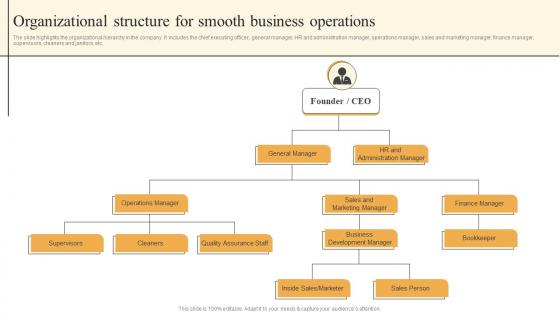
The slide highlights the organizational hierarchy in the company. It includes the chief executing officer, general manager, HR and administration manager, operations manager, sales and marketing manager, finance manager, supervisors, cleaners and janitors, etc.
People who downloaded this PowerPoint presentation also viewed the following :
Cleaning Services Business Plan Organizational Structure For Smooth Business Operations BP SS with all 9 slides:
Use our Cleaning Services Business Plan Organizational Structure For Smooth Business Operations BP SS to effectively help you save your valuable time. They are readymade to fit into any presentation structure.








FAQs for Cleaning Services Business Plan Organizational Structure For Smooth Business
So I'd break it into three main parts - field work, admin stuff, and management. Field team needs leads, cleaners, and quality inspectors (seriously, inspectors make or break you). Admin handles scheduling, customer calls, and billing - trust me, mess up communication and clients lose their minds. Management should bounce between sites for problems. Oh, and don't let managers handle more than 8-10 people max. Figure out everyone's daily tasks first, then build your structure around what actually happens. Way easier than doing it backwards.
Honestly, having a solid hierarchy actually makes everything way smoother. Your field teams know exactly who to hit up for what - no more mass texting chaos. Supervisors handle the daily stuff, managers deal with client drama, executives worry about the big picture. Way less confusing than everyone messaging everyone (trust me, I've been there). Info flows up and down like it should. Plus you get faster responses since people aren't playing phone tag all day. Set up those reporting chains right and boom - communication problems basically solve themselves. It's pretty simple once you get it going.
So for your cleaning business, start with an operations manager - they'll handle scheduling and make sure quality stays consistent. Then you need team leads supervising the actual crews, plus the cleaning techs doing the work. Admin support is huge too because client calls and billing will absolutely bury you otherwise (learned that one the hard way). Sales person for bringing in new clients, maybe someone for HR stuff depending how big you get. Honestly though, just nail down those reporting lines first so everyone knows who they answer to.
Dude, flat structure is perfect for small cleaning crews. You can make calls instantly without dealing with management BS. Your team adapts to whatever clients throw at them, talks directly to each other, and actually cares about the work they're doing. Honestly, bureaucracy is the last thing you need when you're trying to bang out jobs efficiently. Less overhead = more money in your pocket too. Just be super clear about expectations from day one - like, really spell out roles and standards since nobody's hovering over shoulders constantly. Oh and everyone feels way more invested when they have actual say in things.
Dude, scheduling apps are where you want to start - let your cleaners handle their own routes and talk directly to clients. Cuts out so much middle management BS. Mobile apps are clutch too since your team can report problems and update job status instantly. Digital task management lets supervisors watch multiple teams without running around everywhere, which honestly saves your sanity. You'll need way fewer supervisory roles this way. The real-time communication thing makes decisions happen faster instead of playing phone tag all day. Just pick one tool first though, don't go crazy trying to implement everything at once.
So frontline people need the basics - cleaning techniques, safety stuff, customer service. Supervisors are where most places mess up though. They need leadership training, how to do schedules, quality control. I've seen so many companies just promote someone and expect them to figure it out. Management level is different - business ops, client relationships, developing staff. Oh and don't forget ongoing support! Regular check-ins, refresher training when needed. Start with good onboarding and pair newbies with experienced workers. That mentorship thing actually works.
Customer complaints about communication? You'll probably need team leads or someone handling client relations. Quality issues usually mean your supervision structure is broken - maybe territories are too big or you need more oversight roles. I've watched companies totally restructure after losing big clients over this stuff. Clients wanting the same cleaner every time? That means dedicated teams work better than rotating everyone around. Track what people complain about most. Those patterns basically tell you exactly where your org chart needs fixing.
So a quality control manager is basically your standards police - they keep cleaning teams in check and make sure they're hitting your benchmarks. They do site inspections, build checklists, train people on procedures. Plus they deal with angry clients when stuff gets messed up. Really, they're the go-between for crews and management. Total lifesaver when you're growing fast because honestly, you can't be everywhere. Oh and if you hire one, get someone with cleaning experience AND people skills - nobody wants feedback delivered like a drill sergeant, you know?
Break it into three levels - supervisors handle daily routes and client drama, team leads manage 2-4 cleaners plus quality checks, then your actual cleaners just focus on getting stuff done. Don't let supervisors manage more than 15-20 people or you'll be drowning in chaos all day (trust me on this one). Your team leads need real decision-making power for supplies and schedule changes, not just fancy titles. Oh, and definitely map out who reports to who first - sounds boring but it saves so much headache later when people actually know what they can decide on their own.
Mix up your teams and rotate assignments - people bond better when they actually work together. Those quick 5-minute huddles before shifts? Total game changer for discussing priorities. You wouldn't believe the random stuff teams bond over while cleaning lol. Pair your veterans with newbies for training. Try fun competitions like "cleanest lobby this week" or whatever. But honestly, the biggest thing is having team leads call out good teamwork in front of everyone. People love that recognition and they'll keep helping each other without you even asking.
Yeah, high turnover basically forces you to keep things simple structure-wise. You can't have these complex hierarchies when people keep leaving - what if your key supervisor quits next week? Most cleaning companies I've seen just go with crew leads and managers, that's it. Everyone gets cross-trained to cover different stuff. Honestly it's annoying but you don't have much choice. You'll need everything documented really well since people won't stick around long enough to remember how things work. Build systems that function even when your whole team is basically rookies.
Honestly, you've gotta build flexibility right into how you set things up. Cross-train your teams so they can jump between residential, commercial, whatever - based on what's actually busy that month. I've watched too many companies get stuck being super rigid and then miss out when seasonal stuff picks up or they can't scale fast enough. Set up these modular units and get supervisors who can handle different types of jobs. Your staffing needs to let you move people around quickly. Oh, and don't forget to review this stuff quarterly - you'll want to shuffle teams based on what customers are really asking for.
Stop just promoting whoever's been there longest - that's honestly such a waste. Look for people who naturally help teammates and jump in when problems come up. Cross-train everyone so they get the bigger picture, then give your best candidates actual leadership stuff to do. Maybe have them train newbies or manage a small crew on specific jobs. I'd pick one person this month and give them a real project to run. Oh, and definitely do those one-on-one chats about where they want to go career-wise. People leave when they don't see a path forward.
For residential, it's pretty straightforward - cleaners just report to you or maybe a team lead if you're bigger. Commercial gets messy though. You'll need account managers, quality people, different crews for day and night shifts. Healthcare clients are totally different from regular offices too. Way more paperwork and contracts to juggle. Honestly, the admin stuff alone will make your head spin. Figure out what kind of clients you actually have first - that'll tell you if you need the simple setup or the complicated one.
Quality control becomes a nightmare once you scale up - I learned this the hard way. Your biggest headaches will be managing way more staff and keeping service consistent across locations. Communication turns into chaos when you go from 5 to 20+ cleaners. What saved me was setting up team leads for every 6-8 people and getting everything documented beforehand. Honestly, the reporting systems matter more than you think because problems need to surface fast. Don't wait until you're drowning to build these structures. Training processes have to be bulletproof too, otherwise you'll just be firefighting constantly.
-
Amazing variety of PowerPoint slides. Really helpful in designing professional presentations.
-
Excellent design and quick turnaround.