

Residential Cleaning Business Plan Projected Profit And Loss Account Statement For Cleaning BP SS




Try Before you Buy Download Free Sample Product
 Impress Your
 Audience
 100%
100% Editable
 Save Hours
 of Time


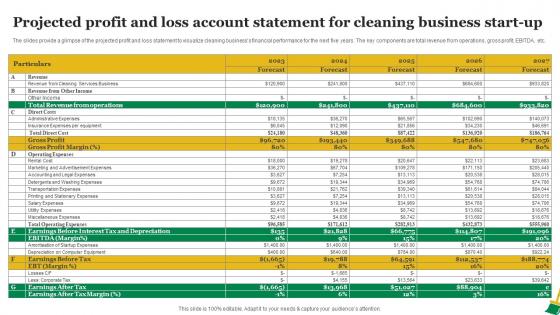
The slides provide a glimpse of the projected profit and loss statement to visualize cleaning business financial performance for the next five years. The key components are total revenue from operations, gross profit, EBITDA, etc.
People who downloaded this PowerPoint presentation also viewed the following :
Residential Cleaning Business Plan Projected Profit And Loss Account Statement For Cleaning BP SS with all 10 slides:
Use our Residential Cleaning Business Plan Projected Profit And Loss Account Statement For Cleaning BP SS to effectively help you save your valuable time. They are readymade to fit into any presentation structure.









FAQs for Residential Cleaning Business Plan Projected Profit And Loss Account Statement For
Okay so for your cleaning business plan, you'll want to hit the basics first. Research your local market and figure out who you're targeting - busy families are gold, plus professionals and older folks. Map out your services and what you'll charge. Startup costs and equipment obviously matter too. The financial projections part is honestly where most people mess up, but you need at least a year's worth if you want funding. Marketing strategy, scheduling systems, insurance stuff - all that operational boring stuff has to be in there. Oh and definitely scope out your competition beforehand. What makes you different from the other cleaning services around?
Start with dual-income households, busy professionals, families with little kids, and elderly folks who need help. Rich suburbs are obvious but middle-class areas have solid demand too - honestly better than you'd think. Drive around and check out home values, how well-kept neighborhoods look, that kind of thing. Read competitor reviews to see what types of customers they're getting. Then just talk to people! Hit up coffee shops, community centers, maybe parent groups if you can find them. Sometimes a simple conversation tells you way more than fancy market research ever will.
Hey! So I'd definitely go with flat rates - nobody wants billing surprises. Get quotes from three local competitors first, then price yourself somewhere in the middle. Maybe 10-15% under the fancy services but way above those sketchy cheap guys (they usually disappear anyway). Package deals for weekly service = steady money. Oh and do a first-time discount to hook new clients. Just be super clear about what's included vs extras. Honestly, transparency is everything in this business - people remember getting nickel-and-dimed way more than they remember a great clean.
So basically you've got three main expenses to think about. Equipment first - vacuum, mop, basic cleaning stuff will probably run you $200-500. Cleaning supplies are another $100-200 upfront, though honestly you'll go through those way faster than expected. Business setup is where it gets pricey - insurance, licenses, maybe throw together a basic website - that's easily $500-1000 right there. Oh and don't forget if you need car magnets or whatever for advertising. I'd say budget around $1,500 total to be safe. Definitely make a spreadsheet and get real quotes though, don't just wing it.
Start with solid background checks - clients need to trust who's entering their homes. Honestly, I'd rather hire someone with zero experience but great attitude than a skilled cleaner who doesn't care. Do working interviews where they actually clean with you for a few hours. Way better than just chatting in your kitchen. Watch for people who ask about your standards and spot little details during the trial run. You can't teach someone to give a damn, but cleaning techniques? Totally trainable. Give them checklists at first, then back off once they prove they won't mess up your reputation.
Honestly, going green might be your best move right now - everyone's doing basic cleaning so you need something different. Families with kids and pets will totally pay extra for non-toxic stuff. Look into concentrates to cut down on packaging waste, ditch disposables for microfiber cloths, that kind of thing. Your supply costs'll be higher but you can charge premium rates to make up for it. Oh and energy-efficient equipment obviously helps too. I'd start hitting up green suppliers now to get real numbers for your business plan. The waste reduction angle is huge right now.
Referrals and online reviews are your best bet - people need to trust whoever's walking into their house, you know? Get your Google My Business dialed in first since that's where everyone searches. Those neighborhood Facebook groups are actually amazing if you don't come off all salesy. Door hangers might seem old school but they still work great in residential spots. Real estate agents can send you tons of business too if you build those relationships right. Honestly though, just focus on getting reviews from happy customers first. Everything else gets easier once you've got that social proof rolling.
Honestly, lead with your executive summary showing the money potential - investors need to see dollar signs first. After that, go traditional: market analysis, your services, marketing plan, operations, then financials. Cleaning businesses are pretty recession-proof which is actually awesome for you. Include realistic startup costs and when you'll break even. Got any contracts already lined up? Definitely throw those in there. Monthly revenue projections are huge too. Oh and be super specific about how much funding you need and where every dollar's going. They hate vague requests.
Honestly, start with scheduling software - that's where you'll see the biggest difference right away. Housecall Pro or ServiceTitan handle your booking and customer stuff all in one spot. Square makes payments super easy too. OptimoRoute is clutch for planning your routes - I'm not even kidding about the gas money you'll save. Customer management systems are great for tracking who wants what and their service history. You can add inventory apps later to keep track of supplies. But seriously, don't go crazy buying every app at once. Get the scheduling thing sorted first, then build from there as you actually need it.
Honestly, consistency is everything - stick the same cleaner with each client so they build that trust. People get seriously attached to "their" person, it's wild. Quick follow-up texts asking if everything looked good work great. Remember weird little details too, like how they arrange their couch pillows or whatever. Set up something simple like every 10th clean is free. Oh and discount add-ons for your regulars. The whole point is making it feel like a pain to switch companies. When everyone's competing on price, these personal touches actually keep people loyal.
So you're gonna want to set up as an LLC - trust me, it's worth it for the liability protection. General liability insurance is a must, no way around that one. Your city will probably want you to get a business license too, maybe bonding depending on your clients. Oh and if you hire people later? Employment law stuff gets complicated real quick. Some places have weird local rules for cleaning businesses (my cousin ran into that in her town), so definitely check what your area requires. Honestly though, just talk to a business lawyer upfront. Way cheaper than fixing mistakes later.
Figure out how many houses you can realistically clean each week, then multiply by your rate and 50 weeks (gotta account for vacations and being sick). So like 10 homes at $100 each = $50k per year. But here's the thing - you'll probably start way slower than expected. Most new cleaning businesses only get 3-5 regular clients in those first few months, which honestly makes sense when you think about it. I'd plan for a 6-month ramp-up while you're building your base. Aim for 70% of your dream capacity so you don't stress yourself out. Track monthly and adjust as you figure out what actually works in your area.
Look for niches that others ignore - eco-friendly supplies, pet-safe products, or post-construction work. Most cleaning companies are super generic, so little things make a difference. Try Sunday appointments when everyone else is closed. Busy professionals love add-ons like folding laundry or quick organizing. Some people are doing really well with apps for booking and sending before/after pics - though honestly the smart lock thing seems like overkill to me. Bring your own supplies so clients don't worry about it. Pick two things you're actually good at and really push those instead of trying to do everything.
Honestly, just pick a few key numbers and check them monthly. Revenue growth is obvious, but also track how many clients keep coming back and your profit margins. Referral rates are huge too - like, seriously huge for this type of business. I'd throw in some operational stuff like how long jobs actually take and if people are showing up when they're supposed to. Just make a basic spreadsheet, nothing fancy. The trick is starting from day one so you can actually see what's working. Makes pricing decisions way easier down the road.
Look, feedback is basically free consulting from your actual customers. They'll tell you stuff you'd never figure out on your own - which services they're obsessed with, what annoys them, or things they desperately want you to offer. Yeah, criticism sucks to hear sometimes, but it's honestly the fastest way to improve your business. I'd set up easy ways for people to share thoughts - maybe a quick text after appointments or those anonymous online forms. The key part though? Actually do something with what they tell you, then circle back and mention you made changes. People love knowing they were heard.
-
You know what? I'm so glad I opted for this PPT design. It has been a total game-changer for me and my presentations. Thank you!
-
“Superb. What a great finding. Thankful for SlideTeam. We were paying people to make slides which went all in vain. We are so happy to have found you.”