


Laundry And Dry Cleaning Projected Profit And Loss Account Statement For Laundry Start Up BP SS




Try Before you Buy Download Free Sample Product
 Impress Your
 Audience
 100%
100% Editable
 Save Hours
 of Time


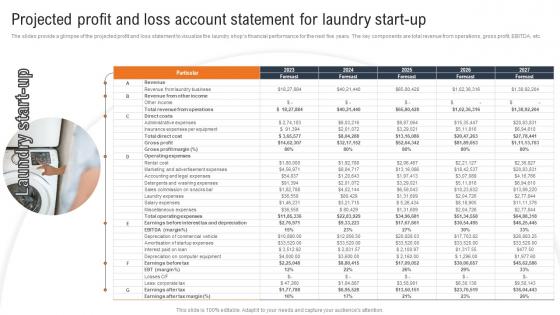
The slides provide a glimpse of the projected profit and loss statement to visualize the laundry shops financial performance for the next five years. The key components are total revenue from operations, gross profit, EBITDA, etc.
People who downloaded this PowerPoint presentation also viewed the following :
Laundry And Dry Cleaning Projected Profit And Loss Account Statement For Laundry Start Up BP SS with all 10 slides:
Use our Laundry And Dry Cleaning Projected Profit And Loss Account Statement For Laundry Start Up BP SS to effectively help you save your valuable time. They are readymade to fit into any presentation structure.









FAQs for Laundry And Dry Cleaning Projected Profit And Loss Account Statement For Laundry Start
Your washers and dryers are obviously the main money makers. Drop-off wash-and-fold brings in solid cash too. Vending machines might seem small but honestly they add up - detergent, snacks, whatever. If you do dry cleaning, track that separately. Pickup and delivery fees are another chunk. Got any commercial accounts with hotels or restaurants? That's good steady income. Oh and equipment rental if you lease machines out. Break everything out on your P&L so you can actually see what's working. Some laundromats do loyalty programs now too but that's probably down the road for you.
Dude, seasonal swings are brutal for laundry businesses. Winter's your goldmine - nobody's hanging stuff outside, so demand shoots up. College towns go absolutely nuts during move-ins too. But summer? People dry clothes on lines again and your profits tank. Holidays are weird - sometimes families visit and you're slammed, other times everyone travels and it's dead. Honestly took me forever to figure this out, but track these patterns for like 2-3 years. Then you can actually budget for slow months and schedule equipment maintenance when you know it'll be quiet anyway.
Utilities are gonna be your biggest headache - water, gas, electricity bills get crazy expensive. Then you've got equipment repairs, rent/mortgage, insurance, cleaning supplies. Coin collection services cost more than you'd think if you outsource that. Don't forget laundry chemicals, any employee wages, business licenses, equipment financing. Honestly, the utility costs fluctuate so much it's annoying. Track them monthly though - helps you catch weird spikes before they wreck your budget. Oh, and buying equipment outright saves you from those financing payments if you can swing it upfront.
Yeah, labor's gonna be your second biggest hit after rent - usually runs about 25-35% of what you bring in. Don't just think hourly wages though. Benefits, workers comp, payroll taxes, training... it adds up fast. The tricky part is it doesn't scale like your electric bill does. Bad scheduling will absolutely wreck you. I learned this the hard way at my cousin's place - too many people during slow hours, not enough when it's crazy busy. Track your labor cost per pound and figure out when you actually need bodies there. Makes a huge difference.
Your pricing basically controls how much cash comes in. Price too low? Sure, you'll stay busy but your margins will suck. Go too high and you'll make great money per job but lose customers. Here's what I'd do - test small bumps on specific stuff first, maybe 10-15% on your specialty services. Then watch what happens to your overall profit (not just revenue) over a couple months. The goal isn't maximum sales, it's maximum profit. I learned this the hard way when I was pricing way too low just to stay competitive.
So basically you put depreciation on your P&L as an expense - cuts your net income but doesn't touch cash since you already bought the machines. Your balance sheet shows the original cost minus accumulated depreciation to get book value. Commercial laundry stuff usually depreciates over 5-7 years straight-line, but honestly those things are tanks if you keep up with maintenance. Just track it monthly so your books stay clean and you don't get hammered on taxes. Way easier than people make it sound.
Honestly, start with your utility bills - that's where the money bleeds out fastest. Get energy-efficient machines and try running them during off-peak hours when electricity's cheaper. Your pricing might be too low too. I know it's scary to raise prices, but most customers won't bail over small bumps. Bigger washers usually make more per load, so think about your machine setup. Oh, and definitely haggle with your suppliers - they expect it anyway. The utility thing though? That's your biggest win right there.
Set up a separate line for customer acquisition costs - ads, promos, referral bonuses, that grand opening thing you mentioned. Then just divide total spend by how many new customers you got that month. Most laundromat owners don't bother with this stuff, which is honestly kind of crazy to me. You need to see if your CAC makes sense compared to what each customer's worth long-term. Track it monthly so you can catch problems early instead of realizing six months later that Facebook ads were burning cash for nothing. Trust me, it's way better than just guessing whether your marketing's working.
Dude, utility bills are killer for laundromats - honestly one of the worst parts about the business. All those machines running constantly plus lighting means you're basically paying for electricity, water, and gas around the clock. It usually hits about 15-25% of your operating costs, which is nuts when you think about it. Even a small spike can wreck your margins. You can't really raise prices much without customers going elsewhere either. I'd track cost per load if I were you - might spot some waste. Oh and those energy-efficient machines actually pay for themselves pretty quick.
Track your expenses for a month first - that's gonna show you where money's bleeding out. Labor scheduling is huge, cross-train people so you're not overstaffed during slow periods. Your utility bills will absolutely kill you if you don't get energy-efficient machines and dial in those wash cycles. I see so many places overusing detergent or having to rewash stuff. Pricing's another thing - specialty services like stain removal should cost more, don't undersell yourself there. Focus on whatever two categories are draining you most.
Track revenue per machine and utility costs as a percentage - those hit hardest. Labor expenses too obviously. Your gross margin tells you if pricing actually works after direct costs. Equipment maintenance will bite you (trust me on this one), so check it monthly. Customer acquisition costs matter if you're doing any marketing. Honestly, trends over time are way more useful than just looking at one month. Set alerts when stuff moves 10-15% from normal so you can jump on issues fast.
Dude, retention is everything for laundry businesses. Getting new customers costs a fortune compared to keeping the ones you already have. Your regulars become more valuable over time - they spend more and tell their friends about you. Otherwise you're constantly hemorrhaging cash on ads just to replace people who left (been there, it sucks). The math is pretty simple: repeat customers trust you already, so your profit margins go way up. Track how much a customer's worth over their lifetime versus what you spent to get them. That'll show you exactly why focusing on keeping people matters more than chasing new ones.
Yeah, most of your laundry business expenses are deductible - utilities, supplies, rent, insurance, maintenance, labor costs. Equipment's a bit different though. Big purchases usually get depreciated over several years instead of one lump deduction. Keep every receipt, seriously. I learned that the hard way with my first business venture (totally different industry but same headache). Your equipment depreciation could be tricky since laundromats have unique setups. Honestly? Just show your P&L to a tax pro. They'll spot savings you'd probably miss.
Look, you gotta spend money to make money - customers won't just magically appear. Most laundromats should budget around 3-7% of revenue for marketing. Track what's actually working though, don't just throw money around blindly. Social media, local ads, loyalty stuff - test it all and see what brings people through your doors. I know a guy who spent nothing on marketing then couldn't figure out why his place was always empty. ROI is everything here. If Facebook ads bring in $3 for every $1 spent, do more of that. Simple as that.
Yeah so those automated machines are gonna ding your profits at first - depreciation hits right away, plus maintenance costs can be annoying. Labor savings kick in pretty fast though since you won't need as many people running things. Revenue usually bumps up too because the machines handle way more loads daily and they're consistent (unlike Steve who calls out sick every other week lol). Your expense line drops from the labor cuts. Just watch your ROI closely for like 12-18 months to make sure it's actually working for your spot.
-
It makes easy work of my work presentations. I’ve never had to be nervous about my presentations for meetings.
-
I looked at their huge selection of themes and designs. They appeared to be ideal for my profession. I'm sure I'll grab a few of them.