

Projected Profit And Loss Account Statement For Travel Agency Start Up Group Travel Business Plan BP SS




Try Before you Buy Download Free Sample Product
 Impress Your
 Audience
 100%
100% Editable
 Save Hours
 of Time


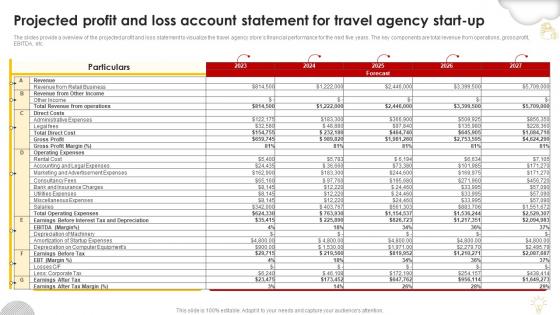
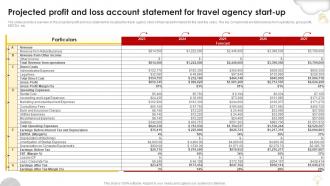
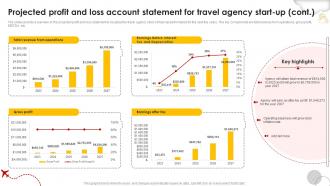
The slides provide a overview of the projected profit and loss statement to visualize the travel agency stores financial performance for the next five years. The key components are total revenue from operations, gross profit, EBITDA, etc.
People who downloaded this PowerPoint presentation also viewed the following :
Projected Profit And Loss Account Statement For Travel Agency Start Up Group Travel Business Plan BP SS with all 10 slides:
Use our Projected Profit And Loss Account Statement For Travel Agency Start Up Group Travel Business Plan BP SS to effectively help you save your valuable time. They are readymade to fit into any presentation structure.








FAQs for Projected Profit And Loss Account Statement For Travel Agency Start Up Group Travel Business
You're basically trying to predict your money situation down the road - revenue, expenses, profits, all that stuff. Usually for planning and budgets. Think of it as your best guess at the financial future (spoiler: you'll probably be wrong about some things, but that's fine). Banks want to see these when you need funding, plus it helps you spot problems before they smack you in the face. The trick is being realistic though. I've seen too many people get crazy optimistic with their numbers. Start with what actually happened before and look at market trends. Oh, and it's super helpful for deciding whether you can afford that new hire or if you need to tighten up spending.
Look, a P&L projection shows investors you're not just throwing darts at a board. They want to see your revenue assumptions and how you'll actually make money - the whole unit economics thing. It forces you to map out costs and figure out when you'll break even, which honestly saves you from nasty surprises later. Your numbers don't have to be spot-on perfect (they won't be anyway), but investors need to see you understand your market and can think logically about the business. Bottom line: it proves you've thought this through instead of just winging it.
So for your P&L, you'll need three chunks: revenue (all the money coming in), cost of goods sold (what it actually costs to make/deliver your stuff), and operating expenses - rent, payroll, marketing, the usual suspects. Oh, and don't forget taxes and interest because those will bite you later. Break it down monthly for year one, then quarterly works fine. Here's the thing though - be conservative with revenue projections. I'd honestly rather underestimate and be pleasantly surprised. Pad your expenses by like 10-15% too, trust me on this one.
I'd say monthly updates are your sweet spot, though quarterly is the absolute minimum if you're swamped. Monthly keeps you ahead of any nasty surprises and gives you fresh numbers to work with. Fast-moving business or startup? Maybe even more often - though honestly that can get exhausting. The real trick is picking something you'll actually do consistently. I learned this the hard way after skipping updates for like three months straight. Set a calendar reminder and treat it seriously, just like you would any other big review.
So for P&L projections, start with your revenue assumptions - growth rates, seasonal stuff, market conditions. Revenue's honestly the hardest part because there's so many moving pieces. Expenses are easier since you can use past data as a baseline, then add in salary increases, rent bumps, material costs going up. Document everything though - trust me on this one. You'll want to update assumptions as real numbers roll in. Oh and be conservative with estimates. Way better to beat your projections than explain why you missed them.
Dude, market trends will absolutely wreck your P&L if you're not paying attention. You'll base everything on how things look right now, then boom - some major shift happens and your projections are trash. COVID's the perfect example, right? Nobody saw that coming. Consumer habits flip, new players jump in, the economy tanks, regulations change - it all hits your sales and costs hard. What works for me is running different scenarios and actually updating my assumptions every quarter instead of just... I don't know, crossing my fingers and hoping I got it right the first time.
You need historical data as your starting point - it's how you spot trends, seasonal stuff, and growth patterns from what actually happened. Look, we've all winged it before, but you're basically guessing without real numbers. Pull at least 2-3 years of financials first. Then dig into revenue trends, how expenses behaved, margin changes over time. Multiple years help you catch weird outliers and figure out your business cycles. Honestly, this part's kind of tedious but you can't skip it. That's what gives you solid assumptions for projecting forward.
Sensitivity analysis is basically stress-testing your P&L to see what happens when things go sideways. Like, what if sales tank 20% or your costs jump 15%? Way better than pretending everything'll go perfectly, honestly. The cool part is figuring out which assumptions actually matter for your profits - some variables barely move the needle while others can wreck you. I'd start with your top 3 revenue sources and biggest costs. That covers most of what you need to know without getting lost in spreadsheet hell for weeks.
Dude, the classic mistakes are being way too optimistic about revenue and totally lowballing your expenses. Round numbers everywhere make it obvious you're just winging it. Seasonal stuff will bite you if you don't plan for it - like, retail dies in January but nobody thinks about that. Hidden costs are the real killer though. Equipment breaks, you need lawyers, marketing costs way more than expected. I learned this the hard way last year. Always pad your expenses by 10-15% and actually look up industry averages to reality-check yourself.
Dude, seasonal stuff will totally throw off your P&L if you're not thinking about it. Like, retail businesses absolutely kill it in Q4 but then January is dead. Landscaping? Forget about it in winter. Don't just take your yearly numbers and divide by 12 - that's asking for trouble. Map out when your business actually makes money vs when it doesn't. Then build those ups and downs into your monthly projections. I had a client freak out every February thinking they were failing, but that was just their slow season! You'll save yourself so much stress if you plan for it upfront.
Your P&L projection is honestly a lifesaver for spotting cash crunches before they hit. Like, you'll see that Q3 equipment purchase coming while knowing sales always tank in summer - gives you time to actually do something about it. I check mine monthly now and compare what really happened vs what I thought would happen. Helps you time big expenses better and figure out when you might need a credit line. The seasonal stuff especially - man, that caught me off guard my first year. Point is, you can shuffle spending around before you're scrambling for cash.
Start by looking up the specific terms your industry uses - retail has "cost of goods sold" but manufacturing breaks it down as "materials and labor." Different businesses track totally different stuff. Benchmarking is clutch though. Find industry averages for margins and operating costs so you're not just making up numbers that sound good. SaaS metrics are way different than what restaurants care about, obviously. Honestly, I'd just find sample P&Ls from companies like yours first. Use those as templates, then tweak them. Way easier than starting from scratch.
Honestly, just start with Excel or Google Sheets if you want control over everything - they're flexible and you probably already know how to use them. QuickBooks and Xero work great too if you want something that pulls from your actual books automatically. I've watched so many people buy expensive software and then never touch half the features. The real trick is picking whatever you'll actually stick with. Your projections are gonna be wrong anyway (they always are), so make sure you can easily tweak your assumptions. Test things every quarter and only upgrade when you're really outgrowing what you have. Simple beats fancy every time.
So your P&L basically tells you *if* you're making money, but cash flow shows *when* you'll actually see it hit your account. Big difference there. You could look profitable on paper but still be scrambling to pay bills if clients are slow to pay or you had massive upfront costs. P&L tracks when you earn/spend money, cash flow tracks the actual movement. Honestly, I got burned by this once - showed profit but couldn't cover payroll because everything was tied up in receivables. Always check both together or you're flying blind.
Yeah so pricing changes basically hit your bottom line immediately. Bump prices up and you'll get more per sale, but some customers will definitely walk. Drop them and you might sell way more but your margins get crushed. Honestly, I'd run some quick math on different scenarios first. Like if you raise prices 10%, how many customers can you afford to lose before you're actually making less money? That breakeven number is super telling. The whole thing's just one big balancing act that flows through your entire forecast. Sometimes the "obvious" move isn't actually the smart one.
-
I didn’t expect such a good service for the money I am paying. But, they exceed my expectations. Great work SlideTeam.
-
Unique design & color.