

Womens Clothing Boutique Projected Profit And Loss Account Statement For Boutique Start Up BP SS




Try Before you Buy Download Free Sample Product
 Impress Your
 Audience
 100%
100% Editable
 Save Hours
 of Time


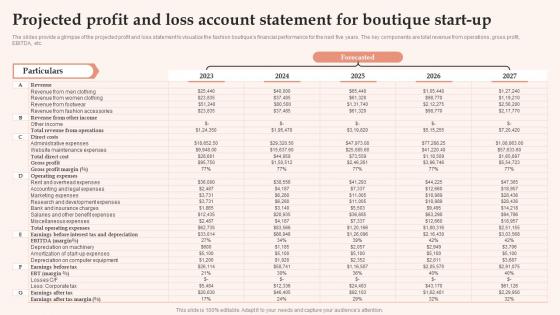
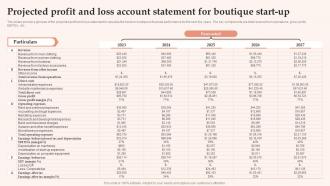
The slides provide a glimpse of the projected profit and loss statement to visualize the fashion boutiques financial performance for the next five years. The key components are total revenue from operations, gross profit, EBITDA, etc.
People who downloaded this PowerPoint presentation also viewed the following :
Womens Clothing Boutique Projected Profit And Loss Account Statement For Boutique Start Up BP SS with all 10 slides:
Use our Womens Clothing Boutique Projected Profit And Loss Account Statement For Boutique Start Up BP SS to effectively help you save your valuable time. They are readymade to fit into any presentation structure.









FAQs for Womens Clothing Boutique Projected Profit And Loss Account Statement For Boutique Start
Okay so sustainable fashion is still huge - people want stuff that won't fall apart after three washes. Y2K somehow refuses to die (wild, right?) and cottagecore's hanging around too. There's this "office siren" thing happening that's actually pretty cute for work looks. Everyone's broke so they're obsessing over versatile basics they can mix and match. I'd go heavy on quality staples with cool little details - stuff that looks good in photos since everything ends up on Instagram anyway. That's honestly where you'll make the most money right now.
Honestly, you've gotta nail down your niche first - like are you targeting busy moms who want cute but comfy stuff, or maybe girls obsessed with that vintage vibe? I see so many boutiques trying to sell everything and they just look messy. Work with smaller brands that Target won't carry. Also build relationships with local designers if you can. Oh, and here's the thing - shop like you're buying for your bestie. Every single piece should feel intentional and fit your brand story. Don't just buy random cute stuff because it's trendy.
Okay so sustainable fashion isn't just trendy anymore - customers literally expect it now. They'll pick you over other boutiques if you stock eco-friendly brands. I'd start with maybe 2-3 sustainable partners who use organic materials or recycled fabrics. The margins are actually better too since people pay more for guilt-free shopping (which is kinda genius). Show off those eco-credentials everywhere - your displays, Instagram, wherever. Honestly, at this point you're behind if you're not doing this. It's what separates the cool boutiques from the basic ones.
Instagram and TikTok are your best friends here - post styling videos and behind-the-scenes stuff constantly. Customer photos wearing your pieces work really well too. Don't chase huge influencers with millions of followers, honestly they're overrated. Find local micro-influencers who actually fit your vibe instead. Stories are perfect for flash sales and teasing new arrivals. Post 3-4 times weekly but here's the thing - you've gotta be real about it. People can tell when you're being fake instantly. Actually respond to comments and build genuine relationships. Oh, and throw in some exclusive social media promos to keep people coming back.
Okay so first thing - check what other boutiques near you are charging. I spent hours walking around when I was figuring this out and prices can be wild even on the same street! Start with 2.5-3x your wholesale cost as a baseline. Your brand matters too though - luxury positioning means luxury prices. Factor in your overhead, rent, all that stuff. And honestly? Your customers' spending habits are huge. Some neighborhoods can handle higher markups, others can't. Oh and don't forget you'll probably want to do seasonal sales, so price accordingly. Competition will tell you a lot about what works.
Look, customer experience is everything in boutiques - it's what makes or breaks you. Women aren't just buying clothes, they're buying how they want to feel. Your store vibe matters. Fitting rooms need to feel comfortable. Staff training is huge because trying on clothes can feel super vulnerable, you know? I've seen great boutiques fail because their service sucked. Train your team to actually be stylists, not pushy salespeople. That personal connection? That's literally the only thing stopping customers from just ordering everything online instead.
Okay so honestly? Just get to know your customers for real. Like, learn their names and what they actually like wearing - not just generic compliments. When someone feels like you *get* their style, they'll literally drive past other stores to come see you. I'd start small - pick maybe three regulars this week and have actual conversations about their lives, not just sales pitches. Text them when something perfect comes in. Maybe do little styling sessions or host events where people can meet each other too. Oh and make your space somewhere they'd want to just chill, you know? The whole community vibe thing really works.
Honestly, talk to your customers constantly - not just when they're buying stuff. Quick surveys work, but also just chat when they're browsing. I'm obsessed with following smaller influencers your customers actually watch. Those random TikTokers with like 50K followers? Gold mine for trends before they hit mainstream. Watch what flies off the racks versus what collects dust. Don't be stubborn about changing your buying strategy mid-season either. Oh, and test trendy pieces in small batches first - learned that one the hard way. You'll save yourself so much headache.
Honestly, micro-influencers are where it's at - way better engagement than the big accounts. Hit up local fashion bloggers first. Cross-promotion with salons, spas, jewelry stores works great too since you share the same customers. Don't forget about events! Charity fundraisers, networking groups, that stuff. Personal stylists and wedding planners are goldmines if you can get in with them. I'd probably start small though - maybe reach out to like 2 or 3 local influencers this week and see what they're into collaboration-wise.
Pop-ups are actually perfect for testing new areas without getting stuck in expensive leases. You can try farmers markets, festivals, or even team up with salons and cafes - basically anywhere your customers hang out. It's crazy how many people you'll reach who'd never find your regular store. I'd honestly start with just a weekend market to see how it goes. Make sure wherever you set up matches your vibe and clientele though. You'll get tons of brand exposure plus learn about different customer types. Way less risky than jumping into a new permanent location.
Honestly, you gotta watch your sell-through rates like a hawk. Figure out what flies off the racks vs what just sits there mocking you. I'd start by looking at your top 10 bestsellers from last year - stock similar stuff first. Pay attention to buying patterns by size and season, that data's gold. Don't get stuck holding trendy pieces too long either, markdown the slow stuff fast. Better to get some cash back than let it collect dust forever. Oh and keep detailed records of what sells when, you'll thank yourself later!
Honestly, seasons dictate everything with merchandising - you've gotta buy 3-6 months ahead or you're screwed. Like, summer dresses transition to fall layers, then holiday party stuff. Timing's the hardest part though. Nobody wants sweaters in August, but if you wait until October to stock them, you've already missed sales. Your displays need to shift too - weather-appropriate pieces, seasonal colors, all that. Oh and keep some transitional basics around year-round since people always need those. Start planning next season right after you finish the current one. It's exhausting but that's retail for you.
Honestly, get a decent POS system first - Square or Shopify POS work great for inventory, sales, all that stuff. The inventory tracking alone is a lifesaver, trust me. For staff scheduling, When I Work or Deputy are solid options. Oh and social media - Later or Hootsuite will keep your Instagram going without you having to post every single day (which gets exhausting). QuickBooks handles the money side of things pretty well too. I'd say nail down the POS system before adding everything else though. Way less overwhelming that way.
Honestly, start by ditching that whole size 2-14 thing and go way bigger on both ends - plus sizes AND petites. Your marketing should show real body types too, not just the usual suspects. Here's what most people miss though - adaptive clothing for folks with disabilities is such an untapped market. Stock some modest pieces for different cultural preferences while you're at it. Oh, and don't make everything crazy expensive. Mix in affordable stuff with your pricier items. The biggest thing? Actually ask your customers what they need instead of guessing.
Dude, get a system that syncs your online and physical inventory in real-time. Trust me on this one - those "oops we don't actually have it" calls are the worst. Yeah, monthly fees for a good POS system suck, but manual tracking will drive you insane. Shopify's pretty solid if you're starting from scratch. Set up in-store pickup to get people through your doors. Your staff can knock out online orders when it's slow anyway. Oh, and make sure your website actually shows what's available - seems obvious but you'd be surprised how many places mess this up.
-
Content of slide is easy to understand and edit.
-
“Easy to use. I always wanted to have a quick search for products and SlideTeam has helped me have it.”