


AI Marketing Strategies Maximizing ROI With Machine Learning AI CD V




Try Before you Buy Download Free Sample Product
 Impress Your
 Audience
 100%
100% Editable
 Save Hours
 of Time


Explore our professionally designed AI Marketing Strategies Maximizing ROI with Machine Learning PowerPoint presentation, which delves into the strategic use of Artificial Intelligence AI in marketing. This comprehensive deck covers the evolution, process, benefits, statistics, sectorial overview, and future impact of AI in marketing. It also addresses challenges and provides solutions to leverage AI effectively. The presentation showcases use cases across various industries, including E-commerce, Banking, Traveling and Hospitality, and Retail. The deck emphasizes foundational focus areas for implementing AI in marketing, such as Usage Steps, Types of Solutions, Customer Journey, and Target Audience Analysis. It guides marketers on integrating AI across digital marketing, social media, websites, and key tasks like user experience, content creation, email automation, and more. It introduces AI technologies like Marketing Automation, Chatbots, Natural Language Processing NLP, Robotic Process Automation RPA, and Metaverse for offline marketing. Additionally, the presentation highlights top AI marketing tools, including ChatGPT3, ChatGPT4, Jasperai, Copyai, Chatfuel, ManyChat, MobileMonkey, Smartlyio, Brand24, Peakai, BrandWatch, SurferSEO, DALL-E 2, and Grammarly. These tools can enhance PPC, SEO, Ad Copy, and Copywriting efforts. Real use cases of Monday, Sephora, and Mongoose Media demonstrate the successful implementation of AI marketing strategies. The deck also explores future prospects and the role of AI in shaping the marketing landscape. Do not miss out on this opportunity to elevate your marketing efforts with AI automation. Get access to this powerful presentation now.
People who downloaded this PowerPoint presentation also viewed the following :
Content of this Powerpoint Presentation
Slide 1: This slide introduces AI Marketing Strategies: Maximizing ROI with Machine Learning. State your company name and begin.
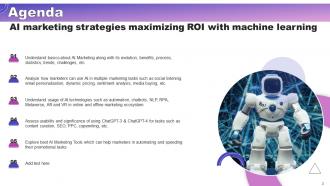
Slide 2: This slide states Agenda of the presentation.
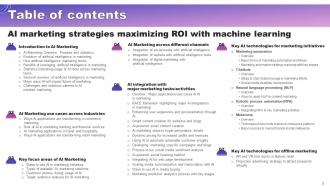
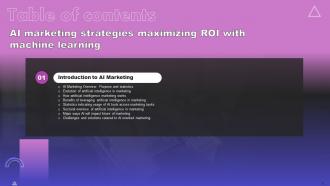
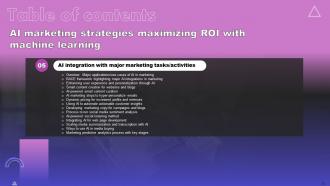
Slide 3: This slide shows Table of Content for the presentation.
Slide 4: This is another slide continuing Table of Content for the presentation.
Slide 5 : This slide highlights title for topics that are to be covered next in the template.
Slide 6: This slide presents AI marketing overview describing Purpose and statistics.
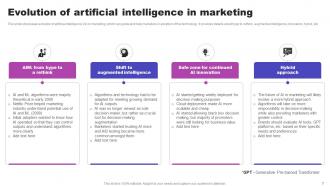
Slide 7: This slide displays Evolution of artificial intelligence in marketing.
Slide 8: This slide represents How artificial intelligence marketing works.
Slide 9: This slide showcases Benefits of leveraging artificial intelligence in marketing.
Slide 10: This slide shows Statistics indicating usage of AI tools across marketing tasks.
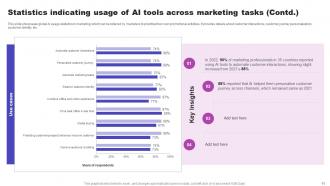
Slide 11: This is another slide continuing Statistics indicating usage of AI tools across marketing tasks.
Slide 12: This slide presents Sectoral overview of artificial intelligence in marketing.
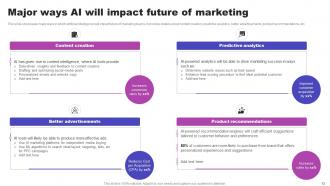
Slide 13: This slide represents Major ways AI will impact future of marketing.
Slide 14: This is another slide continuing Major ways AI will impact future of marketing.
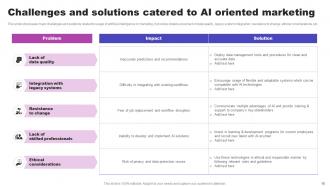
Slide 15: This slide showcases Challenges and solutions catered to AI oriented marketing.
Slide 16: This slide highlights title for topics that are to be covered next in the template.
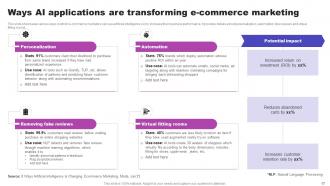
Slide 17: This slide shows Ways AI applications are transforming e-commerce marketing.
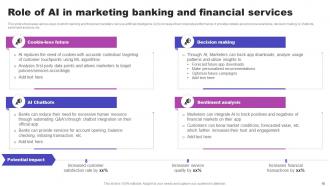
Slide 18: This slide presents Role of AI in marketing banking and financial services.
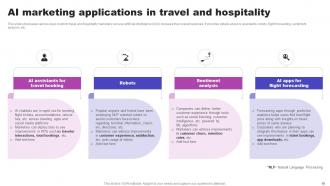
Slide 19: This slide displays AI marketing applications in travel and hospitality.
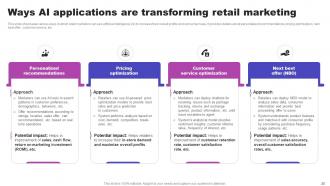
Slide 20: This slide represents Ways AI applications are transforming retail marketing.
Slide 21: This slide highlights title for topics that are to be covered next in the template.
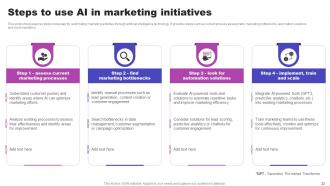
Slide 22: This slide showcases Steps to use AI in marketing initiatives.
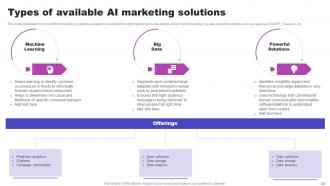
Slide 23: This slide shows Types of available AI marketing solutions.
Slide 24: This slide presents Customer journey during usage of AI.
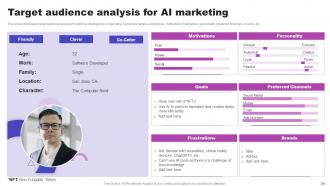
Slide 25: This slide displays Target audience analysis for AI marketing.
Slide 26: This slide highlights title for topics that are to be covered next in the template.
Slide 27: This slide represents Integration of social media with artificial intelligence.
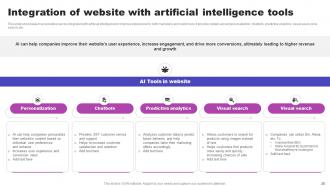
Slide 28: This slide showcases Integration of website with artificial intelligence tools.
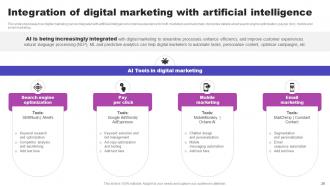
Slide 29: This slide shows Integration of digital marketing with artificial intelligence.
Slide 30: This slide highlights title for topics that are to be covered next in the template.
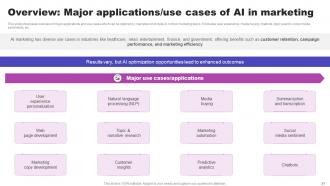
Slide 31: This slide showcases overview of major applications and use cases which can be referred by marketers to include AI in their marketing tasks.
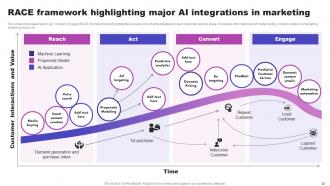
Slide 32: This slide presents RACE framework highlighting major AI integrations in marketing.
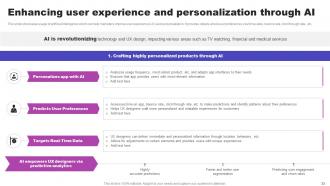
Slide 33: This slide displays Enhancing user experience and personalization through AI.
Slide 34: This is another slide continuing Enhancing user experience and personalization through AI.
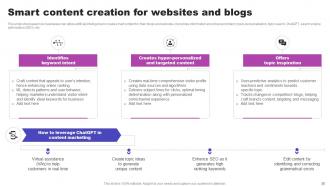
Slide 35: This slide represents Smart content creation for websites and blogs.
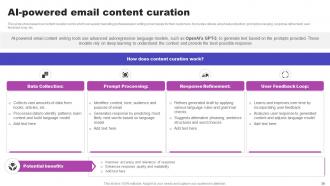
Slide 36: This slide showcases AI-powered email content curation.
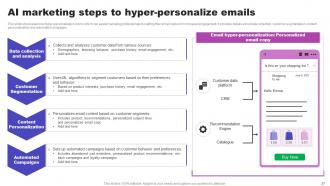
Slide 37: This slide shows AI marketing steps to hyper-personalize emails.
Slide 38: This slide presents Dynamic pricing for increased profits and revenues.
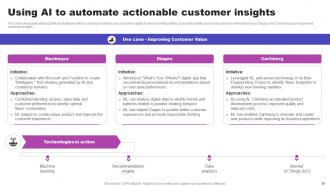
Slide 39: This slide displays Using AI to automate actionable customer insights.
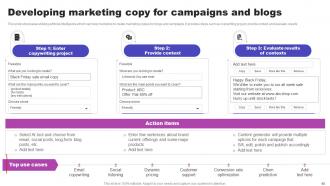
Slide 40: This slide represents Developing marketing copy for campaigns and blogs.
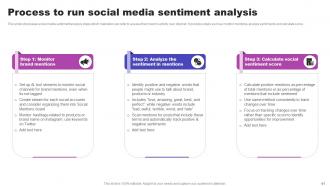
Slide 41: This slide showcases Process to run social media sentiment analysis.
Slide 42: This slide shows AI-powered social listening method.
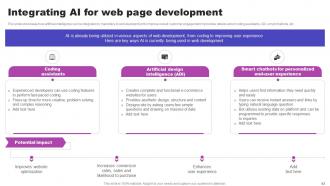
Slide 43: This slide presents Integrating AI for web page development.
Slide 44: This slide displays Integrating AI for web page development.
Slide 45: This slide represents Scaling media summarization and transcription with AI.
Slide 46: This slide showcases various methods in which marketers can use artificial intelligence (AI) in their programmatic advertising efforts.
Slide 47: This slide shows Marketing predictive analytics process with key stages.
Slide 48: This slide highlights title for topics that are to be covered next in the template.
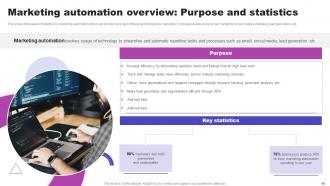
Slide 49: This slide presents Marketing automation overview: Purpose and statistics.
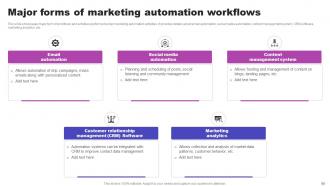
Slide 50: This slide displays Major forms of marketing automation workflows.
Slide 51: This slide represents Marketing automation strategy roadmap with key stages.
Slide 52: This slide highlights title for topics that are to be covered next in the template.
Slide 53: This slide showcases introduction of marketing chatbots which can provide basic idea to marketers about this ML platform.
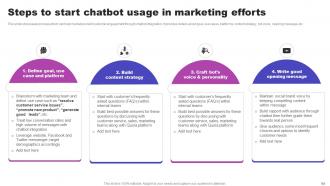
Slide 54: This slide shows Steps to start chatbot usage in marketing efforts.
Slide 55: This is another slide continuing Steps to start chatbot usage in marketing efforts.
Slide 56: This slide showcases best practices which can guide marketers in revamping the customer experience using chatbots.
Slide 57: This slide highlights title for topics that are to be covered next in the template.
Slide 58: This slide shows Overview of natural language processing in marketing.
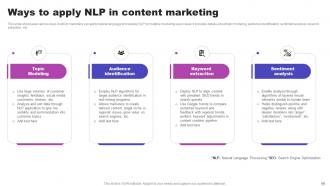
Slide 59: This slide presents Ways to apply NLP in content marketing.
Slide 60: This slide highlights title for topics that are to be covered next in the template.
Slide 61: This slide showcases overview of marketing robotic process automation (RPA) which can provide basic information to marketers for decreasing repetitive tasks.
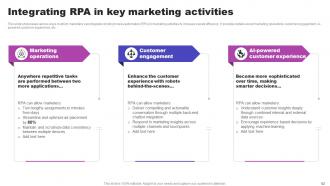
Slide 62: This slide shows Integrating RPA in key marketing activities.
Slide 63: This slide highlights title for topics that are to be covered next in the template.
Slide 64: This slide showcases overview of metaverse marketing along with its key advantages and elements.
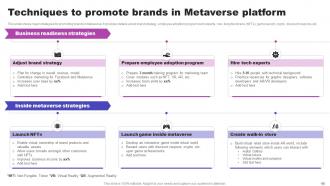
Slide 65: This slide shows Techniques to promote brands in Metaverse platform.
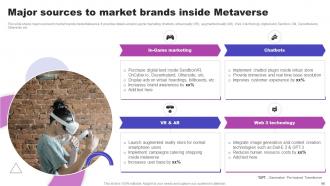
Slide 66: This slide presents Major sources to market brands inside Metaverse.
Slide 67: This slide highlights title for topics that are to be covered next in the template.
Slide 68: This slide displays AR and VR trial rooms in fashion retail.
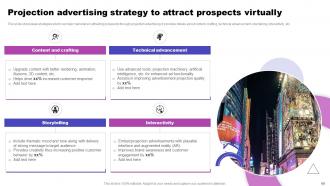
Slide 69: This slide represents Projection advertising strategy to attract prospects virtually.
Slide 70: This slide highlights title for topics that are to be covered next in the template.
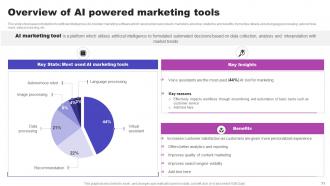
Slide 71: This slide showcases Overview of AI powered marketing tools.
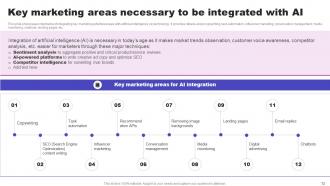
Slide 72: This slide showcases Key marketing areas necessary to be integrated with AI.
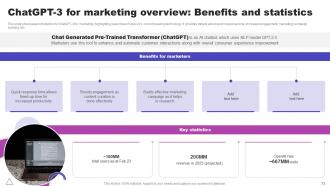
Slide 73: This slide shows ChatGPT-3 for marketing overview with Benefits and statistics.
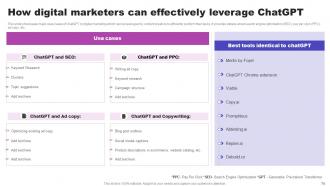
Slide 74: This slide presents How digital marketers can effectively leverage ChatGPT.
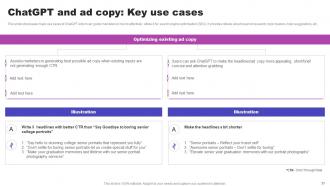
Slide 75: This slide showcases major use cases of ChatGPT which can guide marketers in how to effectively utilize it for search engine optimization (SEO).
Slide 76: This slide showcases major use cases of ChatGPT which can guide marketers in how to effectively utilize it for pay per click (PPC) campaigns.
Slide 77: This slide displays details about keyword research, topic clusters, topic suggestions, etc.
Slide 78: This slide showcases major use cases of ChatGPT which can guide marketers in how to effectively utilize it for professional copywriting.
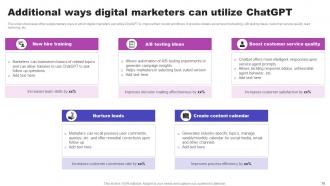
Slide 79: This slide shows Additional ways digital marketers can utilize ChatGPT.
Slide 80: This slide highlights title for topics that are to be covered next in the template.
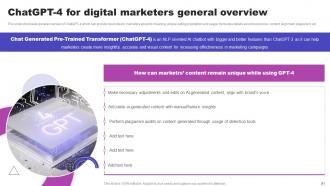
Slide 81: This slide presents ChatGPT-4 for digital marketers general overview.
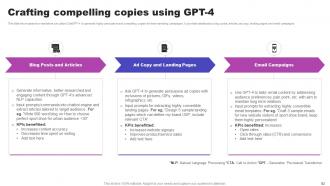
Slide 82: This slide showcases how marketers can utilize ChatGPT-4 to generate highly persuasive and compelling copies for their marketing campaigns.
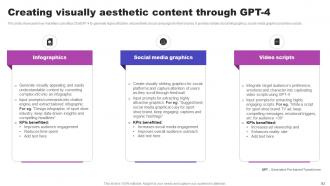
Slide 83: This slide shows Creating visually aesthetic content through GPT-4.
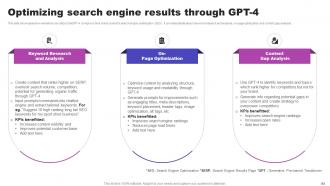
Slide 84: This slide presents Optimizing search engine results through GPT-4.
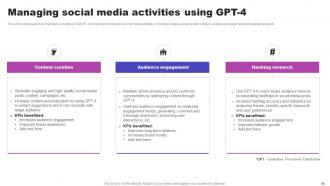
Slide 85: This slide displays Managing social media activities using GPT-4.
Slide 86: This slide represents Using GPT-4 for generating data-driven insights.
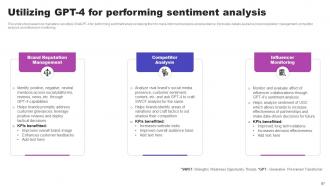
Slide 87: This slide showcases Utilizing GPT-4 for performing sentiment analysis.
Slide 88: This slide highlights title for topics that are to be covered next in the template.
Slide 89: This slide showcases Jasper.ai automation chatbot tool which can help marketers generate marketing copies based on their specific needs.
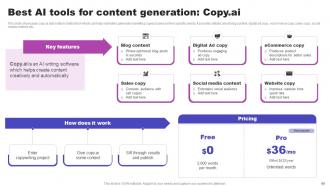
Slide 90: This slide showcases copy.ai automation chatbot tool which can help marketers generate marketing copies based on their specific needs.
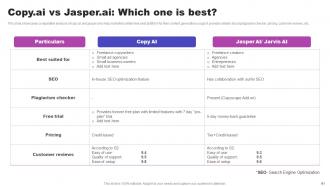
Slide 91: This slide compares Copy.ai vs Jasper.ai: Which one is best?.
Slide 92: This slide highlights title for topics that are to be covered next in the template.
Slide 93: This slide showcases Chatfuel chatbot management tool which can offer great automated lead management and onboarding facility.
Slide 94: This slide shows Manychat chatbot management tool which can offer great automated lead management and onboarding facility.
Slide 95: This slide highlights title for topics that are to be covered next in the template.
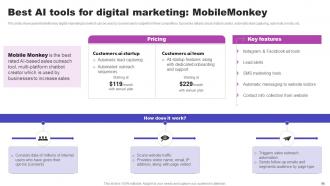
Slide 96: This slide presents Best AI tools for digital marketing: MobileMonkey.
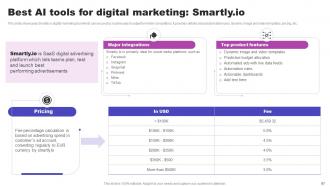
Slide 97: This slide showcases Smartly.io digital marketing tool which can be used by businesses to outperform their competitors.
Slide 98: This slide highlights title for topics that are to be covered next in the template.
Slide 99: This slide shows Best AI tools for customer intelligence: BrandWatch.
Slide 100: This slide showcases Peak.ai digital marketing tool which can be used by businesses to get better and actionable consumer insights.
Slide 101: This slide highlights title for topics that are to be covered next in the template.
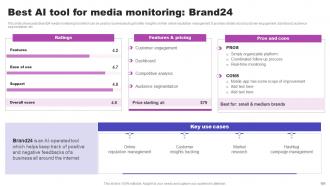
Slide 102: This slide showcases Brand24 media monitoring tool which can be used by businesses to get better insights on their online reputation.
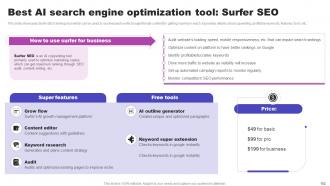
Slide 103: This slide showcases Surfer SEO rankings tool which can be used by businesses to write Google friendly content for getting maximum reach.
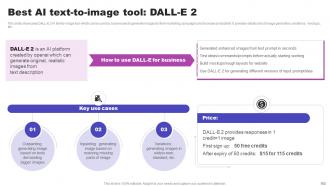
Slide 104: This slide showcases DALL-E 2 AI text-to-image tool which can be used by businesses to generate images for their marketing campaigns.
Slide 105: This slide showcases Grammarly content editing tool which can be used by teams to generate highly conversional and professional marketing.
Slide 106: This slide shows Best AI tool for email marketing: Mailchimp.
Slide 107: This slide highlights title for topics that are to be covered next in the template.
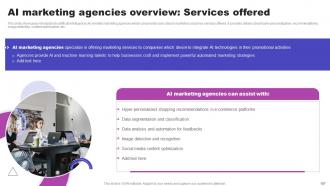
Slide 108: This slide showcases introduction to artificial intelligence (AI) oriented marketing agencies.
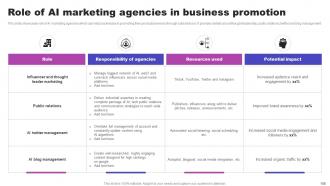
Slide 109: This slide shows Role of AI marketing agencies in business promotion.
Slide 110: This slide presents Audit checklist to evaluate AI marketing agency.
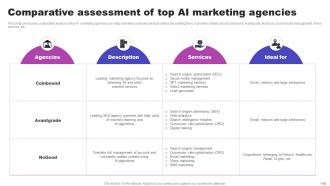
Slide 111: This slide displays Comparative assessment of top AI marketing agencies.
Slide 112: This slide highlights title for topics that are to be covered next in the template.
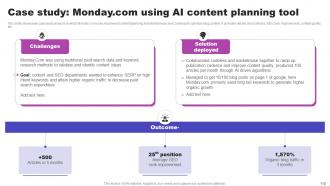
Slide 113: This slide displays Case study of Monday.com using AI content planning tool.
Slide 114: This slide showcases case study analysis in which Sephora uses chatbot tool to optimize their offline and online store operations.
Slide 115: This slide shows case study analysis in which Mongoose Media uses content generation chatbot tool to optimize their copywriting efforts.
Slide 116: This slide highlights title for topics that are to be covered next in the template.
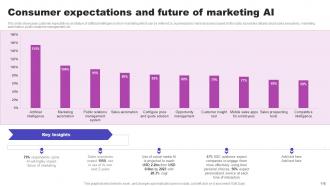
Slide 117: This slide displays Consumer expectations and future of marketing AI.
Slide 118: This slide represents How will customer personalization look like in future.
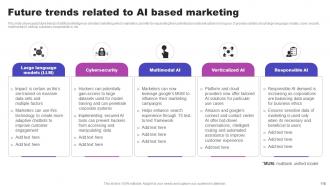
Slide 119: This slide showcases Future trends related to AI based marketing.
AI Marketing Strategies Maximizing ROI With Machine Learning AI CD V with all 128 slides:
Use our AI Marketing Strategies Maximizing ROI With Machine Learning AI CD V to effectively help you save your valuable time. They are readymade to fit into any presentation structure.
-
AI Marketing Strategies Maximizing ROI With Machine Learning AI CD V
-
AI Marketing Strategies Maximizing ROI With Machine Learning AI CD V
-
AI Marketing Strategies Maximizing ROI With Machine Learning AI CD V
-

AI Marketing Strategies Maximizing ROI With Machine Learning AI CD V
-
AI Marketing Strategies Maximizing ROI With Machine Learning AI CD V
-

AI Marketing Strategies Maximizing ROI With Machine Learning AI CD V
-
AI Marketing Strategies Maximizing ROI With Machine Learning AI CD V
-

AI Marketing Strategies Maximizing ROI With Machine Learning AI CD V
-

AI Marketing Strategies Maximizing ROI With Machine Learning AI CD V
-

AI Marketing Strategies Maximizing ROI With Machine Learning AI CD V
-
AI Marketing Strategies Maximizing ROI With Machine Learning AI CD V
-

AI Marketing Strategies Maximizing ROI With Machine Learning AI CD V
-
AI Marketing Strategies Maximizing ROI With Machine Learning AI CD V
-

AI Marketing Strategies Maximizing ROI With Machine Learning AI CD V
-
AI Marketing Strategies Maximizing ROI With Machine Learning AI CD V
-
AI Marketing Strategies Maximizing ROI With Machine Learning AI CD V
-
AI Marketing Strategies Maximizing ROI With Machine Learning AI CD V
-
AI Marketing Strategies Maximizing ROI With Machine Learning AI CD V
-
AI Marketing Strategies Maximizing ROI With Machine Learning AI CD V
-
AI Marketing Strategies Maximizing ROI With Machine Learning AI CD V
-

AI Marketing Strategies Maximizing ROI With Machine Learning AI CD V
-
AI Marketing Strategies Maximizing ROI With Machine Learning AI CD V
-
AI Marketing Strategies Maximizing ROI With Machine Learning AI CD V
-

AI Marketing Strategies Maximizing ROI With Machine Learning AI CD V
-
AI Marketing Strategies Maximizing ROI With Machine Learning AI CD V
-
AI Marketing Strategies Maximizing ROI With Machine Learning AI CD V
-

AI Marketing Strategies Maximizing ROI With Machine Learning AI CD V
-
AI Marketing Strategies Maximizing ROI With Machine Learning AI CD V
-
AI Marketing Strategies Maximizing ROI With Machine Learning AI CD V
-
AI Marketing Strategies Maximizing ROI With Machine Learning AI CD V
-
AI Marketing Strategies Maximizing ROI With Machine Learning AI CD V
-
AI Marketing Strategies Maximizing ROI With Machine Learning AI CD V
-
AI Marketing Strategies Maximizing ROI With Machine Learning AI CD V
-

AI Marketing Strategies Maximizing ROI With Machine Learning AI CD V
-
AI Marketing Strategies Maximizing ROI With Machine Learning AI CD V
-
AI Marketing Strategies Maximizing ROI With Machine Learning AI CD V
-
AI Marketing Strategies Maximizing ROI With Machine Learning AI CD V
-

AI Marketing Strategies Maximizing ROI With Machine Learning AI CD V
-
AI Marketing Strategies Maximizing ROI With Machine Learning AI CD V
-
AI Marketing Strategies Maximizing ROI With Machine Learning AI CD V
-
AI Marketing Strategies Maximizing ROI With Machine Learning AI CD V
-

AI Marketing Strategies Maximizing ROI With Machine Learning AI CD V
-
AI Marketing Strategies Maximizing ROI With Machine Learning AI CD V
-

AI Marketing Strategies Maximizing ROI With Machine Learning AI CD V
-

AI Marketing Strategies Maximizing ROI With Machine Learning AI CD V
-

AI Marketing Strategies Maximizing ROI With Machine Learning AI CD V
-

AI Marketing Strategies Maximizing ROI With Machine Learning AI CD V
-
AI Marketing Strategies Maximizing ROI With Machine Learning AI CD V
-
AI Marketing Strategies Maximizing ROI With Machine Learning AI CD V
-
AI Marketing Strategies Maximizing ROI With Machine Learning AI CD V
-

AI Marketing Strategies Maximizing ROI With Machine Learning AI CD V
-
AI Marketing Strategies Maximizing ROI With Machine Learning AI CD V
-

AI Marketing Strategies Maximizing ROI With Machine Learning AI CD V
-
AI Marketing Strategies Maximizing ROI With Machine Learning AI CD V
-

AI Marketing Strategies Maximizing ROI With Machine Learning AI CD V
-

AI Marketing Strategies Maximizing ROI With Machine Learning AI CD V
-

AI Marketing Strategies Maximizing ROI With Machine Learning AI CD V
-

AI Marketing Strategies Maximizing ROI With Machine Learning AI CD V
-
AI Marketing Strategies Maximizing ROI With Machine Learning AI CD V
-
AI Marketing Strategies Maximizing ROI With Machine Learning AI CD V
-

AI Marketing Strategies Maximizing ROI With Machine Learning AI CD V
-
AI Marketing Strategies Maximizing ROI With Machine Learning AI CD V
-
AI Marketing Strategies Maximizing ROI With Machine Learning AI CD V
-

AI Marketing Strategies Maximizing ROI With Machine Learning AI CD V
-
AI Marketing Strategies Maximizing ROI With Machine Learning AI CD V
-
AI Marketing Strategies Maximizing ROI With Machine Learning AI CD V
-

AI Marketing Strategies Maximizing ROI With Machine Learning AI CD V
-

AI Marketing Strategies Maximizing ROI With Machine Learning AI CD V
-
AI Marketing Strategies Maximizing ROI With Machine Learning AI CD V
-
AI Marketing Strategies Maximizing ROI With Machine Learning AI CD V
-
AI Marketing Strategies Maximizing ROI With Machine Learning AI CD V
-
AI Marketing Strategies Maximizing ROI With Machine Learning AI CD V
-
AI Marketing Strategies Maximizing ROI With Machine Learning AI CD V
-
AI Marketing Strategies Maximizing ROI With Machine Learning AI CD V
-

AI Marketing Strategies Maximizing ROI With Machine Learning AI CD V
-

AI Marketing Strategies Maximizing ROI With Machine Learning AI CD V
-
AI Marketing Strategies Maximizing ROI With Machine Learning AI CD V
-

AI Marketing Strategies Maximizing ROI With Machine Learning AI CD V
-
AI Marketing Strategies Maximizing ROI With Machine Learning AI CD V
-

AI Marketing Strategies Maximizing ROI With Machine Learning AI CD V
-
AI Marketing Strategies Maximizing ROI With Machine Learning AI CD V
-
AI Marketing Strategies Maximizing ROI With Machine Learning AI CD V
-
AI Marketing Strategies Maximizing ROI With Machine Learning AI CD V
-
AI Marketing Strategies Maximizing ROI With Machine Learning AI CD V
-
AI Marketing Strategies Maximizing ROI With Machine Learning AI CD V
-

AI Marketing Strategies Maximizing ROI With Machine Learning AI CD V
-
AI Marketing Strategies Maximizing ROI With Machine Learning AI CD V
-
AI Marketing Strategies Maximizing ROI With Machine Learning AI CD V
-

AI Marketing Strategies Maximizing ROI With Machine Learning AI CD V
-
AI Marketing Strategies Maximizing ROI With Machine Learning AI CD V
-
AI Marketing Strategies Maximizing ROI With Machine Learning AI CD V
-

AI Marketing Strategies Maximizing ROI With Machine Learning AI CD V
-

AI Marketing Strategies Maximizing ROI With Machine Learning AI CD V
-

AI Marketing Strategies Maximizing ROI With Machine Learning AI CD V
-
AI Marketing Strategies Maximizing ROI With Machine Learning AI CD V
-
AI Marketing Strategies Maximizing ROI With Machine Learning AI CD V
-
AI Marketing Strategies Maximizing ROI With Machine Learning AI CD V
-
AI Marketing Strategies Maximizing ROI With Machine Learning AI CD V
-

AI Marketing Strategies Maximizing ROI With Machine Learning AI CD V
-
AI Marketing Strategies Maximizing ROI With Machine Learning AI CD V
-
AI Marketing Strategies Maximizing ROI With Machine Learning AI CD V
-
AI Marketing Strategies Maximizing ROI With Machine Learning AI CD V
-
AI Marketing Strategies Maximizing ROI With Machine Learning AI CD V
-

AI Marketing Strategies Maximizing ROI With Machine Learning AI CD V
-

AI Marketing Strategies Maximizing ROI With Machine Learning AI CD V
-

AI Marketing Strategies Maximizing ROI With Machine Learning AI CD V
-
AI Marketing Strategies Maximizing ROI With Machine Learning AI CD V
-
AI Marketing Strategies Maximizing ROI With Machine Learning AI CD V
-

AI Marketing Strategies Maximizing ROI With Machine Learning AI CD V
-
AI Marketing Strategies Maximizing ROI With Machine Learning AI CD V
-
AI Marketing Strategies Maximizing ROI With Machine Learning AI CD V
-
AI Marketing Strategies Maximizing ROI With Machine Learning AI CD V
-

AI Marketing Strategies Maximizing ROI With Machine Learning AI CD V
-

AI Marketing Strategies Maximizing ROI With Machine Learning AI CD V
-

AI Marketing Strategies Maximizing ROI With Machine Learning AI CD V
-
AI Marketing Strategies Maximizing ROI With Machine Learning AI CD V
-

AI Marketing Strategies Maximizing ROI With Machine Learning AI CD V
-
AI Marketing Strategies Maximizing ROI With Machine Learning AI CD V
-

AI Marketing Strategies Maximizing ROI With Machine Learning AI CD V
-

AI Marketing Strategies Maximizing ROI With Machine Learning AI CD V
-

AI Marketing Strategies Maximizing ROI With Machine Learning AI CD V
-

AI Marketing Strategies Maximizing ROI With Machine Learning AI CD V
-

AI Marketing Strategies Maximizing ROI With Machine Learning AI CD V
-

AI Marketing Strategies Maximizing ROI With Machine Learning AI CD V
-

AI Marketing Strategies Maximizing ROI With Machine Learning AI CD V
-

AI Marketing Strategies Maximizing ROI With Machine Learning AI CD V
-

AI Marketing Strategies Maximizing ROI With Machine Learning AI CD V
-

AI Marketing Strategies Maximizing ROI With Machine Learning AI CD V
FAQs for AI Marketing Strategies Maximizing ROI With Machine Learning
Effective AI tools for analyzing customer behavior include predictive analytics platforms, behavioral tracking software, customer journey mapping tools, sentiment analysis systems, and personalization engines. These technologies streamline marketing efforts by identifying purchasing patterns, predicting customer preferences, and automating targeted campaigns, with many retail and e-commerce companies finding that AI-driven insights deliver significantly higher conversion rates and enhanced customer experiences.
Machine learning algorithms enhance targeted advertising by analyzing consumer behavior patterns, predicting purchase intent, and personalizing ad content in real-time. These technologies enable marketers to segment audiences more precisely, optimize ad placement timing, and adjust messaging dynamically, with many retail and e-commerce companies finding significantly improved conversion rates and reduced acquisition costs.
AI personalizes email marketing campaigns through dynamic content customization, predictive send-time optimization, behavioral trigger automation, subject line A/B testing, and customer journey mapping. These technologies enhance engagement by delivering relevant product recommendations, personalized offers, and timely communications based on individual preferences, with many retailers and e-commerce platforms finding significantly higher open rates and conversion rates.
Businesses can leverage AI to optimize SEO through automated keyword research, content optimization, technical audits, competitor analysis, and personalized user experience enhancements. These AI-powered tools streamline search rankings by analyzing vast data sets, predicting search trends, and automating repetitive tasks, ultimately delivering improved organic visibility and faster content optimization for competitive advantage.
Natural language processing enables content marketing strategies by analyzing customer sentiment, generating personalized content, optimizing SEO keywords, automating social media responses, and improving content relevance across multiple channels. Through NLP technologies, marketing teams streamline content creation, enhance audience targeting, and deliver more engaging customer experiences, with many organizations finding that automated content personalization significantly increases conversion rates and brand engagement.
Predictive analytics transforms e-commerce recommendations by analyzing customer behavior patterns, purchase history, browsing data, and demographic information to anticipate individual preferences with remarkable accuracy. Through machine learning algorithms, online retailers deliver personalized product suggestions, reduce cart abandonment rates, and increase average order values, with many e-commerce platforms finding that strategic predictive modeling ultimately drives 15-30% higher conversion rates.
Marketers using AI must consider data privacy, algorithmic bias, transparency in automated decisions, consent for personalized targeting, and responsible customer profiling practices. These ethical frameworks enable sustainable customer relationships while ensuring regulatory compliance, with many organizations finding that transparent AI practices ultimately enhance brand trust, reduce legal risks, and deliver competitive advantage in increasingly regulated markets.
AI-driven chatbots improve customer experience and conversion rates by providing 24/7 instant support, personalizing product recommendations, and streamlining purchasing processes through automated responses. These intelligent systems enable businesses to handle multiple customer inquiries simultaneously while delivering consistent service quality, with many e-commerce and financial services companies finding significantly faster response times and higher customer satisfaction ultimately drive increased sales conversions.
Marketers should track engagement rates, conversion rates, customer acquisition costs, lifetime value, attribution accuracy, personalization effectiveness, and predictive model performance when measuring AI-enhanced campaigns. These metrics enable organizations to assess ROI improvements, optimize automated targeting, and refine customer segmentation strategies, with many finding that AI-driven campaigns deliver significantly higher conversion rates and reduced acquisition costs.
AI assists in audience segmentation by analyzing customer data, behavioral patterns, purchase history, demographics, and engagement metrics to create highly targeted segments. Through machine learning algorithms, marketers can identify micro-segments and predict customer preferences with remarkable accuracy, enabling personalized campaigns that significantly improve conversion rates and ROI across industries.
AI-generated content delivers speed, scalability, and cost efficiency, while human-created content provides emotional depth, brand authenticity, and strategic nuance. The strategic combination enables organizations to streamline routine content production through AI while reserving human creativity for high-stakes campaigns, ultimately delivering faster time-to-market and enhanced resource allocation across marketing initiatives.
Brands can ensure inclusive AI marketing by implementing diverse training datasets, conducting regular bias audits, designing accessible interfaces, and incorporating multicultural perspectives throughout strategy development. These approaches enable organizations to create personalized experiences that resonate across demographics, while continuously testing campaigns with diverse focus groups, ultimately delivering broader market reach and enhanced customer trust in an increasingly competitive landscape.
AI sentiment analysis helps shape brand messaging by identifying customer emotions across social media, reviews, surveys, and online interactions, enabling real-time message adjustments based on audience reactions. Through natural language processing, brands can detect positive, negative, and neutral sentiments toward campaigns, products, and communications, ultimately refining messaging strategies, improving customer engagement, and delivering more resonant content that drives stronger brand loyalty.
Companies like Netflix use AI for personalized content recommendations, Amazon leverages machine learning for targeted product suggestions, and Spotify employs algorithms for customized playlists and music discovery. These implementations streamline customer experiences by analyzing behavioral patterns, predicting preferences, and automating content delivery, with many organizations finding that AI-driven personalization increases engagement rates and conversion while delivering significant competitive advantage in increasingly crowded markets.
AI marketing strategies vary significantly by industry requirements, with retail focusing on personalized recommendations, dynamic pricing, and customer journey optimization, while healthcare emphasizes patient education, compliance-driven communications, and appointment scheduling automation. Financial services leverage AI for risk assessment marketing, fraud prevention messaging, and personalized financial product recommendations, with many organizations finding that industry-specific regulatory requirements and customer expectations ultimately drive these strategic differences.
-
SlideTeam offers so many variations of designs and topics. It’s unbelievable! Easy to create such stunning presentations now.
-
You guys are life-saver when it comes to presentations. Honestly I cannot do much without your services. Thank you!!!