

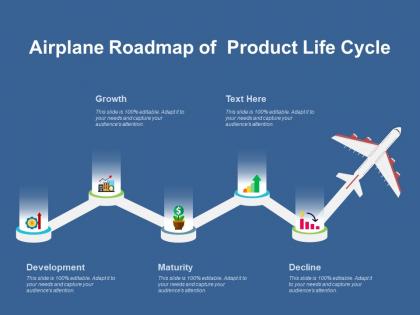
Airplane roadmap of product life cycle




Try Before you Buy Download Free Sample Product
 Impress Your
 Audience
 100%
100% Editable
 Save Hours
 of Time


Our Airplane Roadmap Of Product Life Cycle are explicit and effective. They combine clarity and concise expression.
People who downloaded this PowerPoint presentation also viewed the following :
Airplane roadmap of product life cycle with all 2 slides:
Give your audience a fulfilling experience. They will find our Airplane Roadmap Of Product Life Cycle elevating.

FAQs for Airplane roadmap of
So there's basically six stages: conceptual design, detailed design & development, certification, manufacturing, operations & maintenance, then retirement. Takes about 15-20 years from idea to first plane rolling out. Then they fly for like 20-30 years before getting scrapped. Certification is honestly the biggest pain - it controls everything else. Your timeline, costs, design choices, all of it. I'd map out that regulatory stuff super early if I were you. Each stage has its own milestones and requirements to hit. Oh, and don't underestimate how long certification takes. Seriously, it's brutal.
Dude, compliance touches literally everything in aviation. Design gets locked down by airworthiness regs like FAR Part 25. Then manufacturing needs constant FAA babysitting and quality checks. You can't even sell the thing until certification proves you've dotted every i and crossed every t. Operations? More ongoing maintenance rules and safety reports. Hell, even scrapping the aircraft has environmental hoops to jump through. My old boss learned this the hard way - he tried adding compliance later and it cost like 3x more. Build it into your timeline from the start, seriously.
Customer feedback during airplane development? Absolutely critical. Airlines tell you what they actually need operationally, pilots give the real deal on cockpit design, and maintenance crews - honestly, they're the ones who'll save your butt by catching serviceability nightmares early. Skip this and you're looking at massive redesign costs later. The trick isn't just hitting those big milestone meetings either. Set up regular check-ins throughout the whole process. Those random coffee conversations often surface the best insights that formal presentations miss. Trust me, it's way cheaper to fix issues when they're still on paper.
Oh man, tech upgrades totally change the game for aircraft lifespan. We're talking decades of extra service time! Better materials fight off corrosion way longer now. Predictive maintenance catches problems before they blow up into expensive disasters. Engine swaps can basically resurrect an old plane - it's honestly pretty wild to see. Airlines love this stuff because upgrading beats buying new aircraft every time, especially if the frame's still solid. Avionics updates keep everything legal too. Way cheaper than you'd think compared to a brand new bird.
It's usually a mix of things, not just one factor. Maintenance gets crazy expensive on older planes. Fuel efficiency matters too - newer models just sip fuel compared to the old gas guzzlers. Then you've got regulatory stuff that might force costly upgrades, plus passengers expect modern amenities now. Parts become a nightmare when manufacturers stop supporting older aircraft - suddenly you're hunting down components at ridiculous prices. Market demand shifts play a role too, obviously. Oh, and airlines love standardizing their fleets for simplicity. Really though, it comes down to crunching the numbers: total ownership costs versus buying newer planes. That's the real deciding factor.
So airlines don't just wait until their planes fall apart - they're usually thinking replacement around the 15-20 year mark. These things can technically fly for 30+ years, but fuel costs and maintenance start getting brutal. Smart move is staggering the replacements so you're not dropping billions all at once. Here's the kicker though - new aircraft orders take forever, like 5-10 years sometimes. Wild, right? They're basically playing this balancing game between keeping costs down and making sure passengers actually want to fly on their planes. Bottom line: start planning way sooner than feels necessary.
Dude, maintenance costs are brutal - like 10-15% of your whole operating budget, sometimes more if you're flying older planes. Airlines budget around $3-4 million per aircraft annually just for maintenance alone, which is insane when you think about it. Scheduled stuff you can at least plan for, but unexpected repairs? Those come out of nowhere and absolutely wreck your finances. Your fleet gets older, parts get more expensive, labor costs go up. Honestly, invest in predictive maintenance tech early if you can - those AOG situations where planes are grounded cost tens of thousands per day.
So airlines basically look at different stuff depending on how old their planes are. New routes? They're checking growth forecasts and what competitors are doing. Once things are running smoothly, it's all about actual bookings and how full flights get - that's where the real money talk happens. When planes start getting old, they crunch numbers on maintenance costs vs buying new ones. Regulations sometimes force their hand too, which honestly can mess up their whole timeline. I'd watch these patterns over like 6-12 months to catch shifts before they become obvious.
Aviation's going totally green right now - it's crazy how fast things are changing. Carbon composites are everywhere because they're way lighter, which means less fuel. Electric and hybrid engines are the hot thing now, airlines actually want them because passengers keep asking about emissions. Even the supply chains are getting overhauled. Honestly feels like we skipped ahead like 10 years in just the past couple years. If you're designing anything new, just bake those sustainability numbers right into your requirements from the start. Don't wait and try to add it later.
Look, supplier relationships will literally make or break your project - I've seen it happen. The aerospace supply chain is crazy specialized, so you need these people in your corner from the start. Good partnerships mean better insight into what parts are actually available, quicker fixes when stuff goes wrong, and way more flexibility if you need design changes. These suppliers have been doing this for decades - why not tap into all that knowledge? Oh, and here's the thing most people miss: treat them like actual partners, not just people you buy from. Share your plans early and get them involved in planning meetings. Trust me on this one.
Look, market trends pretty much control how you position any new plane. Hot sustainability trend? You're pushing fuel efficiency hard. During COVID when cargo exploded, companies started pitching passenger jets for freight use instead. You've gotta read what's bothering airlines most right now, then match your plane's best features to those exact problems. Short punchy pitch works better than long explanations too. It's honestly like trying to sell anything else - timing and knowing your audience matters way more than people think. Price positioning follows whatever competitors are doing in that space.
So basically, airlines use a ton of IoT sensors now to predict when stuff's gonna break before it actually does - the amount of data they collect is kinda crazy. They design everything to be modular too, so mechanics can just swap parts out during regular maintenance instead of waiting around for things to fail. Spare parts get stationed all over the world, which honestly makes sense when you think about it. Oh, and most manufacturers throw in these big support packages now. My advice? When you're looking at aircraft, definitely ask about their predictive maintenance setup and how easily they can get you parts.
Look, data analytics stops you from making decisions in the dark. You can dig into flight data and passenger complaints during design to nail the specs. Development gets way smoother when predictive models flag issues before they blow up your budget. Manufacturing? Supply chain data and quality metrics are game-changers there. Real-time monitoring once it's flying helps with maintenance timing and fuel costs - super critical stuff. Oh, and tracking usage patterns makes end-of-life calls much smarter. The airlines crushing it right now are the ones swimming in good data. Start with whatever you're currently guessing on - that's your biggest win.
So the big headaches are all the nasty stuff - fuel, hydraulic fluids, asbestos in older planes. Then there's just massive amounts of aluminum and carbon fiber to deal with. Good news though, like 85% of aircraft can actually get recycled (honestly better than I expected for something that huge). Composite materials are still a pain since there aren't really good recycling options yet. Oh and those weird specialized components too. Best bet is finding certified dismantling places that know how to handle the hazmat properly and can actually recover most of the materials instead of just junking everything.
Yeah so basically politics mess with plane orders big time. Countries start favoring their own manufacturers when things get tense - like during trade wars you'll see airlines picking Boeing or Airbus based on where their government stands. It's kinda crazy how much non-technical stuff influences these decisions. Regional conflicts bump up cargo and military aircraft demand too. Oh and sanctions? They'll totally kill orders from certain countries overnight. Honestly your best move is tracking trade policies and diplomatic stuff - that's where you'll spot trends before they hit the market.
No Reviews