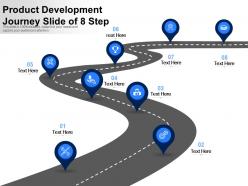
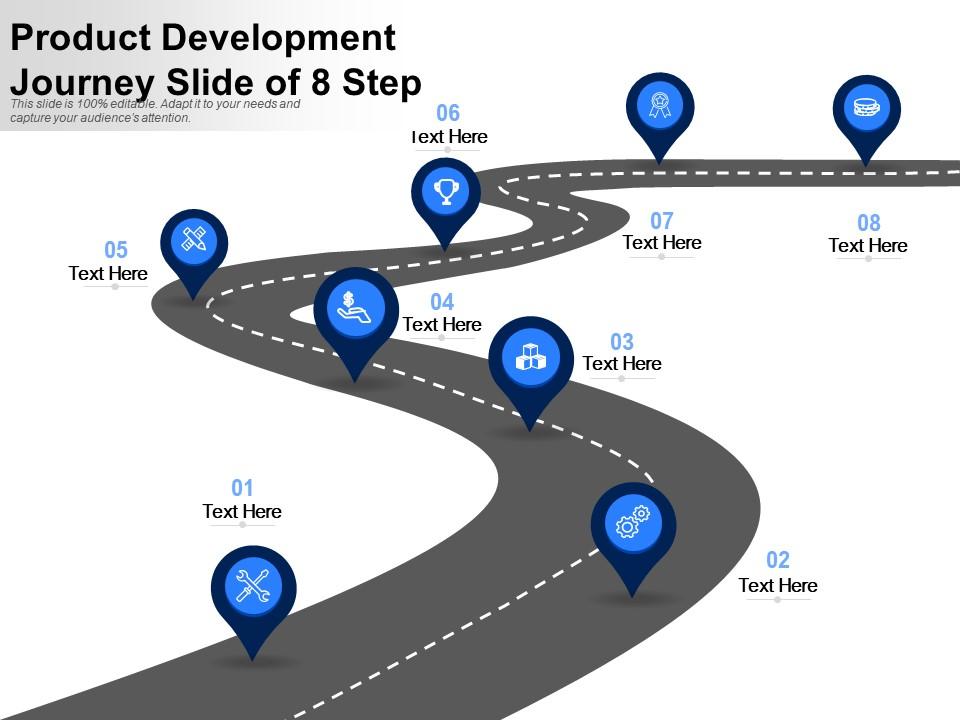
Product development journey slide of 8 step
Try Before you Buy Download Free Sample Product
Audience
Editable
of Time
Our Product Development Journey Slide Of 8 Step are explicit and effective. They combine clarity and concise expression.
People who downloaded this PowerPoint presentation also viewed the following :
Product development journey slide of 8 step with all 2 slides:
Give your audience a fulfilling experience. They will find our Product Development Journey Slide Of 8 Step elevating.
FAQs for Product development journey slide
So there's ideation first - that's your brainstorming and concept validation phase. Then planning where you nail down requirements and timelines. After that comes design/prototyping, then development, testing, and launch. Testing is honestly where everyone screws up because they're rushing to ship. Don't be those people! Each stage needs clear deliverables and sign-offs before moving on. I know it's tempting to skip steps when deadlines are breathing down your neck, but you'll pay for it later. Figure out where your project sits right now and what you actually need to finish before jumping ahead.
Dude, customer insights are literally everything when you're starting out. Skip this and you're basically shooting in the dark. Talk to people first - find out what's actually driving them crazy, what they wish existed, how they're currently dealing with whatever problem you think you're solving. I learned this the hard way watching teams (including mine once, embarrassingly) build "cool" stuff nobody wanted. Surveys work, but honestly? Just having real conversations tells you way more. Figure out what features they'd actually use before you start sketching anything out. Trust me on this one.
Dude, market research is just making sure people actually want what you're building before you waste months on it. Talk to potential customers - surveys, interviews, even random conversations work. I literally know someone who validated their app idea by chatting up people at Starbucks (weird but effective). Test simple stuff first like landing pages or basic mockups. Find out what they'd pay and which features they care about. You gotta get out of your own head because your "genius" idea might be total garbage to everyone else. Don't blow money on development until you know it'll sell.
Dude, cross-functional teams are seriously worth it. You get engineering, design, marketing all working together from the start instead of that annoying back-and-forth later. Catches problems early, decisions happen faster, and you actually build stuff people want to use. No more of those awkward meetings where someone goes "uh, why did we do it this way again?" The alignment thing is huge too - everyone knows what matters. Honestly just try it on your next project. Grab one person from each team that matters and watch how much less painful everything becomes.
Honestly, the worst thing you can do is fall in love with your first attempt - I've watched whole teams burn weeks polishing garbage that should've been ditched day one. Don't over-engineer either; ugly but functional beats pretty and broken every time. Oh, and stop waiting for it to be "perfect" before showing users. That's such a waste. Here's what actually works: decide upfront what success looks like, give yourself strict deadlines for each version, and get real people using it ASAP. Yeah, it'll be rough, but that's literally the point. Prototypes should break so you learn something useful.
Honestly, I'd focus on what actually matters to your users first - then figure out business impact. Create some basic scoring system that weighs user value against how much dev time it'll take. Revenue stuff is obvious, but those tiny features that make people's lives easier? Don't sleep on those. Be brutal about cutting the fluff though. Get everyone to agree on your scoring criteria upfront or you'll be arguing about priorities forever. And write this stuff down! Trust me, someone will always come back asking why you didn't build their pet feature instead.
Honestly, just be super upfront from day one about timelines and what could go wrong. I made this mistake last year and it was brutal! Check in constantly - like, way more than you think you need to. Don't wait for those big milestone meetings because by then it's too late. Write everything down so nobody can pull the "I thought you meant..." thing later. Scope will definitely change (it always does), so when it happens, spell out exactly what that means for time and budget. Oh, and start every meeting by double-checking everyone's still on the same page about priorities.
Dude, agile is a game changer - you basically build stuff in tiny pieces instead of one massive project. Way less stressful than those waterfall disasters where you're just hoping everything works at the end. The constant feedback loop is clutch because you can actually pivot when users hate something. Your team stays on the same page too since you're meeting all the time (which sounds annoying but isn't). Honestly, I'd start with 2-week sprints and just see how much faster you catch problems. It's wild how much waste you cut when you're not building the wrong thing for months.
Track both numbers and feelings, honestly. Revenue, adoption rates, customer acquisition costs - the usual suspects. But also dig into whether people actually enjoy using your thing through satisfaction scores and NPS. Support tickets tell a story too. Feature analytics are clutch for seeing what's working. I'd probably obsess over a dashboard with like 5-7 key metrics those first few months - check it weekly so you don't miss anything important. Time to break-even matters more than people think.
User feedback is everything - it literally drives your whole iteration cycle. After each release, collect what people are saying and figure out which pain points to hit next sprint. Look, some feedback stings at first, but that brutal honesty? Pure gold. Set up those feedback loops early or you'll be coding in a bubble for months, which sucks. Here's the thing though - track what users SAY versus how they actually use your product. Those two don't always line up, and the behavior data usually tells the real story. Don't just rely on surveys.
Go with 5-8 users each round - you'll spot the big problems without getting overwhelmed by feedback. Create scenarios that mirror real usage, not some sterile lab setup. Test complete user journeys too, not just individual features in isolation (learned this the hard way). Recording sessions helps since you'll miss stuff in the moment, but honestly? Watch what people do, not what they claim they want. Those are usually two different things. Quick rounds beat massive studies every time. Oh, and definitely show your team the highlights with actual video clips - way more convincing than a summary doc.
Get your MVP in front of real users ASAP to test if your main assumptions actually hold up. Only build what solves the core problem - skip the bells and whistles for now. The goal? Learning what works before you waste months on features nobody wants. I always tell people to launch to a small group first, then obsess over their feedback. Honestly, you'll probably need to pivot from your original idea anyway - most of us do. If you're not a little embarrassed by your first version later, you waited too long to ship it.
Get your IP stuff locked down first - patents, trademarks, whatever applies to your product. If you're dealing with healthcare, food, or electronics, regulatory compliance is massive and honestly kind of a nightmare. Data privacy laws are another headache if users input personal info. Oh, and definitely do a patent search so you don't accidentally step on someone else's territory. That's lawsuit city right there. I know lawyers are expensive, but bringing one in early beats scrambling to fix everything later. Trust me on that one.
Honestly, people won't try new stuff if they're terrified of screwing up. So make it safe to fail first. Give them actual time to mess around with ideas - I know, easier said than done when you're swamped. When someone does fail, treat it like a lesson instead of pointing fingers. Mix up your teams once in a while. Bring in fresh voices from other departments or whatever. Here's the thing though - you absolutely have to act on the good ideas that surface. Nothing's more soul-crushing than watching your brilliant suggestion vanish into thin air. Just ask your team what's stopping them from being creative right now.
AI integration and voice interfaces? Yeah, you can't ignore those anymore. Same with sustainability features - users actually care now. IoT connectivity is massive if you're doing anything physical. Honestly though, blockchain and AR/VR still feel overhyped to me. Privacy-first design is where I'd put my energy instead. Plus accessibility compliance from the start, not slapped on later. My take? Don't chase every shiny thing. Pick maybe 2-3 trends that actually match what your users need and really nail those. Going deep beats going wide every time.
No Reviews