


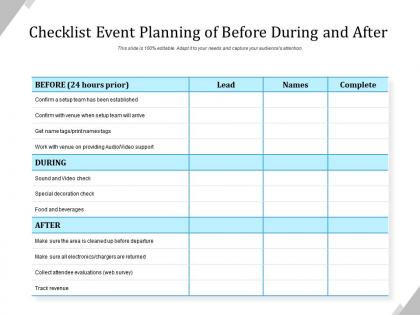
Checklist event planning of before during and after




Try Before you Buy Download Free Sample Product
 Impress Your
 Audience
 100%
100% Editable
 Save Hours
 of Time


Our Checklist Event Planning Of Before During And After are explicit and effective. They combine clarity and concise expression.
People who downloaded this PowerPoint presentation also viewed the following :
Checklist event planning of before during and after with all 2 slides:
Give your audience a fulfilling experience. They will find our Checklist Event Planning Of Before During And After elevating.
FAQs for Checklist event planning of before
Start with the obvious stuff - venue, food, guest list, budget. Then tackle the tedious legal bits like permits and insurance (ugh, but necessary). Break everything into timeline chunks: 8 weeks out, 4 weeks, week of, etc. I learned the hard way to always have a day-of section with vendor contacts and backup plans. Weather can totally ruin outdoor events, trust me. Audio/visual stuff too if you're doing speeches or whatever. Honestly, the earlier you start this list, the less you'll hate yourself later when everything's due at once.
Honestly, a timeline is what saves you from that panicky "oh crap" moment when you realize you should've booked the venue months ago. Work backwards from your event date - that's the trick. Give each task a realistic deadline so you're not cramming everything last minute. You'll actually know what to tackle first (spoiler: it's probably the big stuff like venue and catering, not the cute decorations). I learned this the hard way! Plus you can see where things might get crazy busy. Way better than just having a random list floating around.
Oh man, virtual events are tricky! Start with your tech stack - pick a solid platform and test everything like three times minimum. Murphy's Law is real with this stuff. Audio matters way more than video honestly, so spend your money there first. You'll want engagement tools ready - polls, breakout rooms, chat moderation because people zone out fast on screens. Keep sessions short with actual breaks between them. Time zones are a nightmare if you're going global, so plan accordingly. And seriously, have someone dedicated to tech support the whole time or you'll hate your life when things inevitably break.
Okay so here's what works - make one main checklist with the basics everyone needs. Venue, catering, timeline stuff. Then create add-on sections for different event types. Corporate events get AV equipment and presentation logistics. Weddings need florals and ceremony details. Fundraisers... well, donation tracking and sponsor stuff obviously. I tried using my wedding checklist for a work event once and it was a mess, don't do that lol. The trick is building it so you can turn sections on/off depending what you're planning. Saves tons of time honestly.
So for your event budget - definitely hit the big stuff first: venue, food, staff, marketing, equipment rentals, decorations. But here's what always gets people: permits, insurance, transport costs. They sneak up on you and suddenly you're scrambling. I learned this the hard way lol. Break everything into detailed line items so you can actually track where your money's going. Start with your total number and work backwards - figure out what matters most to you first. Oh, and budget at least 10-15% extra for when stuff inevitably goes sideways. Trust me on this one.
Honestly, digital checklists are a game changer. I use Trello for everything now - way better than my old chaotic notebook system. The automatic reminders actually work, and your whole team can see what's happening in real-time. Templates are clutch since you're not rebuilding the wheel each time. Just copy your last successful event and adjust from there. Everything stays in one place instead of scattered across random emails and post-its (which I definitely used to lose constantly). Pick whatever app your team's already comfortable with and start simple.
Don't treat your checklist like it's set in stone - that's the biggest mistake. I've watched people stress over totally random stuff just because their template said to do it. Make sure each task actually matters for YOUR event. Also avoid going crazy detailed (you'll drown) or being too vague where "handle catering" could mean literally anything. Oh, and build in buffer time! Tasks always take longer than you think they will. Honestly, a good checklist should feel helpful, not like homework. Customize it based on what type of event you're throwing and give yourself realistic deadlines with breathing room.
Honestly, past event feedback is pure gold for your checklists. Go through attendee surveys and team notes looking for patterns - stuff that keeps coming up over and over. Like if people always complain about long registration lines, add "open check-in 30 mins early" to your list. Same with catering running out (learned that one the hard way). I keep a messy Google doc where I dump these insights right after events, otherwise I totally forget by the next one. The key is reviewing everything within a week while it's still fresh in your head, then actually updating your master checklist instead of just thinking about it.
Dude, you gotta split up the big stuff - venue, catering, A/V, registration, day-of chaos. Pick one person for each. I totally screwed this up once when literally nobody grabbed the mics and we had dead silence lol. Budget and vendor stuff should go to your most organized person (you know who that is). Get backup people too because someone always gets the flu at the worst time. Honestly, just throw it all in a spreadsheet with names and deadlines. Sounds boring but it'll save your sanity when everything's falling apart the week before.
Honestly, you've gotta plan for everything to fall apart - because it will. Have backup vendors, alternative venues, the whole deal. Our keynote speaker got food poisoning literally an hour before showtime once (nightmare fuel). Keep a separate list of emergency contacts who can actually deliver same-day. Short sentences work better when you're panicking. Give different team members specific crisis roles ahead of time, otherwise you'll waste precious minutes figuring out who's doing what. Oh, and definitely update your backup plans after each event. You'll be shocked at the random stuff that goes wrong.
Honestly, just pick one main way to talk and stick with it - whether that's Slack, Teams, or whatever your team already uses. Weekly update emails are solid for keeping people posted. Also throw up a shared dashboard so folks can peek at progress whenever they want. Those quick 15-minute check-ins are surprisingly helpful too, they stop small problems from turning into disasters. Oh, and definitely tell everyone upfront how often you'll be reaching out and what kind of info they'll get. Consistency is everything here.
Okay so basically the checklist keeps you from losing your mind trying to remember who does what and when. You'll know exactly when to give your caterer final numbers, when the AV people need to show up, all that stuff. Plus it tracks contracts and payments - trust me, you don't want to wing that part. I swear I've watched the florist and band literally bump into each other because nobody coordinated timing. Super awkward. The whole thing just becomes your go-to document so vendors aren't tripping over each other and you're not frantically googling "emergency DJ" at 2am.
Get that debrief scheduled within 48 hours - trust me, wait longer and everyone forgets the important stuff. Send surveys to attendees, your team, AND vendors. The vendor feedback is usually harsh but honestly the most helpful. Document everything: what worked, what flopped, budget issues. I always add a section asking "would we hire this vendor again?" because future you will be so grateful for those notes. Oh, and snap photos during setup and breakdown - sounds random but it's clutch for planning next time. Don't just collect all this feedback and let it sit there though. Actually read it and make a real action plan.
Oh man, cultural stuff changes EVERYTHING when you're planning events. Seriously - I once brought white flowers thinking they were elegant and found out they symbolize death in that culture. Super awkward. You've gotta research dietary restrictions, religious holidays, even communication styles. Some cultures have specific venue layout needs too. Timing gets tricky because you might need to work around cultural holidays you didn't even know existed. My advice? Just ask people directly what they need instead of guessing - saves you from looking like an idiot later.
Templates are seriously a game changer - I wish I'd started using them way earlier. Instead of rebuilding everything from zero each time, you just tweak one solid base for different events and budgets. Used to spend forever recreating the same basic stuff (so annoying). The cool part is adding your own lessons learned after each event, so they actually get smarter over time. Those random details that always get forgotten? They're all built in now. Just start basic and keep improving it. Oh, and honestly the time savings alone makes it worth it.
No Reviews