


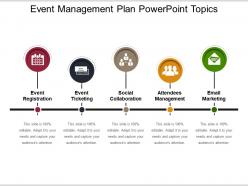
Event management plan powerpoint topics





Try Before you Buy Download Free Sample Product
 Impress Your
 Audience
 100%
100% Editable
 Save Hours
 of Time


Enable folks to benefit from the depth of your expertise with our Event Management Plan Powerpoint Topics. Be generous with your advice.
People who downloaded this PowerPoint presentation also viewed the following :
Event management plan powerpoint topics with all 5 slides:
Our Event Management Plan Powerpoint Topics display completely factual data. You can draw accurate deductions.
FAQs for Event management
Okay so you'll want to nail down your goals and budget first - that's like your foundation. Timeline comes next, and honestly this is where everyone screws up because we're all terrible at estimating time. Work backwards from your event date and add buffer time to everything. You also need venue stuff sorted, vendor coordination, marketing plan, and some kind of backup plan for when things go wrong (they will). Oh and don't forget attendee tracking - sounds boring but you'll thank me later. I always tell people to add like 20% extra time to each big task because something weird always happens.
Okay so stakeholder analysis is honestly pretty crucial - it helps you figure out who actually matters for your event. Start by listing everyone who's involved or affected, then rank them by how much influence they have. Some people control the budget, others make final decisions. Don't ignore the seemingly small players though, they can totally surprise you later! Once you know their priorities and concerns, you can communicate better with each group. Trust me, you don't want to accidentally leave someone important out of the loop. It saves you from those awkward "why wasn't I consulted" moments.
Dude, definitely put aside like 10-15% for random stuff that'll pop up - there's always something. I use a basic spreadsheet to track venue, food, marketing, all that against what I'm actually spending. Food costs? Always go higher than you think because people are basically bottomless pits lol. Get quotes from multiple vendors and try to work out payment schedules that don't kill your cash flow. Oh and check your numbers every week instead of waiting - way less stressful to catch problems early. Trust me on the contingency fund thing, it's saved me so many times.
Honestly, get yourself a good event management platform first - it'll handle registration, tickets, and all that attendee communication stuff in one spot. Mobile apps are a game changer for keeping people engaged during the event. They can network, check schedules, give feedback instantly. Analytics tools show you what's actually hitting with your crowd, which is pretty clutch. Oh, and live streaming opens things up to way more people than just whoever shows up physically. The data insights you get afterward are kind of addictive once you see how useful they are. Start simple with one solid platform, then build from there as you figure out what else you need.
Start with the obvious risks - weather, tech failures, sketchy vendors, security stuff. But honestly, the weird random things that can go wrong are what'll really bite you. Make sure each risk has a clear plan and assign specific people to handle different disasters. Communication chains are huge - nobody wants to be scrambling around asking "who do I call??" when everything's falling apart. Oh, and always have backup options for your venue, key vendors, and main staff members. Trust me, write all this down beforehand instead of winging it during the actual event. You'll thank yourself later.
Honestly, start by figuring out what you actually want from this event. Lead gen? Track registrations and how many turn into real prospects. Brand awareness? Look at social buzz and whether people remember you afterwards. Don't get caught up in just counting butts in seats - that's pretty meaningless unless you're literally just trying to pack a room. The trick is knowing your baseline numbers first, otherwise you're just guessing if things worked. Use surveys and event apps to grab data while it's happening. Pick maybe 3-4 key metrics tops or you'll drown in spreadsheets later.
Okay so first thing - nail down your exact budget and what you actually need before reaching out to anyone. Get quotes from at least three vendors, but honestly don't just pick whoever's cheapest because I made that mistake and it was a disaster lol. Check their recent references, not just the glowing reviews on their site. You want someone who responds quickly and asks smart questions about what you're envisioning. Insurance and backup plans are non-negotiable. Meet them face-to-face or on video to get a feel for how professional they are. If you can swing it, definitely do a site visit to see their actual work.
Oh man, project communication is such a pain point! What's worked for me is doing super quick daily check-ins instead of those soul-crushing hour-long meetings. Like 15 minutes max - people actually listen when it's short. Get everyone on Asana or Trello so you can see who's doing what without constantly bugging people. Use different channels for different stuff too - Slack for random updates, email when it's official, and definitely talk face-to-face for the messy complicated problems. Pro tip: pick one person to handle all vendor communication or things get weird fast. And honestly? Write decisions down immediately because nobody remembers what we agreed on three weeks later.
Yeah, sustainability isn't optional anymore - clients straight up expect it now. Wild how fast that shifted, right? Most venues won't even book you without a decent green plan these days. Start with an audit of what you're doing wrong (probably everything lol). Then pick maybe 2-3 things to fix first. Digital tickets instead of paper ones. Source stuff locally when you can. The whole carbon offset thing if you're feeling fancy. Honestly makes business sense too, not just the feel-good factor. Local vendors are usually cheaper anyway, and going paperless saves you money. Win-win situation.
Virtual events are way riskier tech-wise - you're basically crossing your fingers that the internet doesn't crap out. I'd do tons of rehearsals and have backup streaming ready. People's attention spans online are absolutely terrible, so keep segments short and punchy. In-person stuff means dealing with all the venue logistics and catering headaches instead. The upside? Virtual events are actually easier to fix on the fly if things go sideways. Oh, and map out your biggest potential disasters first - that'll help you figure out which format makes more sense for what you're planning.
Okay so first thing - get your permits sorted early because they take forever to process. You'll need venue permits, liquor licenses if you're doing drinks, plus whatever special event stuff your city wants. Definitely get liability insurance too, trust me on this one. When you're signing contracts with vendors and venues, actually read the cancellation and force majeure clauses - I learned that the hard way once. Oh and if it's public, you gotta make sure it's ADA compliant. Honestly the legal prep is boring but way better than dealing with problems later.
Honestly, you gotta plan interactive stuff from the start - don't just hope it works out. Switch things up every 15-20 minutes or people will totally zone out (I've been to way too many boring events lol). Interactive polls are great, plus Q&A sessions and breakout discussions. Those live polling apps are pretty clutch too. The real trick is reading the room though. Sometimes you need to pivot if something isn't landing. Oh, and hands-on activities work way better than just talking at people. Mix short bursts with longer discussions so the energy doesn't die.
For registration stuff, just go with Eventbrite or Cvent - they're lifesavers and handle all the payment headaches. Project management wise, I swear by Asana (though my coworker loves Trello). You'll probably want a CRM too - HubSpot's pretty solid for tracking people and doing follow-ups. Oh, and get Slack for your team chat, maybe Mailchimp for sending updates to attendees. Here's the thing though - don't go crazy with tons of apps. Pick like 3 or 4 max and actually learn them well. Trust me, I've seen people drown trying to manage fifteen different platforms.
Oh man, cultural stuff is HUGE for events - like way more than people realize. You've got to think about religious holidays, what people can actually eat, how formal to dress, all that. I totally bombed once by scheduling something right during Ramadan... felt awful. Don't serve alcohol if half your crowd doesn't drink, you know? And honestly, some cultures are way more direct than others when communicating. Skip the guesswork though - just ask people what they need upfront. Way easier than trying to fix things later. Build in extra planning time because this stuff always takes longer than you'd think.
Honestly, the best move is hitting them with a quick survey within 48 hours - like 5-7 questions tops while it's all still fresh. I always do the 1-10 rating thing plus maybe two open-ended questions where they can actually tell you what they're thinking. Social media stalking helps too, check what they're posting with your event hashtags. For smaller events, calling a few key people works great. Oh and definitely throw in some tiny incentive for filling out the survey - even a $5 gift card bumps response rates like crazy. People need that little push sometimes.
-
Content of slide is easy to understand and edit.
-
It saves your time and decrease your efforts in half.