

Event management timeline ppt example




Try Before you Buy Download Free Sample Product
 Impress Your
 Audience
 100%
100% Editable
 Save Hours
 of Time


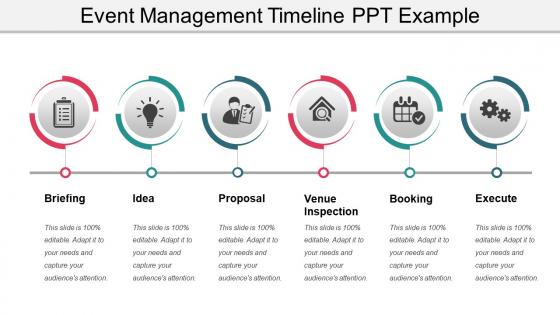
Familiarize folks with the information gathered through our Event Management Timeline Ppt Example. Elaborate on the interrogation.
People who downloaded this PowerPoint presentation also viewed the following :
Event management timeline ppt example with all 5 slides:
Elaborate on the chain of events that got you here with our Event Management Timeline Ppt Example. It helps document your growth.

FAQs for Event management
Honestly, break it into four main chunks - planning (3-12 months out), pre-event stuff (1-4 weeks before), the actual day, and cleanup after. Planning's where you book venues and pick vendors. Pre-event gets absolutely insane - you're chasing final headcounts, coordinating setup times, making emergency contact lists. Day-of is pure chaos management, basically putting out fires left and right. Then post-event you've got breakdown, paying everyone, collecting feedback. Oh, and definitely work backwards from your event date when you're making timelines. Sounds obvious but you'd be surprised how many people don't do this and then panic three weeks out.
Pick your event date first, then count backwards from there. Big events? You'll want at least 6-12 months, maybe more if it's complex. I totally bombed a conference once trying to do it in 3 months - nightmare. Break everything into chunks: venue hunting happens 6-8 months out, speakers and vendors around 4-6 months, marketing gets serious at 3-4 months. Save the last 2 months for all the nitty-gritty stuff. Oh, and build in extra time because something will definitely go wrong. Weekly deadlines work way better than monthly ones - keeps you from procrastinating and catches issues before they blow up.
Start with venues and vendors 6-12 months out - seriously, good venues disappear so fast it's crazy. Launch marketing and open registration around 3-4 months before. Two weeks out, nail down your final headcount and confirm catering. Oh, and do your day-of logistics briefing a week before the event. Here's what I learned the hard way: work backwards from your date and add 20% more time to everything. Like, everything will take longer than you think. I always forget this but then remember when I'm panicking at 2am three days before an event. Give yourself those buffer zones now and you won't hate yourself later!
Honestly, your timeline completely depends on who you're trying to reach. Busy executives? Give them tons of advance notice and hit them with reminders - they're juggling way too much. Families are weird though - they plan months ahead but then kids get sick and everything changes. Different channels need different prep time too. Social media you can post whenever, but if you want print ads you're looking at weeks of planning. Oh and demographics totally change which platforms you'll even use. Figure out your audience first, then work backwards from there.
Honestly, your budget is going to control everything about timing. Tight on cash? You'll need way more time upfront to shop around and find deals. But if money's not an issue, you can move faster since pricier vendors usually have better availability last-minute. I totally bombed this once - tried planning a gala in 6 weeks thinking it'd be fine, then the catering quotes came in and I nearly died. Pro tip: figure out what you can actually spend first, then work backwards from there. Otherwise you're just setting yourself up for a stress headache.
Honestly, tech can save your sanity with event planning. Project management stuff like Asana tracks deadlines and sends reminders automatically - no more sticky notes everywhere. Vendor platforms are clutch too since you can handle all contracts and payments without drowning in email chains. During the actual event, mobile apps keep everyone updated in real time. Oh, and don't go crazy downloading every tool you see. Pick like 2-3 that actually work together instead of creating more chaos for yourself.
So for event timelines, Asana and Monday.com are solid if you need the whole team involved. But honestly? Google Sheets can work miracles - I've seen people build crazy detailed timelines that way. Trello's perfect if you're visual since you drag stuff around between columns. TeamGantt does proper Gantt charts if that's your thing. Microsoft Project is powerful but feels like using a sledgehammer to hang a picture sometimes. My take: go with whatever tool your team's already comfortable with. The fanciest software means nothing if people won't actually use it.
You definitely want to bake backup plans right into each big milestone instead of treating them separately. Pick your major deadlines - venue booking, vendor stuff, setup day - then figure out what could tank and have your Plan B ready with its own timeline. Our caterer literally ghosted us 48 hours before an event once (still bitter about that tbh). Build buffer time between the critical tasks. That way when something inevitably goes sideways, you're not losing your mind. I'd do "backup plan check-ins" like 2 weeks before each milestone to make sure your alternatives still work.
Honestly, vendor coordination can make or break your event. Picture this: caterers trying to set up while the sound crew's dragging equipment through the same doorway, and meanwhile flowers are arriving but there's literally nowhere to put them because tables aren't even up yet. It's a nightmare I've watched happen too many times! What works is creating a timeline that maps out when each vendor arrives and how long they need for setup. Give everyone their own window so they're not tripping over each other. Oh, and send that timeline out like a week beforehand - people need time to actually read it and ask questions if something seems off.
Dude, start your paperwork like 2-3 months early - trust me on this. Permits are the worst and take forever, plus you've got insurance stuff and contract negotiations that drag on. I swear venues make it harder than it needs to be sometimes. Don't forget liability waivers for everyone and vendor contracts. If you're doing alcohol or live music, that's extra licensing you'll need too. We almost had to cancel an event once because a permit got stuck in some bureaucratic mess. Build in way more buffer time than you think - weeks or months depending on your location. Legal stuff will mess up your timeline guaranteed.
Oh nice, virtual events are so much faster to organize! You can literally put one together in like 2-3 weeks instead of the 2-3 months you'd need for finding venues and dealing with catering nonsense. The logistics are way simpler. But here's the thing - don't sleep on tech rehearsals because they always take forever and something weird will break. I learned this the hard way lol. Focus your timeline more on platform testing and making sure your speakers can actually figure out how to unmute themselves. I'd say start planning seriously around 4-6 weeks out. Gives you breathing room when the tech inevitably gets moody.
Honestly, having a solid timeline is like giving your whole team the same map so nobody's wandering around lost. Everyone can see who's doing what and when stuff needs to be done. Dependencies become super obvious too - like oh wait, Sarah can't start her part until Mike finishes his thing. You'll catch problems way earlier instead of scrambling at the end. I swear I've watched teams go from total chaos to actually enjoying their planning meetings just because they could see everything laid out. The trick is building it together from the start though - people hate timelines that get dumped on them.
Ugh, the worst mistake is totally underestimating setup time. Vendors ALWAYS run late - like, always. Don't pack your schedule too tight either, you need breathing room between stuff. Oh and permits! Start that paperwork nightmare early because it takes forever. I learned this the hard way when our caterer needed two weeks notice and I gave them basically two days (oops). Build in extra time for literally everything - like 20-30% more. Medium-sized events? Start planning three months out, minimum. And honestly, have backup plans for anything you can't live without.
Oh man, seasons totally mess with event planning timelines! Peak season (spring/summer) means you're competing with everyone else, so book stuff like 6-12 months ahead instead of the usual 3-6. Fall weddings look incredible with all those colors, but the weather can be super unpredictable. Winter obviously needs backup plans and heaters everywhere. Honestly, transition seasons are the worst - late fall and early spring weather is just chaos. My advice? Start way earlier than feels necessary and build in extra time buffers, especially if you're doing anything outdoors.
Honestly, just blast everyone with updates through different channels. Weekly emails work great for the big stuff and timeline changes. I always set up some kind of shared dashboard too - people love checking progress whenever they want. Those quick 15-minute status meetings are actually super helpful, even though they sound annoying. But here's the thing - if something urgent comes up, don't wait for your next scheduled email. Just call them or shoot a text. Being ahead of the communication game is way better than scrambling to catch up later. Oh, and make a communication plan early so people know what to expect from you.
-
Great quality slides in rapid time.
-
Very well designed and informative templates.