


Product launch marketing plan and communication timeline ppt design
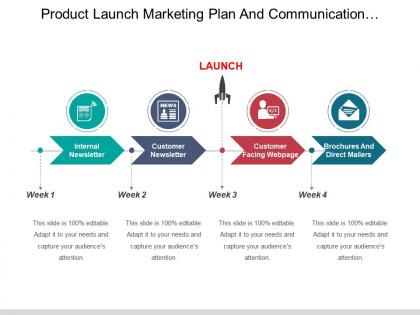




Try Before you Buy Download Free Sample Product
 Impress Your
 Audience
 100%
100% Editable
 Save Hours
 of Time


Become the entrepreneur of your choice with our Product Launch Marketing Plan And Communication Timeline Ppt Design. Don the hat that you desire.
People who downloaded this PowerPoint presentation also viewed the following :
Product launch marketing plan and communication timeline ppt design with all 5 slides:
Acquire great credit with our Product Launch Marketing Plan And Communication Timeline Ppt Design. Their faith in you will grow many fold.
FAQs for Product launch marketing plan and communication
Start with who you're actually selling to - like, get super specific about your ideal customer and work backwards from there. Map out your messaging, pricing, distribution channels. Build buzz before launch (seriously, this is where everyone screws up). Have your launch day tactics ready, plus what happens after. Your sales team better know the pitch cold. Oh and decide how you'll measure success upfront - otherwise you're just guessing if it worked. The targeting thing though? That's everything. Get that wrong and the rest doesn't matter.
Dude, you NEED to do market research - I can't stress this enough. Without it, you're basically throwing money at a wall and hoping something sticks. Start with surveys and interviews at least 8 weeks out (learned this the hard way). Research shows you who actually wants your stuff and where they spend their time online. Plus you'll figure out what messaging clicks with them instead of just winging it. The best part? You'll spot potential complaints before they happen. I know it feels like extra work, but trust me - way better than launching blind and watching your budget disappear.
Dude, segmentation literally makes or breaks your launch. I learned this the expensive way when I tried blasting the same message everywhere - total disaster. You've got to pick like 2-3 core groups max and actually understand what makes them tick. Each segment needs its own angle because what works for millennials on Instagram won't land with executives scrolling LinkedIn. Honestly, the research part is kind of tedious but so worth it. Once you nail their specific pain points, you can craft messaging that actually hits. Then build mini-campaigns for each group instead of one generic mess.
Honestly, it totally depends who you're trying to reach. I'd pick 2-3 things you can actually do well instead of half-assing everything. Social media works great if that's where your people are. Email's solid for existing customers. Content stuff like blogs or videos usually pays off long-term. PR and influencer collabs can blow things up if you nail them - though I've seen people waste tons of money there too. Don't forget about just talking to people IRL either. Sometimes picking up the phone or meeting someone for coffee beats all the fancy digital stuff.
Look, the key is figuring out what you actually do better than everyone else - just one thing though. Don't try to be everything to everyone because that messaging gets confusing fast. What specific problem are you solving that competitors aren't? Maybe you're faster, cheaper, or just way less annoying to work with. Honestly, I've seen too many startups overthink this part. Once you think you've got it, test it on real customers. If they can't explain your value back to you in their own words, you're not there yet. Keep tweaking until it clicks.
Track the vanity stuff like social mentions and email signups for pre-launch buzz, but honestly the metrics that matter are conversion rates and actual sales on launch day. After that, watch your customer acquisition cost and lifetime value - that's where you'll see if this thing has legs. Repeat purchases are gold though, way more telling than follower counts. I've watched launches with massive hype completely tank on revenue. Oh, and set up your tracking beforehand because trust me, you don't want to be digging through analytics when your boss starts asking for numbers.
Start teasing it 2-3 weeks out to get people hyped. Instagram Stories work great for behind-the-scenes stuff, LinkedIn's good for the business angle. TikTok too if your crowd's on there. Timing everything is honestly such a pain but worth it. Get influencers involved early - give them samples or whatever to play with first. Oh, and make up a hashtag people can actually use without cringing. Once you launch, your customer service folks need to be glued to their phones because social moves crazy fast. You don't want to be that brand that goes silent when everyone's talking about your product.
Dude, teaser campaigns are where it's at. Drop some cryptic social posts that hint at what's coming - don't give everything away though. Email your current customers with "coming soon" vibes, maybe throw in early access or pre-orders. Behind-the-scenes content works amazing too. Find influencers who actually fit your brand and can get people hyped authentically. People go crazy when they feel like they're getting insider info before anyone else does. Honestly, I've seen brands totally nail this by just... being mysterious? Keep dropping little hints but don't reveal the whole thing. Gets everyone talking and speculating about your launch.
Partnerships are honestly a game-changer for launches when you're tight on budget. You're basically tapping into someone else's audience and the trust they've already built. Look for influencer collabs, co-marketing stuff, or brand partnerships where you both promote each other's thing. I've watched launches triple their reach just from picking the right partners - it's wild how much difference it makes. Find companies or creators your ideal customers already follow, but make sure they're not direct competitors. Then pitch them on joint webinars, bundle deals, content swaps, whatever makes sense for both sides.
Honestly, the big stuff that'll bite you is timing, competition, and your own team screwing up execution. Launch too early and you're not ready. Too late and someone beats you to it. Do your homework on the market first - I can't stress this enough. Keep tabs on what competitors are doing. Always have a Plan B (and C). Oh, and give yourself way more time than you think you need because everything takes longer. Have backup suppliers lined up, different PR angles ready depending on how it goes. Set clear metrics upfront so you know when to change course fast.
Honestly, pricing is huge for launches - mess it up and you're screwed. Go too high? People bounce immediately. Price too low and they assume it's garbage quality. Plus you're basically throwing away profit. Really depends what you're going for though. Premium pricing can actually boost perceived value, or you could undercut competitors to steal market share quickly. I'd definitely test some price points with focus groups first - saves you from guessing later. Oh, and watch your conversion rates like a hawk those first couple weeks. You can always tweak if something's off.
Honestly, the worst thing you can do is launch without knowing who you're actually targeting. I've watched so many teams crash because they think "build it and they will come" actually works - spoiler alert, it doesn't. Unrealistic timelines will kill you too. Your marketing and sales people need to be talking to each other, not working in silos. Skip competitor research at your own risk. But here's the real deal - make sure you're solving something people actually give a shit about. Do customer interviews early and keep doing them. Oh, and don't forget about what happens after launch day.
Build feedback loops into every phase - start with beta tests and pre-launch surveys to catch the big stuff early. Once you're live, social listening tools help you monitor reactions in real-time. Honestly, I've watched so many launches tank because teams just ignored what users were telling them from day one. Set up dedicated channels - feedback forms, community forums, whatever works for your audience. Oh, and make sure someone's actually checking this feedback daily (not just collecting it) and can fast-track urgent fixes to dev. That part's crucial.
Honestly, storytelling is like having a cheat code for product launches. People's brains are wired to remember stories way better than boring feature lists - it's wild how that works. You're basically creating this whole narrative around the problem you're solving or how your product changes someone's life. Way more memorable than "our app has 15 new features." Plus it gives you something competitors can't just copy, even if they have similar stuff. I always tell people to nail down their core story before they do anything else, then just run with it everywhere. Makes such a huge difference in how people connect with what you're building.
Start dropping teaser content and behind-the-scenes stuff early to get people curious. Blog posts work well, but honestly video is where it's at for launches - way better engagement if you can swing it. Map out content for different buyer stages. Answer the questions people will definitely ask and tackle their objections head-on. Educational pieces showing your product solving real problems are gold. Ramp up your posting schedule as launch day gets closer. Oh, and make a content calendar so you're not scrambling at the last minute trying to figure out what to post.
-
Qualitative and comprehensive slides.
-
Excellent design and quick turnaround.