


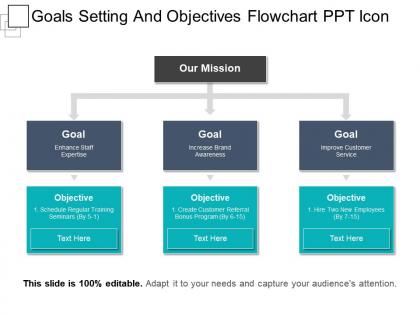
Goals setting and objectives flowchart ppt icon




Try Before you Buy Download Free Sample Product
 Impress Your
 Audience
 100%
100% Editable
 Save Hours
 of Time


Enable effective control with our Goals Setting And Objectives Flowchart Ppt Icon. Help them keep an eye on things.
People who downloaded this PowerPoint presentation also viewed the following :
Goals setting and objectives flowchart ppt icon with all 5 slides:
Begin your corporate journey with our Goals Setting And Objectives Flowchart Ppt Icon. Arrive at the destination you aimed for.

FAQs for Goals setting and objectives
Honestly, just stick to the SMART thing but actually do it this time lol. Write your goals somewhere you'll see them daily - not buried in some random notebook. Break the big scary ones into smaller chunks that don't make you want to hide under a blanket. Find someone to bug you about progress, whether it's a work buddy or just weekly check-ins with yourself. Most people set goals in January then completely forget until December (guilty as charged). Pick like 2-3 max so you're not spreading yourself thin. That's it really.
Honestly, SMART goals are a game-changer because they stop teams from setting those super vague objectives that nobody understands. You know, like "be more collaborative" - what does that even mean? Breaking it down into Specific, Measurable, Achievable, Relevant, and Time-bound components means everyone's on the same page about what you're working toward. It makes tracking progress so much simpler too. No more guessing if you're doing well or not. I'd suggest taking whatever goals your team has now and just... run them through that SMART checklist. You'll be shocked at how many are basically meaningless without more detail.
Think of visualization like rehearsing in your head before the real thing. Your brain gets used to succeeding, which is pretty cool. Short-term stuff? Picture the actual process - it cuts down on nerves. Long-term goals are trickier since progress drags forever, but visualizing keeps you motivated when you're feeling stuck. Don't just imagine "success" though - that's too vague. See yourself doing the specific steps. I'd try 5 minutes each morning visualizing your day, including the annoying obstacles you'll probably hit and how you'll deal with them.
Your brain basically gets little dopamine rewards every time you knock out a smaller goal, which keeps you way more motivated than waiting forever to hit some massive target. It's honestly like playing a video game - you wouldn't want to grind for months without leveling up, right? Breaking things down also lets you pivot when something isn't working. I usually chunk my big goals into monthly pieces, then figure out what I can actually do each week. Way less overwhelming, and you get that satisfying feeling of crossing stuff off your list regularly instead of just... staring at this huge thing forever.
Okay so the main things that'll trip you up: vague goals like "get healthier" (what does that even mean?) and going way too hard from day one. Trust me, I bombed my fitness goals last year because I never tracked anything. Write down specific, measurable stuff instead. Big goals? Break them into smaller pieces. Put them somewhere you'll actually see daily - not buried in your notes app or whatever. Weekly check-ins work well to start. You can always adjust from there once you figure out your groove.
So here's the thing - most companies totally bomb at goal-setting because they write them once in January then never look back. You need frameworks like OKRs or SMART goals, but the real trick is having regular check-ins. Make sure company goals flow down to individual ones so everyone's rowing in the same direction. Stretch goals work great when you pair them with feedback loops. Oh, and celebrate the small wins! People eat that stuff up. Train your managers to actually write decent goals and track them consistently. Transparency around progress is huge too - like, way bigger than most people realize.
Dude, you should totally tell someone about your goal! There's this study showing you're like 65% more likely to actually follow through when someone's watching your progress. Makes sense though - nobody wants to look like they can't stick to anything. Your reputation gets tied up in it, which honestly makes procrastination feel way worse than usual. I always thought private goals were better, but turns out the social pressure actually helps motivate you. Just pick one person you trust and have them bug you about it weekly.
Honestly, apps like Todoist or Notion are game-changers for tracking goals. Break everything down into daily tasks and set up those automated reminders. Progress bars are weirdly addictive - I get way too excited watching them fill up lol. Habit trackers help build consistency, plus you can block time on your calendar so you actually work on stuff. Those completion notifications hit different when you're trying to stay motivated. Oh, and don't go crazy with multiple tools at first. Pick one and stick with it, otherwise you'll spend more time organizing than doing.
Honestly, give yourself 2-3 days to step back and figure out what's actually going wrong instead of just grinding harder. Maybe your timeline's unrealistic, or you don't have the resources you thought, or - plot twist - the goal doesn't even matter anymore. I did this last quarter and wasted so much time chasing something that became irrelevant. Break big stuff into smaller pieces, push deadlines if you need to, or completely switch directions. Being flexible isn't the same as being wishy-washy, you know? Oh, and set a monthly reminder to check in on your goals so you're not realizing months later that you've been heading in the wrong direction.
Dude, this is actually super important for your career. When your personal goals match up with what the company wants, you're way more motivated and engaged at work. Performance reviews become easier too - you can actually show how your wins helped the bigger picture. Here's what I'd do: figure out 2-3 things your company really cares about right now. Then think about how your skills could make a difference there. The magic happens when you find that overlap between what gets you excited and what they value. Trust me, when everything clicks like that, you'll get more support and resources than you ever expected.
Honestly, checking in on your goals regularly is what separates people who actually hit them from people who just write stuff down once. I do these quick 10-minute weekly check-ins - sounds boring but they're seriously helpful. You start noticing when you're being way too ambitious or super vague about what you want. Plus getting feedback from other people catches stuff you'd never see yourself. Like, I always thought I was great at deadlines until my friend pointed out I consistently underestimate how long things take. The whole thing just makes you better at setting goals that actually make sense for how you work.
Honestly, the best thing I've found is treating roadblocks like puzzle pieces instead of brick walls - what's this telling me about my approach? I know visualization sounds super cheesy, but it actually works if you give it a shot. Break that huge goal into tiny wins you can celebrate each week. Also try the "if-then" method - like "if I feel overwhelmed, then I'll do just 10 minutes of work." You're basically training yourself to bounce back automatically. Oh, and random tip - I always remind myself that obstacles are just annoying detours, not permanent stops. What's your biggest roadblock right now? Pick one small thing to test this week.
Dude, you HAVE to celebrate the small wins along the way. Like seriously, waiting until you hit your final goal is torture - we're talking months without any reward, and your brain just gives up. I learned this the hard way lol. Your dopamine needs those regular hits to keep you going. Break it down into chunks - celebrate at 25%, 50%, 75% completion. Doesn't have to be fancy either. Grab that expensive coffee or binge a show you've been saving. These checkpoints also help you see if you're actually on track or totally off course.
Honestly, the key is getting your team involved in actually creating the goals instead of just dumping them from above. People buy into stuff they helped build. Chunk those big scary objectives into smaller wins you can celebrate - trust me, waiting until the end to celebrate anything is a recipe for burnout. Each goal should tie back to what your people actually want, whether that's learning new skills or getting recognized for their work. Oh and check in regularly to clear out whatever's blocking them. Short wins keep everyone motivated way better than some distant finish line.
Oh totally, culture makes a huge difference with goal-setting at work. Americans love their individual KPIs and quarterly targets. Meanwhile, collectivist teams care way more about group wins than personal stats. The time thing is wild too - some cultures think in years while others want everything done yesterday (planning meetings become a nightmare lol). Hierarchical cultures expect goals handed down from above, but flatter orgs want everyone weighing in. Honestly? Just ask your teams how they prefer to set goals instead of assuming one approach works everywhere.
-
Illustrative design with editable content. Exceptional value for money. Highly pleased with the product.
-
Presentation Design is very nice, good work with the content as well.