


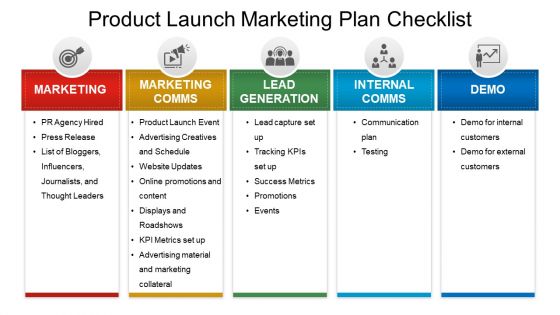
Product launch marketing plan checklist ppt example file





Try Before you Buy Download Free Sample Product
 Impress Your
 Audience
 100%
100% Editable
 Save Hours
 of Time


End the dispute in an amicable fashion with our Product Launch Marketing Plan Checklist Ppt Example File. Bring the controversy to a close.
People who downloaded this PowerPoint presentation also viewed the following :
Product launch marketing plan checklist ppt example file with all 5 slides:
The haze clears away with our Product Launch Marketing Plan Checklist Ppt Example File. Your goal emerges clearly ahead.
FAQs for Product launch marketing plan checklist
Okay so first things first - figure out your audience and scope out the competition. Pricing strategy too. Marketing-wise, pick your channels early (social, email, whatever actually reaches your people). The unsexy stuff matters: QA testing, support docs, making sure you won't run out of stock. Honestly, timelines are where I always screw up, so add way more buffer time than you think you need. Set up tracking for success metrics and feedback collection before you launch - trust me on this one. Make a shared doc with owners and deadlines for everything. Sounds boring but it'll save your sanity later.
Honestly, your market research should be calling the shots on pretty much everything - positioning, pricing, which channels to focus on first. Figure out your target segments and craft messaging that actually hits home with them. I can't tell you how many launches I've watched bomb because teams thought they could wing this part! The data will tell you when to launch, what competitive advantages to play up, and which features deserve the spotlight. Oh and here's the thing - don't force your product into some strategy you already decided on. Let the research shape your go-to-market approach instead.
Your stakeholders are basically your safety net for launches - they catch stuff you'd never think of and handle the actual execution. Get them involved super early when you're building the checklist, not after (trust me on this one). Marketing owns campaigns, sales preps their team, support writes help docs, legal does compliance - the usual suspects. Map out who's doing what first though, or you'll end up with a mess. Oh and make deadlines crystal clear because nobody wants to play the "I thought you were handling that" game. Short version: involve them early, assign clear ownership, profit.
Honestly, work backwards from launch day - total game changer. Pick your launch date and map everything out in reverse. We tried working forwards once and it was a disaster, everything got crushed at the end. You need to spread out the big stuff over months - product dev, marketing materials, training your team, all that launch prep. Don't forget about task dependencies either, some things can't start until others finish. Oh and add like 20% buffer time because something always goes wrong or takes way longer than you think.
Okay so track three main things: adoption stuff (downloads, signups, active users), how well it's performing (conversion rates, feature usage, customer satisfaction), and the business side (revenue, acquisition costs, churn). Don't go crazy tracking everything though - that's just noise. Pick like 5-7 metrics that actually connect to your launch goals. Set your dashboard up early because your boss will definitely ask "how's it going?" way sooner than you think. Also, choose metrics you can actually do something about if they tank. There's nothing worse than watching a number drop and having zero clue how to fix it.
Don't just slap social media on at the end - weave it through your whole timeline. I'd start teasing 2-3 weeks before launch to get people hyped. Then hit all platforms hard on launch day. Honestly, I always underestimate how much content I actually need until I'm panicking at 11pm the night before. LinkedIn posts are totally different from TikTok stuff, so prep platform-specific content ahead of time. Also throw in influencer outreach and hashtag research on your list. Schedule everything beforehand so you're not posting like crazy while dealing with other launch chaos. Trust me on this one.
Start with the basics - product benefits, features, pricing, when it's available. Your main sales sheet needs to nail these points without being confusing. If it's digital, throw in some demo videos or screenshots. Comparison charts work great when you're competing against other products. Here's the thing though - you need two versions of everything. Technical specs for the detail-oriented buyers, then simple benefit statements for executives who hate reading. They just want the "what's in it for me" stuff. Focus on high-impact pieces first. Main sales sheet, website copy - that's where I'd put my energy. The fancy brochures can wait.
Honestly, timing is everything with launches. First thing - figure out when your people are actually paying attention. Don't launch when they're on vacation or swamped unless your product solves that exact problem. I bombed a December launch once because everyone was checked out for the holidays. Also peek at what competitors are doing. You don't want to get buried under someone else's big announcement. Seasonal stuff matters too - like nobody's buying swimsuits in January, you know? The magic happens when your audience is engaged, competitors aren't making noise, and the market timing actually works for what you're selling.
So definitely track your sales and user feedback right away - those first few weeks are make or break. Get your support team prepped for all the confused customers (trust me, there will be tons). Plan some follow-up marketing too, maybe hit social media again or reach out for reviews. Oh and seriously, celebrate with your team first! Launches are brutal and everyone needs that moment. I'd block out time in the first month or two for a real debrief meeting - what worked, what was a disaster, all that good stuff. Otherwise you'll forget half the lessons by your next launch.
Get feedback from everywhere - surveys, social media, support tickets, actual customer calls. Honestly, skip the numbers game early on and focus on the "why" behind what people say. Small sample sizes make metrics pretty useless anyway. Hotjar's great for seeing how users actually behave, and Google Alerts catches when people talk about you online. Throw a simple feedback button in your product too. Here's the thing though - don't chase every complaint. Look for patterns instead. We do weekly meetings to sort through everything and figure out what needs a real product fix versus just better documentation. Works way better than trying to please everyone individually.
Honestly, start with IP stuff - get those patents and trademarks filed before anyone sees your product. Double-check you're not stepping on someone else's IP too, because those lawsuits will drain your bank account fast. Your terms of service and privacy policy need to be rock solid, especially if you're grabbing user data. Whatever regulatory stuff applies to your industry (FDA, FCC, etc.) - handle that early. Oh, and liability insurance is a must. My cousin learned this the hard way with his app launch. Get your lawyer involved like 3-6 months out so you're not panicking last minute trying to fix everything.
Dude, you HAVE to do internal training - I can't stress this enough. Start 2-3 weeks before launch so your sales team can actually handle objections without fumbling around. Support needs hands-on time to troubleshoot stuff that'll inevitably break. Marketing has to sound like they actually use the product, not like they're reading from a script. Honestly, I've watched launches crash and burn because teams just winged it (cringe). The training sessions also help you catch problems early. Oh, and make sure everyone gets real time with the actual product, not just slides.
Honestly, you've got to get everyone talking from the start or it'll be a disaster. Weekly syncs need to happen at least 8 weeks out - trust me on this one. Get reps from each team using the same dashboard so nobody's working with different numbers. I'd probably set shared KPIs too, so marketing and sales aren't pulling in opposite directions like usual. The biggest thing though? Pick one person to own the whole launch. Someone who can actually make calls when product and marketing inevitably butt heads. Cross-functional meetings sound boring but they'll save your ass when things get messy closer to launch date.
Here's what I'd do - map out your competitors' pricing and messaging first, then find the gaps they're missing. Everyone always makes this mistake of jumping in with the same boring value props. Look for white space opportunities instead. Maybe they're all screaming about price while you could actually own quality? Or targeting big enterprise clients when smaller businesses are totally ignored. Oh, and definitely schedule a competitive review like 6-8 weeks before launch. That way you've still got time to change direction if your messaging sounds too similar to everyone else's.
Lead with the problem you're solving and that "holy shit" moment users get. Visuals over text - nobody wants to read a novel on your slides. Tell it like a story: here's what sucks, here's how we fix it, watch this demo, look at this huge market, here's how we'll dominate it. Practice your demo until you're sick of it because Murphy's law is real. Got customer quotes? Use them. People trust other people way more than your fancy graphs. Oh, and end with concrete next steps - investors hate vague timelines. What happens tomorrow, next week, next month?
-
Great experience, I would definitely use your services further.
-
Excellent template with unique design.