


Event management activities example of ppt




Try Before you Buy Download Free Sample Product
 Impress Your
 Audience
 100%
100% Editable
 Save Hours
 of Time


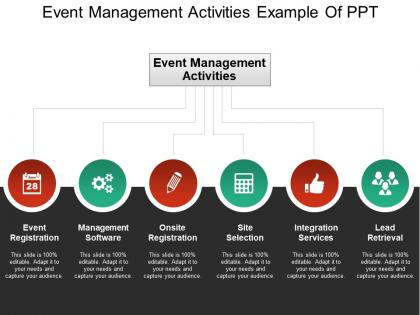
Manage your project with this event management activities PPT slide design. You can use this project management PPT diagram to coordinate as well as managing all your business elements in such a manner to achieve the set goals. Define the different stage involved in the process of event planning with this event management business plan PowerPoint template design. Starting from studying or researching about the event concept. Then planning the event as per the target or segmented audiences, devising and planning the event parameters and objectives. Till the stage of coordinating all the event elements all together before actually launching a successful event. Thus, it also allows you to further identify as well as implement the best practices for your event business. With this event planning Presentation design, you can easily define the relevance, structure, and effectiveness of managing all your event related activities. Therefore, simply click on the download button and start representing your event management model with this Presentation template. Our Event Management Activities Example Of Ppt ensure harmonious gatherings. The entire group will enjoy the event.
People who downloaded this PowerPoint presentation also viewed the following :
Event management activities example of ppt with all 5 slides:
Counter any criticism with our Event Management Activities Example Of Ppt. They don't let you get harassed.
FAQs for Event management activities
Budget and venue are the big ones - figure those out first. Once you know who's coming and where it'll be, work backwards from your event date. I learned the budget thing the hard way lol, it really does control everything else. Permits and insurance are boring but you'll hate yourself if you forget them. Oh and start reaching out to vendors way sooner than feels necessary - like months ahead. Catering and tech setup are where I've seen things completely fall apart. Make a stupid-detailed checklist because you'll definitely forget something otherwise. Contingency plans aren't fun to think about but trust me on this one.
Honestly, tech can make such a huge difference for events. Apps are great for networking and letting people build their own schedules. QR codes speed up check-ins like crazy - no more standing in those awful registration lines. Live streaming brings in remote folks, and interactive polls keep sessions from getting boring. VR demos are pretty cool too, though maybe overkill depending on your crowd. Oh, and gamification stuff works surprisingly well to keep energy up. Just don't go overboard - pick maybe 2-3 things that'll actually fix real problems instead of throwing every tech gadget at people.
Figure out exactly who you're targeting first - that's huge. Then go where they already are, both online and IRL. Social media's obvious, but honestly word-of-mouth still beats everything if people are genuinely excited about your thing. Email campaigns work well when you segment properly. Partner with influencers who actually fit your vibe, not just anyone with followers. Create content people want to share. Oh, and retarget people who checked you out but didn't bite. Start promoting way earlier than you think you should and keep posting updates regularly.
Honestly, you gotta look at the numbers first - how many people actually showed up vs registered? Then dig into those post-event surveys if you sent them out. Social media is pure gold for this stuff too. People always post when they're loving an event, so check your hashtags and mentions. Did you get any leads or close deals? That matters way more than vanity metrics tbh. Track engagement during the actual event - were people asking questions, networking, staying till the end? Compare everything back to what you originally wanted to achieve. Oh and write up a quick summary within like a week while it's all still fresh. Trust me on that one.
Honestly, just make a spreadsheet with all your major costs - venue, food, marketing, the works. Add like 15% extra because something ALWAYS goes wrong (learned that the hard way). I'd get quotes from at least 3 vendors for the big stuff and see if they'll let you pay in chunks instead of everything upfront. Apps like Mint work great for tracking expenses if spreadsheets aren't your thing. Check your numbers every week so you don't end up scrambling later. Oh, and get everything in writing - people's memories get weird when money's involved.
Plan for accessibility right from the start - seriously, don't leave it till later. Pick venues with ramps, elevators, and accessible bathrooms. Ask about accommodation needs on your registration form early. Get interpreters and captioning when people request them. Oh, and think about dietary stuff too, plus quiet spaces for anyone who needs sensory breaks. I made this mistake once where we had to frantically figure out how to make our stage wheelchair accessible like two days before the event - total nightmare! Do a venue walkthrough beforehand with accessibility in mind. Materials in different formats help too.
OMG yes, vendors can literally make or break your whole event! I learned this the hard way when a caterer showed up with lukewarm food that looked nothing like what we ordered. Good vendors become your lifeline - they'll fix problems fast and deliver exactly what they promised. Bad ones? Total nightmare. Cold food, busted sound systems, decorations that look like a Pinterest fail. Your guests will remember the experience, and honestly, so will your sanity and wallet. Don't just pick the cheapest option either. Start looking early, call their recent references, and trust your gut if something feels off.
Honestly, get feedback from everyone - attendees, vendors, your team - right after the event ends. Send surveys within 48 hours while it's all fresh in their minds. Ask about everything, not just the main stuff. Logistics, timing, food, even bathrooms (people definitely notice that). Actually read through the responses and make a lessons-learned doc for next time. Here's the thing though - assign someone to own this whole process. Otherwise those surveys just sit there collecting digital dust. Oh, and start building your template now so you're not scrambling later.
Hybrid events are still massive - people want that smooth mix of in-person and virtual. Sustainability's becoming non-negotiable too, so look into green venues and going digital with materials. AI's everywhere now for matching attendees and automating networking (seriously, it happened so fast). Personalized experiences based on data aren't just fancy extras anymore - they're expected. AR/VR is finally affordable for smaller events, which is pretty cool. I'd say pick one or two of these to test out at your next event. You don't want to fall behind while everyone else is experimenting.
Honestly, you've gotta have your crisis plan locked down before things go sideways. Get backup vendors lined up, designate who handles what, and keep communication tight with your team. I found this out the hard way when our caterer's truck literally died an hour before service - total nightmare! Don't try doing everything yourself when stuff hits the fan. Quick assessment, then delegate like crazy. Always be straight with clients about realistic timelines instead of sugarcoating it. Oh, and here's what saved my butt multiple times: keep 10-15% of your budget as emergency cash. Trust me on this one.
Honestly, event management software will save your sanity. Instead of drowning in spreadsheets and random Post-it notes, you can handle registrations, RSVPs, and vendor coordination all in one spot. The automation stuff is clutch - automated emails, payments, attendee updates happen without you babysitting everything. Real-time data shows you registration numbers and budget tracking as it happens. Most have mobile apps too, which is super handy when you're running around during the actual event. I'd say grab a free trial first - maybe something like Eventbrite or similar platforms everyone talks about.
So basically start with your venue - find places with green certifications if you can. Digital invites are a no-brainer, and local caterers will cut down on food miles (plus the food's usually fresher anyway). Set up recycling stations that actually make sense, and maybe push carpooling or transit options. Oh, and reusable decorations save money long-term too. Don't try to overhaul everything at once though - pick like 2-3 changes for your next event. You'll be surprised how much stakeholders notice the waste reduction efforts. Build it into your planning from the start rather than scrambling later.
Okay so first things first - nail down capacity, budget, and location. Can people actually get there without wanting to murder you? Parking situation, transit, all that jazz. Visit 2-3 places in person because photos lie. Check if the vibe matches what you're going for. AV stuff is crucial - I've seen events crash and burn over bad tech. Ask about catering options and accessibility too. Here's the thing though: read that contract carefully. Hidden fees are lurking everywhere and their cancellation policy might be brutal. Oh, and find out what's actually included in the rental fee upfront.
Honestly, you can't just throw people in a room and expect magic to happen. Build in actual networking breaks throughout the day - speed networking, roundtables, whatever works. Those name tags with conversation starter questions? Yeah, they're corny but people totally use them. Skip the theater seating if you can - create some lounge spots where folks can actually chat. Registration's a great time for icebreakers too since everyone's already mingling anyway. The whole point is giving people multiple chances to connect, not just that weird cocktail hour everyone dreads at the end.
Venue logistics will make or break you - load-in times, power, WiFi, all that stuff. Transportation and parking are huge too, especially if it's a big event. You've gotta think about how people actually move through the space (honestly this gets overlooked so much). Catering and equipment setup are obvious ones but still critical. My biggest tip? Work backwards from your start time when you're planning, and add buffer time to literally everything. Something always goes sideways - learned that the hard way. Oh, and don't forget accessibility requirements early on.
-
The Designed Graphic are very professional and classic.
-
Unique and attractive product design.