

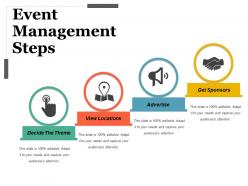
Event management steps ppt design





Try Before you Buy Download Free Sample Product
 Impress Your
 Audience
 100%
100% Editable
 Save Hours
 of Time


Demonstrate capability to deliver with our Event Management Steps Ppt Design. Display all the information folks desire.
People who downloaded this PowerPoint presentation also viewed the following :
Event management steps ppt design with all 5 slides:
Arouse their conscience with our Event Management Steps Ppt Design. Evoke feelings of charity in their hearts.
FAQs for Event management
Ok so event management breaks down into three main chunks. First you've got pre-planning - setting your budget, picking venues, all that logistics stuff. This phase honestly makes or breaks everything. Execution is obviously the actual event day when reality hits and you see if your planning worked. Then there's post-event cleanup and getting feedback. The thing is, each part builds on the last one. Solid planning = smoother event day. Good wrap-up analysis helps you crush the next one. My advice? Start keeping notes on everything now, even small stuff.
Honestly, budgeting is make-or-break for events. You don't want to be halfway through planning and realize you've blown through everything on fancy linens while having no money left for, you know, actual food. A good budget lets you figure out where to spend big (maybe the venue) and where to go cheap (decorations from the dollar store work fine). Stakeholders and vendors take you way more seriously when you have your numbers straight too. Oh, and definitely pad it by 10-15% - there's always some random expense that comes out of nowhere.
First figure out your non-negotiables: budget, how many people, and location. Visit everywhere in person - I learned this the hard way because venue photos are basically lies. Check if the vibe actually matches your event too. A stuffy hotel ballroom might be weird for a startup thing, you know? Ask about their AV setup and parking early since that stuff gets complicated. Also find out their cancellation policy now because life happens. Oh, and see if they restrict outside vendors. Make a little scoring sheet for your top 3 so you're not just going with whatever felt prettiest.
Honestly, tech makes event planning so much easier. Instead of drowning in spreadsheets (been there), you can use one platform for registrations, automated emails, and tracking RSVPs. Mobile apps are clutch for networking and schedules. Social media integration gets people hyped beforehand too. Virtual events? Total game-changer for reaching more people. Though I'd skip the fancy stuff at first - just pick something that fixes your biggest headache. Start simple with one tool and add more later. Way less overwhelming that way, trust me.
Okay so first things first - check their reliability, pricing, and quality. References are huge here, and honestly if they won't share past work samples, that's a red flag. You'll want to make sure they can actually handle your event size and hit your timeline too. Local vendors are usually easier to work with since there's less shipping drama and coordination headaches. Oh and definitely check their insurance and what happens if they need to cancel. I always tell people to get written quotes from at least three vendors before making any decisions. Makes comparing so much easier.
So basically it comes down to who you're trying to reach and why. Corporate events? You're dealing with people who care about ROI and business outcomes - think LinkedIn, industry mags, that whole professional scene. Social events are totally different though. Facebook, Instagram, wherever your crowd actually hangs out online. I honestly think corporate messaging works best when it hits on networking value and professional growth stuff. But social? You can get way more personal and fun with it. Oh and here's the thing - don't just guess where your audience is. Actually figure out where they spend their time first, then match your tone to what they'd respond to.
So before your event, get people hyped with personalized invites and some teaser content - social media buzz works great too. During the actual thing, throw in live polls, Q&As, maybe some networking time. People are suckers for contests and prizes, trust me on that one. Don't forget gamification if it fits your vibe. Afterwards, hit them up fast with thank you notes and recap stuff while they still remember what happened. Oh, and surveys work better when the event's still fresh. Just make the whole thing feel like you're actually talking WITH them, not AT them.
Don't treat risk management like some boring afterthought - weave it into every planning step. When you're picking venues and vendors, think about what could go wrong: weather, tech disasters, people flaking, security stuff. I got burned once when our generator crapped out at an outdoor gig, so trust me on this! Make backup plans for the big risks and put someone in charge of each one. Keep updating your risk list as the date gets closer because random stuff always comes up. Just make it part of your regular planning chats instead of scrambling last minute.
Honestly, get feedback surveys out ASAP while everything's still fresh in people's heads. Check if you actually hit your original goals - attendance numbers, leads, whatever you were aiming for. Social media tells you a lot too (people don't hold back online, trust me). Also sit down with your team afterward and hash out what went well vs. what was a disaster. Oh, and don't just rely on numbers - sometimes the best insights come from actual conversations with attendees. Mix the hard data with the real human reactions and you'll get a solid read on how things went.
Okay so sustainability is basically expected now - clients want it and honestly it just makes sense. Digital tickets are an easy win, plus local vendors cut down on shipping stuff around. Look for venues that actually have green certs too. The food waste thing is huge though - find caterers who'll donate leftovers or at least compost properly. Ditch single-use plastics when you can and set up decent recycling stations. Here's the cool part: a lot of this stuff actually saves money over time. I'd say pick like one or two changes per event and just build up from there. Way less overwhelming that way.
Honestly, social media is where it's at for promoting events now. Most people find out about stuff through Facebook events, Instagram stories, all that. Yeah, organic reach sucks compared to before - those algorithm changes really screwed everyone over. But the paid targeting? That's actually insane how specific you can get. Location, interests, even people who've been to similar events before. Start posting early and stay consistent across platforms. I'd make a content calendar so you don't forget to post. Trust me, showing up regularly matters way more than having perfect posts every time. You'll see better results that way.
Oh man, this stuff can totally make or break your event! Start by surveying people early about dietary needs and religious holidays. Some cultures do the mingling thing, others want formal seats - it's wild how different preferences can be. Food's huge obviously, but don't forget translation services if you've got language barriers. I learned this the hard way at my cousin's wedding lol. Dress codes matter too. Honestly? Reach out to community leaders if you're unsure. Way better to ask than accidentally offend half your guests.
Oh man, where do I even start? Asana's been a lifesaver for keeping track of all my deadlines and tasks. Eventbrite is pretty solid for registration stuff - super easy setup. I've heard good things about Monday.com too but haven't tried it yet. Whova's cool if you want people actually networking instead of just sitting there on their phones. For hybrid events, Zoom works but Hopin feels more professional somehow? Social Tables is clutch for floor plans if you're doing anything fancy with seating. Honestly though, don't go crazy with too many tools at once - I made that mistake and spent more time managing the apps than the actual event.
Get your survey out within 24-48 hours max - seriously, people forget everything after that. Mix rating scales with open-ended questions so you get actual numbers plus those random comments that are surprisingly helpful. Oh, and don't just collect it and call it done. Look for patterns in what people are saying. Maybe everyone hated the lunch or couldn't hear the speaker. Take those common complaints and make a real plan to fix them next time. Your future self will thank you.
Oh man, the biggest mistakes I see are timeline disasters and people going way over budget. Communication with vendors gets messy too - like, nobody knows who's supposed to do what. Setup always takes longer than expected, trust me on this one. Start planning super early, even if it feels ridiculous. Buffer time is your best friend. Make crazy detailed checklists and put someone's name next to every single task. Weather backup plans aren't optional btw. Have your Plan B ready for the big stuff - venue, food, all the tech. Do your final walkthrough the day before, not day-of when it's too late to fix anything.
-
Editable templates with innovative design and color combination.
-
Awesome use of colors and designs in product templates.