


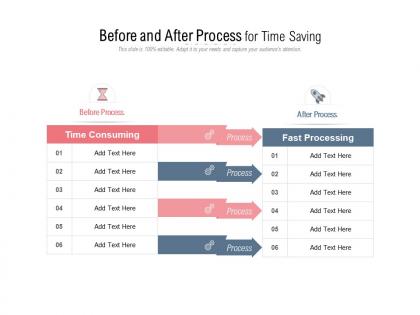
Before and after process for time saving




Try Before you Buy Download Free Sample Product
 Impress Your
 Audience
 100%
100% Editable
 Save Hours
 of Time


Be equal to the challenge with our Before And After Process For Time Saving. They ensure you never feel fazed.
People who downloaded this PowerPoint presentation also viewed the following :
Before and after process for time saving with all 5 slides:
Our Before And After Process For Time Saving bring out the essence. Your core idea gets accentuated.

FAQs for Before and after process
Honestly, just focus on three things that actually move the needle. First - time blocking. Instead of random to-do lists, block out specific hours for different work types. Game changer. Then there's the two-minute rule: anything under two minutes? Just knock it out right then instead of adding it to your pile (seriously, this one's annoying but works). Oh, and batch similar stuff together - all your emails at once, calls in one block, whatever. Don't try all three immediately though, you'll burn out. Pick one this week and see how it goes.
Okay so the Pomodoro thing is basically 25 minutes of focused work, then a 5-minute break. Repeat that cycle. What's nice is it makes huge projects feel less overwhelming - instead of staring at this massive thing, you're just doing 25 minutes. The timer actually helps because you know you can't check your phone or whatever until it goes off. Those short breaks keep your brain from turning to mush by 3pm. After four rounds, take like 15-30 minutes off. Honestly, I was skeptical at first but it really does make you more productive. Try it tomorrow with something you've been putting off.
Honestly, prioritizing changed everything for me. I used to waste entire afternoons on random busy work that didn't matter at all. Now I rank my tasks by actual impact vs just what seems urgent - there's a huge difference. Like, responding to every email immediately feels urgent but usually isn't. Start your day by figuring out what'll actually move things forward, not just what's easiest to check off. Short tasks are tempting but they're often distractions. Focus on the stuff that matters first and you'll get way more done.
Dude, visual stuff is a game changer. Color-coded calendars, Gantt charts, time-blocking templates - they beat boring to-do lists every time. You'll actually see where your time goes instead of just wondering why you're always behind. I'm obsessed with color coding everything, probably too much honestly. Templates give you structure for breaking big projects into smaller pieces that don't feel overwhelming. Plus it's way harder to ignore a deadline when it's staring at you in bright red. Start simple - grab a weekly calendar template and block out time for your top 3 priorities.
You'll want three main tools - a calendar (I use Google Calendar), something for tasks like Todoist, and time tracking with RescueTime or Toggl. Time tracking felt stupid to me at first but wow, it really shows you where hours disappear. Calendar does your scheduling obviously. Task managers keep everything organized with due dates. The time tracker? That's your reality check. Don't try setting up all three right away though - I made that mistake and gave up after like two days. Pick one first and actually use it before adding the others.
Honestly, the biggest thing that helped me was breaking stuff down into tiny pieces with actual deadlines. Like instead of "write report," make it "draft intro by 2pm" - way less scary. I always do my hardest task first thing in the morning because my brain actually works then lol. Try time-blocking too, even just 25-minute chunks if you're really stuck. Oh and this sounds weird but set a timer for 15 minutes and just start whatever you're avoiding. Usually once I get going, I don't want to stop. The momentum thing is real.
Dude, deadlines are seriously a lifesaver for getting stuff done. Your brain basically goes into overdrive when there's actual pressure, you know? Without them, I just end up scrolling my phone instead of working (whoops). The trick is breaking big projects into smaller deadlines - like don't just set one final date. Make mini ones along the way. It keeps you moving forward instead of panicking at the last minute. Even when you set your own deadlines, something clicks and you start planning backwards from that date. Trust me, it beats the whole "I'll get to it eventually" mindset that never actually works.
Block out personal stuff on your calendar like it's an actual meeting - gym, dinner with family, whatever. I used to let work bleed into my weekends constantly until I got fed up. Now I batch similar tasks together so I'm not jumping around all day. Saying no is huge too, especially to random requests that aren't really urgent. Honestly, people respect boundaries more than you'd think. Just pick one thing this week and don't budge on it. Maybe start small though - I went overboard at first and it backfired.
Honestly, when you manage your time well, your whole team just works better together. People can actually count on you meeting deadlines, which helps them plan their own stuff. You're not constantly in panic mode either - I swear that's half the battle right there. Having breathing room means you can jump in and help teammates when they need it. Here's something I learned the hard way: block out actual collaboration time on your calendar or it'll get buried under everything else. You'll be way more present in meetings too instead of mentally going through your never-ending task list.
Oh man, where do I even start? Meetings are the absolute worst - half of them could've been emails anyway. Social media is obviously a huge trap, and don't get me started on email notifications constantly pinging you. I'm guilty of the perfectionism thing too, spending way too long on stuff that doesn't really matter. Office gossip is tempting but such a time sink. Multitasking seems smart but it's actually terrible for getting things done. When I don't plan my day properly, everything feels like it's on fire. Time-blocking has helped me tons though - that and killing most notifications.
Okay so SMART goals are actually a game changer - they make you get super specific about what you want instead of just saying "I'll be more productive" or whatever. You know how you can spend hours feeling busy but not really getting anywhere? That stops happening when your goals hit all five boxes: Specific, Measurable, Achievable, Relevant, Time-bound. It's like suddenly having this filter that tells you what's worth your time and what isn't. Honestly, I used to bounce between random tasks all day until I started doing this. Pick one thing you want to accomplish this week and make it SMART - you'll be shocked how much clearer everything becomes.
Okay so first thing - chunk out your presentation with specific minutes for each part. Seriously saved my butt so many times. You'll want to practice with an actual timer because everyone talks at different speeds (learned that after bombing a presentation by going way over, ugh). I always build in little buffer zones between sections. That way if someone asks questions or you need to breathe, you're not screwed. Oh and get someone in the crowd to be your timekeeper - have them give you hand signals or whatever. If you're running behind, ditch the examples and stories, not your main points. Use phrases like "moving on" to keep yourself moving.
Dude, time blocking seriously works. You pick specific hours for each task and suddenly your brain stops jumping around everywhere. No more sitting there wondering "what should I do next?" for like 20 minutes. The crazy part is when you only give yourself 90 minutes for something, you actually get it done faster - weird how that works. I thought it would feel super restrictive at first, but it's the opposite. Try blocking out just a few chunks tomorrow and you'll see what I mean. Your whole day feels way more intentional.
Honestly, time audits are total eye-openers. You think you know where your time goes, but then you see you've been scrolling Instagram 30 times a day without realizing it. They help you figure out when you're actually sharp and focused versus when you're just going through the motions. For work stuff, you'll catch those annoying bottlenecks that slow everyone down. I know it sounds boring, but track everything for a week - even bathroom breaks if you want to get weird about it. The results will probably annoy you at first, but then you can actually fix the problems instead of just complaining about being busy all the time.
Honestly, you've gotta model it yourself first - they'll copy whatever you're doing. I'd start with clear deadlines that you actually follow (the hardest part, tbh). Regular check-ins help too, where you talk through what's genuinely urgent vs what just *feels* urgent. Give them permission to say no to random requests and have their backs when they do. Oh, and celebrate the wins! When someone nails their time management or delegates well, make it visible to everyone. People will keep doing stuff that gets noticed, so shine a light on those moments.
No Reviews