

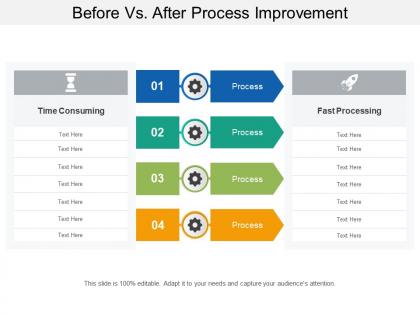
Before vs after process improvement





Try Before you Buy Download Free Sample Product
 Impress Your
 Audience
 100%
100% Editable
 Save Hours
 of Time


Interlink inputs with our Before Vs After Process Improvement. Ensure you disseminate the entire information.
People who downloaded this PowerPoint presentation also viewed the following :
Before vs after process improvement with all 5 slides:
Our Before Vs After Process Improvement are an artistic handiwork. Created by excellent craftsmen.




FAQs for Before vs
Ok so first thing - figure out exactly what problem you're trying to solve. Map out how things work now, then spot where stuff gets stuck or slows down. Design something better, but here's the thing everyone screws up: test it small first! I learned this the hard way lol. Get the actual workers involved early - they know weird edge cases you'd never think of. Once you've worked out the kinks, then roll it bigger. Oh and write down your steps so you can actually tell if it's working later. Don't try fixing everything - just tackle your worst headache first.
Look at your numbers first - cycle times, error rates, customer complaints. That stuff shows you where things break down. But honestly, your employees are gonna give you the best intel since they deal with this mess every day. Draw out your workflows too because sometimes you don't realize how convoluted things are until you see it mapped out. Customer surveys help catch blind spots your team might miss. Oh, and don't just rely on data - mix it with actual feedback from people. That's where you'll find what's really costing you time and cash.
Think of data analysis like being a detective for your processes - it shows what's really going on vs what you assume is happening. You'll spot bottlenecks and patterns you never noticed before. Honestly, without numbers you're just throwing stuff at the wall and hoping it sticks. The data helps you figure out which fires to put out first and gives you proof when you need to show your boss that changes actually worked. Oh, and it's super helpful for getting buy-in from people who control budgets. Start simple though - pick 2-3 metrics to track before you change anything.
So the big three are Lean, Six Sigma, and Kaizen - you'll run into these pretty much anywhere. Lean's about cutting waste from your processes. Six Sigma uses data to hunt down defects and inconsistencies. Kaizen is just continuous tiny improvements, which honestly is where I'd start since you don't need a black belt or anything. There's also Agile if you're doing more project work. I learned this the hard way, but pick whatever actually fits your team's skills and the problems you're dealing with. Don't go for the flashy complex stuff right away.
Your employees are sitting on a goldmine of insights you can't see from up top. They deal with all the broken processes and daily headaches, so they know exactly what needs fixing. Thing is, you gotta make it safe for them to actually speak up - nobody wants to be the complainer, you know? Try anonymous surveys or just grab coffee with people sometimes. Regular feedback sessions work too. But here's the thing that trips up most managers: you absolutely have to act on what they tell you. Otherwise they'll just stop bothering to share anything useful.
Definitely track efficiency and quality stuff - cycle time, error rates, customer satisfaction, cost per unit. That's the core data you need. Oh, and don't skip employee satisfaction because if your team's miserable, the whole thing falls apart anyway. Get your baseline numbers first, then compare after you implement changes. Honestly, I've seen people go overboard with like 15 different metrics and it gets messy fast. Stick to maybe 3-5 that actually matter for what you're trying to fix. Give it a few months of consistent tracking before you decide if it's working.
Listen to what people are actually worried about first - they usually spot the real issues anyway. Get your team involved in figuring out the solutions instead of just dropping changes on them. Nobody likes being told what to do without context, so explain why you're doing this and what's in it for them personally. Roll things out slowly if you can. People get overwhelmed otherwise. Oh, and definitely celebrate when someone adopts the new way of doing things. Makes everyone else think "hey, maybe this isn't so bad after all." Once you get a few people on board, the rest usually follow.
Look, continuous improvement is what separates thriving businesses from dead ones. Instead of getting trapped in "we've always done it this way" thinking, you're making tiny tweaks that snowball into massive wins. Better efficiency, happier customers, costs go down - the works. Way smarter than betting everything on some huge risky overhaul, honestly. The secret sauce? Getting your team excited about suggesting changes and trying stuff out. I'd start simple - grab that one annoying process everyone complains about and ask your people what small change could make it even 10% better this week.
Start with your biggest time-wasters - those manual tasks that make you want to scream. Analytics tools will show you where things actually break down (way better than just guessing). I'm obsessed with process mapping software because you can literally see the mess your workflow has become. Even basic stuff like Zapier saves me tons of hours on repetitive work. The key is automating those annoying handoffs between team members. Oh, and data pattern analysis? Total game-changer for spotting bottlenecks you didn't even know existed. Pick one painful process and find tech to fix it first.
Honestly, the hardest part is people just hate change - even when current processes totally suck. You'll get pushback from your team because they're comfortable with the status quo. Plus you're probably dealing with unclear goals, crappy communication about why things need to shift, and never enough resources. Oh, and bad data will screw you over fast if you're not careful. Here's what actually works: start with small pilot runs instead of going big right away. Get the biggest skeptics involved in planning - weird but it helps. Celebrate those early wins hard. Builds momentum and suddenly people start buying in.
Dude, you really need people from different departments on these teams. Sales folks will catch stuff that IT completely misses, and vice versa. I've seen it happen so many times - operations spots a bottleneck that would've killed the whole project later. The best part? Everyone actually gets why changes matter since they see how it affects their own work. Makes rolling things out way less painful. Oh, and don't just invite people to check a box - actually listen to what they're saying. Trust me, the customer service rep probably knows more about what's broken than the executives do.
Look, when you fix broken processes, customers get happier because stuff actually works. They get faster service with way fewer screw-ups. Your team stops wasting time on janky systems and can focus on helping people - honestly, it's a win-win for everyone. Start by figuring out where customers usually hit roadblocks or get frustrated. Those are your problem spots. Then just work through them one by one. You'll catch issues before they blow up into angry phone calls or returns. I've seen companies totally turn around their customer reviews just by smoothing out the obvious friction points first.
You know how problems are way easier to spot when they're right in front of you? That's basically why visual stuff works so well. Dashboards, kanban boards, even just charts on the wall - they help your team catch bottlenecks and delays instantly instead of hunting through boring spreadsheets (which nobody wants to do anyway). Everyone gets on the same page about what's broken and what's actually working. When you make changes, you'll see results happening in real time. Honestly, start with something super basic like a whiteboard tracking your main numbers. Way better than burying everything in Excel.
Honestly, process changes mess with team dynamics more than people realize. Your team will probably push back at first - nobody likes changing routines, even crappy ones. But once they see actual results? Game changer. Everyone starts pitching ideas instead of just showing up. Some people become your biggest cheerleaders while others... well, they need more hand-holding. The problem-solving part actually brings teams together though. Trust builds fast when you're all figuring stuff out together. Start by asking them what's broken first - makes them feel like they're driving the change instead of just dealing with whatever you decide.
Yeah totally! Lean works for basically anything - I've watched teams clean up everything from hiring processes to how they run social media campaigns. First thing is just draw out whatever workflow is driving everyone crazy right now. You'll spot the stupid stuff pretty quickly - like emails sitting in someone's inbox for days or getting five approvals for a $20 expense. Then cut out anything that doesn't actually help your customers. Honestly, half the steps in most processes exist because "that's how we've always done it." Get everyone involved though - the person doing the work usually knows exactly what's broken. Start small with one thing that annoys your team every single day.
No Reviews