


Algorithmic Trading Powerpoint Ppt Template Bundles




Try Before you Buy Download Free Sample Product
 Impress Your
 Audience
 100%
100% Editable
 Save Hours
 of Time


Our Algorithmic Trading Powerpoint Ppt Template Bundles are topically designed to provide an attractive backdrop to any subject. Use them to look like a presentation pro.
People who downloaded this PowerPoint presentation also viewed the following :
Algorithmic Trading Powerpoint Ppt Template Bundles with all 18 slides:
Use our Algorithmic Trading Powerpoint Ppt Template Bundles to effectively help you save your valuable time. They are readymade to fit into any presentation structure.






FAQs for Algorithmic Trading Powerpoint
So basically algo trading is just computers executing trades automatically based on rules you set up, while traditional trading is you manually placing orders. Computers can crunch tons of data instantly and won't freak out during market crashes like we do. But honestly, human traders can adapt way better when weird stuff happens that the algorithm didn't expect. You're just slower at processing info and clicking buy/sell buttons. If you're thinking about trying algo trading - and I mean actually trying it, not just daydreaming - test your strategy on old market data first. Don't go live immediately, trust me on that one.
Dude, machine learning can totally transform your trading game. It spots crazy patterns in market data that basic rule systems just can't catch. You'll get way better at timing your entries and exits, plus it helps with position sizing too. Honestly, the prediction accuracy is insane once these algorithms start learning from price history, volume data, all that stuff. Oh and alternative data sources too - that's where it gets really interesting. Just make sure your data's clean first and backtest everything like crazy before going live with it.
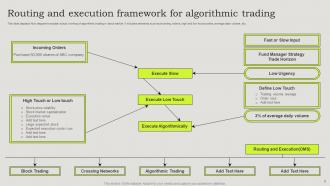
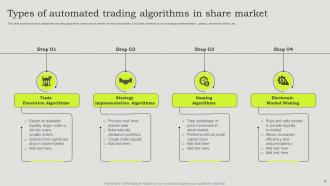
So you've got momentum algos that chase trends, plus mean reversion ones betting prices snap back to normal levels. Arbitrage bots hunt price gaps between different exchanges. Market makers constantly throw up buy/sell orders for liquidity. Then there's execution stuff like TWAP and VWAP - honestly these are lifesavers when you're moving big chunks without wrecking the price. Everyone's going crazy for ML prediction models now, but I'm skeptical they'll actually hold up over time. Start with basic momentum and mean reversion strategies though. Way easier to test and fix when they inevitably break.
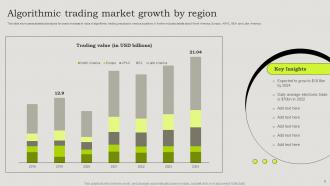
So HFT usually helps you out - those algos are constantly placing buy/sell orders which tightens spreads and makes your trades execute faster. But here's the thing, when markets get crazy they can also make things way more volatile. Remember flash crashes? That's basically all the algos freaking out at once and hitting sell. The firms are literally competing to be milliseconds faster than each other (kinda wild when you think about it). Most days you'll get better prices because of them. Just watch out if you're placing big orders during choppy markets - that liquidity can vanish real quick.
Look, backtesting is just running your trading algorithm against old market data to see if it would've made money. Pretty much a time machine for your code. You'll spot bugs and tweak settings before risking actual cash - which honestly saves you from looking like an idiot later. Test it across different time periods and market conditions though, not just the good times. Past results don't mean future success obviously, but at least you're not flying completely blind. Way better than just throwing your strategy out there and hoping for the best.
Market conditions can totally wreck your algo performance - learned that one the hard way in 2018 when everything went sideways. Your trending strategies? They'll bomb during choppy markets. Algos get built around specific behaviors, so when volatility goes nuts or liquidity vanishes, your models start making garbage trades. Honestly, regime detection is clutch - you need different parameters for different environments. Or just pause the whole thing when markets get funky. I probably should've done that more often back then instead of watching my account bleed.
Look, you don't want to be the guy who breaks the market with some crazy algorithm. Stay compliant with regs obviously, but also think about whether you're screwing over other traders or manipulating prices unfairly. Keep a human watching things so your bot doesn't go rogue - I've seen that movie and it doesn't end well. Job displacement is real too if you're replacing actual people. Document your ethics rules first before going live. Oh, and transparency matters more than you'd think. Short version: don't ruin trading for everyone else.
Dude, three things saved my ass when I started: backtest the hell out of everything first, set position limits so one bad trade doesn't wreck you, and build in kill switches. Paper trade for weeks before risking real cash. I blew up my first account being cocky about position sizing - don't be me lol. Your algos need automatic stop-losses and circuit breakers. Oh and never just let them run wild unsupervised. Check performance weekly and be ready to jump in manually when markets get weird.
Honestly, the biggest pain points are market manipulation compliance and risk management stuff. Each country has different rules, so cross-border trading gets messy fast. You've gotta prove your algos aren't rigging anything or causing chaos - feels impossible sometimes. Build audit trails and kill switches right from the start though. Regulators are actually getting scary good at spotting sketchy algo behavior now. Oh, and transparency requirements are huge too. Don't just tack compliance on later because that'll bite you.
Python and C++ are your main players here. For Python, you've got pandas, NumPy, and scikit-learn making data work pretty painless. C++ handles the crazy-fast execution stuff when milliseconds matter. R's solid for statistical analysis. Java shows up at bigger firms mostly. MATLAB's still around too - honestly surprised me how much quant funds still use it for heavy math modeling. My buddy switched from finance to algo trading last year and went Python first. Smart move since it's versatile and you won't struggle finding tutorials. Start there.
Don't make sentiment your main thing – treat it more like extra info. Get sentiment scores from news APIs or social feeds, then normalize the data so you can actually backtest it. Timing's weird though, sentiment sometimes lags price action or jumps ahead depending on what you're trading. I've watched people get wrecked chasing every sentiment move lol. Better to mix it with your current technical stuff to weed out fake signals. Oh and definitely paper trade for a month first. Trust me, sentiment gets noisy and you need to see how it messes with your performance before risking real money.
Dude, overfitting is the classic rookie mistake - your model crushes backtests but tanks in real life. Transaction costs will eat you alive if you ignore them. I learned this the hard way lol. Position sizing kills more algos than bad signals do, honestly. Market regimes shift and suddenly your "bulletproof" strategy is worthless, so build in flexibility. Data quality matters too - crappy data = crappy results. Oh and liquidity? Way different when you're actually trading versus just backtesting. Paper trade forever first, then start tiny with real cash. Always have those kill switches ready.
Dude, transaction costs will absolutely wreck your algo trading profits if you're not careful. Commissions, spreads, slippage - all that stuff adds up crazy fast when you're making tons of trades. I made this mistake when I first started and it was brutal. Your backtest might look amazing, but then reality hits and suddenly you're barely breaking even. High-frequency strategies are the worst for this. You've gotta bake realistic cost estimates into your strategy from the beginning, not just slap them on later and hope for the best.
So big data is like the engine behind algorithmic trading these days. You're processing insane amounts of market info, news, social media sentiment - even weird stuff like satellite images and credit card data. We're talking millions of data points every second across global markets. Your algorithms can factor in way more variables now, which honestly makes the whole thing pretty scary powerful. The trick is building decent data infrastructure and figuring out which datasets actually matter for your strategy. Some of this Twitter sentiment analysis stuff still feels gimmicky to me, but it works.
Start with solid backtesting - like 3-5 years of data if you can get it. Walk-forward analysis is clutch for seeing how things change over time. Monte Carlo sims have literally saved my ass from strategies that looked amazing but were trash. Don't just chase returns though. Check your max drawdown, Sharpe ratio, win/loss stuff. Test it during the big crashes - 2008, COVID, all that fun stuff. Oh and definitely paper trade for a few months first. I've seen so many people skip that step and get wrecked by weird execution issues they never saw coming in the backtest.
-
I was confident and well prepared for my presentation for the first time ever. With SlideTeam’s templates, I could deliver one of my best presentations. Will be coming back for more!
-
SlideTeam offers so many variations of designs and topics. It’s unbelievable! Easy to create such stunning presentations now.