

Aligning Product Portfolios With Strategic Plans Powerpoint Presentation Slides




Try Before you Buy Download Free Sample Product
 Impress Your
 Audience
 100%
100% Editable
 Save Hours
 of Time


Diversification and rising consumer demand have prompted companies to widen their product portfolios, and firms are investing more in new product development activities to meet customer expectations. Check out our professionally designed presentation on Aligning Product Portfolios with Strategic Plans that will help businesses that want to increase their global market share and expand their services by developing and offering products in line with customer demand. Firstly, the presentation begins with an industry overview section that organizations can use to showcase the significant industry trends and attractiveness. Section such as analyzing current capability will help the business provide information about existing product portfolio, companys ability, and a lifetime of various products. How our competitors are performing section will help the business address their competitors portfolio characteristics along with product development methodologies used by them. To effectively develop and manage product portfolios, organizations can use slides addressing business goals, product vision, and sections, namely identifying and developing target customer lists, product portfolio development, resource allocation, product portfolio roadmap, etc. Finally, performance evaluation dashboards will assist organizations in monitoring the performance of various product portfolios and the overall business. Get access now.
People who downloaded this PowerPoint presentation also viewed the following :
Content of this Powerpoint Presentation
Slide 1: This slide introduces Aligning Product Portfolios with Strategic Plans. State your company name and begin.
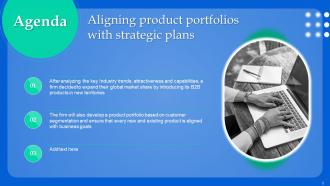
Slide 2: This slide states Agenda of the presentation.
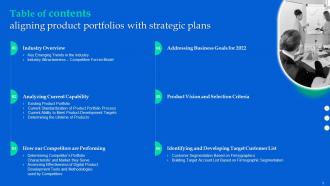
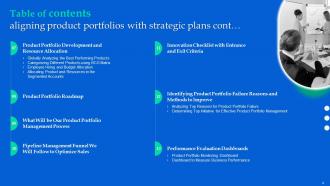
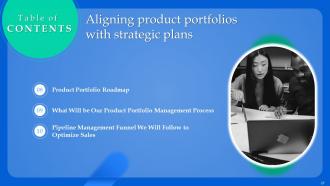
Slide 3: This slide presents Table of Content for the presentation.
Slide 4: This is another slide continuing Table of Content for the presentation.
Slide 5: This slide highlights title for topics that are to be covered next in the template.
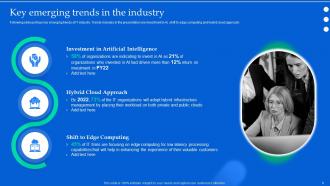
Slide 6: Following slide portrays key emerging trends of IT industry.
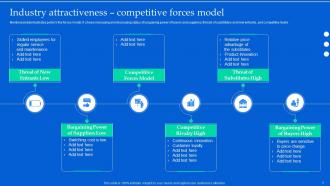
Slide 7: Mentioned slide illustrates porter's five forces model.
Slide 8: This slide highlights title for topics that are to be covered next in the template.
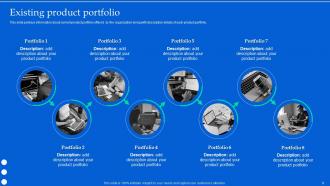
Slide 9: This slide portrays information about current product portfolio offered by the organization.
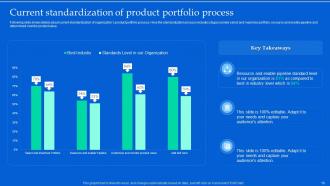
Slide 10: This slide displays Current Standardization of Product Portfolio Process.
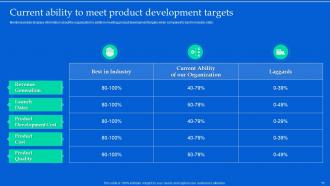
Slide 11: This slide represents Current Ability to Meet Product Development Targets.
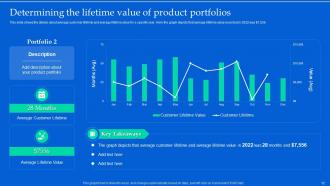
Slide 12: This slide showcases Determining the Lifetime Value of Product Portfolios.
Slide 13: This slide highlights title for topics that are to be covered next in the template.
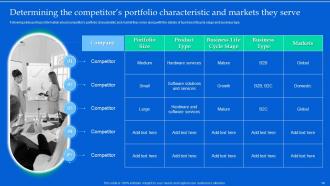
Slide 14: This slide shows Determining the Competitor’s Portfolio Characteristic and Markets they Serve.
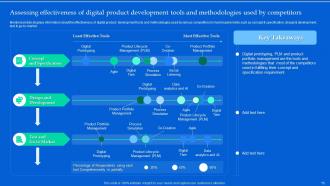
Slide 15: This slide presents Assessing Effectiveness of Digital Product Development Tools and Methodologies used by Competitors.
Slide 16: This slide highlights title for topics that are to be covered next in the template.
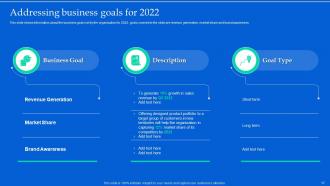
Slide 17: This slide shows information about the business goals set by the organization for 2021.
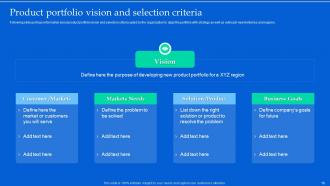
Slide 18: This slide presents Product Portfolio Vision and Selection Criteria.
Slide 19: This slide highlights title for topics that are to be covered next in the template.
Slide 20: This slide displays Customer Segmentation Based on Firmographics.
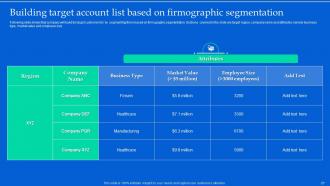
Slide 21: This slide represents Building Target Account List Based on Firmographic Segmentation.
Slide 22: This slide highlights title for topics that are to be covered next in the template.
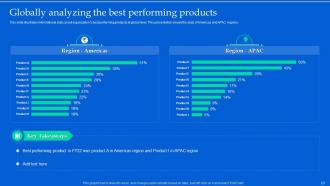
Slide 23: This slide showcases Globally Analyzing the Best Performing Products.
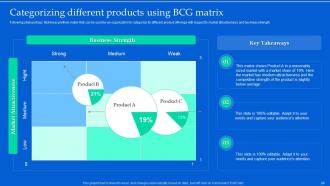
Slide 24: This slide shows Categorizing Different Products using BCG Matrix.
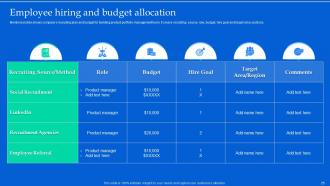
Slide 25: This slide presents Employee Hiring and Budget Allocation.
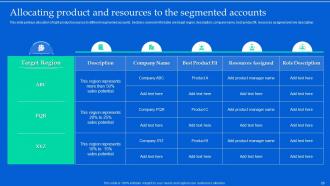
Slide 26: This slide displays Allocating Product and Resources to the Segmented Accounts.
Slide 27: This slide highlights title for topics that are to be covered next in the template.
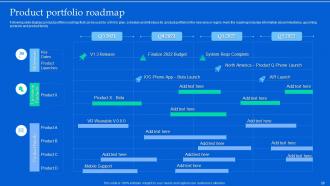
Slide 28: Following slide displays product portfolio roadmap that can be used by a firm to plan.
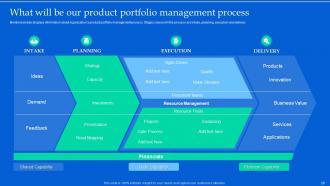
Slide 29: Mentioned slide displays information about organization’s product portfolio management process.
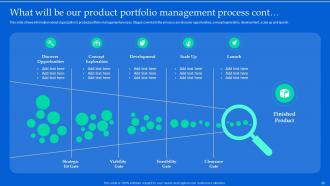
Slide 30: This is another slide continuing organization’s product portfolio management process.
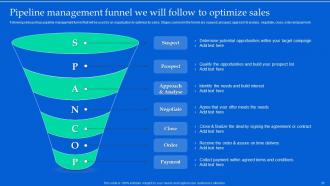
Slide 31: This slide presents Pipeline Management Funnel We Will Follow to Optimize Sales.
Slide 32: This slide highlights title for topics that are to be covered next in the template.
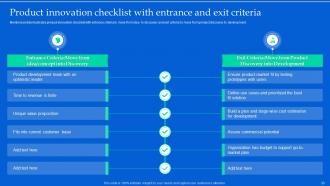
Slide 33: This slide displays Product Innovation Checklist with Entrance and Exit Criteria.
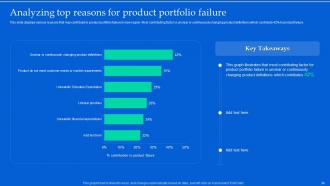
Slide 34: This slide represents Analyzing Top Reasons for Product Portfolio Failure.
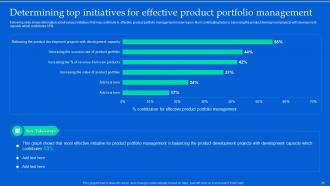
Slide 35: This slide showcases Determining Top Initiatives for Effective Product Portfolio Management.
Slide 36: This slide highlights title for topics that are to be covered next in the template.
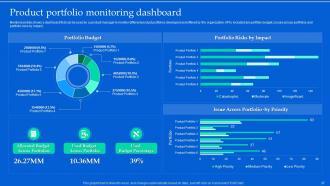
Slide 37: This slide shows Product Portfolio Monitoring Dashboard.
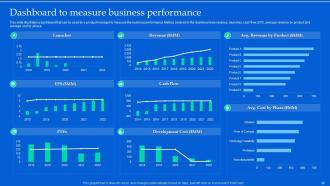
Slide 38: This slide presents Dashboard to Measure Business Performance.
Slide 39: This slide contains all the icons used in this presentation.
Slide 40: This slide is titled as Additional Slides for moving forward.
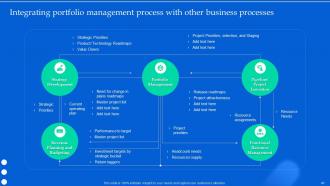
Slide 41: This slide shows Integrating Portfolio Management Process with Other Business Processes.
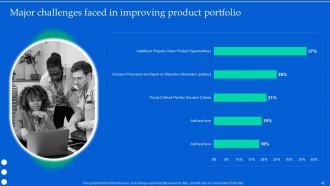
Slide 42: This slide presents Major Challenges Faced in Improving Product Portfolio.
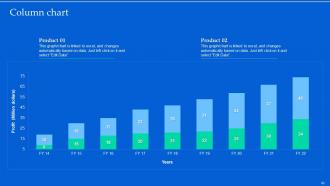
Slide 43: This slide displays Column chart with two products comparison.
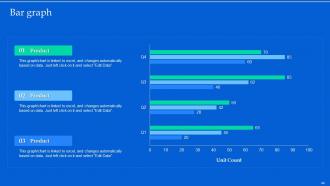
Slide 44: This slide presents Bar chart with two products comparison.
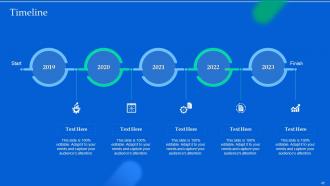
Slide 45: This is a Timeline slide. Show data related to time intervals here.
Slide 46: This slide contains Puzzle with related icons and text.
Slide 47: This slide depicts Venn diagram with text boxes.
Slide 48: This slide shows Post It Notes. Post your important notes here.
Slide 49: This is a Thank You slide with address, contact numbers and email address.
Aligning Product Portfolios With Strategic Plans Powerpoint Presentation Slides with all 54 slides:
Use our Aligning Product Portfolios With Strategic Plans Powerpoint Presentation Slides to effectively help you save your valuable time. They are readymade to fit into any presentation structure.








FAQs for Aligning Product Portfolios With Strategic Plans
Honestly, it comes down to three big things. First - strategic alignment. Every product needs to actually support your main business goals, not fight against your other stuff. Resource allocation is where most people mess up though. Don't spread your team crazy thin across like ten different products (trust me on this one). Market positioning is the third piece - figure out how each product hits different customer segments or solves different problems. Oh, and here's what I'd actually do: audit everything you've got right now. Cut anything that isn't clearly helping your main strategy. Sounds harsh but it works.
Start with a portfolio audit - list out everything and check revenue, profit margins, market share, that whole deal. Each product's at a different lifecycle stage too. Honestly, I'd make a visual matrix because staring at endless spreadsheet rows will drive you nuts. See how well stuff actually matches your strategy and what customers want. There's probably some overlap or weird gaps you haven't noticed. Here's the hard part though - you've got to be ruthless about the losers. I know it sucks when you're attached to something, but cutting the dead weight frees up resources for products that'll actually move the needle.
Track your usual suspects first - revenue growth, profit margins, market share. Those tell you if stuff's actually making money. Customer satisfaction and adoption rates matter too since they show product health. Time-to-market is huge for staying competitive. Resource allocation efficiency is worth watching because some products just eat up resources for no good reason (learned that the hard way). Don't go crazy with metrics though. Pick maybe 4-5 that actually align with where you're headed. Run quarterly benchmarks against your current portfolio and you'll spot patterns pretty quick.
Honestly, market trends are like a constant nudge to reevaluate what's worth your time and money. Customer behavior shifts, new tech pops up, competitors change direction - that's when you pivot your resources. Can't ignore it when everyone's going crazy for AI integration while you're still pushing old-school tools. Either kill the duds or go all-in on products that match where things are headed. I'd say check your whole lineup quarterly against what's actually happening out there. Don't get emotionally attached to stuff that isn't working anymore - brutal but necessary.
Dude, customer feedback is like your GPS for figuring out what to build next. It shows you which products actually matter to people and which are just... there. I always look for patterns - are people constantly asking for something you don't have? That's a gap worth filling. Also, you'll spot the products that confuse users or aren't pulling their weight. Honestly, I've watched teams build features for months that nobody even wanted because they ignored what customers were saying. Use the feedback to decide what deserves more resources and what needs to get axed. Just group the common themes first.
Honestly, I'd start with mapping what you already have against what customers actually want - gaps become super obvious that way. Your sales team is sitting on gold here since they constantly hear about stuff you don't offer. Check where people bail out of your customer journey too, that's usually telling. Competitor analysis helps but don't fall into the copying trap (been there). Customer feedback is clutch obviously. The main thing is being methodical about it instead of just throwing darts at a board and hoping something sticks.
Don't just axe everything at once - that's a recipe for angry customers. Pull back on marketing spend for the duds first, then dig into your usage data to see what's actually worth saving. Be upfront with users about what's happening and when. Maybe bundle some of the weaker products with your winners during the transition? Honestly, people just want enough time to figure out their next move - whether that's upgrading to your better stuff or downloading their data to bail out completely. Pick your sunset date and don't cave when people complain later.
So basically, product lifecycle management forces you to think strategically about where you're putting your money and effort. You've got products at different stages - some just launching, others hitting their peak, some clearly dying a slow death (we've all been there). The trick is balancing everything properly. Don't let dying products drain resources forever while your promising new stuff gets ignored. I'd regularly check where each product sits in its lifecycle, then shift your investments accordingly. Short bursts for declining ones. More focus on the winners. It keeps your whole portfolio aligned with what you're actually trying to achieve business-wise.
Honestly? Misaligned portfolios are brutal - you're basically setting money on fire. Your team gets pulled in ten different directions working on stuff that doesn't even connect. Engineering gets confused, marketing can't tell a coherent story, and everyone's pissed because nobody knows what the actual goal is. I've watched companies waste entire quarters on products they should've axed months earlier. Oh and your resources get so scattered that nothing builds real momentum. Short version: audit what you've got and figure out which products actually support your main thing. Everything else is just expensive noise.
Honestly, Tableau and Power BI are lifesavers for this stuff. Start simple though - just do a 2x2 matrix plotting performance against strategic importance. Way easier than drowning in spreadsheet hell! Heat maps and bubble charts make the patterns pop out instantly. Once you've got the basics down, you can get fancy and pull in competitor data or market trends. The automated reporting feature is clutch too since everything stays updated without you having to rebuild it constantly. I'd probably avoid going too complex right away - learned that the hard way on my last project.
Three things to look at: how well each product fits your company's main strategy, whether there's actually decent money to be made, and what resources you'll need. Check market size and growth potential - no point chasing something tiny. Then figure out what each product demands for budget, people, and time. Customer feedback is honestly your best friend here, don't sleep on that data. Oh and retention numbers too if you've got them. Make a simple scoring system with all these factors so you're not just going with your gut. Way easier to defend your choices later.
Honestly, cross-functional teams are like magic for getting your portfolio actually aligned. When engineering, product, marketing and sales work together from day one, nobody's confused about the big picture anymore. You avoid those awful "wait, what?" moments months down the road. Plus everyone gets why decisions are made - market reality, tech limitations, business goals all make sense together. My advice? Just get the right mix of people in your planning meetings from the start. The alignment kind of happens on its own after that, which is pretty cool.
Honestly, you've got to stay on top of this with regular check-ins - quarterly reviews work well even though they're kind of a drag. Get everyone using the same metrics so you're not comparing apples to oranges. Your roadmaps need to actually tie back to what the business wants, not just what sounds cool. When stuff changes (and it always does), tell people right away. Don't overthink the governance part - just enough structure so nobody goes rogue but not so much that everything slows to a crawl. I'd start by just mapping what you have now against your strategy next week.
Pick 2-3 product lines and stick with them - don't do what I did with 15 random projects that went absolutely nowhere. Map what you've got against what customers actually want first. Then only approve new stuff that either makes your existing products better or obviously connects to what you're already doing. Yeah, some projects will seem super cool but kill them if they don't fit. Oh, and set up some kind of review process so you're not just throwing money at shiny objects. Focus beats spreading yourself thin every single time.
Apple's the perfect example here - they axed profitable stuff like the iPod because it might hurt iPhone sales. Brutal but smart. Netflix did something similar when they killed their DVD cash cow for streaming (which seemed crazy at the time). Amazon's whole thing revolves around obsessing over customers, whether that's AWS, Prime, whatever. I think the hardest part is being willing to ditch something that's making money now if it doesn't fit the bigger picture. Most companies can't stomach that kind of decision.
-
“You have the structure in place that are easy to explore new opportunities.I will be recommending your services to other people.”
-
If you have visited their site and failed to find the products, try reaching the customer service because it will be the case that you didn't use the search bar well.