

Amazon Business Plan Powerpoint Presentation Slides





Try Before you Buy Download Free Sample Product
 Impress Your
 Audience
 100%
100% Editable
 Save Hours
 of Time


Grab our expertly crafted Amazon Business Plan Presentation, designed to help entrepreneurs succeed in the competitive e-commerce market by providing a comprehensive outline of their online business strategy. Our Amazon Corporate Plan includes an executive summary, a market analysis, and a breakdown of vital success factors. Additionally, it highlights the mission, vision, and the companys financial summary. Further, our Amazon Business Model PPT displays potential growth analysis and covers a SWOT analysis with Porters five force analysis model, customer analysis, and market sizing. The plan also outlines an offline and online marketing v strategy and a sales funnel for customer retention. The financial summary includes a scenario analysis, profit and loss statement, cash flow statement, balance sheet, and a DCF valuation model for the business after five years. By implementing the strategies outlined in this plan, you can increase your sales, improve customer retention, and ultimately achieve substantial success in the highly competitive marketplace. Access the PPT now to take your e commerce business to the next level.
People who downloaded this PowerPoint presentation also viewed the following :
Content of this Powerpoint Presentation
Slide 1: This slide introduces Amazon Business Plan. Commence by stating Your Company Name.
Slide 2: This slide depicts the Agenda of the presentation.
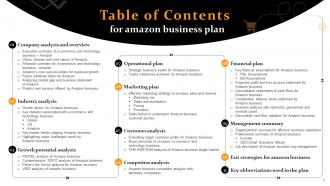
Slide 3: This slide includes the Table of Contents.
Slide 4: This slide highlights the Title for the Topics to be covered further.
Slide 5: This slide presents the Executive summary of e-commerce and technology business – Amazon.
Slide 6: This slide covers the details related to Amazon's vision, mission, and core values.
Slide 7: This slide provides the details related to Amazon’s financial performance based on its revenue growth and profitability.
Slide 8: This slide depicts Amazon's core success pillars defining its growth and profitability.
Slide 9: This slide includes details related to Amazon's future initiatives and its focus on expanding existing businesses and investing in new technologies.
Slide 10: This slide covers the problem associated with the e-commerce and technology industry.
Slide 11: The purpose of this slide is to provide information related to the wide range of products and services offered by the Amazon business.
Slide 12: This slide includes the Heading for the Contents to be discussed next.
Slide 13: This slide highlights the Key statistics associated with e-commerce and technology business - Global.
Slide 14: This slide continues the Key statistics associated with e-commerce and technology business – Global.
Slide 15: This slide presents the Key statistics associated with e-commerce and technology business - US.
Slide 16: This slide states the Key statistics associated with e-commerce and technology business - Amazon.
Slide 17: This slide portrays the Key market trends shaping Amazon business.
Slide 18: This slide deals with Highlighting major challenges faced by Amazon business.
Slide 19: This slide contains the Title for the Ideas to be further discussed.
Slide 20: This slide reveals the PESTEL analysis of Amazon business.
Slide 21: This slide shows the Comprehensive SWOT analysis of Amazon business.
Slide 22: The slide highlights porter’s five forces model and its implications in the US e-commerce and technology industry.
Slide 23: This slide portrays the VRIO analysis of Amazon business.
Slide 24: This slide includes the Heading for the Ideas to be covered next.
Slide 25: This slide displays the Amazon business competitor analysis with attributes comparison.
Slide 26: This slide continues the Amazon business competitor analysis with attributes comparison.
Slide 27: This slide shows the Title for the Topics to be discussed in the upcoming template.
Slide 28: This slide covers an assessment of how the company's products will fit into a particular market and where they will acquire the most traction with customers.
Slide 29: This slide provides an overview of how to better understand the target audience.
Slide 30: This slide depicts the TAM SAM SOM analysis of Amazon business target market.
Slide 31: This slide indicates the Heading for the Contents to be covered further.
Slide 32: This slide portrays the Effective marketing strategy to increase sales and revenue – Marketing mix.
Slide 33: This slide shows the Effective marketing strategy to increase sales and revenue – Sales and Distribution.
Slide 34: This slide displays the Effective marketing strategy to increase sales and revenue - Pricing.
Slide 35: The purpose of this slide is to implement an effective go-to-market strategy for bringing the company's products or services to an end customer.
Slide 36: This slide continues the Effective marketing strategy to increase sales and revenue – Promotion.
Slide 37: This slide reveals the Sales funnel to understand Amazon business customer journey.
Slide 38: This slide highlights the Title for the Contents to be discussed next.
Slide 39: This slide presents the Strategic business model for Amazon business.
Slide 40: The slide covers particular objectives or goals achieved by an organization in different years.
Slide 41: This slide portrays the Heading for the Topics to be covered in the upcoming template.
Slide 42: This slide depicts the important financial assumptions that are to be made while setting Amazon business.
Slide 43: This slide states the Key financial assumptions for Amazon Business – BS Assumptions.
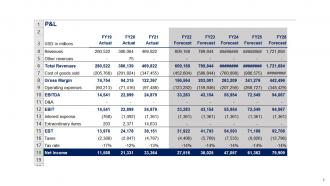
Slide 44: This slide represents the Projected profit and loss account statement for Amazon business.
Slide 45: This slide continues the Projected profit and loss account statement for Amazon business.
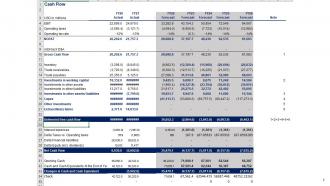
Slide 46: This slide displays the Consolidated statements of cash flows for Amazon business.
Slide 47: This slide continues the Consolidated statements of cash flows for Amazon business.
Slide 48: This slide covers the Comparative balance sheet statement for Amazon business.
Slide 49: This slide portrays the Scenario analysis with optimistic, pessimistic and nominal cases.
Slide 50: This slide continues the Scenario analysis with optimistic, pessimistic and nominal cases.
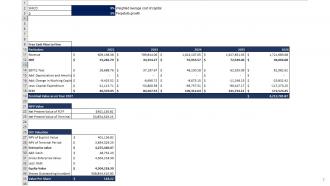
Slide 51: This slide shows the Discounted cash flow valuation for Amazon business.
Slide 52: This slide contains the Title for the Topics to be discussed next.
Slide 53: The slide highlights the organizational hierarchy in the company used to define the staff structure.
Slide 54: This slide presents the founder’s biggest professional achievements and most valuable skills.
Slide 55: This slide shows the CEO’s (Chief Executive Officer) biggest professional achievements and most valuable skills.
Slide 56: This slide depicts the Job description of Amazon business key management.
Slide 57: This slide continues the Job description of Amazon business key management.
Slide 58: This slide reveals the Heading for the Contents to be covered further.
Slide 59: This slide represents exit strategies such as sell-offs, IPOs, mergers, and acquisitions.
Slide 60: This slide exhibits the Title for the Ideas to be discussed in the upcoming template.
Slide 61: This slide presents the Key abbreviations used in the plan.
Slide 62: This is the Icons slide containing all the Icons used in the plan.
Slide 63: This slide is used for depicting some Additional infomration.
Slide 64: This is the 30,60,90 days plan slide for effective planning.
Slide 65: This slide highlights the company-related information.
Slide 66: This is Meet our team slide.
Slide 67: This slide contains the Posts it notes for reminders and deadlines.
Slide 68: This slide elucidates the organization-related Roadmap.
Slide 69: This slide displays the firm's Timeline.
Slide 70: This is the Quotes slide for motivation.
Slide 71: This is the Thank you slide for acknowledgement.
Amazon Business Plan Powerpoint Presentation Slides with all 76 slides:
Use our Amazon Business Plan Powerpoint Presentation Slides to effectively help you save your valuable time. They are readymade to fit into any presentation structure.







































































FAQs for Amazon Business Plan
Dude, you gotta nail the market research first - figure out your niche and scope out competitors. Product sourcing is huge too, plus pricing that covers all those annoying Amazon fees (seriously, they add up fast). Don't skip inventory planning and marketing for visibility. Financial projections are clutch because margins get tight real quick. Also map out brand protection and customer service stuff. Honestly? Start small with just one product category. Test it out, see what works, then expand once you've got the hang of it. Way less overwhelming that way.
Look, market research is what separates successful Amazon sellers from people who just burn through cash. Without it, you're basically guessing at everything - pricing, competition, what people actually want to buy. Pretty risky move if you ask me. Tools like Jungle Scout or Helium 10 will show you real demand numbers and how saturated different niches are. You'll spot seasonal patterns, find keywords that convert, and figure out pricing that actually works. Honestly beats the hell out of launching something random and hoping for the best. Do this homework first before you pick any product.
Look, you gotta spy on your competition or you'll get destroyed. Check what they're charging, which keywords they use, how they write their listings - basically everything. I know it sounds creepy but it works. Track your top 5-10 competitors every week and see what moves they make. This stuff helps you find pricing sweet spots and gaps in the market nobody's filling yet. Without doing this research, you're basically gambling with your money. Trust me, I learned this the hard way when I first started selling.
Start with Helium 10 or Jungle Scout to see what keywords people actually search for - that data's everything. Then dig into your competitors' listings and find the gaps. The reviews section is honestly where the magic happens though. Read what customers complain about and how they describe problems. Use their exact words in your listings, not some corporate speak. Set up PPC campaigns targeting those high-intent searches, and Amazon's advertising console has decent audience insights if you poke around. Pick one customer type first - trying to target everyone usually backfires.
Dude, be super conservative with your Amazon forecasts - that platform is wild. Don't just burn cash on random keywords, figure out what ads actually convert. Seasonal stuff will mess with your numbers big time, plus Amazon loves changing their fees randomly (ugh). Rolling 13-week forecasts work way better than trying to predict a whole year. Amazon moves too fast for that. Oh and if you're new, account for the fact that you'll probably screw some things up at first - we all do. Track your weekly actuals religiously so you can pivot when things go sideways. Buffer time for inventory delays too.
Dude, inventory is everything - don't treat it like some side thing. Stock out and your rankings tank hard. But don't go crazy buying too much either (learned that with $10K of fidget spinners just sitting there lol). Amazon's forecasting tools help but they're not gospel, you know? Track your velocity like crazy and set up those auto-reorder points. Always add buffer time for delays because stuff happens. Oh and with new products? Start small. Scale up once you see real sales, not what you hope will happen. Cash tied up in dead inventory is the worst feeling ever.
Honestly, start with your product photos - they're everything on Amazon. Bad pics = no sales, period. Then work on getting those first few reviews, which takes forever but you need them. Keywords in your listings matter too, just don't stuff them awkwardly. Once you've got maybe 10-15 reviews, try some Sponsored Product ads. Don't go crazy with the budget though - I learned that the hard way lol. Test small amounts first, see what actually works for your stuff specifically. The algorithm's weird and takes time to figure you out, so be patient while you're tweaking things based on real data.
Honestly, start with Amazon's seller tools - the data you'll get on customer behavior and competitor pricing is insane. Their ad platform is perfect for testing what actually works before you scale up. I'd definitely use FBA so you're not dealing with shipping headaches (trust me on this one). Brand registry is a must too - protects your listings and gives you way better content options. The Seller Central dashboard might look overwhelming at first, but those performance metrics will literally show you where to adjust your strategy. Oh and seasonal trends - that data alone is worth diving in.
Honestly, supply chain issues are probably your biggest headache - stuff just stops showing up sometimes. Competition's brutal too, and don't even get me started on Amazon randomly changing their algorithm and tanking your listings. You'll have cash tied up in inventory that might just sit there for months. The worst part? Amazon controls everything with your customers, so you're basically at their mercy. Their fees keep going up too, which sucks. Oh, and definitely stash away like 3-6 months of expenses because things get weird fast. Multiple income streams are clutch from the start.
Honestly, branding is everything on Amazon. You'll stand out from all the generic crap flooding the marketplace. Customers actually search for YOUR stuff specifically instead of just grabbing whatever's cheapest - which means better margins. Amazon's algorithm loves branded sellers too. You get A+ content, brand stores, sponsored ads that regular sellers can't touch. I know this one guy who literally tripled his profits just from better packaging and a solid brand name (kinda crazy but true). Start simple - consistent logo and packaging across your listings. Then you can build out from there. Worth the investment for sure.
Honestly, there's like 5 main things I'd watch if I were you. Your conversion rate and ad click-through rates are huge - they tell you if people actually want your stuff. Check your organic keyword rankings too. Profit margins are critical because Amazon's fees will eat you alive if you're not careful. Also track how fast inventory moves and keep an eye on reviews/return rates. I pull these numbers every week now - way easier to catch issues early. Oh and inventory turnover rate matters more than people think.
Dude, Amazon policy changes will mess up your plans so fast. Last year they switched up seller fees with barely any heads up - totally caught me off guard. Fee changes, new FBA rules, advertising tweaks... all of it hits your profit margins hard. I always build in some extra cushion now when I'm projecting costs. Check Seller Central regularly (I know, it's boring) and set up those notification alerts. Honestly, reviewing your whole setup every few months isn't overkill anymore. Having a backup plan ready has saved me more times than I can count.
Honestly, customer feedback is like a mirror for your Amazon business - shows you what's really happening vs what you think is happening. Reviews and DMs are pure gold (I swear, read them all even when they sting). You'll spot issues with product quality, pricing problems, shipping delays before they wreck your metrics. Common complaints usually follow patterns. Track those monthly and tweak your business plan every quarter based on what you're seeing. It's wild how one bad review can point you toward a product improvement that doubles your sales.
Honestly, start by figuring out what actually makes your product better than everyone else's. Could be quality, features, whatever - just make it real. Get some solid photos up and use keywords people are actually searching for (not what you think sounds cool). Reviews are huge, so follow up with customers and make sure they're happy. PPC ads help too if you're just starting out. Oh, and don't sleep on your brand story - people buy from companies they connect with. I'd probably audit your biggest competitors first though. See what gaps they're missing that you can jump on.
So for your operational plan, map out the boring stuff first - sourcing, inventory, fulfillment, customer service. You'll want workflows for daily tasks written down somewhere (seriously, future you will love having this when orders start flooding in). Don't skip the unsexy parts like returns and quality checks. Document what you're doing now, then spot where things might get messy later. Oh, and definitely think through how you'll handle growth - like, what happens when you're doing 10x the volume? The logistics piece is honestly where most people mess up.
-
You guys are life-saver when it comes to presentations. Honestly I cannot do much without your services. Thank you!!!
-
Wow! The design and quality of templates on SlideTeam are simply the best.