


Android Device Security Management Powerpoint Presentation Slides
Check out our competently designed Android Device Security Management template that analyzes current scenarios in terms of mobile devices. It covers current challenges in managing mobile devices at the workplace, such as the threat of mobile device theft, limited bandwidth, data breaches, and financial repercussions associated with failure in managing mobile devices at the workplace. The PPT covers information regarding the mobile device management approach such as container and platform approach and mobile device management model for enterprise such as bring your device BYOD. The template covers MDM solution components such as central management console, kiosk module, etc. Furthermore, the template will cover details about MDM for Android and iOS platforms. It will cater to how firms manage incidents in different departments using MDM technology and determine a mobile device maintenance checklist. The presentation will also cover roles and responsibilities in handling risk and effective information security governance. The firm can choose a suitable mobile device management solution. The template will cover the impact assessment of effective mobile device security management and tracking mobile device activities at the workplace using Dashboard. Get access now.
Check out our competently designed Android Device Security Management template that analyzes current scenarios in terms of ..














-

- Google Slides is a new FREE Presentation software from Google.
- All our content is 100% compatible with Google Slides.
- Just download our designs, and upload them to Google Slides and they will work automatically.
- Amaze your audience with SlideTeam and Google Slides.
-

Want Changes to This PPT Slide? Check out our Presentation Design Services
-

- WideScreen Aspect ratio is becoming a very popular format. When you download this product, the downloaded ZIP will contain this product in both standard and widescreen format.
-

- Some older products that we have may only be in standard format, but they can easily be converted to widescreen.
- To do this, please open the SlideTeam product in Powerpoint, and go to
- Design ( On the top bar) -> Page Setup -> and select "On-screen Show (16:9)” in the drop down for "Slides Sized for".
- The slide or theme will change to widescreen, and all graphics will adjust automatically. You can similarly convert our content to any other desired screen aspect ratio.
Compatible With Google Slides

Get This In WideScreen
You must be logged in to download this presentation.


Do you want to remove this product from your favourites?
PowerPoint presentation slides
Deliver this complete deck to your team members and other collaborators. Encompassed with stylized slides presenting various concepts, this Android Device Security Management Powerpoint Presentation Slides is the best tool you can utilize. Personalize its content and graphics to make it unique and thought-provoking. All the sixty two slides are editable and modifiable, so feel free to adjust them to your business setting. The font, color, and other components also come in an editable format making this PPT design the best choice for your next presentation. So, download now.

People who downloaded this PowerPoint presentation also viewed the following :
Content of this Powerpoint Presentation
Slide 1: This slide introduces Android Device Security Management. State Your Company Name and begin.
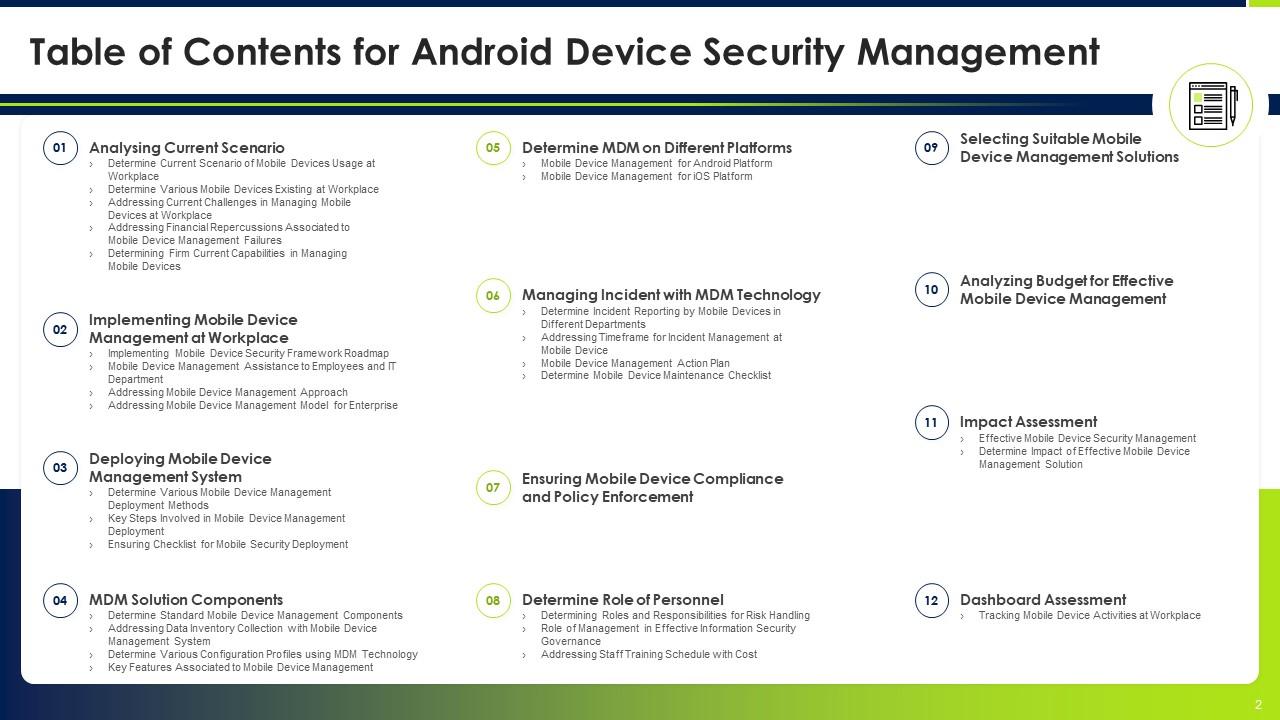
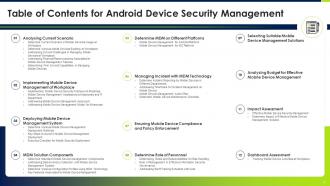
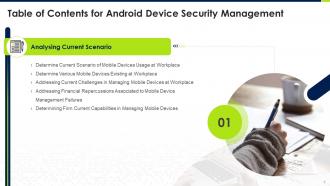
Slide 2: This slide presents Table of Content for the presentation.
Slide 3: This slide depicts title for six topics that are to be covered next in the template.
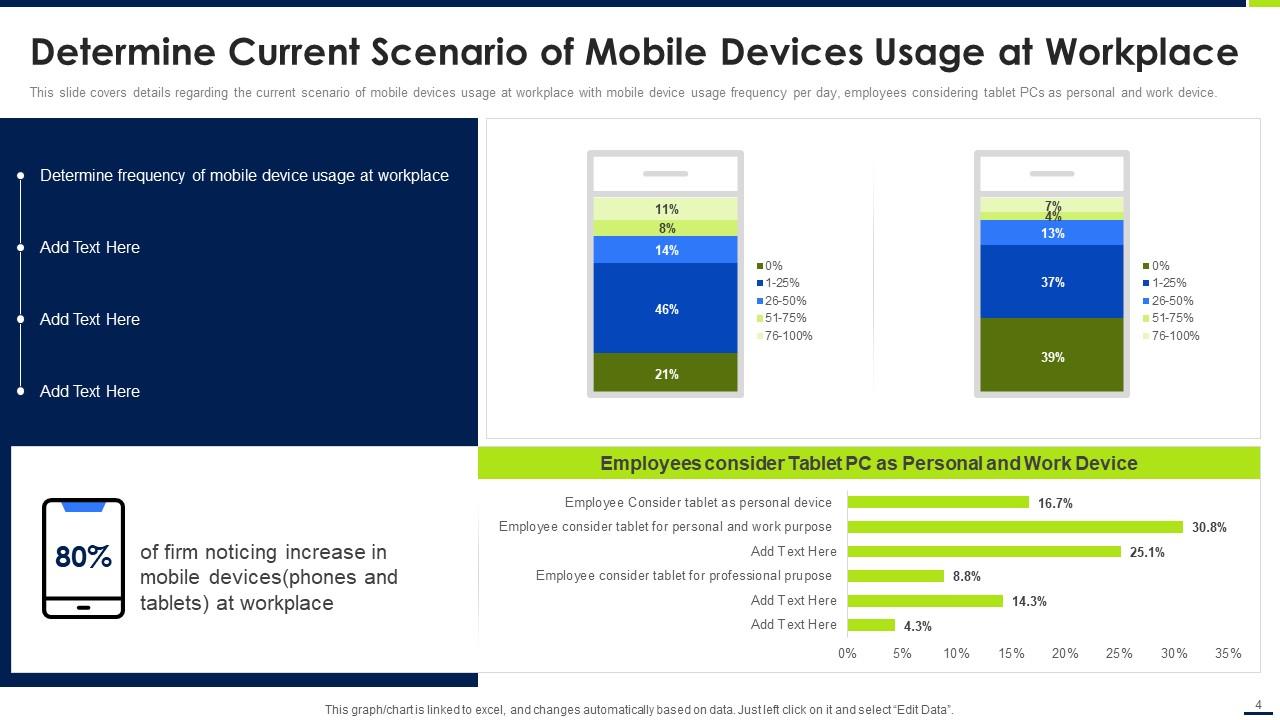
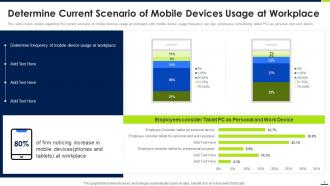
Slide 4: This slide covers details regarding the current scenario of mobile devices usage at workplace with mobile device usage frequency per day, etc.
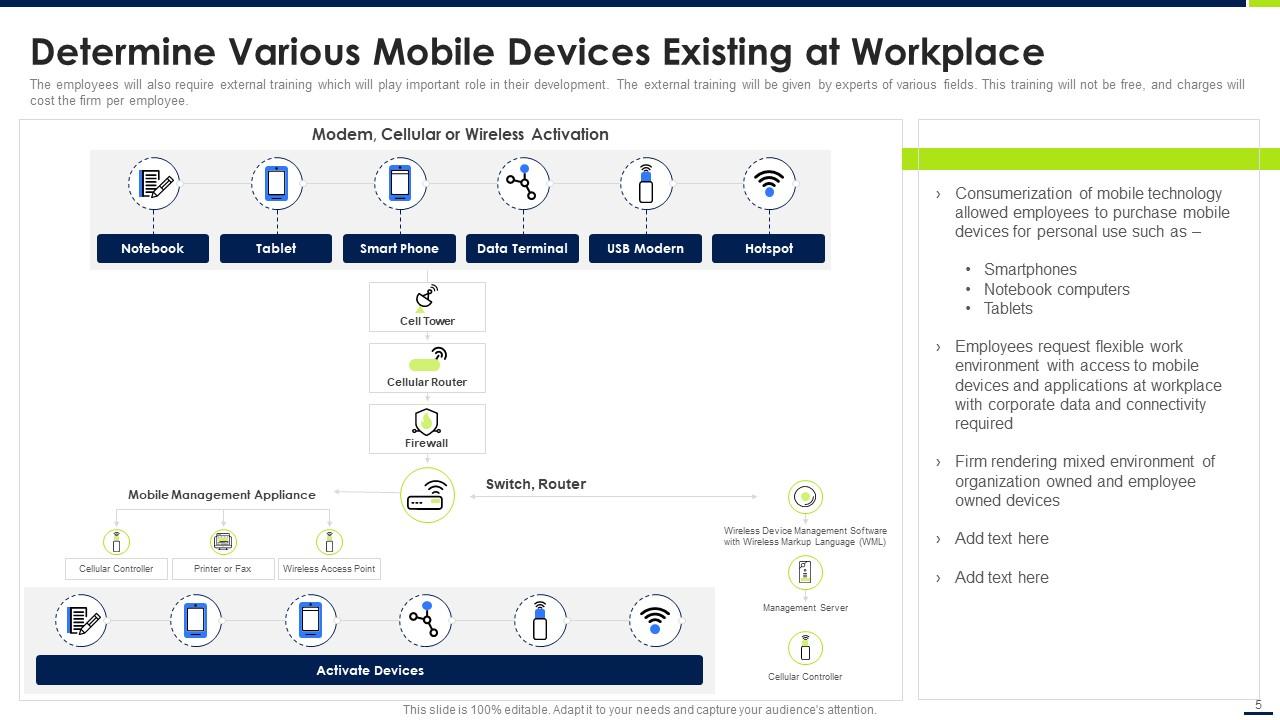
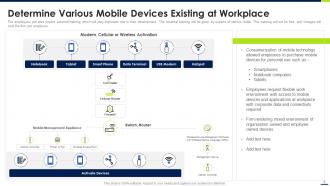
Slide 5: This slide highlights Determining Various Mobile Devices Existing at Workplace.
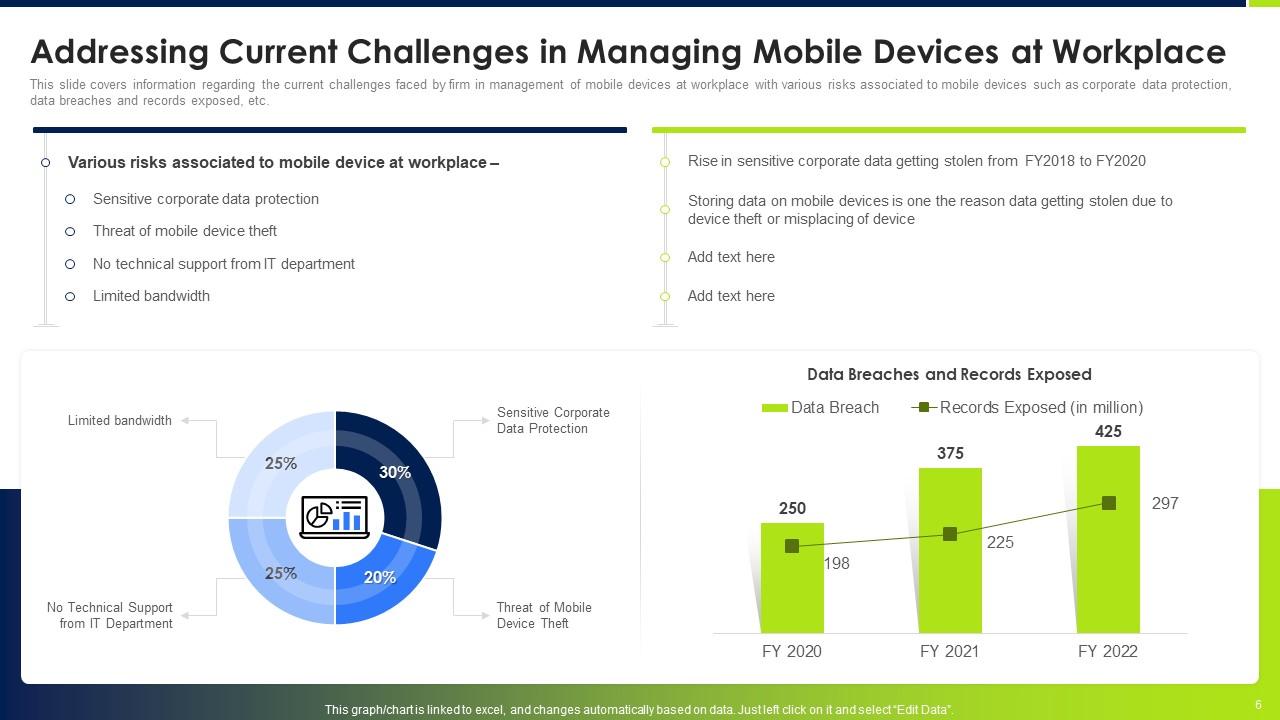
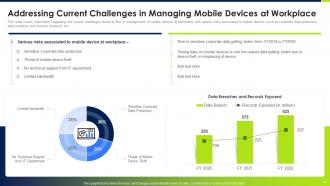
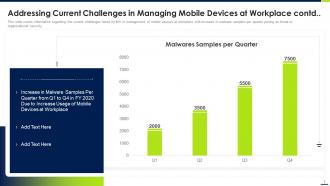
Slide 6: This slide covers information regarding the current challenges faced by firm in management of mobile devices at workplace.
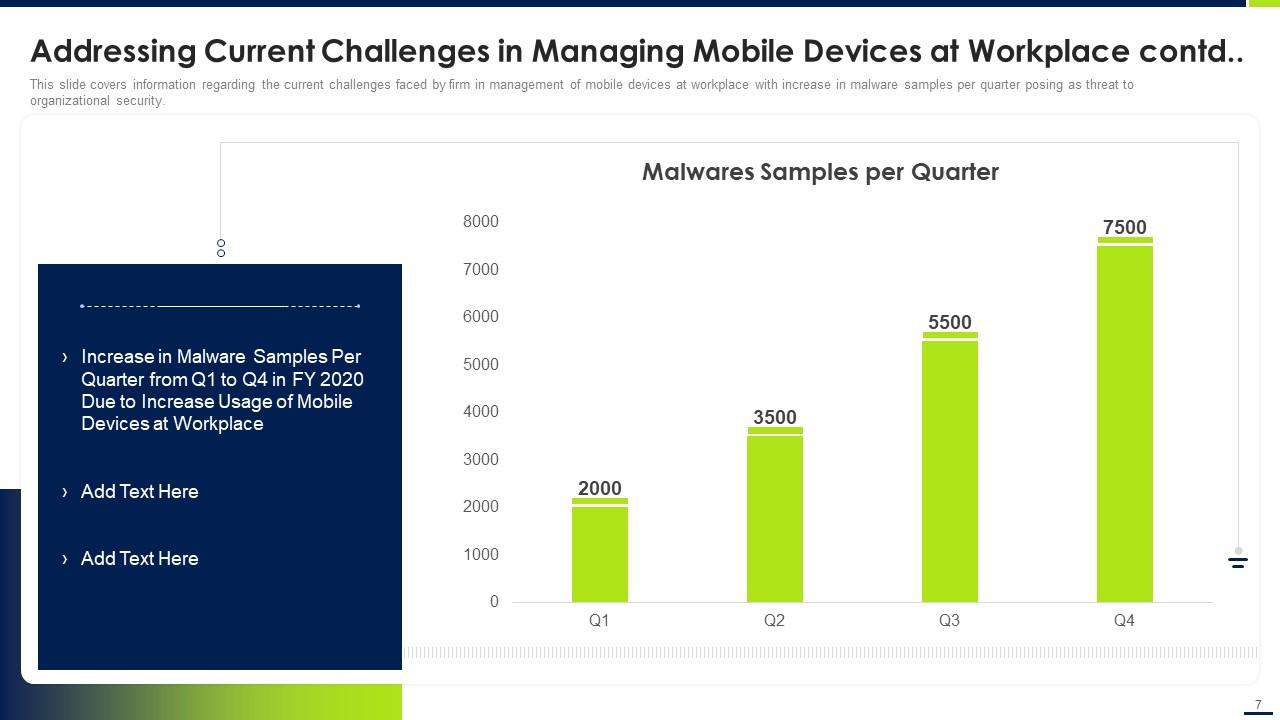
Slide 7: This slide covers information regarding the current challenges faced by firm in management of mobile devices at workplace.
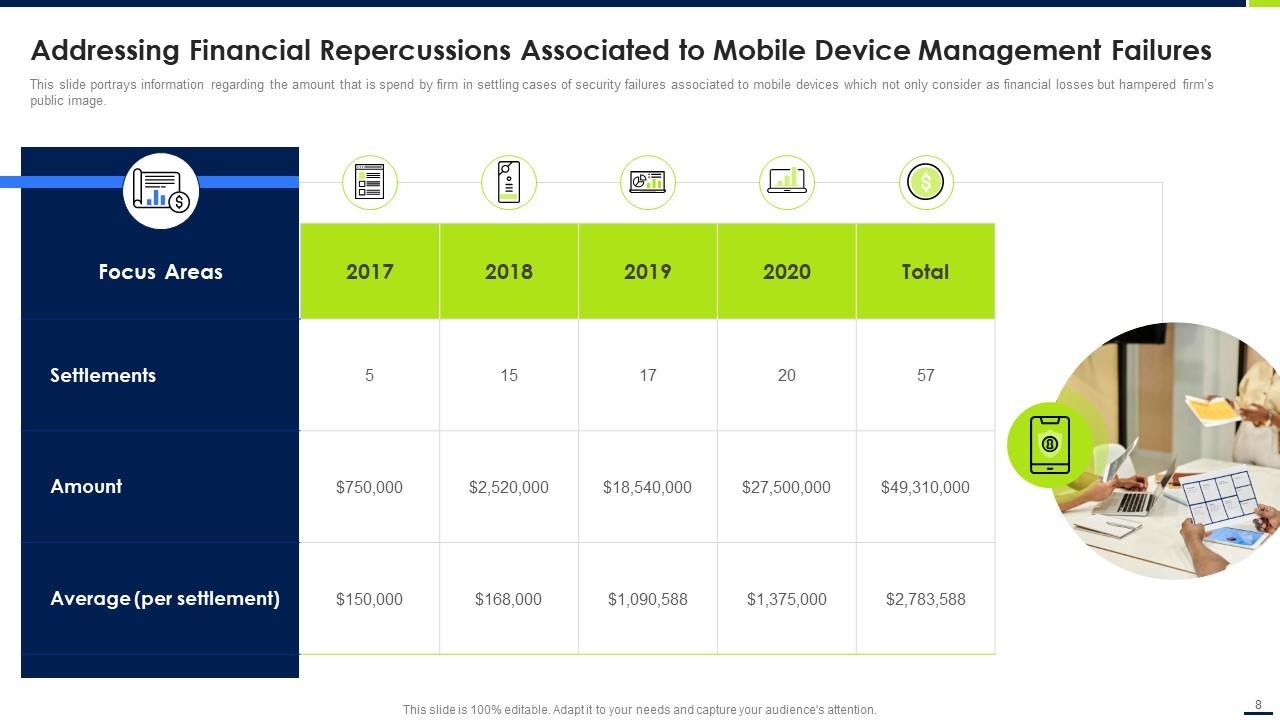
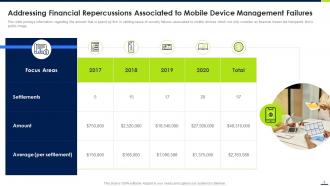
Slide 8: This slide portrays information regarding the amount that is spend by firm in settling cases of security failures associated to mobile devices.
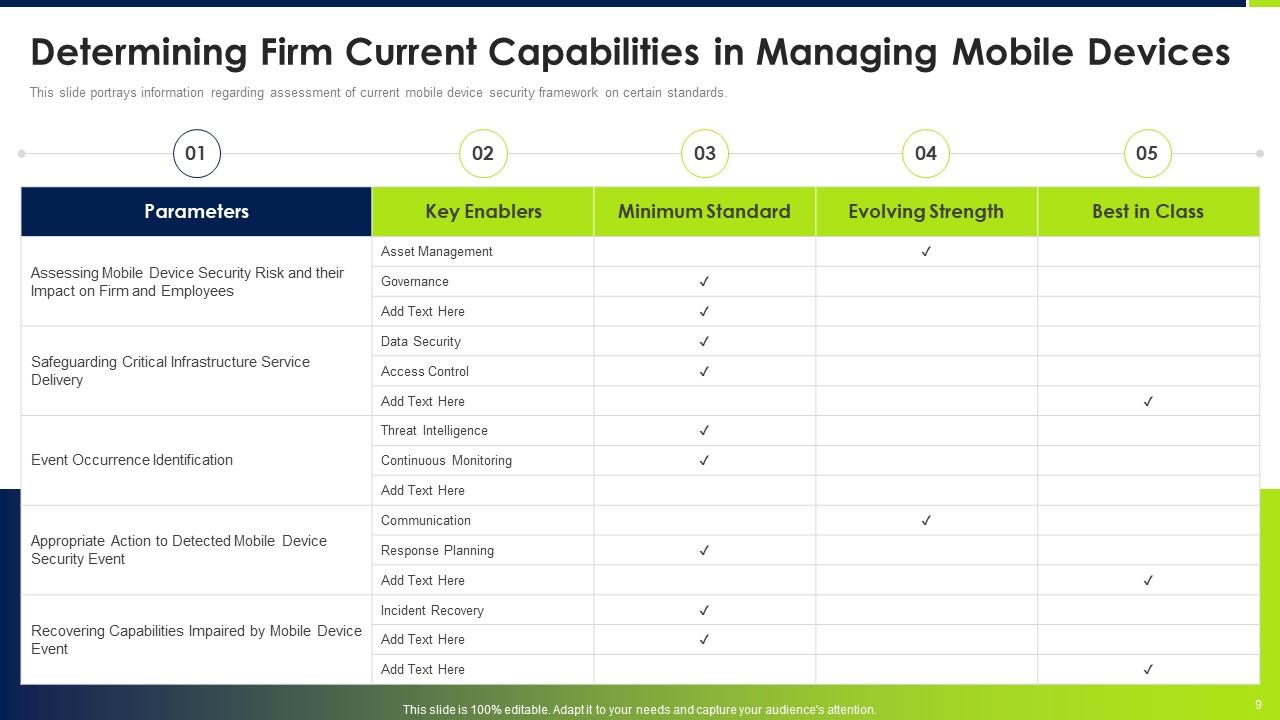
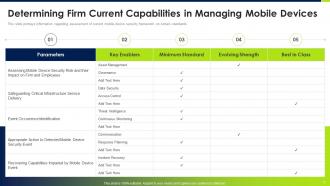
Slide 9: This slide portrays information regarding assessment of current mobile device security framework on certain standards.
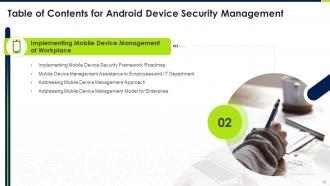
Slide 10: This slide depicts title for four topics that are to be covered next in the template.
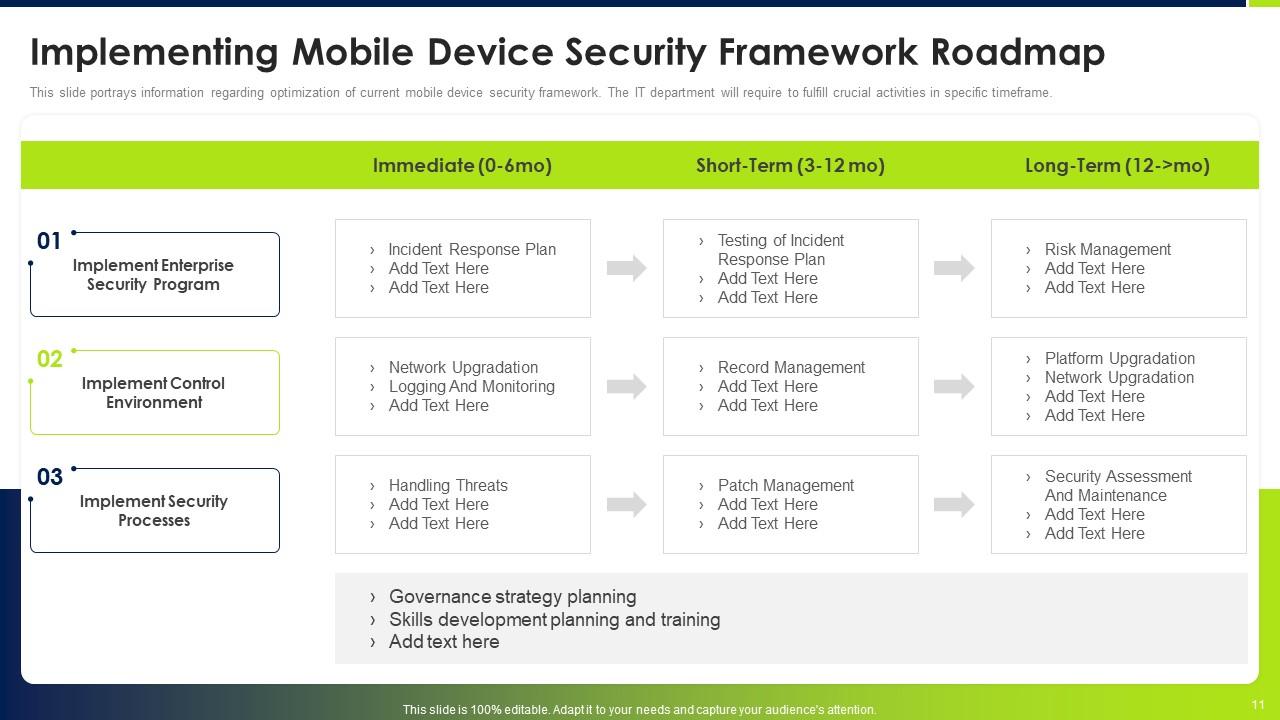
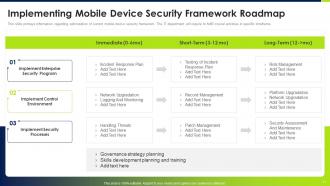
Slide 11: This slide portrays information regarding optimization of current mobile device security framework.
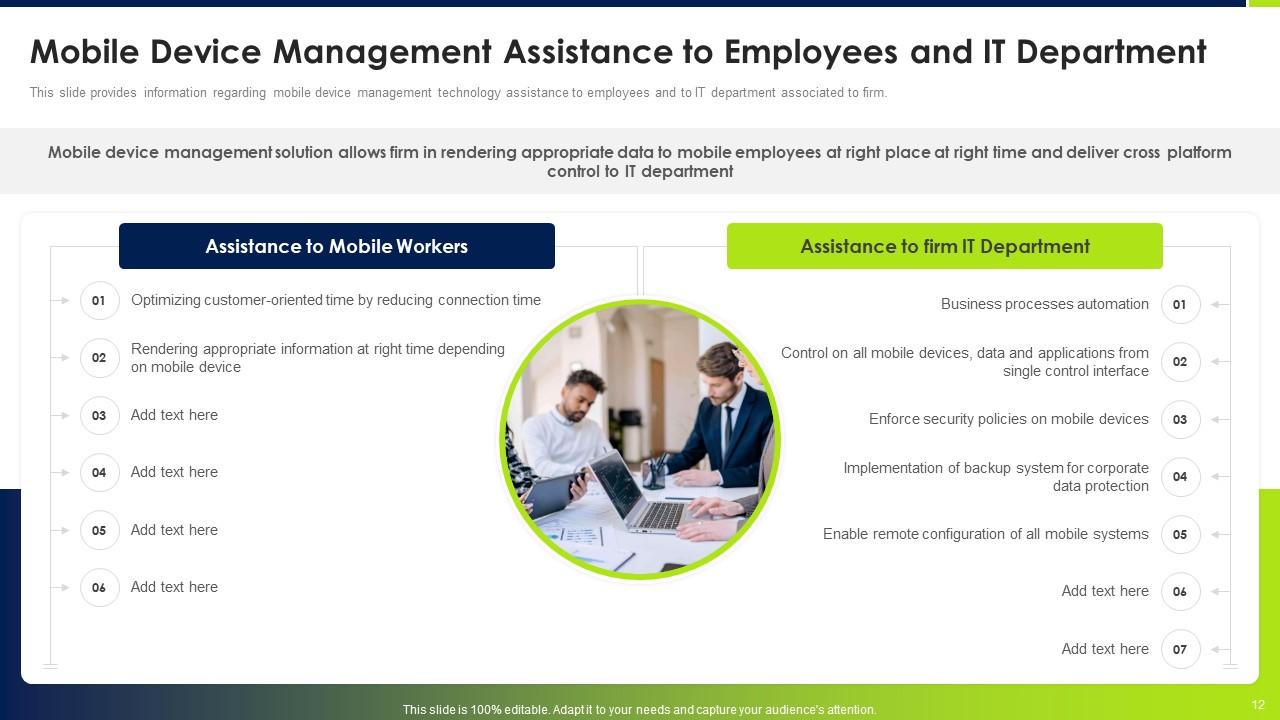
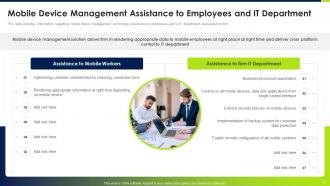
Slide 12: This slide provides information regarding mobile device management technology assistance to employees and to IT department associated to firm.
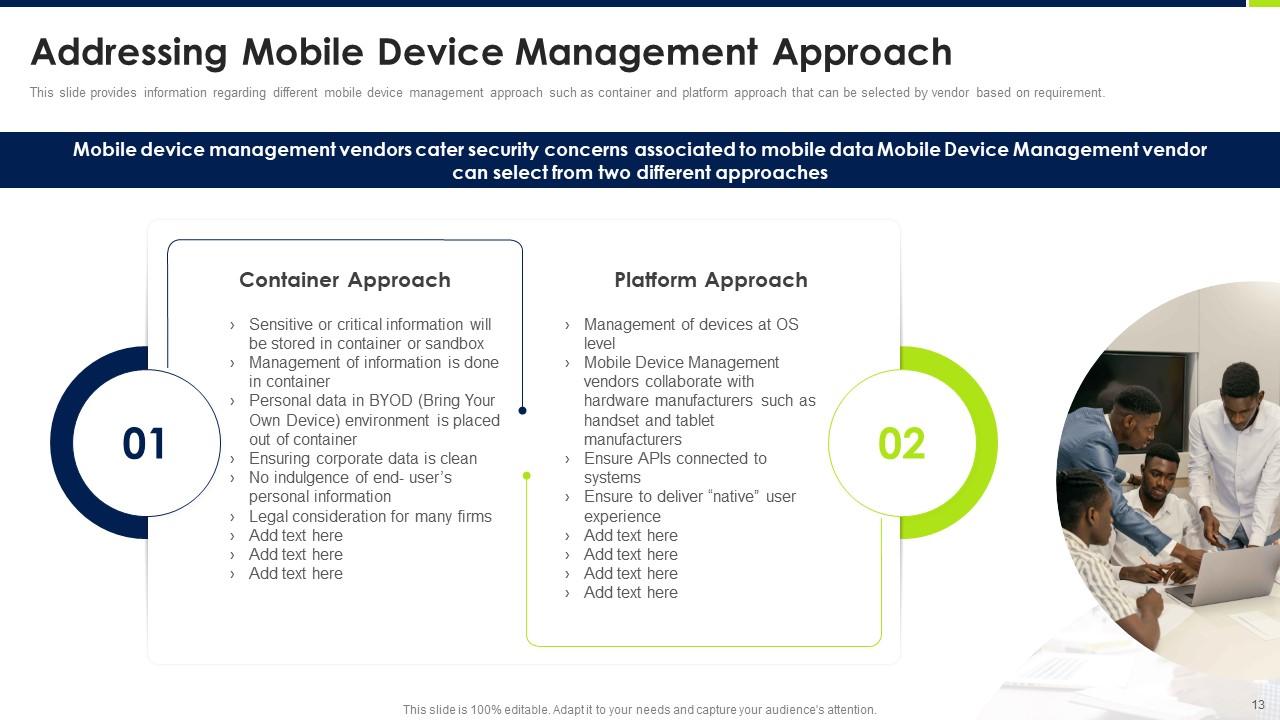
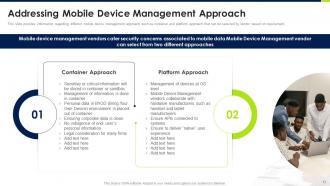
Slide 13: This slide provides information regarding different mobile device management approach such as container and platform approach.
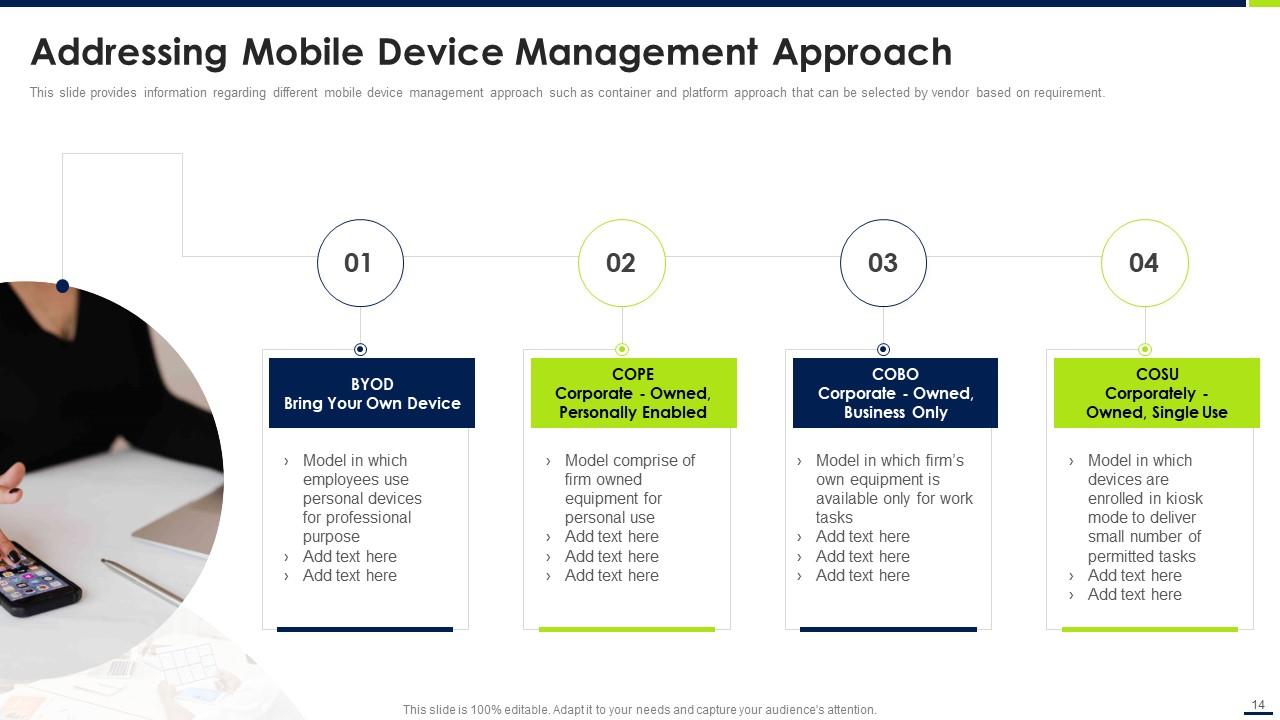
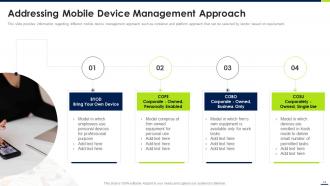
Slide 14: This slide provides information regarding various mobile device management models such as BYOD, COPE, COBO, COSU.
Slide 15: This slide depicts title for four topics that are to be covered next in the template.
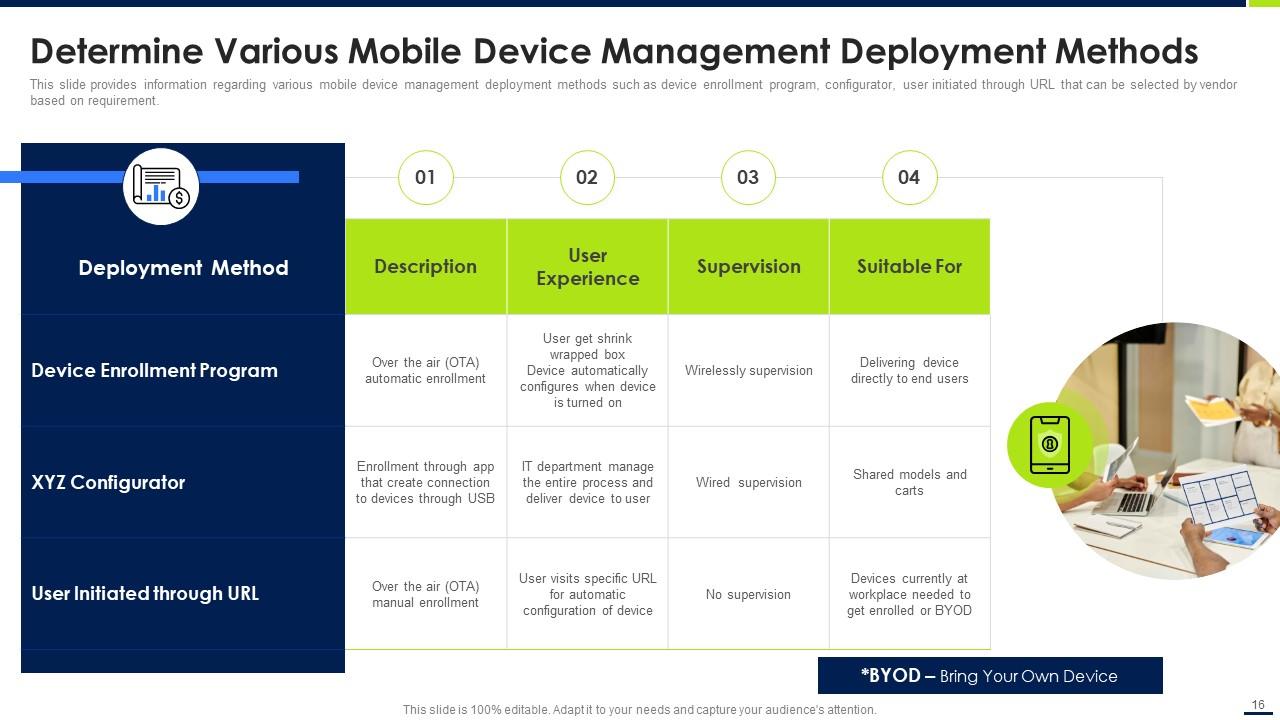
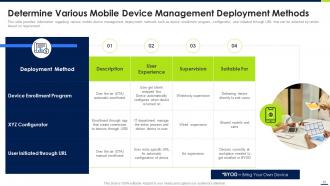
Slide 16: This slide provides information regarding various mobile device management deployment methods such as device enrollment program, configurator, etc.
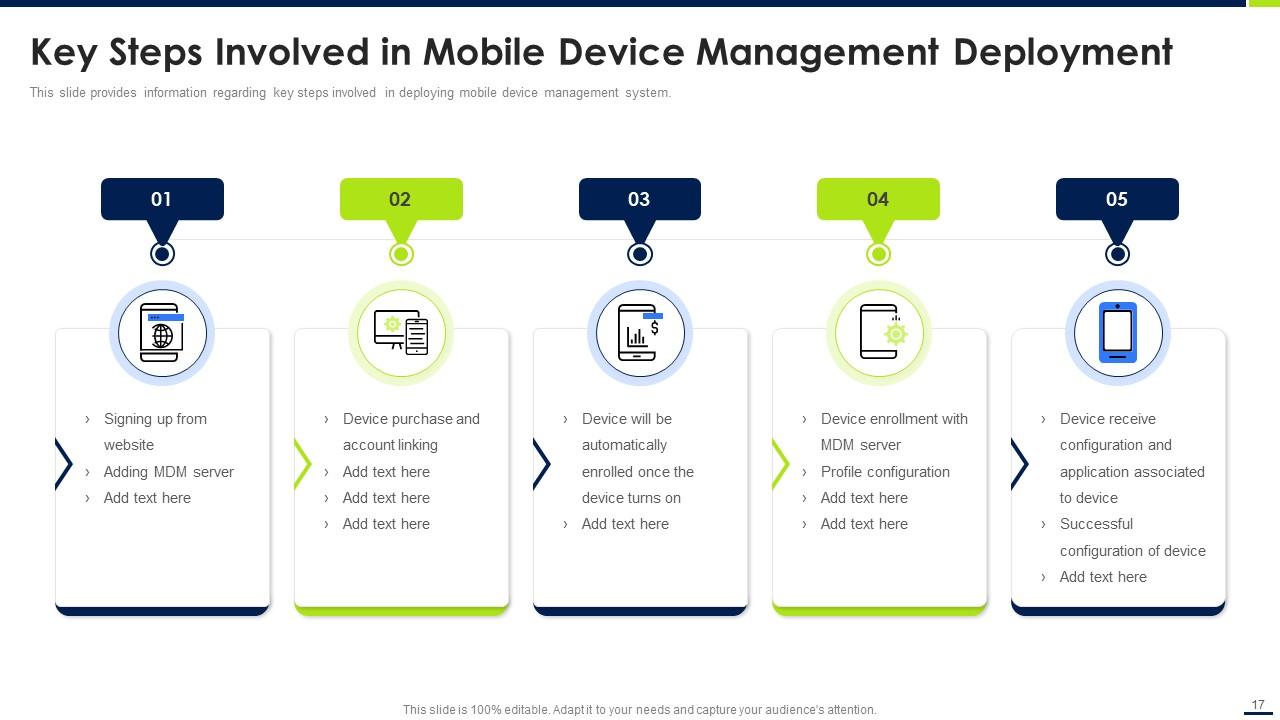
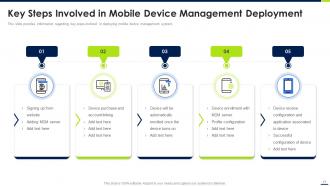
Slide 17: This slide provides information regarding key steps involved in deploying mobile device management system.
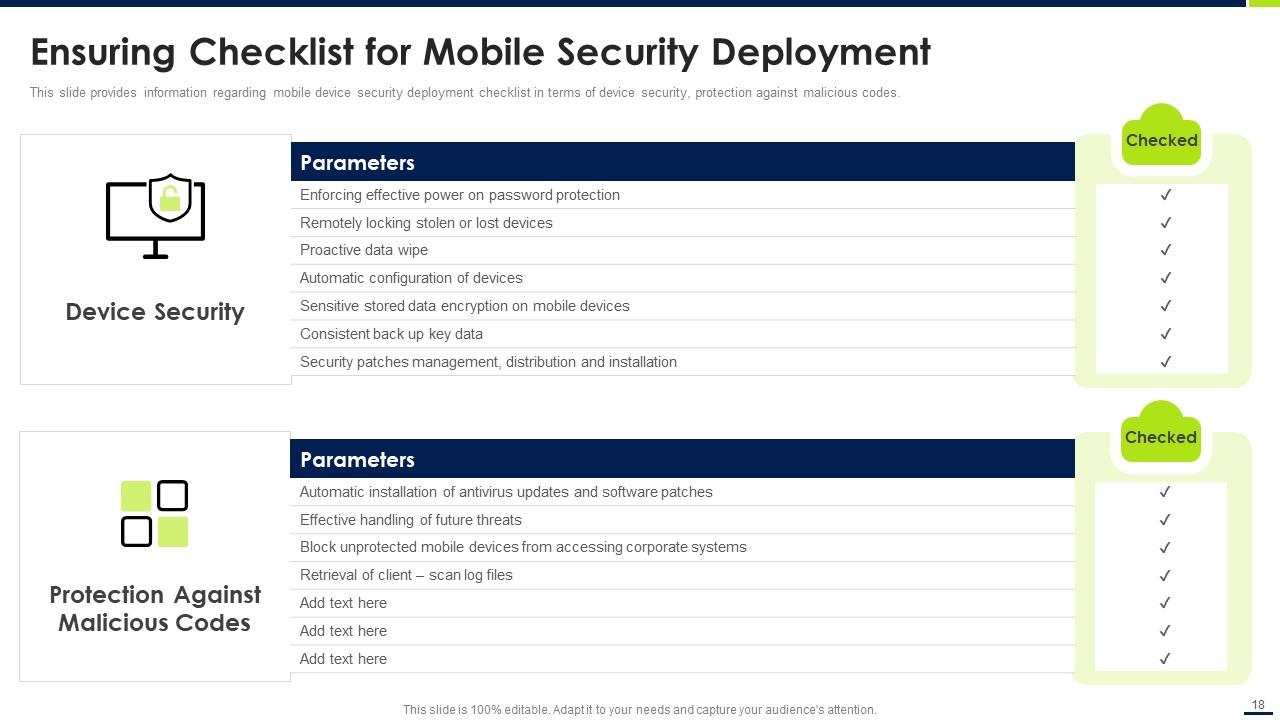
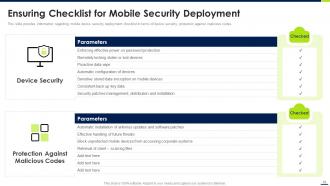
Slide 18: This slide provides information regarding mobile device security deployment checklist in terms of device security, protection against malicious codes.
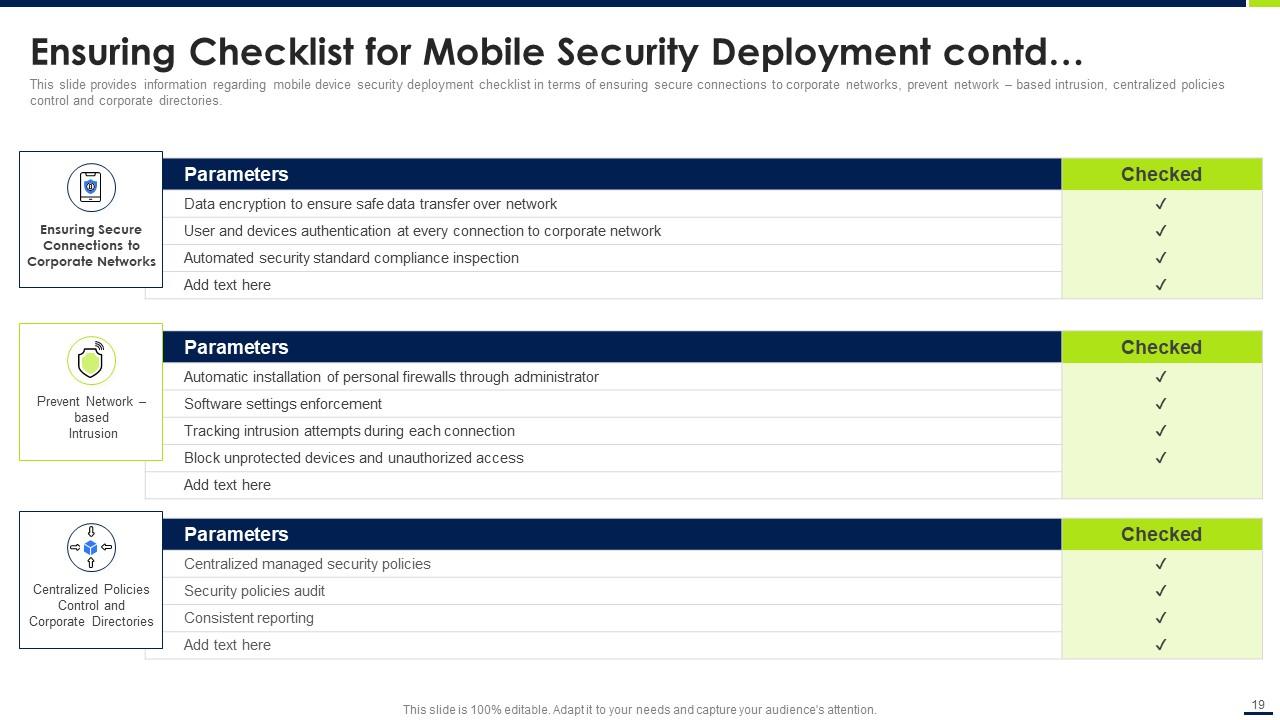
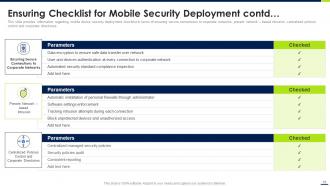
Slide 19: This slide provides information regarding mobile device security deployment checklist in terms of ensuring secure connections to corporate networks, etc.
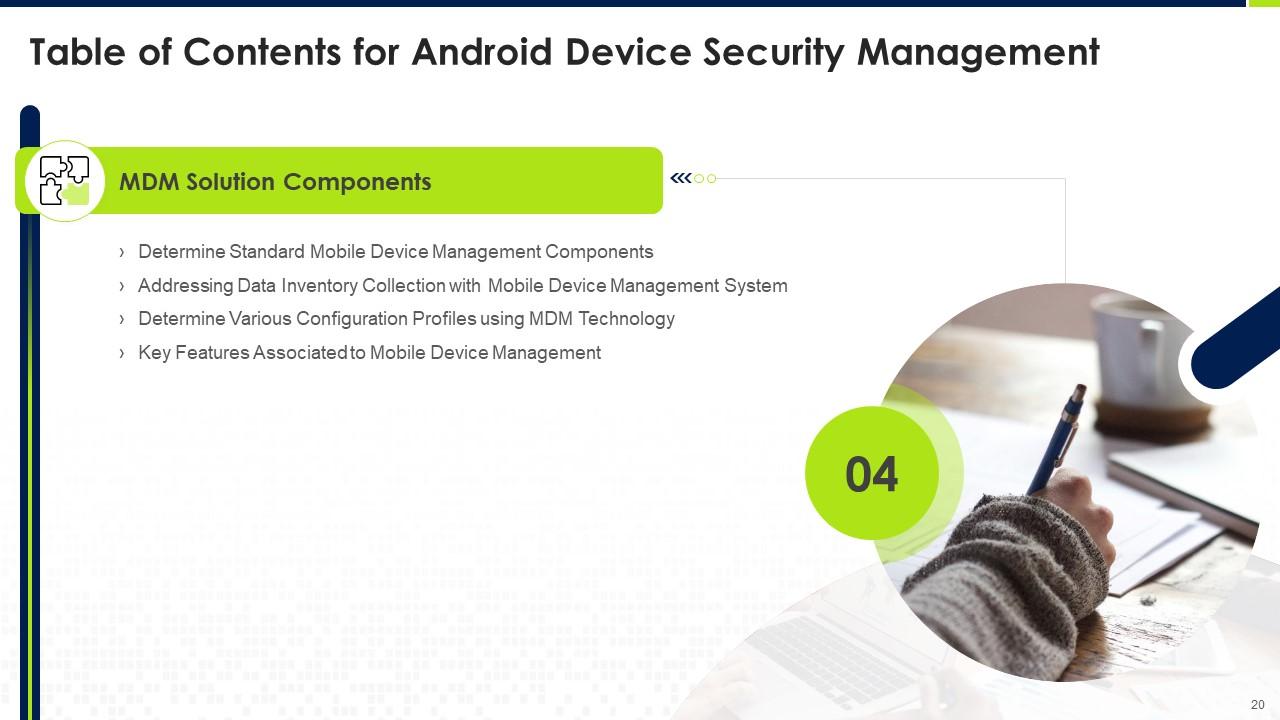
Slide 20: This slide depicts title for six topics that are to be covered next in the template.
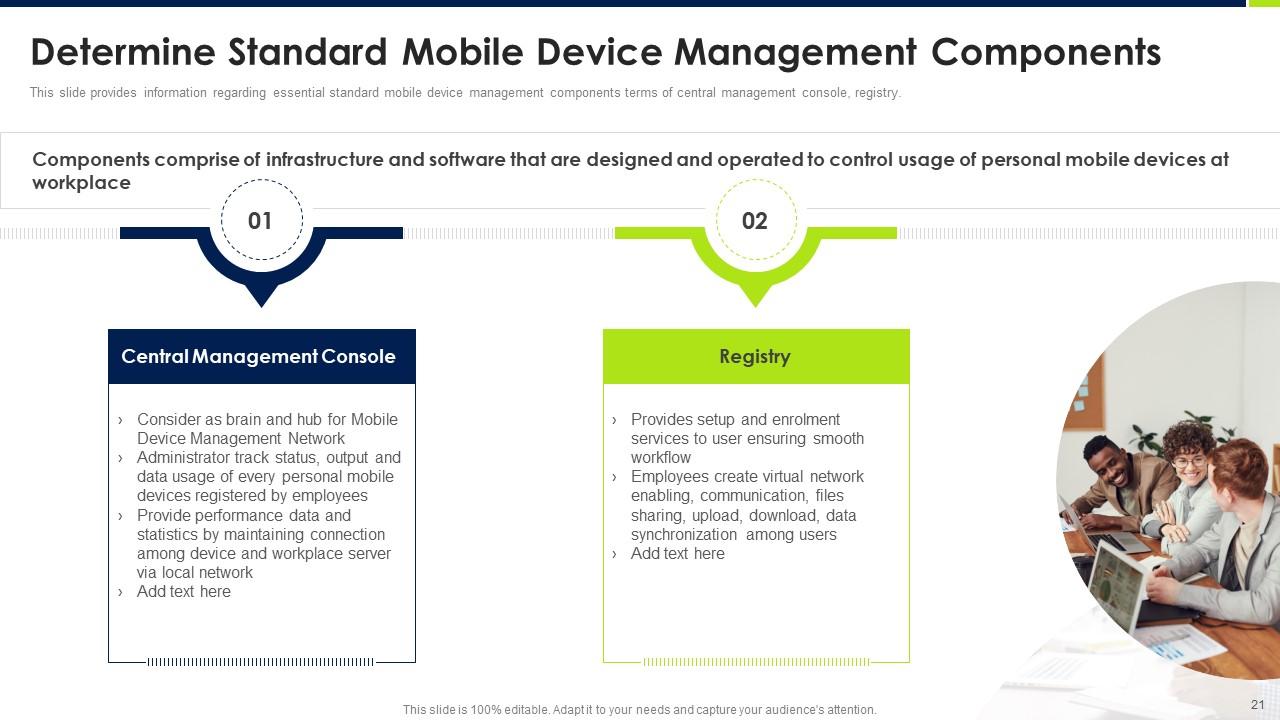
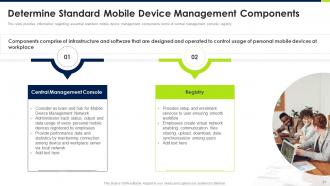
Slide 21: This slide provides information regarding essential standard mobile device management components terms of central management console, registry.
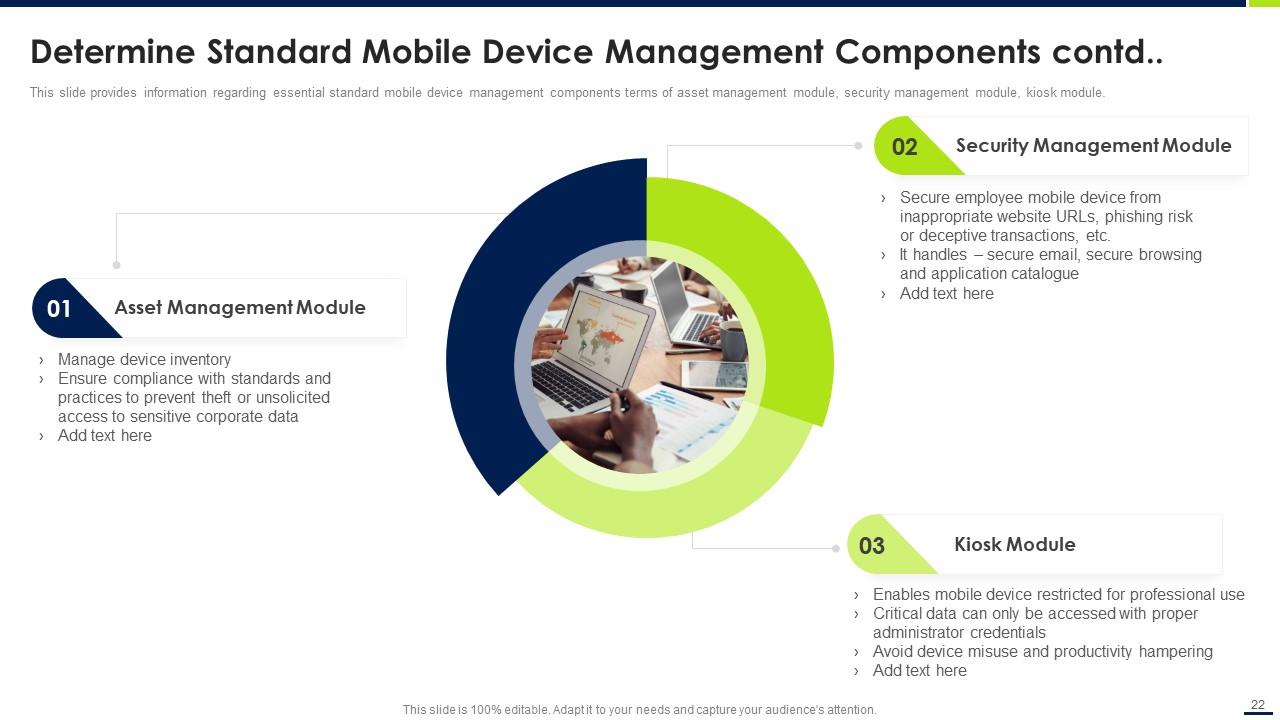
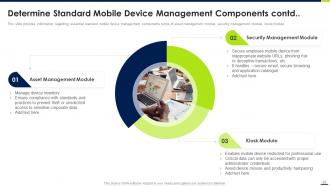
Slide 22: This slide provides information regarding essential standard mobile device management components terms of asset management module, etc.
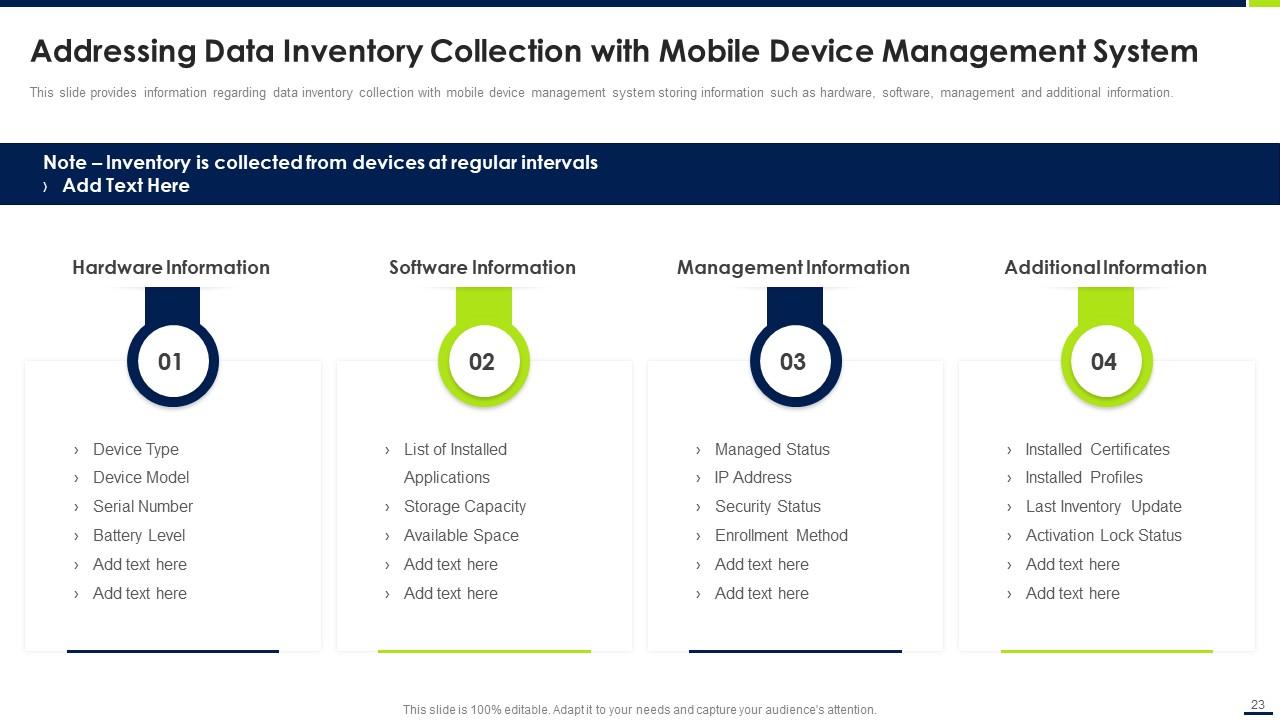
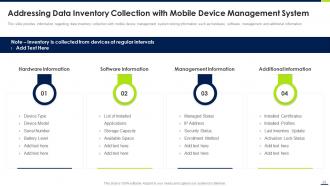
Slide 23: This slide provides information regarding data inventory collection with mobile device management system storing information such as hardware, software, etc.
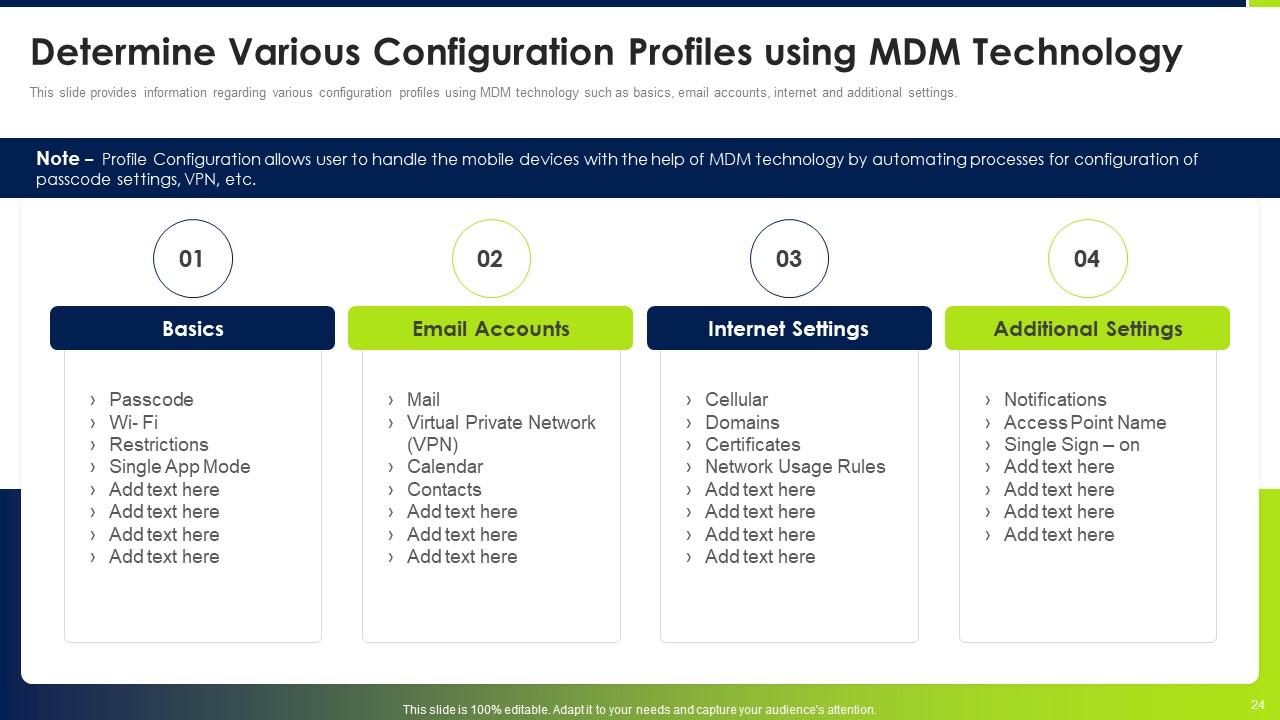
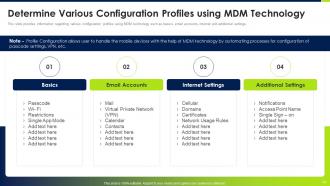
Slide 24: This slide provides information regarding various configuration profiles using MDM technology such as basics, email accounts, internet and additional settings.
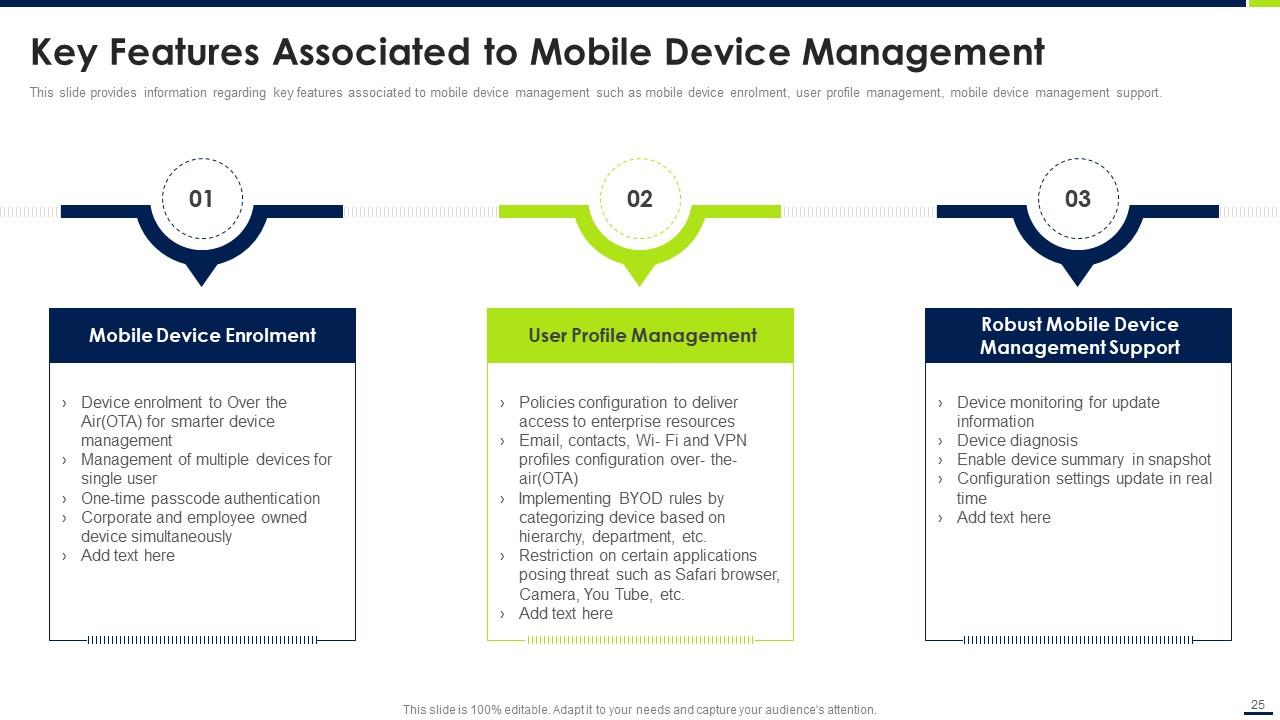
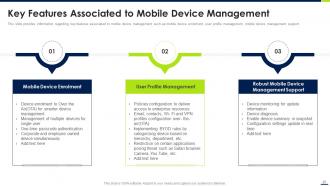
Slide 25: This slide provides information regarding key features associated to mobile device management such as mobile device enrolment, user profile management, etc.
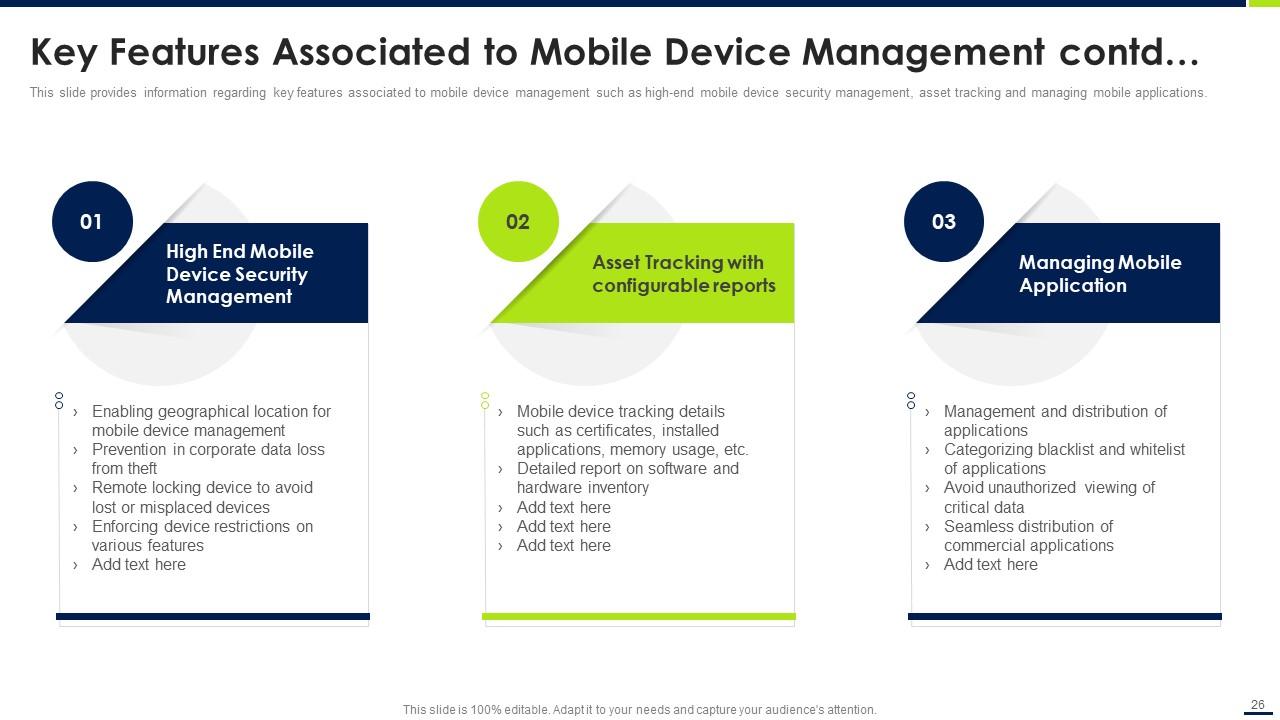
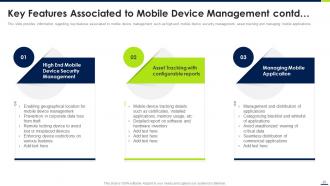
Slide 26: This slide provides information regarding key features associated to mobile device management such as high-end mobile device security management, etc.
Slide 27: This slide depicts title for two topics that are to be covered next in the template.
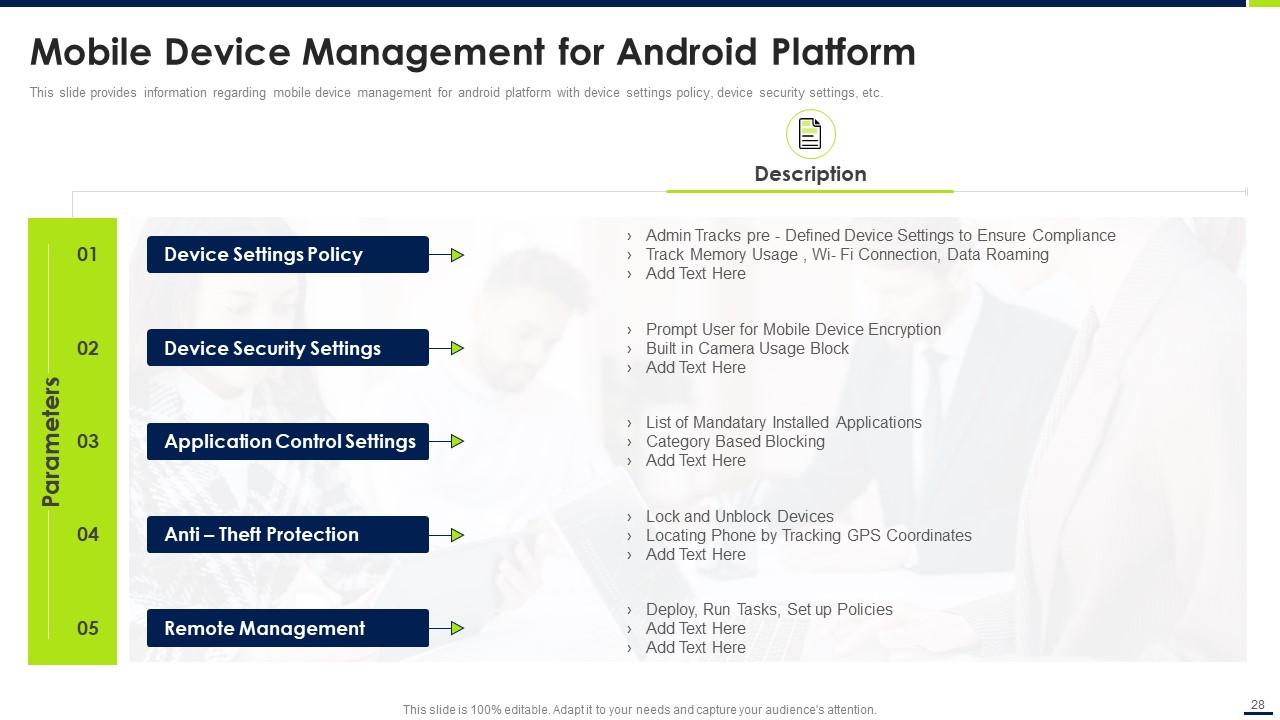
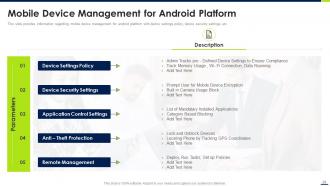
Slide 28: This slide provides information regarding mobile device management for android platform with device settings policy, device security settings, etc.
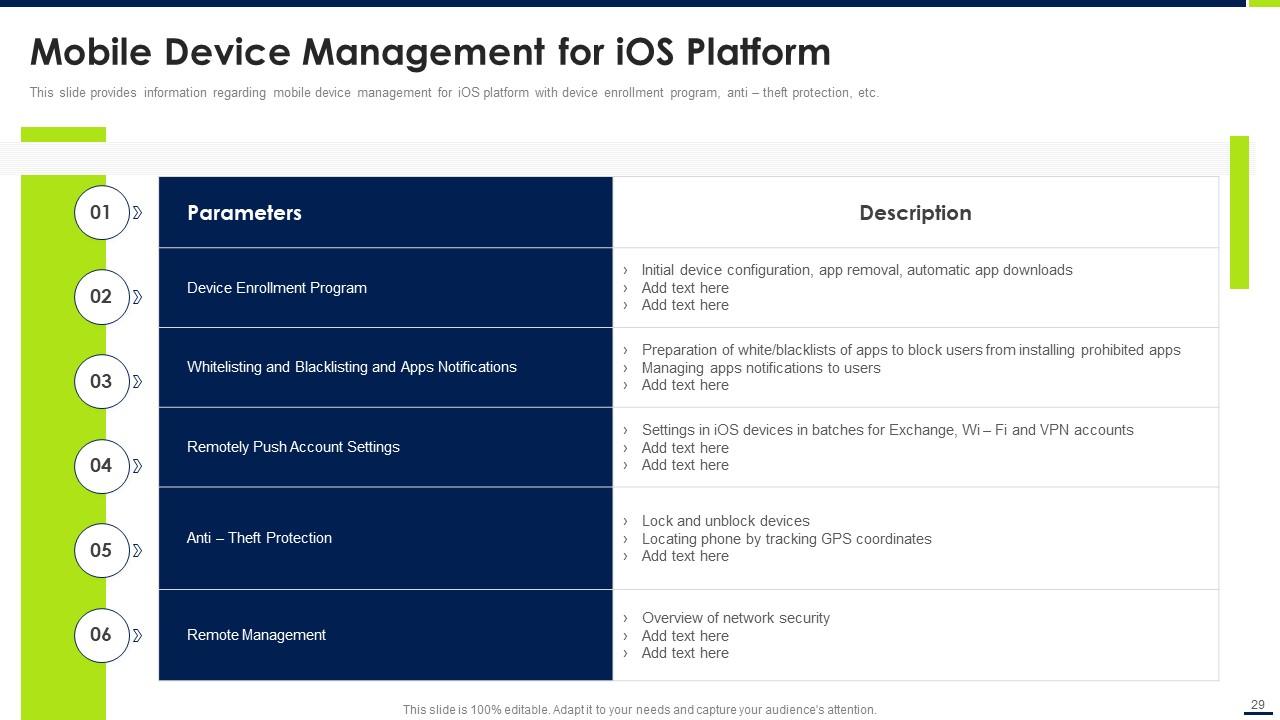
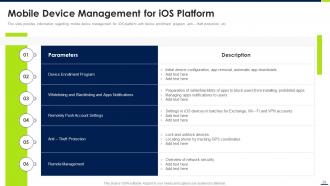
Slide 29: This slide provides information regarding mobile device management for iOS platform with device enrollment program, anti – theft protection, etc.
Slide 30: This slide depicts title for four topics that are to be covered next in the template.
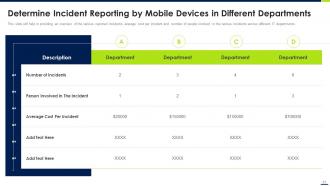
Slide 31: This slide will help in providing an overview of the various reported incidents, average cost per incident.
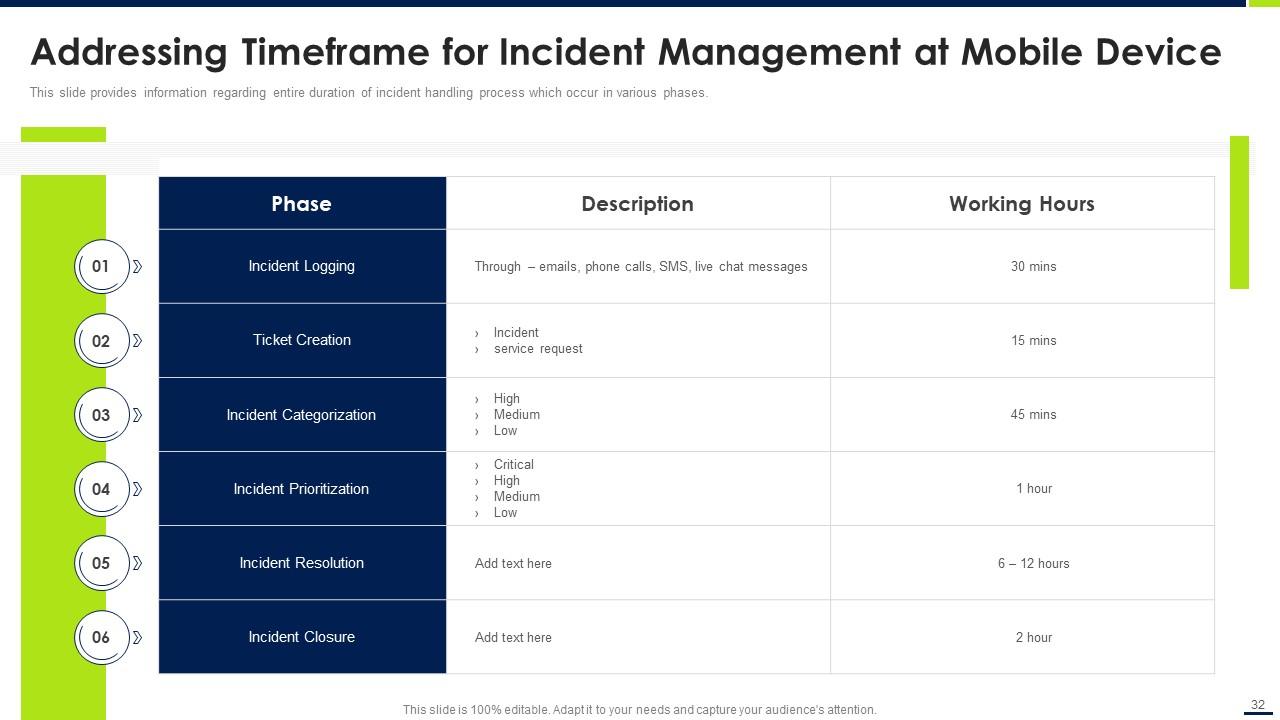
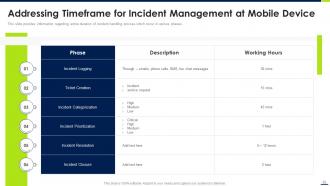
Slide 32: This slide provides information regarding entire duration of incident handling process which occur in various phases.
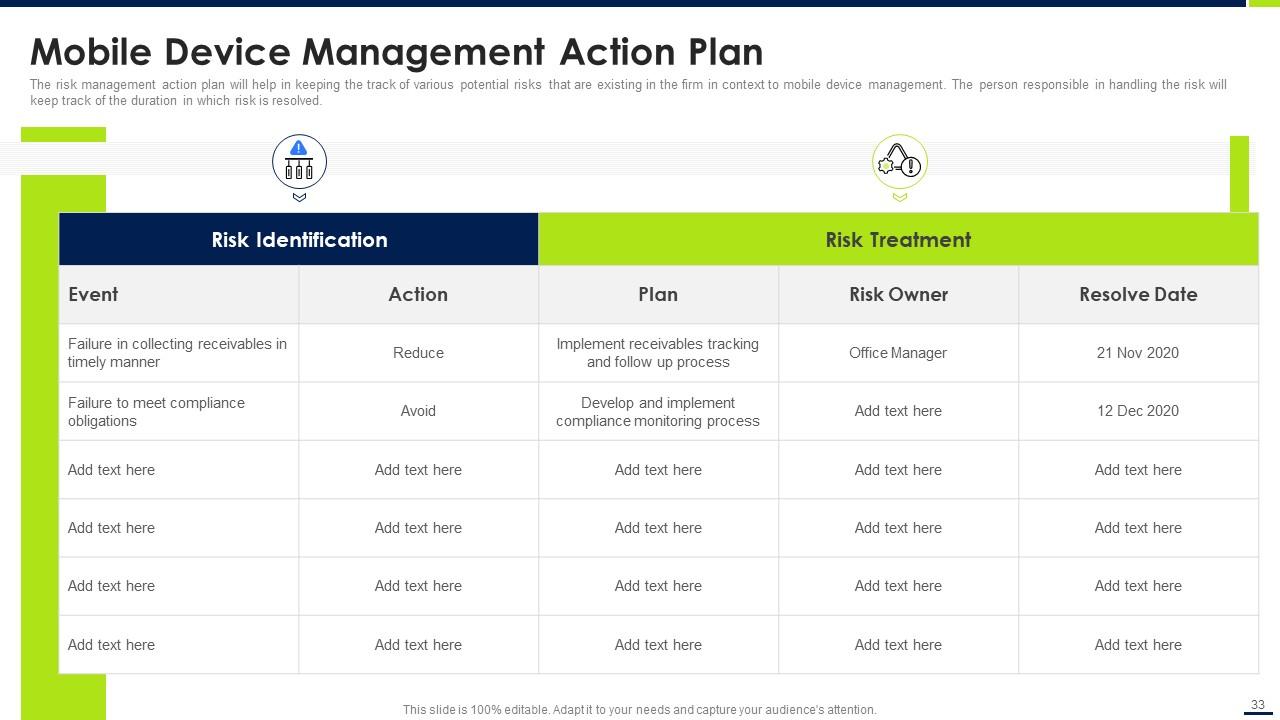
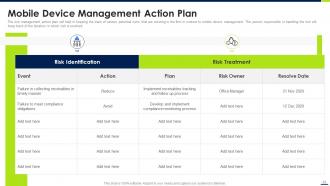
Slide 33: This slide displays Mobile Device Management Action Plan.
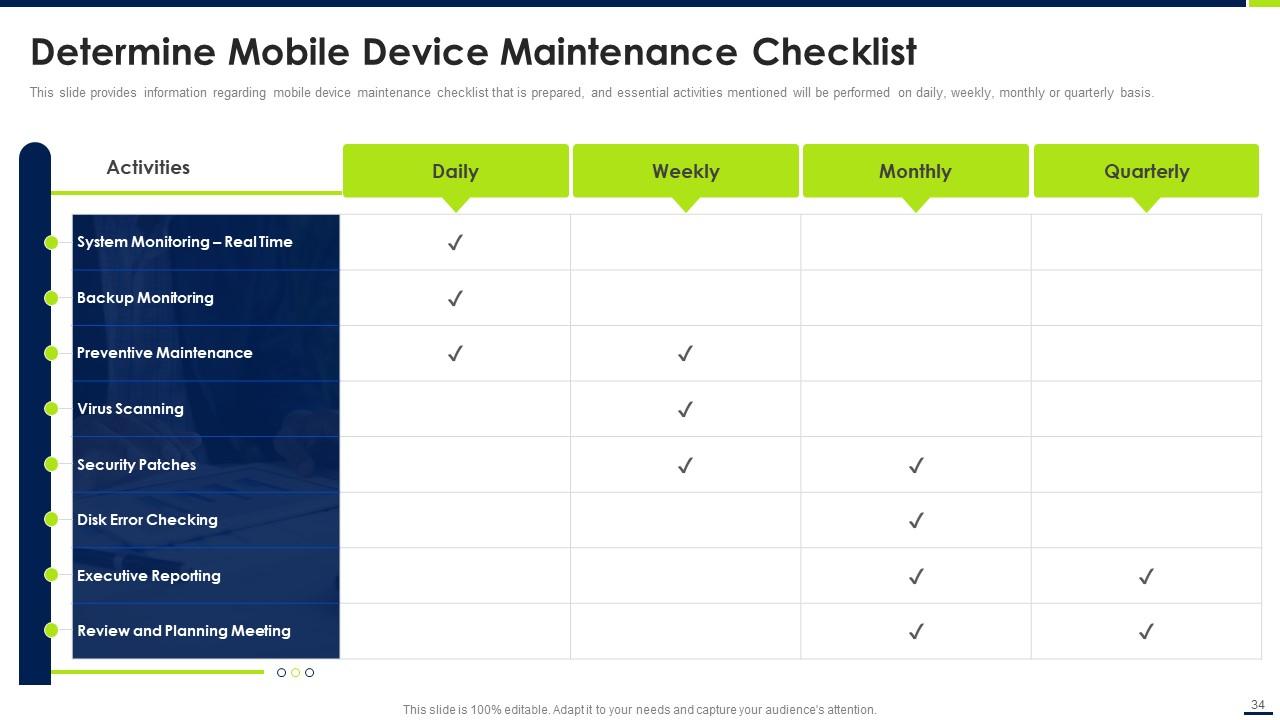
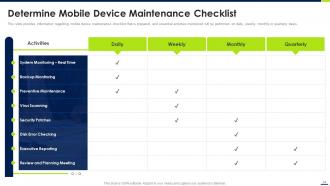
Slide 34: This slide provides information regarding mobile device maintenance checklist that is prepared.
Slide 35: This slide depicts title for the topic that are to be covered next in the template.
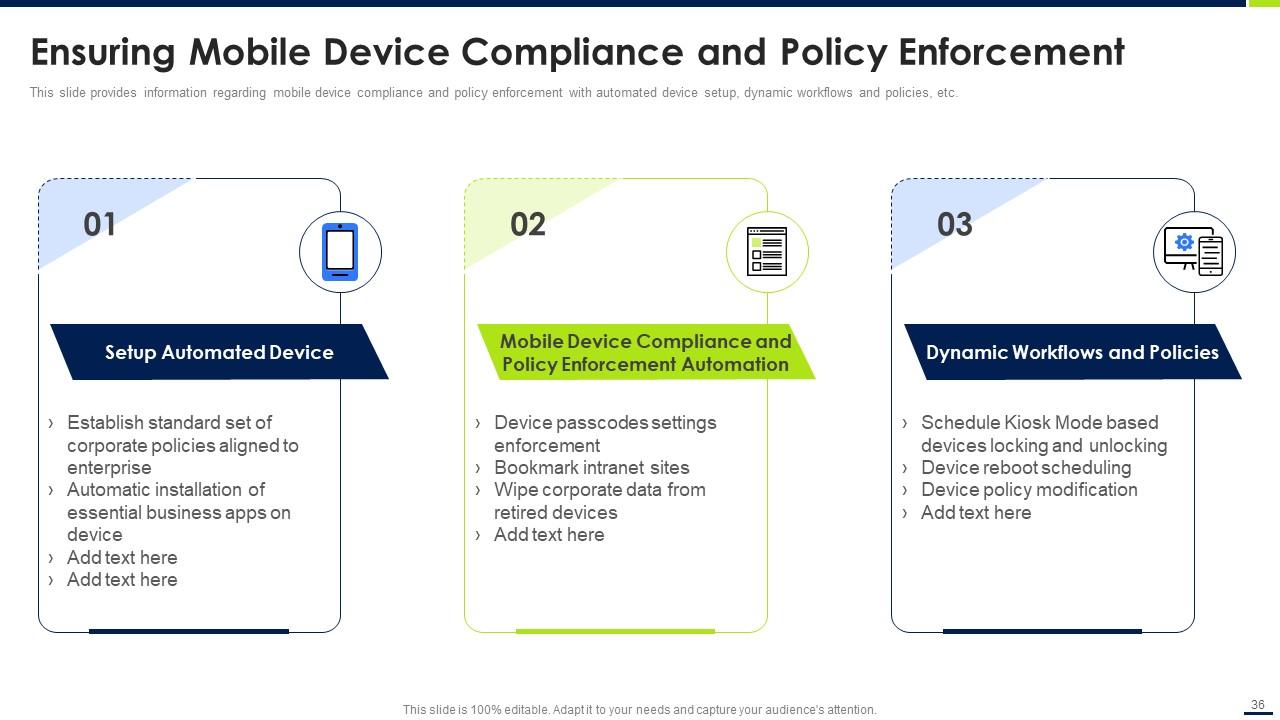
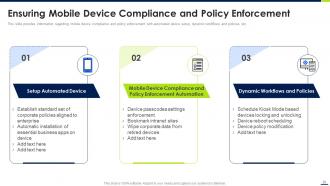
Slide 36: This slide provides information regarding mobile device compliance and policy enforcement with automated device setup, dynamic workflows and policies, etc.
Slide 37: This slide depicts title for three topics that are to be covered next in the template.
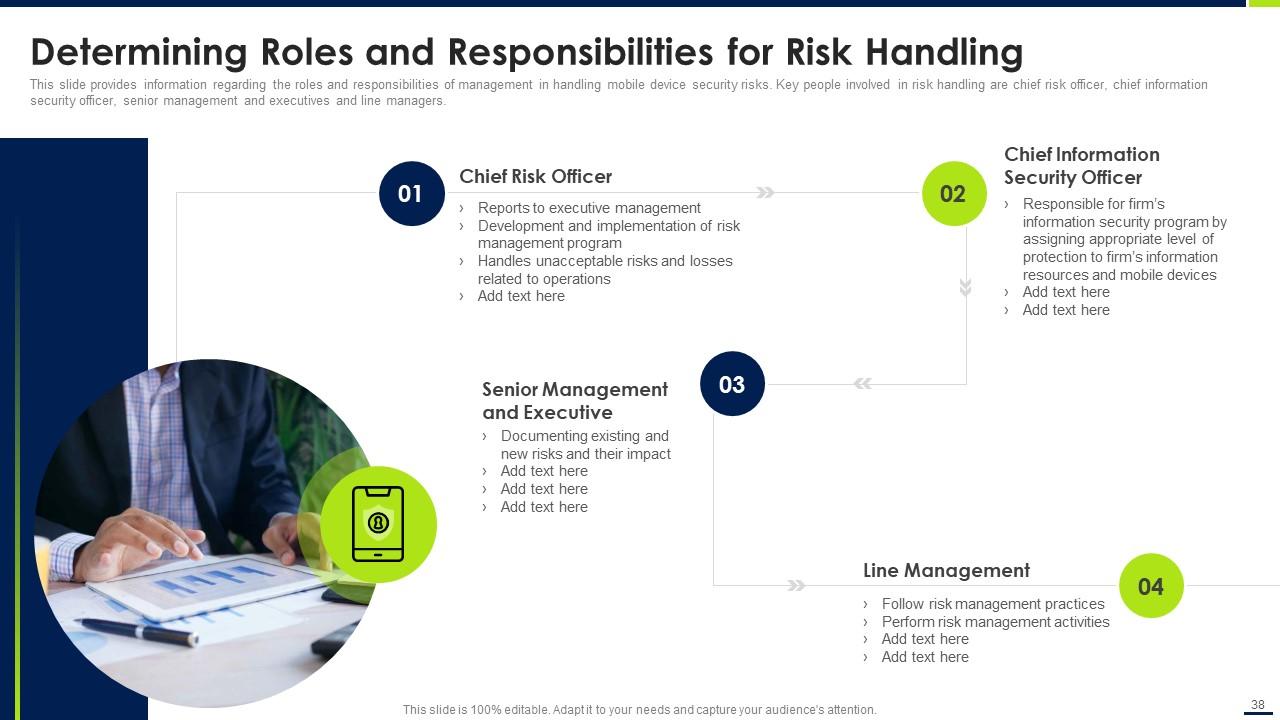
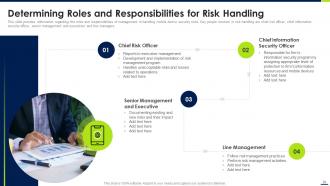
Slide 38: This slide provides information regarding the roles and responsibilities of management in handling mobile device security risks.
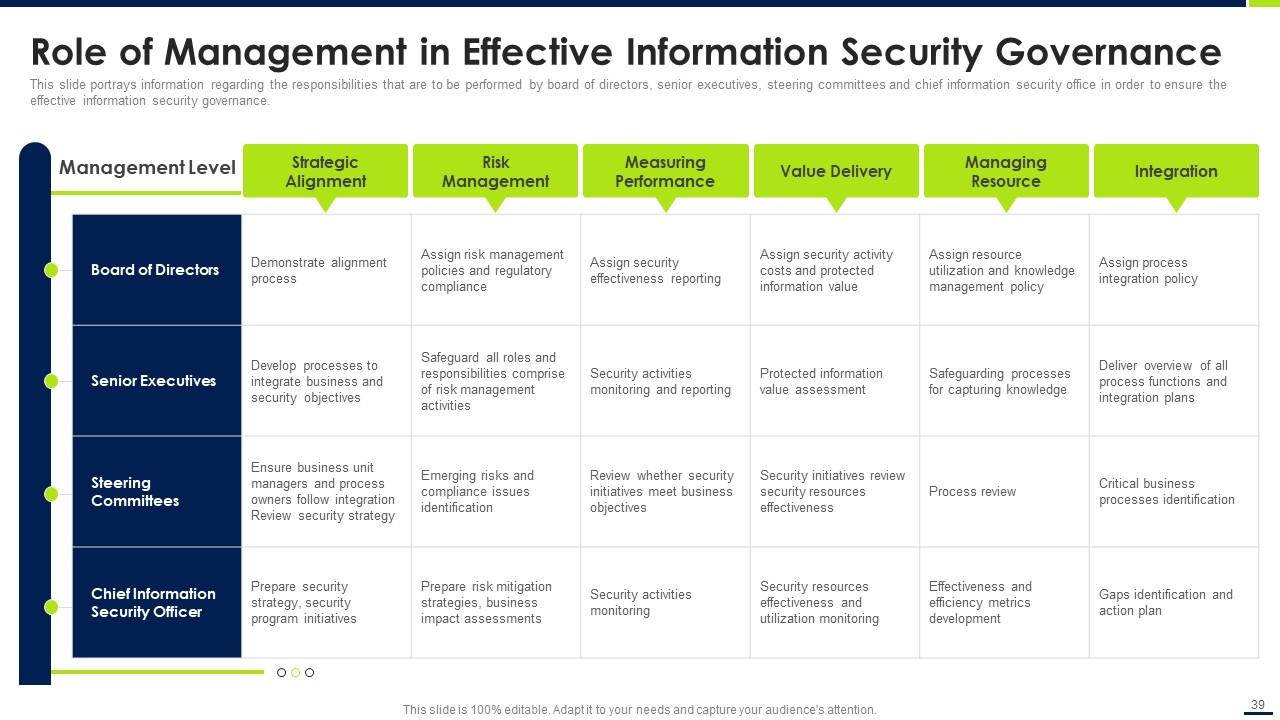
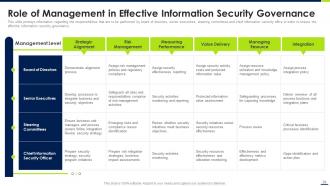
Slide 39: This slide portrays information regarding the responsibilities that are to be performed by board of directors, senior executives, steering committees, etc.
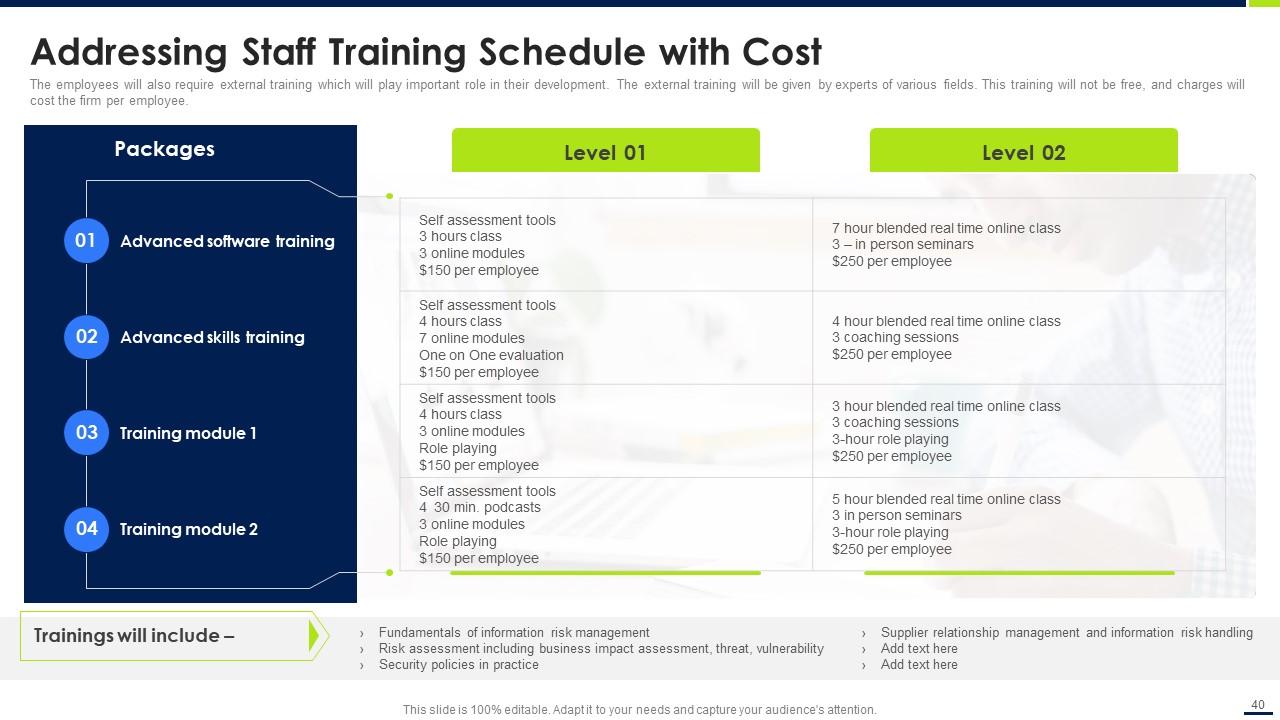
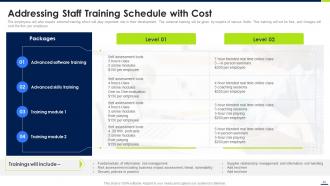
Slide 40: This slide addresses Staff Training Schedule with Cost.
Slide 41: This slide depicts title for the topic that are to be covered next in the template.
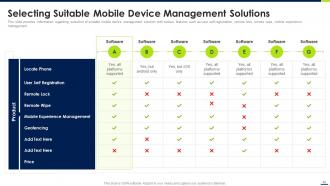
Slide 42: This slide provides information regarding selection of suitable mobile device management solution with various features.
Slide 43: This slide depicts title for the topic that are to be covered next in the template.
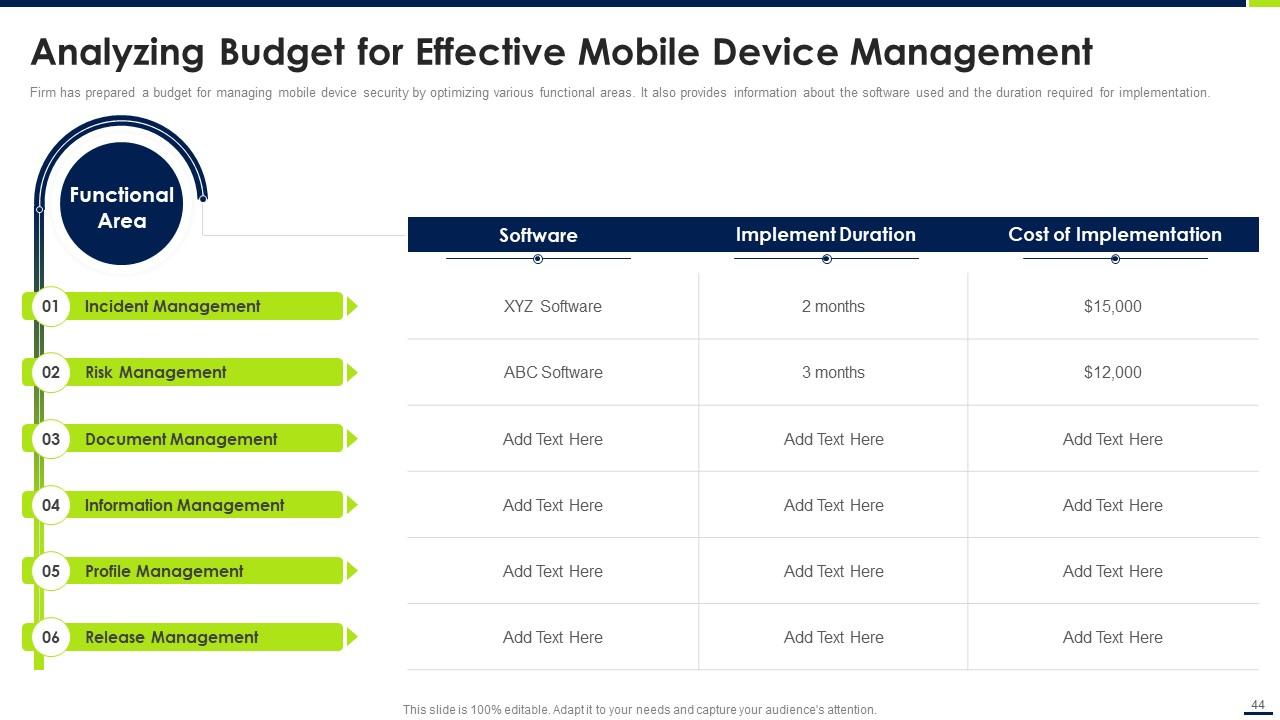
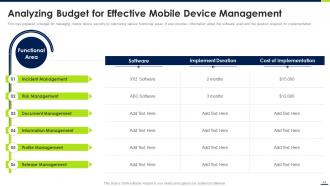
Slide 44: This slide Analyzes Budget for Effective Mobile Device Management.
Slide 45: This slide depicts title for two topics that are to be covered next in the template.
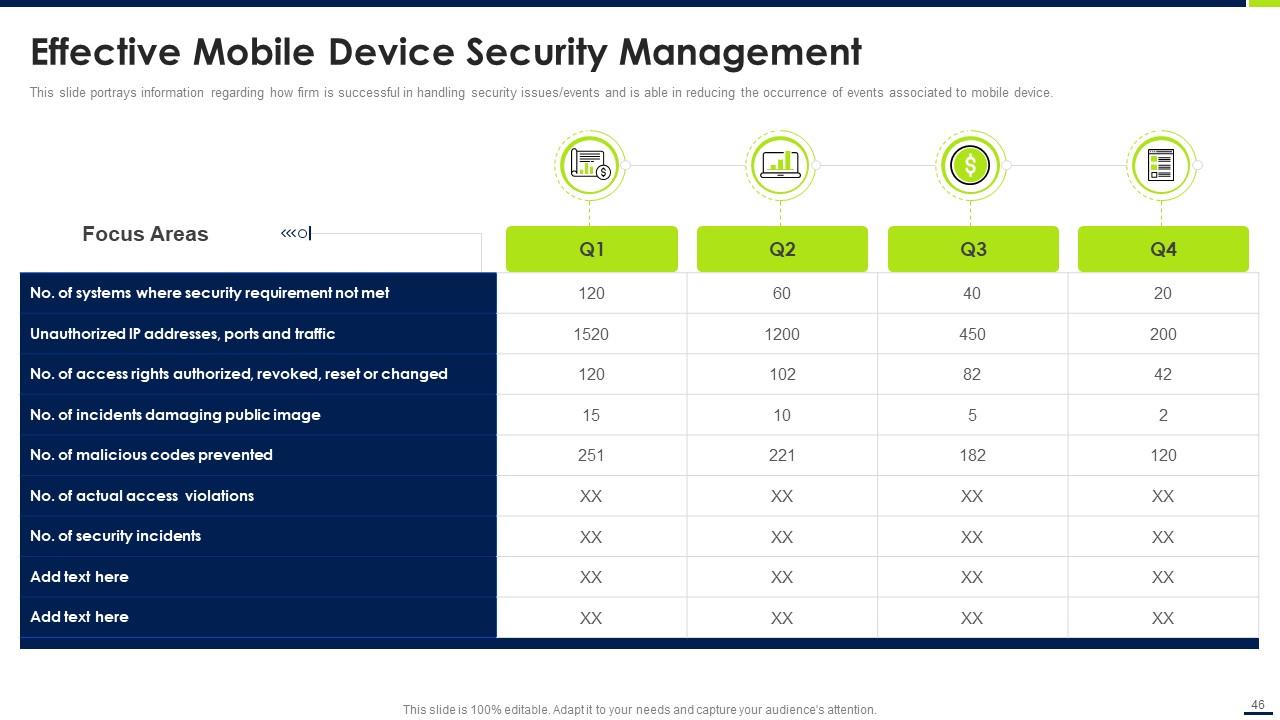
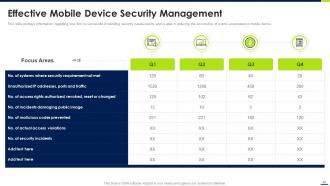
Slide 46: This slide portrays information regarding how firm is successful in handling security issues/events and is able in reducing the occurrence of events.
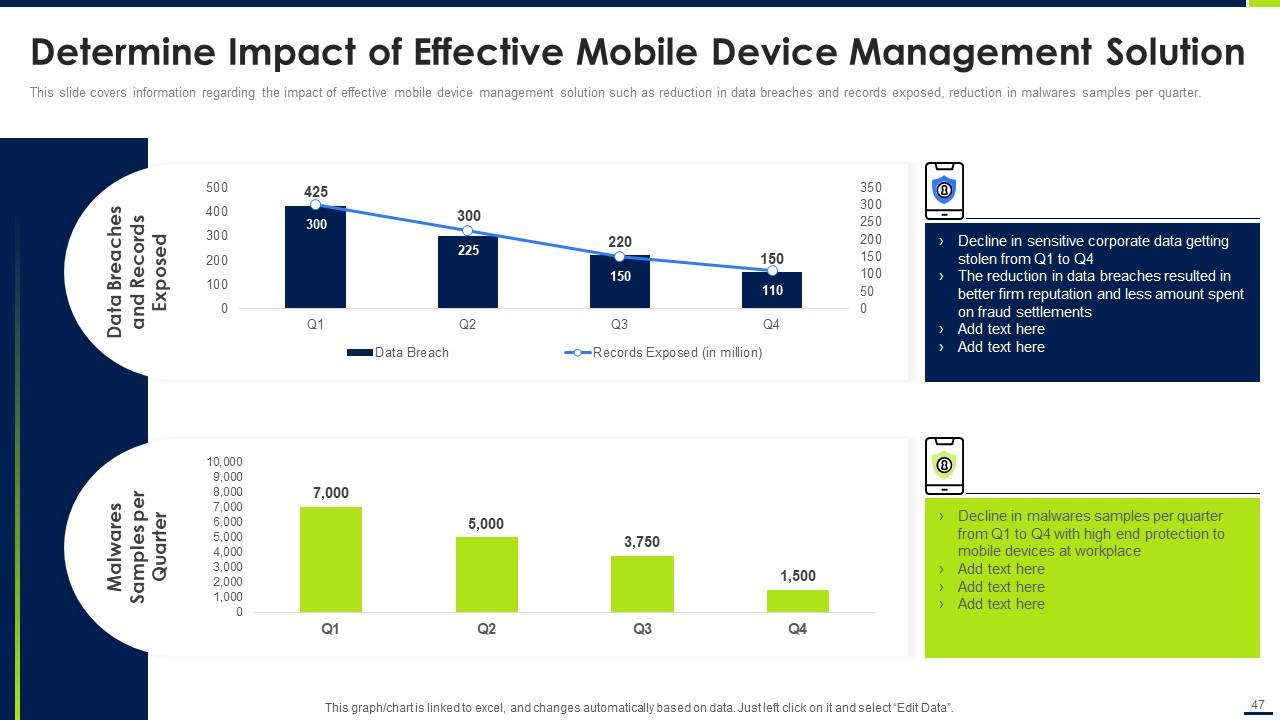
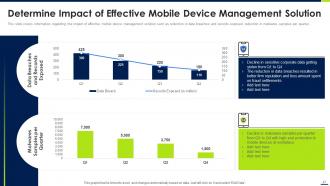
Slide 47: This slide covers information regarding the impact of effective mobile device management solution such as reduction in data breaches and records exposed, etc.
Slide 48: This slide depicts title for two topics that are to be covered next in the template.
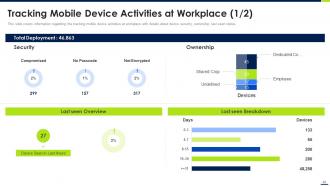
Slide 49: This slide covers information regarding the tracking mobile device activities at workplace with details about device security, ownership, last seen status.
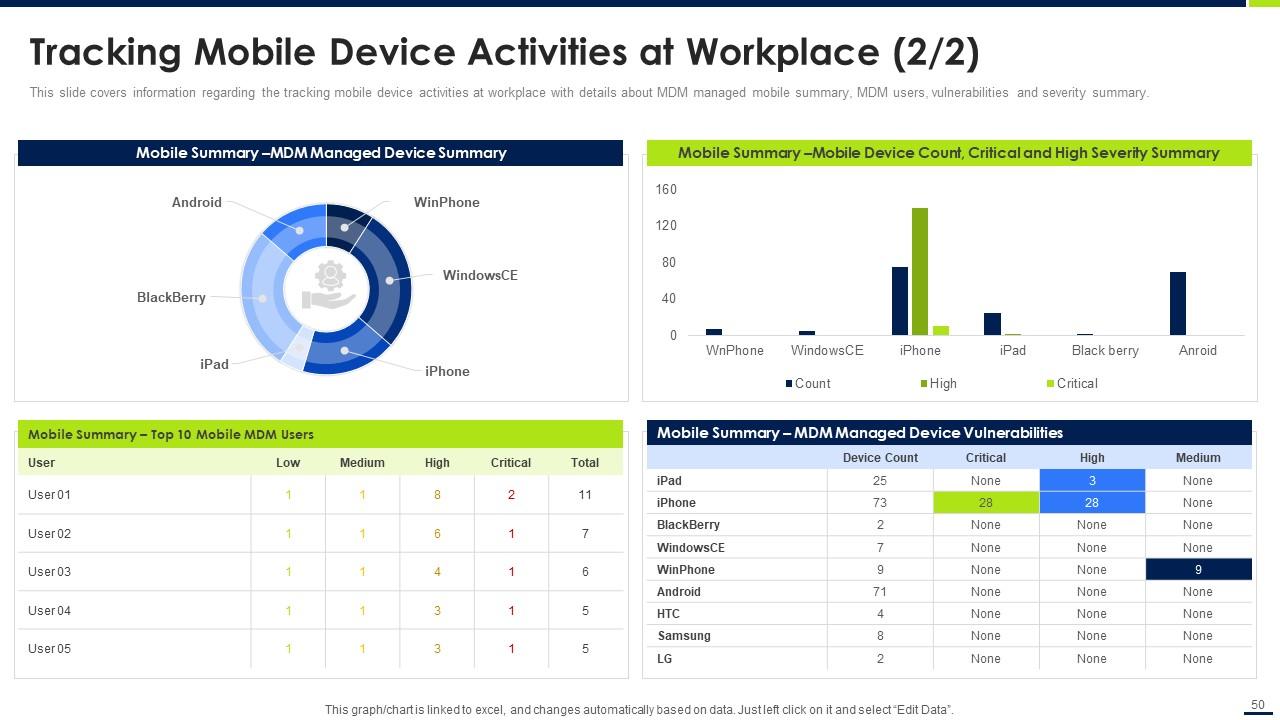
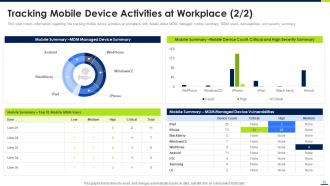
Slide 50: This slide covers information regarding the tracking mobile device activities at workplace with details about MDM managed mobile summary, MDM users, etc.
Slide 51: This slide displays Icons for Android Device Security Management.
Slide 52: This slide is titled as Additional Slides for moving forward.
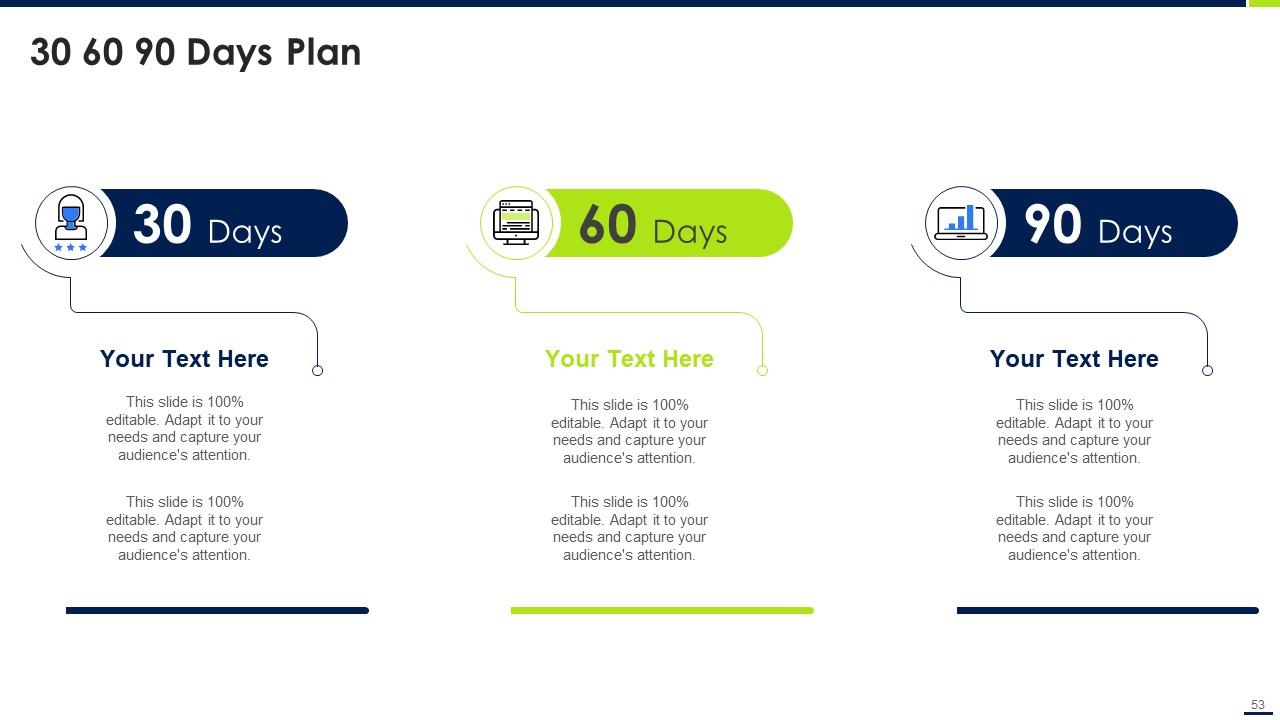
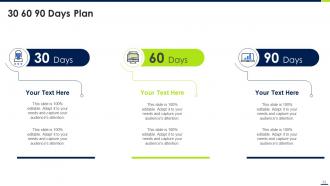
Slide 53: This slide provides 30 60 90 Days Plan with text boxes.
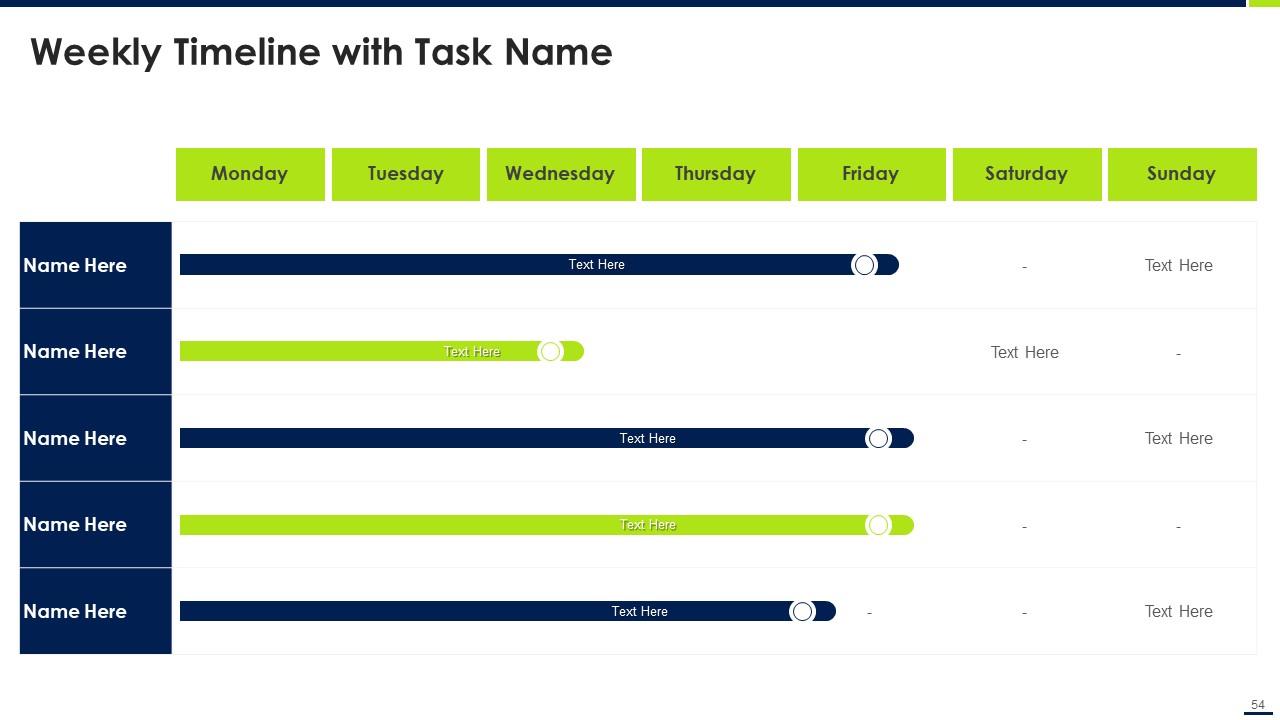
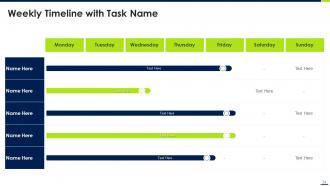
Slide 54: This slide showcases Weekly Timeline with Task Name.
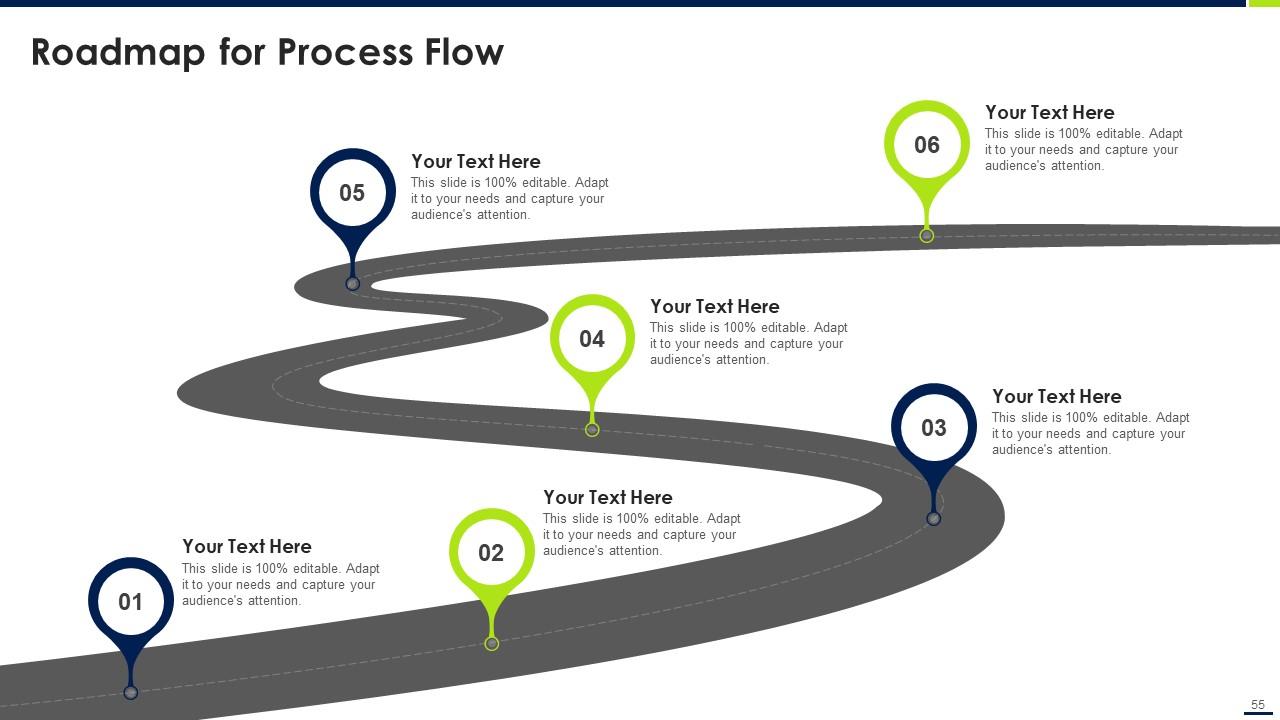
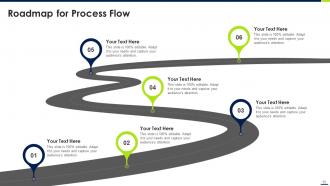
Slide 55: This slide shows Roadmap for Process Flow.
Slide 56: This slide displays Mind Map with related imagery.
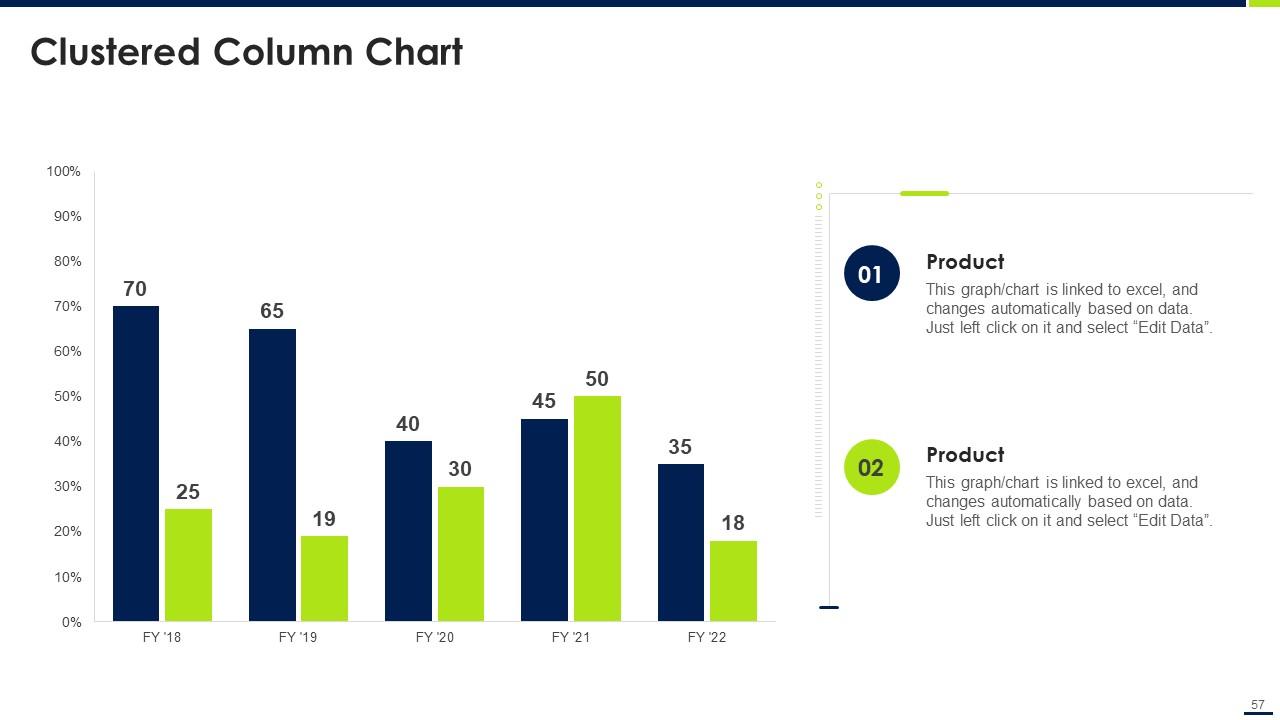
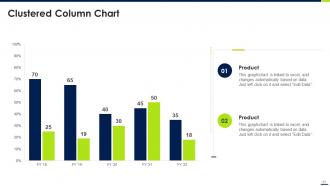
Slide 57: This slide provides Clustered Column chart with two products comparison.
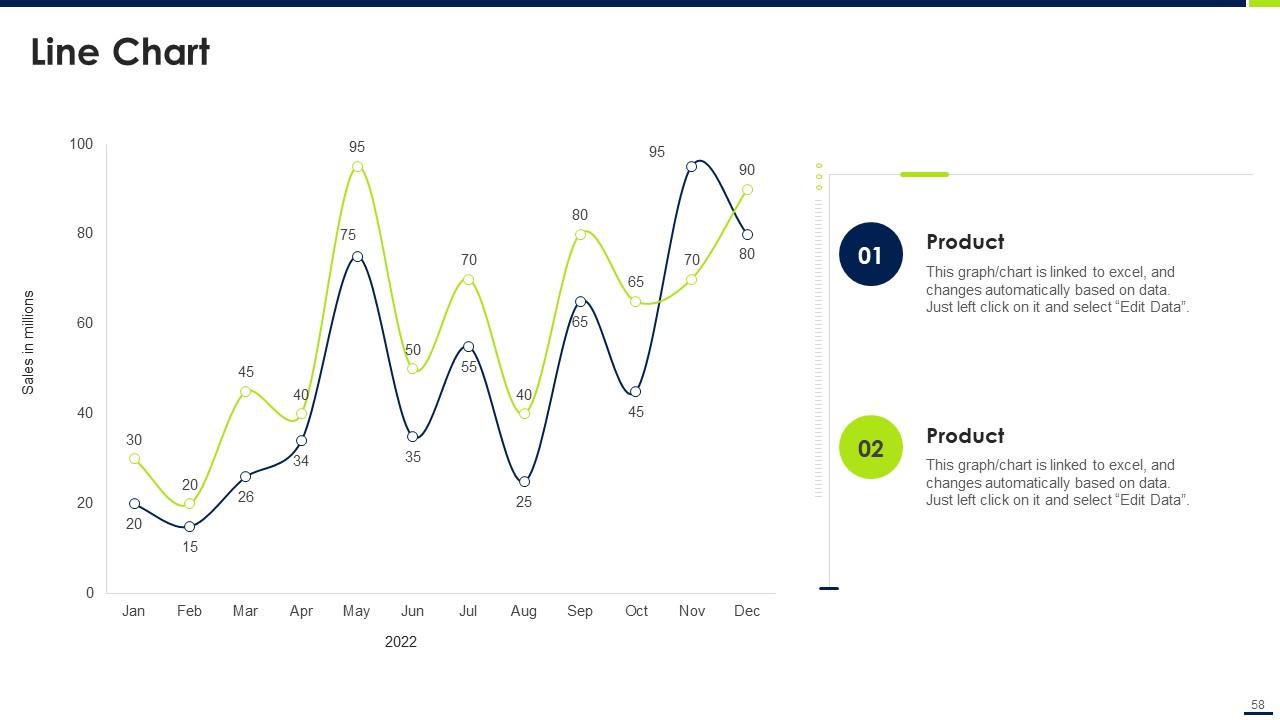
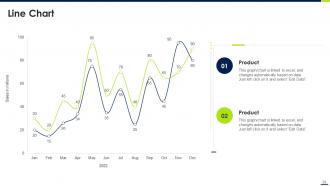
Slide 58: This slide describes Line chart with two products comparison.
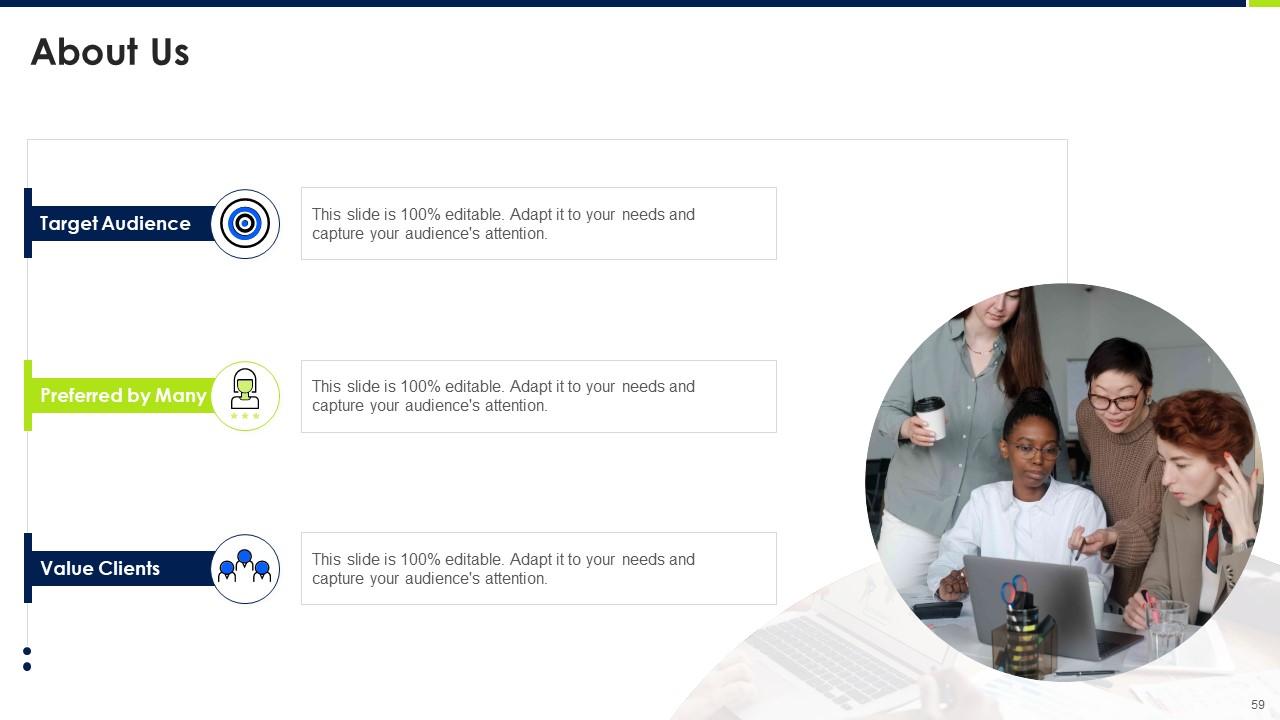
Slide 59: This is About Us slide to show company specifications etc.
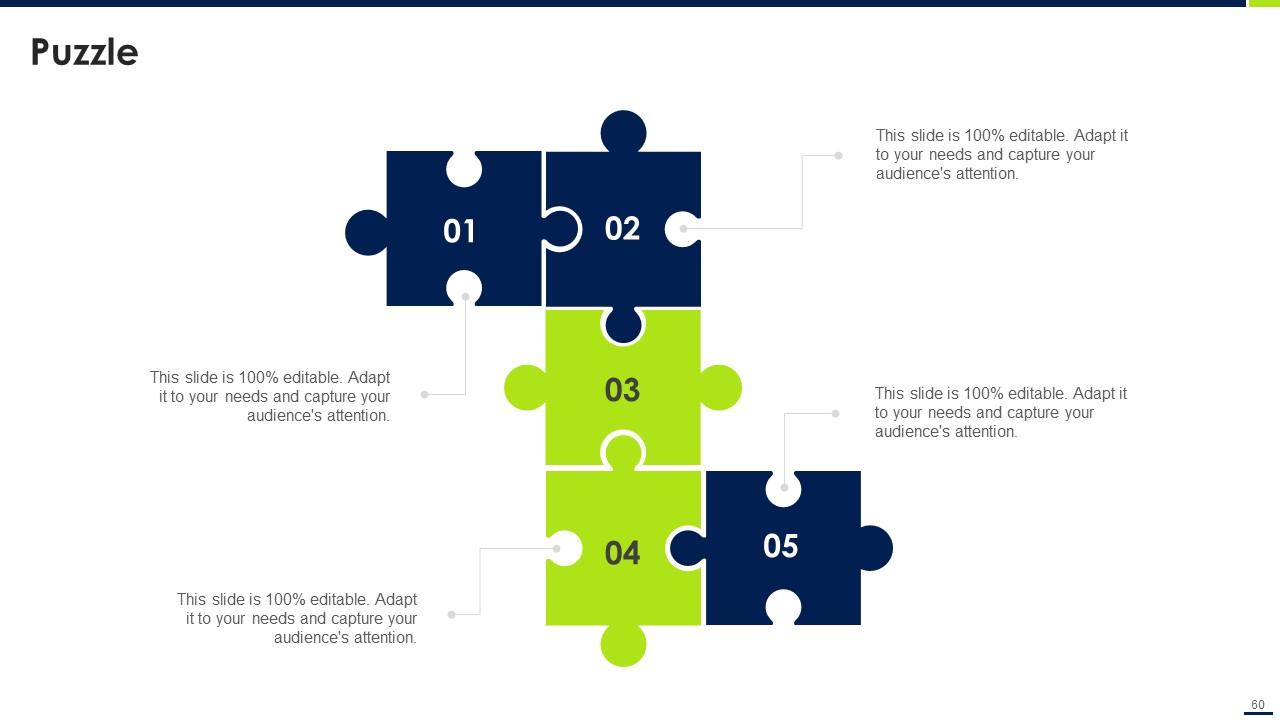
Slide 60: This slide contains Puzzle with related icons and text.
Slide 61: This slide shows Post It Notes. Post your important notes here.
Slide 62: This is a Thank You slide with address, contact numbers and email address.
Android Device Security Management Powerpoint Presentation Slides with all 67 slides:
Use our Android Device Security Management Powerpoint Presentation Slides to effectively help you save your valuable time. They are readymade to fit into any presentation structure.
-
One word for SlideTeam–Versatile!
-
Perfect template with attractive color combination.
