


Strawman Project Plan Powerpoint Presentation Slides





Try Before you Buy Download Free Sample Product
 Impress Your
 Audience
 100%
100% Editable
 Save Hours
 of Time


Management usually discusses critical concerns and areas of improvement by analyzing crucial information. Grab our competently designed Strawman Project Plan template. The template is considered a solution space for management to brainstorm various solutions for organizational progress. It comprises details about the company overview with key people involved, the firms product portfolio, and firm strategic objectives. It will cover the firms present scenario by analyzing financial summary, capital funding, financial ratios, and assessing several overheads essential for business operations. The template will cover details about financial statements. The template will cover critical concerns firms face in corporate failures, quality-related problems, and operational issues. The organizational improvement initiative addresses functional considerations vital for firm growth, determines three cases future scenario analysis, assesses business priorities crucial for development, analyzes brand building strategies, etc. It implements organizational change by analyzing employees skills, workforce upskilling plan, and coordination activities to improve stakeholder communication. This insightful template will help users improve marketing effectiveness by potential prospect nurturing, etc. Customize this 100 percent editable template now.
People who downloaded this PowerPoint presentation also viewed the following :
Content of this Powerpoint Presentation
Slide 1: This slide displays Strawman Project Plan. State Your Company Name and begin.
Slide 2: This slide states Agenda of the presentation.
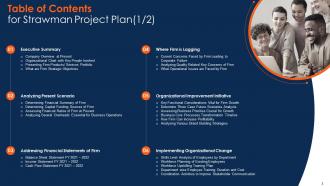
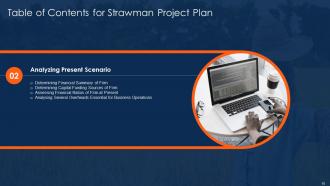
Slide 3: This slide presents Table of Content for the presentation.
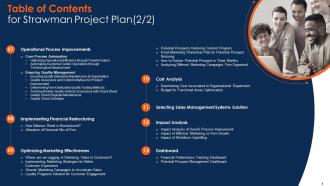
Slide 4: This is another slide continuing Table of Content for the presentation.
Slide 5: This slide depicts title for four topics that are to be covered next in the template.
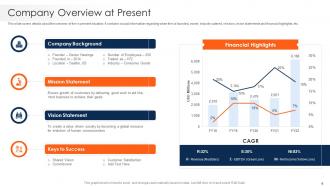
Slide 6: This slide covers details about the overview of firm’s present situation.
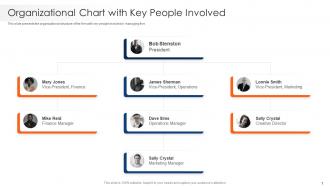
Slide 7: This slide presents the organizational structure of the firm with key people involved in managing firm.
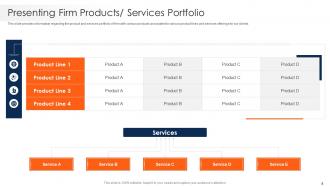
Slide 8: This slide provides information regarding the product and services portfolio of firm with various products.
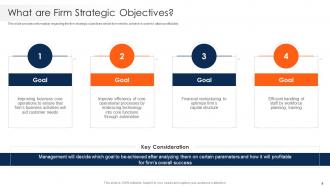
Slide 9: This slide provides information regarding the firm strategic objectives which firm need to achieve in order to attain profitability.
Slide 10: This slide depicts title for four topics that are to be covered next in the template.
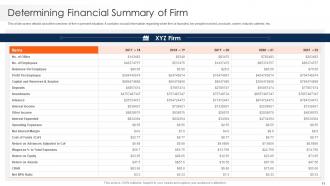
Slide 11: This slide covers details about the overview of firm’s present situation.
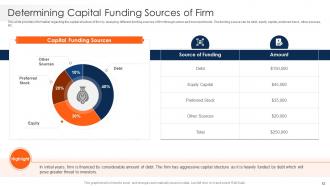
Slide 12: This slide provides information regarding the capital structure of firm by analyzing different funding sources of firm.
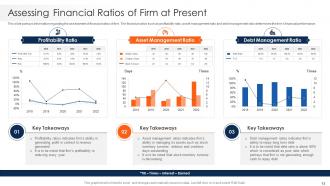
Slide 13: This slide portrays information regarding the assessment of financial ratios of firm.
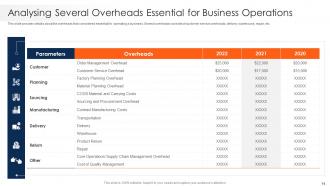
Slide 14: This slide provides details about the overheads that considered essential for operating a business.
Slide 15: This slide depicts title for three topics that are to be covered next in the template.
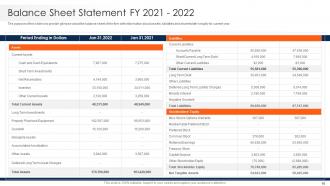
Slide 16: This slide provide glimpse about the balance sheet of the firm with information about assets, liabilities and shareholder’s equity for current year.
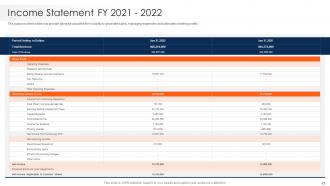
Slide 17: This slide provide glimpse about the firm’s ability to generate sales, managing expenses, and ultimately creating profits.
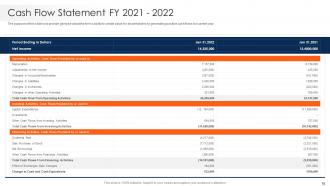
Slide 18: This slide provide glimpse about the firm’s ability to create value for shareholders by generating positive cash flows for current year.
Slide 19: This slide depicts title for four topics that are to be covered next in the template.
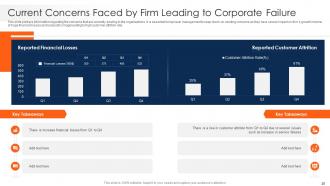
Slide 20: This slide portrays information regarding the concerns that are currently existing in the organizations.
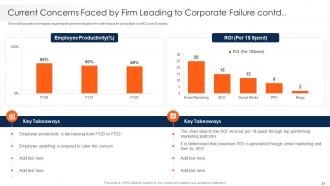
Slide 21: This slide provides information regarding the present situation firm with employee productivity and ROI (per1$ spent).
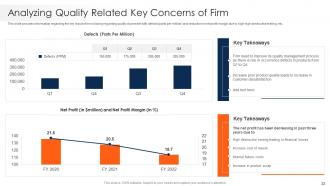
Slide 22: This slide provides information regarding the key issues firm is facing regarding quality at present with defects(parts per million).
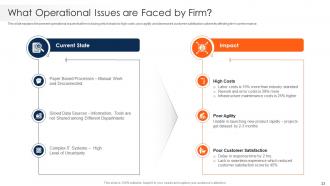
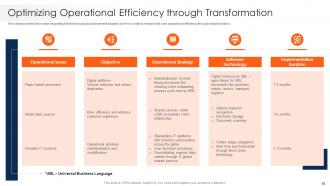
Slide 23: This slide explains the present operational issues that firm is facing which leads to high costs, poor agility, etc.
Slide 24: This slide depicts title for six topics that are to be covered next in the template.
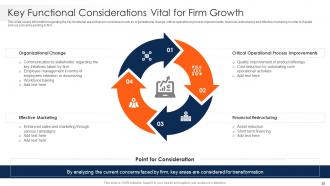
Slide 25: This slide covers information regarding the key functional areas that are considered such as organizational change, etc.
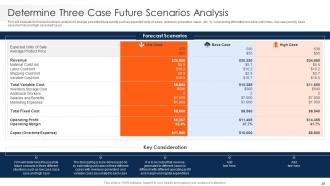
Slide 26: This slide displays 'Determine Three Case Future Scenarios Analysis'.
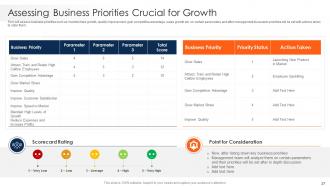
Slide 27: This slide presents 'Assessing Business Priorities Crucial for Growth'.
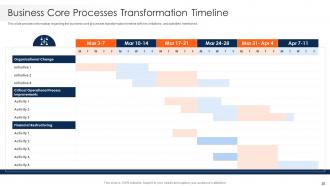
Slide 28: This slide provides information regarding the business core processes transformation timeline with key initiatives and activities mentioned.
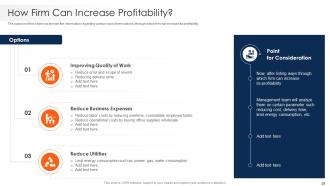
Slide 29: This slide provide the information regarding various ways (three options) through which firm can increase its profitability.
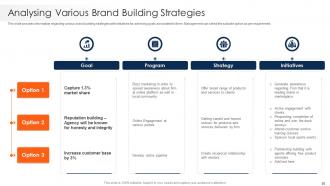
Slide 30: This slide provides information regarding various brand building strategies with initiatives for achieving goals associated to them.
Slide 31: This slide depicts title for five topics that are to be covered next in the template.
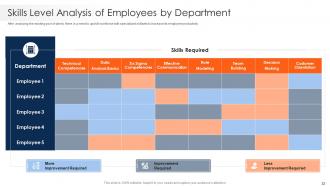
Slide 32: This slide exhibits 'Skills Level Analysis of Employees by Department'.
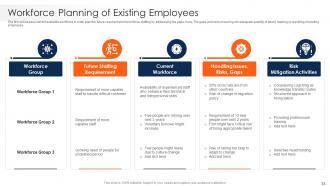
Slide 33: This slide showcases 'Workforce Planning of Existing Employees'.
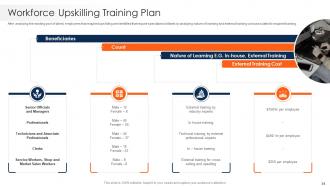
Slide 34: This slide illsutrates 'Workforce Upskilling Training Plan'.
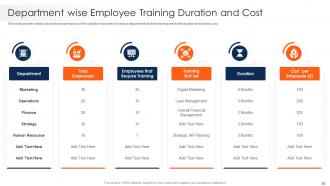
Slide 35: This slide provides details about necessary training of the specific employees in various departments.
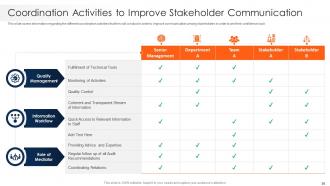
Slide 36: This slide covers information regarding the different coordination activities that firm will conduct.
Slide 37: This slide depicts title for two topics that are to be covered next in the template.
Slide 38: The slide provides information regarding the technological advancement adapted by firm.
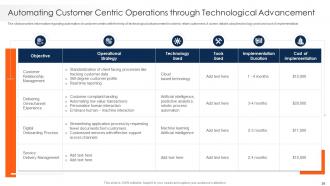
Slide 39: The slide provides information regarding automation of customer centric with the help of technological advancement.
Slide 40: This slide depicts title for six topics that are to be covered next in the template.
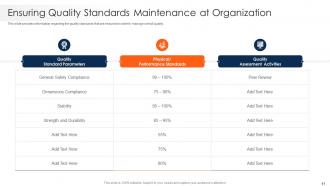
Slide 41: This slide provides information regarding the quality standards that are ensured in order to manage overall quality.
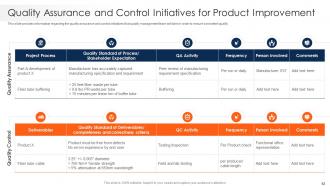
Slide 42: This slide provides information regarding the quality assurance and control initiatives.
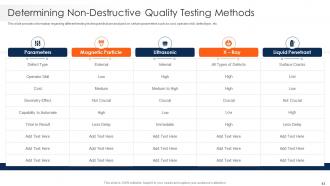
Slide 43: This slide provides information regarding different testing techniques that are analyzed on certain parameters such as cost, operator skill, defect type, etc.
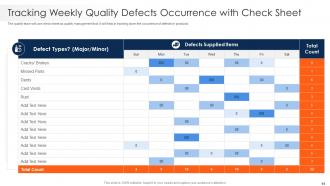
Slide 44: This slide presents 'Tracking Weekly Quality Defects Occurrence with Check Sheet'.
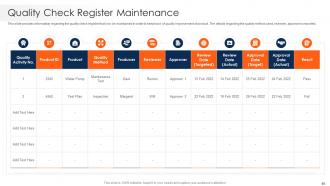
Slide 45: This slide provides information regarding the quality check register that is to be maintained in order to keep track of quality improvement of product.
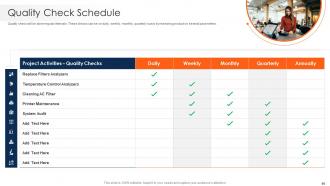
Slide 46: This slide exhibits 'Quality Check Schedule'.
Slide 47: This slide depicts title for two topics that are to be covered next in the template.
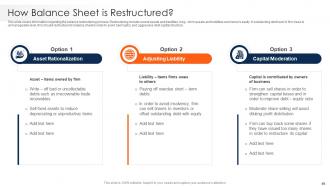
Slide 48: This slide covers information regarding the balance restructuring process.
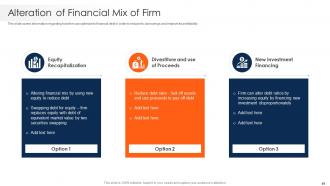
Slide 49: This slide covers information regarding how firm can optimize its financial debt in order to reduce its borrowings and improve its profitability.
Slide 50: This slide depicts title for eight topics that are to be covered next in the template.
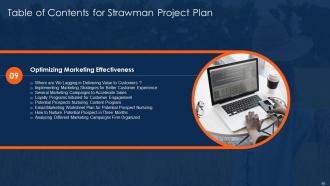
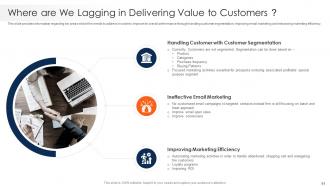
Slide 51: This slide provides information regarding key areas which firm needs to address.
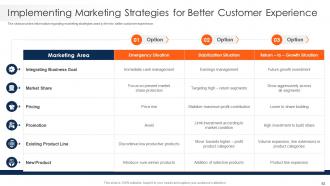
Slide 52: The slide provides information regarding marketing strategies used by firm for better customer experience.
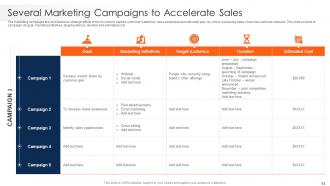
Slide 53: This slide displays 'Several Marketing Campaigns to Accelerate Sales'.
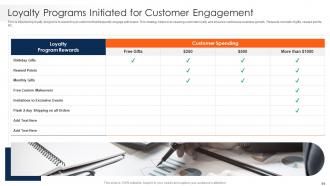
Slide 54: This slide presents 'Loyalty Programs Initiated for Customer Engagement'.
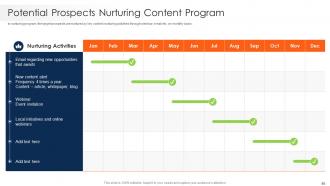
Slide 55: This slide exhibits 'Potential Prospects Nurturing Content Program'.
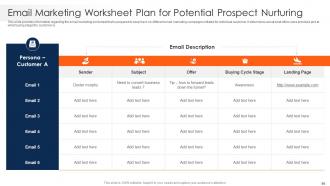
Slide 56: This slide provides information regarding the email marketing worksheet that is prepared to keep track on different email marketing campaigns.
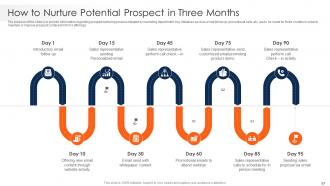
Slide 57: This slide showcases 'How to Nurture Potential Prospect in Three Months'.
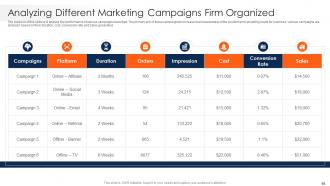
Slide 58: This slide highlights 'Analyzing Different Marketing Campaigns Firm Organized'.
Slide 59: This slide depicts title for two topics that are to be covered next in the template.
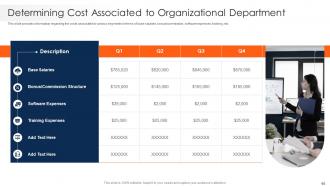
Slide 60: This slide provides information regarding the costs associated to various segments in terms of base salaries, etc.
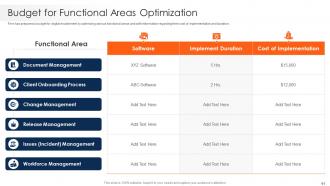
Slide 61: This slide displays 'Budget for Functional Areas Optimization'.
Slide 62: This slide depicts title for one topic that is to be covered next in the template.
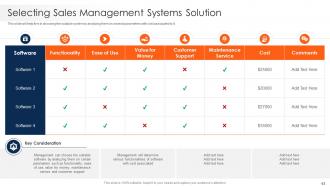
Slide 63: This slide will help firm in choosing the suitable system by analyzing them on several parameters with cost associated to it.
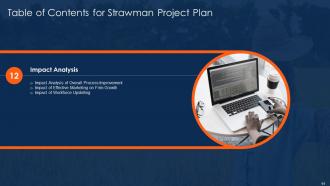
Slide 64: This slide depicts title for three topics that are to be covered next in the template.
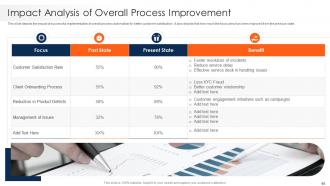
Slide 65: This slide depicts the impact of successful implementation of overall process automation for better customer satisfaction.
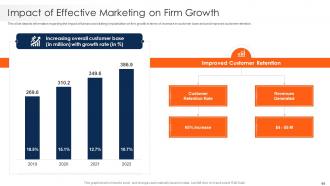
Slide 66: This slide depicts information regarding the impact of turnaround strategy implantation on firm growth.
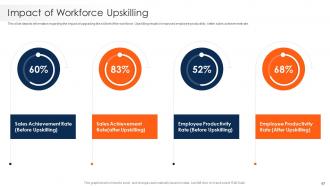
Slide 67: This slide depicts information regarding the impact of upgrading the skillset of the workforce.
Slide 68: This slide depicts title for two topics that are to be covered next in the template.
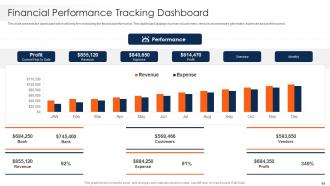
Slide 69: This slide presents the dashboard which will help firm in tracking the financial performance.
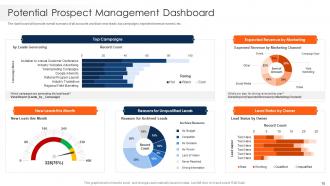
Slide 70: This slide will provide overall scenario of all accounts and track new leads, top campaigns, expected revenue earned, etc.
Slide 71: This slide displays Icons for Strawman Project Plan.
Slide 72: This slide is titled as Additional Slides for moving forward.
Slide 73: This is Our Mission slide with related imagery and text.
Slide 74: This is About Us slide to show company specifications etc.
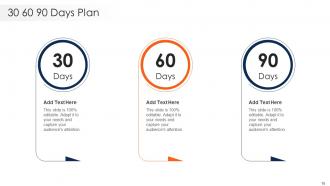
Slide 75: This slide provides 30 60 90 Days Plan with text boxes.
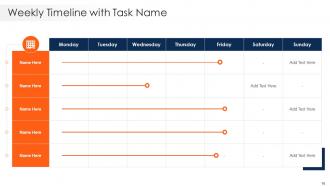
Slide 76: This slide represents Weekly Timeline with Task Name.
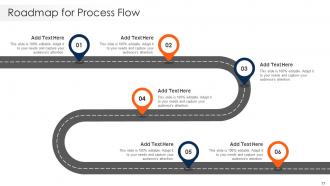
Slide 77: This slide showcases Roadmap for Process Flow.
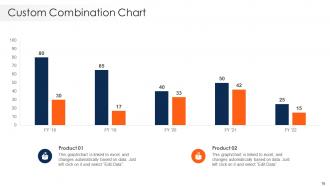
Slide 78: This slide displays Custom Combination chart with two products comparison.
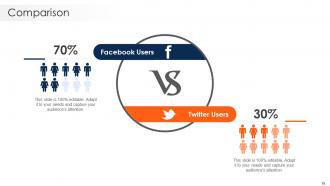
Slide 79: This is a Comparison slide to state comparison between commodities, entities etc.
Slide 80: This slide depicts Venn diagram with text boxes.
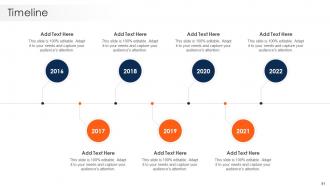
Slide 81: This is a Timeline slide. Show data related to time intervals here.
Slide 82: This slide showcases Magnifying Glass to highlight information, specifications, etc.
Slide 83: This slide shows Post It Notes. Post your important notes here.
Slide 84: This is a Thank You slide with address, contact numbers and email address.
Strawman Project Plan Powerpoint Presentation Slides with all 89 slides:
Use our Strawman Project Plan Powerpoint Presentation Slides to effectively help you save your valuable time. They are readymade to fit into any presentation structure.










FAQs for Strawman Project Plan
A strawman project plan is just your rough first draft that gets everyone talking. I always tell people - make your best guess at tasks, timeline, and who you'll need, then watch it get picked apart. That's literally the whole point! Way more productive than sitting around brainstorming into the void for hours. Your team gets something real to react to instead of starting from nothing. It surfaces all those hidden assumptions and gaps you didn't think about. Plus it gets everyone on the same page about what you're actually trying to accomplish and when. Don't overthink it - just start somewhere.
So basically, strawman plans are a lifesaver because nobody wants to stare at a blank whiteboard together trying to figure out timelines from nothing. Draft something up first - your best guess at milestones, deadlines, resources, whatever. Then stakeholders can actually react to something real instead of just throwing around vague ideas. Trust me, people are way better at saying "that deadline's crazy" or "we'll need double the budget for this part" when they're looking at your draft. Shows you came prepared too, which doesn't hurt. Keep it simple - like one page max - then just roll with their feedback.
Start with the basics - scope, timeline with big milestones, deliverables, who's doing what, and rough budget numbers. Don't overthink it though. The goal is having something "good enough" that people can actually react to instead of staring at a blank page forever. Make sure you call out your major assumptions and risks right upfront - honestly, that's where most of the arguments happen anyway. I learned that the hard way on my last project. You want something concrete but not so polished that you can't pivot when (not if) stakeholders want changes.
Oh, a strawman plan? It's basically a rough draft that you know will get shredded. You throw together your best guess at a project plan - doesn't have to be perfect or complete. Actually, it shouldn't be! The whole point is giving people something concrete to react to and tear apart. Way faster than spending weeks polishing every detail upfront like traditional planning. People can't critique thin air, but they'll definitely tell you what's wrong with your rough outline. I've seen teams waste so much time trying to get plans "perfect" from the start. With strawman planning, you're basically saying "here's my attempt, now help me fix it." Gets you feedback and buy-in much quicker.
Honestly, just throw together a rough draft - even a messy one. People are weird about blank whiteboards but they'll tear apart your ideas all day long (in a good way though). I swear it's like some psychological thing where we're better at fixing stuff than starting from nothing. Don't stress about making it perfect because that's not the point. Once you've got a basic timeline with some milestones, everyone suddenly has opinions about what's missing or won't work. It kills that "where do we even begin" paralysis instantly. The feedback starts flowing and you'll spot problems way earlier than usual.
Honestly, the worst thing you can do is fall in love with your first draft and refuse to change it. I've watched teams get stuck arguing about minor details for hours - total waste of time when you should be tackling the big stuff. Also don't rush it. Yeah, you want something quick, but if you skip getting input from people, what's the point? Oh and here's a big one: stakeholders might think it's way more final than it is. They'll start making real decisions off your rough numbers. Label that thing clearly as a rough draft and literally ask people to tear it apart.
Honestly, start by updating it weekly or every two weeks when you're just getting going. That early phase is chaos - you'll get feedback, hit roadblocks you didn't see coming, scope creeps around. It's like rough sketching before the real work starts. Once you're actually executing? Monthly updates work fine unless something big happens. The beauty of strawman plans is they're supposed to change, so don't fall in love with version one. Regular check-ins with your stakeholders help tons - they'll catch stuff you missed and keep everyone aligned on where things are headed.
Yeah, totally works! I'd actually say it's easier with agile since you're already planning for things to change anyway. Start with your big-picture stuff - main features, rough sprint guesses, key deadlines. That becomes your backlog foundation basically. Just keep it super loose though. Each sprint you'll tweak it based on what you learned. Honestly, the whole point is getting everyone on the same page about scope and timing upfront, then let your regular sprint planning handle the nitty-gritty details. I've seen teams get way too attached to their initial plan - don't be those guys.
Construction and software dev are huge on strawman plans. Manufacturing too. Basically any field where you've got tons of people who need to sync up fast without sitting through meeting hell. Tech companies use them constantly since requirements shift every five minutes - which, honestly, drives me insane but whatever. Consulting loves them for showing clients initial frameworks. Healthcare does a lot of system rollouts this way. The thing is, they work best when you're dealing with messy, complex projects where you just need something to start the conversation. Should definitely try one next time you're juggling multiple teams.
Honestly, visuals are a game changer for strawman docs. Nobody wants to read walls of text - I learned this the hard way. Flowcharts and wireframes let people see the whole project flow instantly. Templates keep everything organized too, which your stakeholders will thank you for later. People catch problems way faster when they can actually see what you're talking about. I usually just use PowerPoint or Lucidchart to map out milestones and dependencies. Makes the whole thing feel less overwhelming for everyone involved.
Honestly, you can't do strawman plans alone - you'll miss way too much stuff. Get people from different teams involved right from the start because they'll catch things like unrealistic deadlines or resource problems that seem super obvious to them but you'd never think of. I learned this the hard way when my first few attempts basically crumbled. The whole idea is making something rough but actually workable that everyone can improve on together. Just throw your draft out there and let people tear it apart - that's literally how you turn a shaky first attempt into something solid you can actually plan around.
Don't just dump your strawman on people - bring them into the process from day one. Grab your key stakeholders and actually workshop it together. Let them tear it apart! That's literally the whole point. I've watched so many "strawmen" that were basically set in stone, which defeats the purpose entirely. People need to feel like they can mess with it without stepping on toes. Be genuinely ready for them to flip your ideas upside down. If they think you're faking the collaboration thing, they'll mentally check out fast. Book that working session in the first week while everyone's still engaged.
Track three things to see if your strawman plan's working. Are people actually jumping into discussions and giving useful feedback? That's your engagement metric. Also count how many assumptions you can prove or disprove - honestly that's why you're doing this whole thing anyway. Timeline matters too - how much faster are you getting to a real plan vs starting blank? Oh and pay attention to whether good alternatives come up during discussions. Just start measuring this stuff right away so you can pivot if it's not working.
Share your strawman with stakeholders and tell them straight up - you want brutal honesty, not head nods. Don't ask "what do you think?" Ask "what am I missing?" or "where's this gonna blow up?" People actually enjoy tearing apart plans (weirdly), so let them go wild. Set up different review sessions - tech people, business folks, actual users. Write down everything, even the stuff that contradicts itself. Oh, and don't get married to your first idea. The whole point is catching problems before you're too invested to pivot.
Just tell everyone upfront this is your rough draft, not the final plan. Lead with the big stuff - timeline, major milestones, what resources you'll need. I learned the hard way to actually say "this is deliberately messy" so people feel okay tearing it apart. Make your assumptions super obvious since that's usually where things go wrong. Oh, and don't get bogged down in tiny details right away - honestly, half of those will probably change anyway. Come with specific questions ready. Like, where do you actually need their input to keep moving? People love giving opinions when you ask directly.
-
Editable templates with innovative design and color combination.
-
Best Representation of topics, really appreciable.