

Project Task Powerpoint Presentation Slides





Try Before you Buy Download Free Sample Product
 Impress Your
 Audience
 100%
100% Editable
 Save Hours
 of Time


Introducing our project task PowerPoint presentation slides. Provide a detailed description of your new project with the help of this report assessment PowerPoint deck. This task assignment PPT theme has a slide that deciphers the type and impact of the risk over the project. Utilizing this assignment plan PPT layout will help you in organizing your project management team. This readymade task optimization PowerPoint design contains a slide that provides details on schedule and activity sequence. Incorporating this particular mission proposal PPT theme allows you to present your project task list. This project assessment PowerPoint creative set contains a slide that has a task matrix detailing main tasks, competencies, and responsibilities. Selection of this task boost PowerPoint template lets you showcase the project cost estimate. This activity standardization PPT deck lets you make required variations to icons and colors. Choose this project escalation PowerPoint design to display organization and assurance. Download this PPT slide to avail the benefits of perfection.
People who downloaded this PowerPoint presentation also viewed the following :
Content of this Powerpoint Presentation
Slide 1: This slide introduces Project Task. State your company name and get started.
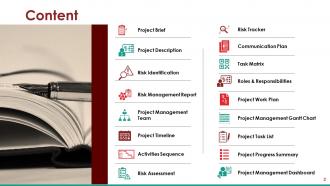
Slide 2: This is a Content slide with- Project Brief, Risk Management Report, Project Description, Project Management Team, Risk Identification, Project Timeline, Activities Sequence, Risk Assessment, Project Work Plan, Project Progress Summary, Communication Plan, Project Management Gantt Chart, Project Management Dashboard, Task Matrix, Risk Tracker, Project Task List, Roles & Responsibilities.
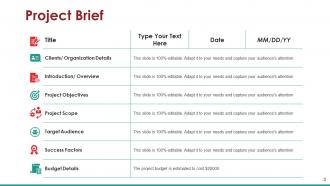
Slide 3: This is a Project Brief slide. You can change/ alter the contents as per need.
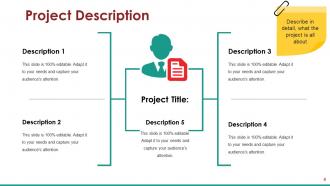
Slide 4: This is Project Description slide with imagery and text boxes to go with. Describe in detail, what the project is all about here.
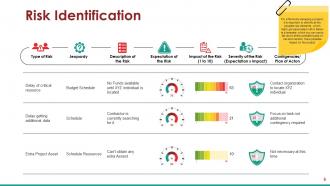
Slide 5: This is Risk Identification slide showing- Type of Risk, Jeopardy, Description of the Risk, Expectation of the Risk, Impact of the Risk (1 to 10), Severity of the Risk (Expectation x Impact), Contingencies/ Plan of Acton.
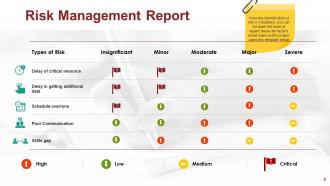
Slide 6: This slide presents Risk Management Report with High, Medium, Low and Critical parameters.
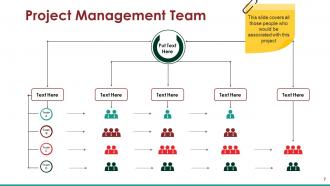
Slide 7: This is a Project Management Team slide. Introduce your project management team with name, designation etc. here.
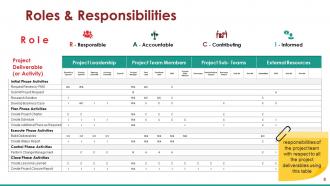
Slide 8: This slide shows Roles & Responsibilities table. State the responsibilities of the project team with respect to all the project deliverables using this table.
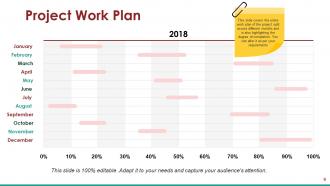
Slide 9: This slide showcases Project Work Plan. It covers the entire work plan of the project split across different months and also highlights the degree of completion. You can alter it as per your requirements.
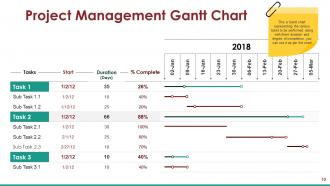
Slide 10: This slide shows Project Management Gantt Chart. Use it to represent the various tasks to be performed along with there duration and degree of completion. You can also modify it as per your requirement.
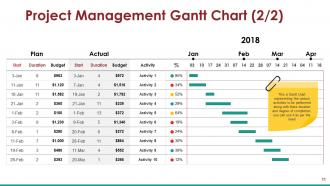
Slide 11: This slide also shows Project Management Gantt Chart. You can modify it as per your requirement.
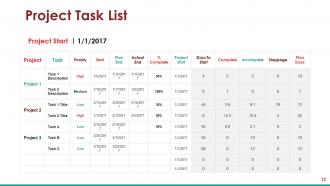
Slide 12: This slide showcases Project Task List.
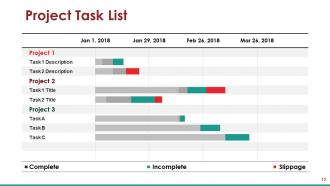
Slide 13: This is another slide showing Project Task List.
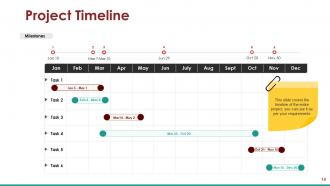
Slide 14: This is a Project Timeline slide. Use it to showcase product milestones, growth etc.
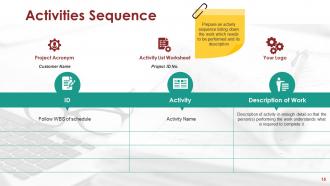
Slide 15: This slide shows Activities Sequence table. Prepare an activity sequence listing the work which needs to be performed and its description.
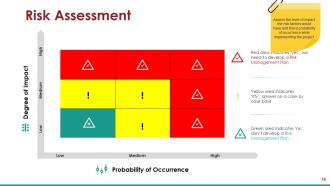
Slide 16: This slide displays Risk Assessment matrix with High, Medium and Low parameters.
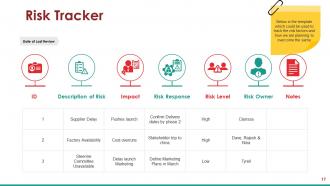
Slide 17: This slide showcases Risk Tracker Template. Use the template to track the risk factors and how you are planning to overcome the same.
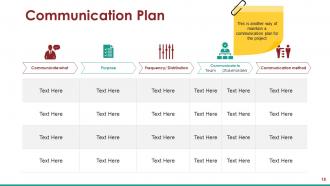
Slide 18: This is Communication Plan slide to display.
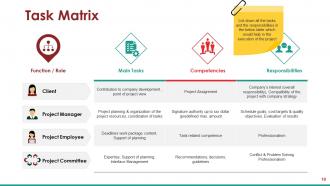
Slide 19: This slide presents Task Matrix. List down all the tasks and the responsibilities in the table which would help in the execution of the project.
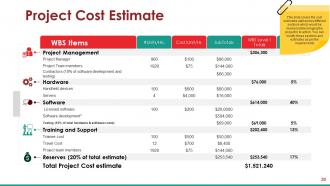
Slide 20: This slide shows Project Cost Estimate. You can alter/ modify content as per requirement.
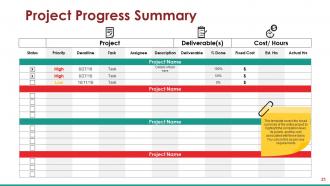
Slide 21: This slide states Project Progress Summary in terms of months with text boxes.
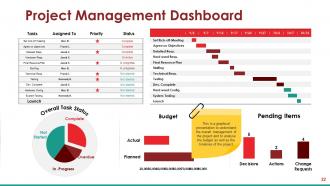
Slide 22: This slide showcases Project Management Dashboard in charts and graphs.
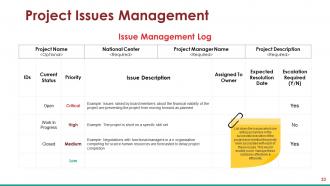
Slide 23: This slide shows Project Issues Management with Issue Management Log.
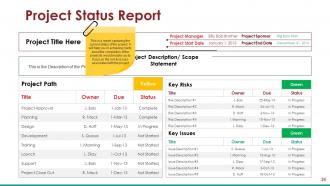
Slide 24: This slide shows Project Status Report.
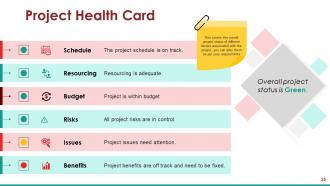
Slide 25: This slide showcases Project Health Card to assess project status of different factors associated with the project, you can alter them as per your requirements.
Slide 26: This is Project Task Icons Slide. Use icons as per your requirement.
Slide 27: This slide shows Coffee Break image. You can alter the content as per need.
Slide 28: This slide is titled Charts & Graphs to move forward. You may change the content as per requirement.
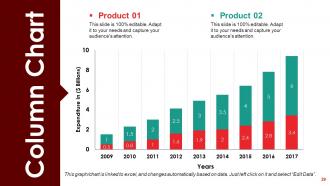
Slide 29: This slide showcases Column Chart with which you can compare the products.
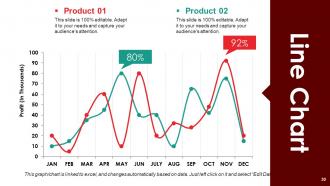
Slide 30: This slide shows a Line Chart for two product comparison.
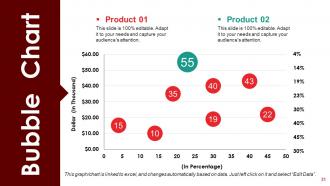
Slide 31: This is a Bubble Chart slide to present product/ entity comparison, specifications etc.
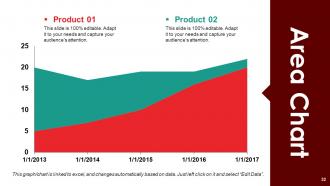
Slide 32: This is an Area Chart slide to show product/ entity growth, comparison, specifications etc.
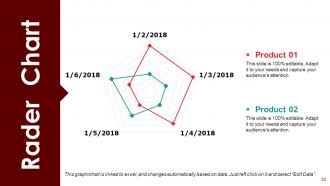
Slide 33: This slide showcases a Radar Chart. Compare Product 01, Product 02 and use as per required.
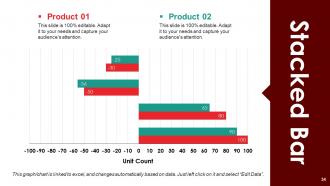
Slide 34: This is a Stacked Bar Chart slide to show product/entity growth, comparison, specifications etc.
Slide 35: This slide is titled Additional Slides to move forward. You can alter the content as per need.
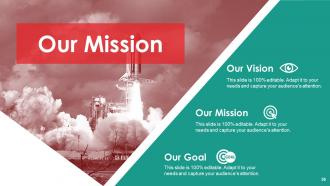
Slide 36: This slide showcases Our Mission. Show your company mission, goals etc. here.
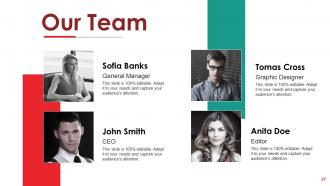
Slide 37: This slide showcases Our Team with Name and Designation to fill.
Slide 38: This is an About Us slide showing Our Company, Value Client, and Premium services as examples.
Slide 39: This is Our Goal slide. State your goals here.
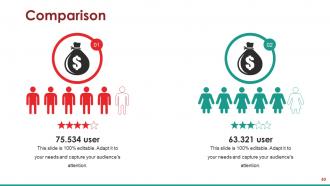
Slide 40: This is a Comparison slide. You can compare the male and female ratio in it.
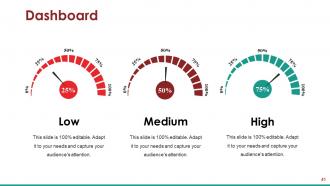
Slide 41: This is a Dashboard slide to state Low, Medium and High aspects, kpis, metrics etc.
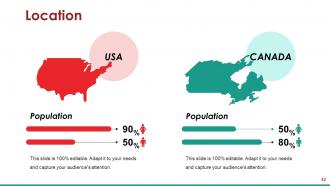
Slide 42: This is a Location slide to show global segregation, presence etc. on a world map and text boxes to make it explicit.
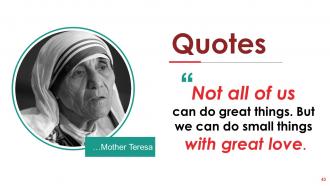
Slide 43: This is a Quotes slide to convey company/ organization message, beliefs etc. You may change the slide content as per need.
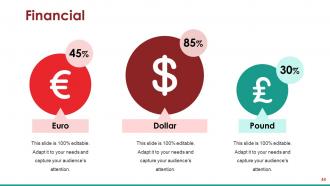
Slide 44: This slide is titled as Financials. Show finance related stuff here.
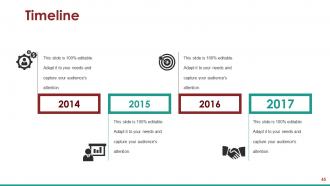
Slide 45: This slide presents a Timeline to show growth, milestones etc.
Slide 46: This is Our Target image slide. State your targets here.
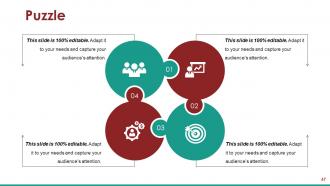
Slide 47: This is a Puzzle image slide to show information, specifications etc.
Slide 48: This slide shows a Mind map for representing entities.
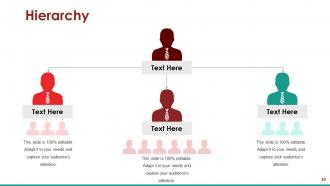
Slide 49: This is a Hierarchy slide to show information, organization structural specifications etc.
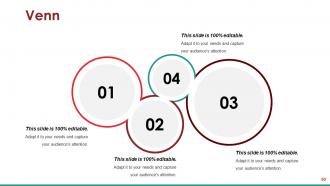
Slide 50: This is a Venn diagram image slide to show information, specifications etc.
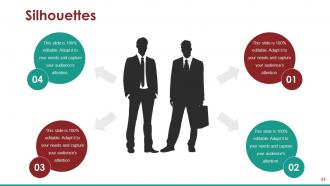
Slide 51: This is a Silhouettes slide to present people related information, specifications etc.
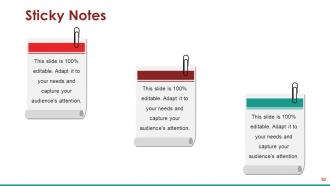
Slide 52: This slide shows Sticky Notes to be displayed. Show events, important piece of information, events etc. here.
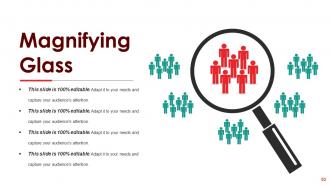
Slide 53: This is a Magnifying glass image slide to show information, scoping aspects etc.
Slide 54: This is a Bulb Or Idea image slide to show information, innovative aspects etc.
Slide 55: This is a Thank You slide with Address# street number, city, state, Contact Number, Email Address.
Project Task Powerpoint Presentation Slides with all 55 slides:
Take the pressure out of preparing presentation presentations. Our Project Task Powerpoint Presentation Slides will do the hard parts for you.

FAQs for Project Task
So there are five main phases: initiation, planning, execution, monitoring/controlling, and closing. Initiation is basically defining scope and getting everyone on board. Planning's where you map out timelines and resources - honestly this part is crucial, don't rush it. Then execution is the actual work (obviously), while monitoring keeps your budget and deadlines in check. Closing wraps everything up and documents what you learned. Pro tip though - these aren't set in stone. You'll bounce between phases constantly as things change. I always tell people to spend extra time upfront in planning because it saves your butt later.
So basically you need to write down exactly what you're delivering and what you're NOT doing - that second part is huge. Talk to everyone involved first through meetings or whatever works. I always make a document listing the specific stuff you'll create, how you'll measure success, and hard boundaries. Get people to actually approve it in writing before you start anything (trust me on this one). Oh and do regular check-ins because scope creep is real. Honestly, most project disasters happen because someone skipped the validation step with stakeholders early on.
Honestly, start by writing down everything that could mess up your project - way more stuff will break than you expect. Rate each risk by how likely it is and how bad it'd be. Focus your energy on the scary high-impact ones first. Your stakeholders need to know about the big risks upfront, not when things are already on fire. Check your risk list weekly with the team because new problems always pop up. Oh, and actually USE the thing - I've seen too many people create these detailed registers then never look at them again. That's just busywork.
Dude, templates will literally save your sanity. I used to spend forever on the same weekly reports - such a waste of time. Now I just have standard formats for meeting notes, status updates, project plans, all that stuff. My team fills in the blanks instead of starting over each time. Just make them detailed enough to actually help but not so rigid they're useless for different projects. Consistent headers and sections are clutch so people know where to look for info. Seriously, reporting went from like an hour to maybe 15 minutes. Game changer.
Oh man, communication is everything. Seriously - I've watched projects with solid plans completely tank because people just stopped talking to each other. Your team ends up doing their own thing, stakeholders get lost, and suddenly scope creep is everywhere. Regular check-ins are a lifesaver. Share docs, overcommunicate instead of assuming everyone gets it. Actually, I probably bug people too much with updates but whatever - better than surprises later. Get those communication habits going early and don't let them slide.
So there's a few main ones to think about. Waterfall works when you know exactly what you want from day one and it won't change much - pretty straightforward stuff. With Agile you're constantly tweaking things based on feedback, which is honestly way more realistic for most projects. Scrum fits under that umbrella but focuses on those sprint cycles (kind of intense but effective). Kanban's great too - those visual boards just make sense, you know? Oh and hybrid approaches exist where you basically cherry-pick what works. Really depends on how complex your project is and whether your stakeholders will change their minds every five minutes.
Get yourself a solid project management tool first - Asana or Monday are both great. Jira if you're feeling fancy. Seriously, I've watched so many projects crash and burn just because nobody could see what was actually happening. For reporting, Tableau's nice but honestly? Sometimes a clean Excel dashboard does the trick just fine. Oh, and if you're dealing with budgets or billing clients, definitely grab some time tracking software. The real trick though is picking stuff your team will actually want to use. Start basic and add more later.
Dude, stakeholder engagement is seriously everything. I've watched projects tank because someone ignored the key players early on. Get them involved from day one and you'll actually understand what they want - plus they won't throw curveballs at you later. Trust me on this one. When stakeholders feel heard, they're way more willing to give you resources and political cover when things get messy. Skip this step though? You're looking at scope creep, angry executives, and those fun meetings where someone goes "wait, this isn't what we discussed." Map out who matters and check in regularly, even when it feels excessive.
First thing - figure out what resources you actually have and what everyone's good at. Make some kind of visual map so you can see who's doing what and catch conflicts before they blow up. Never book people at 100% capacity though, that's just asking for trouble when someone gets sick or whatever. Resource histograms are super helpful for spreading work evenly across your timeline. I always go for skill-based assignments over just grabbing whoever's free. Oh and definitely keep some backup resources for your critical stuff. Check in weekly and move things around - plans change constantly anyway.
Honestly, deadlines are overrated if nobody ends up using what you built. Track the stuff that actually matters - are people adopting it? What's the feedback like? Is it solving the real problem? I'd start measuring user satisfaction and business impact from the beginning, not just whether you hit your timeline. Your team learning something new along the way is a nice bonus too. But the real question is pretty simple: did you create something people want and does it move the needle for your company? That's way more telling than just checking boxes on a project plan.
Oh man, remote managing is rough! Communication becomes such a mess without those random desk chats that actually fix stuff. Your team starts feeling disconnected and motivation drops - I swear some people just disappear for hours. Time zones are the absolute worst for meetings. You can't just peek over and see if someone's stuck on something anymore. Honestly the isolation thing hits harder than I expected when I first started doing this. Best thing is probably messaging on like 3 different platforms and being super clear about deadlines upfront.
Don't let conflicts fester - they just get worse if you ignore them. Make sure people feel safe speaking up about issues. Listen to everyone first, then steer the conversation back to what you're actually trying to accomplish together. I've honestly seen some brilliant solutions come out of arguments that got heated but stayed focused. Set up clear ways for people to communicate, maybe use some structured problem-solving steps. Sometimes you need an outside person to help mediate if things stay tense. The trick is treating conflicts like puzzles to solve together instead of fights someone has to win.
Dude, agile works so well in fast-moving industries because you can actually pivot when things change. Instead of building something for months just to realize it's completely wrong, you get feedback every couple weeks. Short sprints let you fix stuff quickly rather than waiting until some massive deadline. Your stakeholders won't hate you either since they see progress regularly instead of wondering what the hell you've been doing for half a year. Honestly, I'd start small - try 2-week sprints and daily check-ins to get everyone used to the rhythm first.
Oh man, cultural stuff can totally tank your international team if you're not careful. Some people are blunt as hell, others dance around problems - super confusing when you're trying to figure out if the project's actually on track. Time zones suck but honestly the real nightmare is how different cultures handle decisions. Half your team might sit there waiting for their boss to approve everything while the other half already shipped the feature. I learned this the hard way lol. Set up one-on-ones with everyone right away so you can figure out how they actually work.
Dude, AI integration is everywhere now - seriously game-changing for automating boring stuff and predicting risks. Remote work isn't going anywhere (shocker, right?). Agile's spreading way beyond tech into all kinds of industries. Companies are finally caring more about actual outcomes instead of just meeting random deadlines, which honestly makes way more sense. Sustainability metrics are becoming mandatory too. Data tools are getting easier to use without needing a PhD. I'd jump into AI tools first if I were you - they'll probably help your current projects right away. Maybe pick one area to really focus on this quarter?
-
The Designed Graphic are very professional and classic.
-
Amazing product with appealing content and design.