


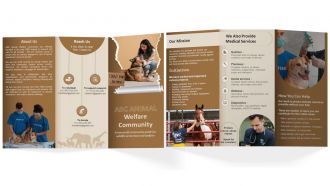
Animal Welfare Community Brochure Trifold





Try Before you Buy Download Free Sample Product
 Impress Your
 Audience
 100%
100% Editable
 Save Hours
 of Time


Advertise your welfare community by using our visually appealing Animal Welfare Community Trifold Brochure Template. Use this pamphlet presentation template to provide information about the community overview, including its vision, mission and initiatives. With the assistance of the Animal Welfare Community brochure PowerPoint theme, you can talk about core values, services, medical assistance your community provide for welfare of abandoned animals. Employ this professionally designed PPT brochure to showcase methods of contributions, medical services etc.
People who downloaded this PowerPoint presentation also viewed the following :
Animal Welfare Community Brochure Trifold with all 1 slides:
Use our Animal Welfare Community Brochure Trifold to effectively help you save your valuable time. They are readymade to fit into any presentation structure.
FAQs for Animal Welfare
So there's this thing called the Five Freedoms that covers most of it - no hunger, pain, discomfort, fear, plus letting animals do their natural thing. Works as a baseline, but honestly it gets way more complex depending on the species. Like pigs are crazy social and need mental stimulation, while reptiles... not so much. Birds need proper perches and nesting spots. Fish need decent water flow. I learned this the hard way with my friend's parrot actually - turns out they get seriously depressed without enough interaction. Research whatever animal you're dealing with first, because their specific needs vary wildly.
Yeah, it's wild how differently countries treat animals based on their culture. Buddhist countries usually have way better protections since they see animals as sentient beings. Meanwhile, places focused on economic stuff? Not so much. A pig in Germany has totally different legal rights than one in, say, parts of Asia or Africa. Europe's generally ahead on this, though they also have more money to throw at regulations. Oh, and if you're doing any advocacy work internationally - honestly, you've gotta understand the local mindset first or people won't listen.
So basically these regulations set the bare minimum for how farms have to treat animals - space, food, water, that kind of stuff. Without them it'd be chaos and profits would win every time (which still happens tbh). They cover housing, transport, slaughter methods, all of it. Look, they're not amazing and usually behind what experts actually recommend, but at least there's legal backing. If you're in agriculture you'll need to know your local AND federal rules - they're totally different depending where you are and what animals you're dealing with.
Oh man, there's some seriously cool stuff happening with tech and animal welfare! Sensors can track stress hormones and movement patterns - way better than just eyeballing it. You've got smart feeding systems, environmental controls that auto-adjust temperature and lighting to mimic natural habitats. The interactive enrichment tech is where it gets really interesting though - puzzle feeders, interactive toys, even VR setups that keep animals mentally engaged. I honestly didn't know VR for animals was a thing until recently. Start with whatever's your biggest welfare headache, then find tech that'll give you actual data to measure if you're making progress.
Basically it comes down to weighing human benefits vs animal suffering. Researchers say animal testing has saved tons of lives through medical breakthroughs. But animals can't consent and they definitely feel pain. Cosmetics testing is where I draw the line honestly - like, we're talking about lipstick, not cancer cures. That's why lots of countries have banned it for beauty products. If this is for work stuff, look into the 3 Rs thing: Replace, Reduce, and Refine. It's about minimizing animal use whenever you can find alternatives.
You know how stressed animals get sick more easily? Same deal with food safety. Overcrowded, miserable animals are basically disease factories - salmonella, E. coli, all that nasty stuff spreads easier. They pump them full of antibiotics too, which creates those scary superbugs. Honestly, it's pretty gross when you think about it. Better conditions mean healthier animals and safer food for us. I always look for those welfare certification labels now - they're not just feel-good stickers, they actually help protect your family from getting food poisoning.
Social media's probably your best bet to start. Hit up local pet stores, vet clinics, maybe some cafes - most are pretty cool about putting up flyers or whatever. Farmers markets are gold for this stuff since tons of people walk by your table. Oh, and definitely connect with animal rescue groups already in your area - they've got volunteers and know what works. Community events are solid too, like hosting movie nights at the library or adoption events. Honestly though, don't try everything at once or you'll burn out. Pick one thing first and see how it goes.
Honestly, you need several things working together. Regular surprise inspections by independent groups help a ton. Staff need protection when they blow the whistle - they're usually first to notice problems anyway. Make sure facilities have proper accreditation (AZA is solid for zoos). The inspection results should be public too, not buried somewhere impossible to find. Oh, and this might sound obvious but inspectors actually need to know what good animal care looks like - you'd be surprised how often that's not the case. When you visit places, don't hesitate to ask direct questions about their practices.
Animals who've been abused or neglected usually end up with serious anxiety and trust issues. They get hypervigilant, withdrawn, sometimes aggressive - basically whatever helped them survive before. It's actually amazing how they bounce back though, even after going through hell. The trauma makes it super hard for them to bond with new families or feel safe in normal situations. But here's the thing - most of them can recover pretty well with time. You just need tons of patience and consistent positive experiences. Create routines they can predict, keep things calm, and honestly? Celebrate every tiny breakthrough. Those small wins add up.
Most rescues are pretty intense about their screening process - they'll do applications, home visits, the whole nine yards. They're checking out your living situation, how much experience you have with pets, your lifestyle, all that stuff. Honestly, some of them are almost *too* thorough, but I get it - they don't want animals coming back. They'll ask about kids, other pets, how active you are, apartment restrictions. A lot of places do trial runs too which is smart. Just be upfront about what you can actually handle - don't oversell yourself.
Ugh, it's such a messy situation honestly. Individual animal welfare and ecosystem health constantly butt heads. Like you'll have deer destroying entire forests because there's too many of them, so you need to cull some. Sucks for those deer obviously. Same with relocating stressed predators. But here's the thing - if you let one species go crazy with population growth, the whole system can collapse. Way more animals suffer in the end. I always try to find management approaches that cause the least individual harm while keeping biodiversity intact. Short-term pain vs long-term disaster basically.
Honestly, start small with stuff that actually fits your life. I usually tell people to check labels for cruelty-free products - it's easier than you think once you get in the habit. Maybe cut back on meat or just buy the better stuff when you do eat it. Local shelters always need volunteers if you've got time, or you could foster (though fair warning, foster fails are real lol). Sharing posts about animal welfare helps too since most people just don't know. Pick like one or two things that don't feel overwhelming. The little changes do add up, even if it doesn't feel like much at first.
Yeah so factory farming is brutal for animals - they're crammed into tiny spaces, can't do normal animal stuff, constantly stressed out. It's honestly pretty disturbing once you see it. But people are waking up to this mess thanks to documentaries and social media. Now everyone wants "cage-free" and "pasture-raised" labels, though half the time they don't actually know what that means lol. If you're in food business though, you gotta pay attention to this shift. People really care about transparency now when they're buying groceries.
Honestly, it's way easier than you'd think! Science classes are perfect for covering animal behavior and basic needs. Social studies can dive into how humans and animals have connected throughout history. Literature? There are so many great animal books - I was obsessed with them growing up. Start simple with younger kids learning pet care and respecting wildlife. High schoolers can handle the heavier stuff like factory farming ethics. Definitely reach out to local shelters for guest speakers. Field trips make everything click better. Kids get so much more excited when they can actually meet the animals they're studying.
Dude, the vet tech stuff happening now is wild! Remote consultations are everywhere - way less stressful for pets than dragging them to clinics. Pain meds have gotten so much more targeted, plus they're doing laser therapy now. The AI diagnosis thing kinda freaks me out but it's actually catching diseases super early through scan analysis. Most surgeries are way less invasive these days. Oh, and stem cell treatments are becoming real options, not just experimental anymore. Honestly though, if you're thinking about this space, digital health platforms are where it's at. That's where regular pet owners like us actually see the difference day-to-day.
-
“One of the best experiences with SlideTeam for my presentation.Everything on time, communication is efficient and price is reasonable. All good in one place.”
-
Awesomely designed templates, Easy to understand.