


Community Service Brochure Trifold




Try Before you Buy Download Free Sample Product
 Impress Your
 Audience
 100%
100% Editable
 Save Hours
 of Time


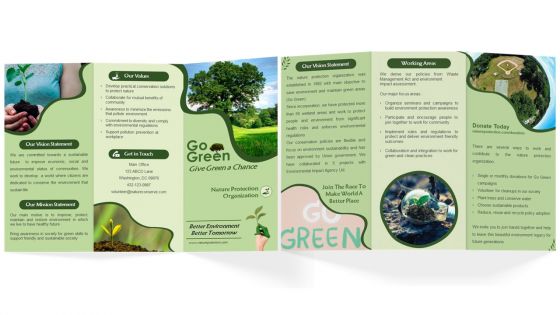
Promote your community service brochure by using our visually appealing Community Service Brochure Trifold Brochure Template. Use this pamphlet presentation template to provide information about the community overview, including its mission, approach and core values. With the assistance of the Community Centre brochure PowerPoint theme, you can talk about importance of conserving nature, initiatives, working areas. Employ this professionally designed PPT brochure to showcase methods of contributions, working areas and purpose of environment conservation that attract people to donate and join your community.
People who downloaded this PowerPoint presentation also viewed the following :
Community Service Brochure Trifold with all 1 slides:
Use our Community Service Brochure Trifold to effectively help you save your valuable time. They are readymade to fit into any presentation structure.
FAQs for Community
Honestly, teens respond way better when it's stuff they actually give a damn about - like if they're into animals, start there instead of forcing some random cause on them. Let their friends do the recruiting too, because we all know they'll listen to each other before any adult. Give them real control over the whole thing, not just "show up and fold pamphlets" nonsense. And definitely show them the results! Post photos, share stories, whatever proves their time mattered. Oh, and start with like a one-day thing first - don't jump straight into "commit every Saturday forever."
Honestly, there's tons of ways to do this. You could set up employee volunteer days or sponsor their events. We donated some services to a local food bank last year - way more rewarding than I expected. Sometimes just letting them use your space for meetings works great too. The trick is finding groups that actually match what your business stands for. I'd start by hitting up organizations already doing stuff in your neighborhood. Your local United Way's usually a good resource for connections. Even small partnerships can really boost your community rep while doing good.
Look, apps like VolunteerMatch make finding volunteer stuff super easy now. Most nonprofits post everything on Facebook events too - that's honestly where I see most opportunities pop up. You can sign up online, track your hours, and they'll even match you with causes based on what you're into. Social media has made recruitment way more streamlined than it used to be. I'd start by googling "[your city] volunteer opportunities" or just stalking local nonprofits' Instagram pages. Oh, and JustServe is another good one if you haven't heard of it.
Honestly, don't make it a separate thing - just weave it into what you're already teaching. Math kids can dig into local budgets. English classes? Have them write for nonprofits. Science students love tackling real environmental problems nearby. Kids are smart - they'll know if it feels forced or fake. I'd start with just one pilot program (less headache that way). Partner with organizations that actually know what they're doing. And here's what most people forget - build in time for students to reflect on what they learned. Otherwise it's just another assignment to forget about.
Dude, volunteering has gotten so much cooler lately! COVID basically forced everyone online, so now you can tutor kids or help nonprofits with their websites from your living room. There's this thing called micro-volunteering too - literally just 15-30 minutes through apps when you're bored. Skills-based stuff is where it's at though. Instead of just showing up to pack boxes (nothing wrong with that btw), you can actually use whatever you're good at professionally. Way more satisfying honestly. I'd say figure out what you already know how to do first, then find orgs that need exactly that.
Yeah, so cultural background totally changes how people see volunteering. Some cultures are all about collective responsibility - like, helping out is just expected, you know? But others put individual success first, so community service feels more like optional charity work. Religious stuff plays into it too, obviously. What's interesting is how differently people define "community" - could be your block or could be halfway around the world. If you're trying to get volunteers organized, honestly just look at who lives there first. Then design things that actually speak to what those groups care about. Way more effective that way.
Track the hard numbers first - participation rates, volunteer hours, funds raised, that stuff. But honestly? The real gold is in feedback from people actually involved. Survey your volunteers and the folks you're helping. That's where you'll see if you're making a difference or just spinning wheels. Also keep an eye on partnerships you're building and skills your team picks up along the way. Don't go crazy trying to measure everything though - pick maybe 3-4 things that actually matter to your goals. Start small, you can always add more later.
Honestly, the trick is tackling root causes, not just slapping band-aids on problems. Like instead of only handing out food, push for better wages or job training too. Direct service feels amazing in the moment - don't get me wrong - but you gotta think bigger if you want real change. The programs that actually work? They help people right now AND fight for policy changes so fewer people need help later. It's way more work but so much more effective. Find spots where you can do both immediate relief and long-term advocacy.
Dude, volunteering is honestly amazing for your headspace. When you help people, your brain literally dumps endorphins - like a natural high that crushes stress hormones. The connections you make fight off loneliness too. There's something about having actual purpose that just hits different, you know? Way better than sitting around overthinking everything. I always tell people it's basically therapy except you're fixing real problems instead of just venting. Even doing it once a month can totally flip your mood and perspective when life feels overwhelming.
Stories work so much better than just asking people to volunteer. Get some real testimonials from your current volunteers - like that tutor who saw a kid's confidence totally transform, or the food bank person who really connected with struggling families. Honestly, people tune out statistics but they'll actually listen to human stories. Video testimonials are gold for social media too. Oh, and keep them short! Nobody wants to sit through a 10-minute thing. When people see the actual impact they could make, that's when they'll sign up.
Oh man, rural communities get screwed over in so many ways. Limited transportation is a nightmare - people literally drive hours for basic services. Internet's spotty as hell, so finding resources online? Forget it. Plus there's way fewer local organizations to help out. Mobile service units are clutch for this stuff. Telehealth actually works pretty well too, and setting up satellite offices helps a ton. Churches and schools make great distribution points since everyone knows where those are. The whole thing is basically about bringing services TO people instead of making them come to you.
Honestly, it starts with making people feel like they actually matter from the jump. Be super upfront about what you expect - nobody likes surprises. Give them real training and actual meaningful work, not just envelope stuffing (ugh). Check in regularly so they know their work matters. I've watched so many nonprofits just dump volunteers into random tasks with zero support, then act shocked when everyone bails. Host some social stuff too - volunteers stick around when they feel part of something bigger. Oh, and here's the best part: ask your long-term people what keeps them coming back. They'll tell you exactly what works.
Dude, community service is honestly such a good way to build leadership skills without even realizing it. You end up organizing people and solving random problems on the fly. Plus you're working with all kinds of different volunteers - some are super motivated, others... not so much lol. But that's what makes you figure out how to communicate with everyone. The cool thing is there's way less pressure than at work since you're just trying to help people, not meet some crazy deadline. Next time you volunteer, try coordinating something small. You'll surprise yourself with what you pick up about managing people and projects.
Honestly, Asana or Trello are lifesavers for tracking schedules and assignments - way better than those messy spreadsheets everyone tries to use. Slack keeps your team connected without drowning in emails. For recruiting new volunteers, check out VolunteerMatch or SignUpGenius. They're pretty solid. Digital check-in apps can automatically track hours too, which is clutch. My advice? Don't go crazy trying to implement everything at once. Pick whatever fixes your biggest headache first, get your core people actually using it, then add more tools later.
Honestly, the biggest red flag is when programs are more about your Instagram than actually helping anyone. Skip the short-term stuff that disrupts real work already happening. Look for places where locals are running the show, not just saying thanks for showing up. Construction and teaching programs are notorious for this - you might literally be taking someone's paycheck. Before signing up, ask yourself what you actually bring to the table. Do they need your specific skills, or just your wallet? Programs with long-term community partnerships are usually legit. The ones that feel like expensive gap year adventures? Yeah, probably skip those.
-
I have been using SlideTeam for the past six months. Very happy and satisfied!
-
“Slides are formally built and the color theme is also very exciting. This went perfectly with my needs and saved a good amount of time.”