


Community Centre Brochure Trifold





Try Before you Buy Download Free Sample Product
 Impress Your
 Audience
 100%
100% Editable
 Save Hours
 of Time


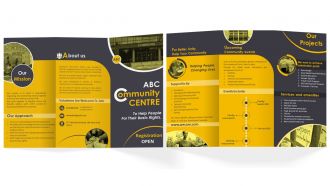
Advertise your community centre brochure by using our visually appealing Community Centre Brochure Trifold Brochure Template. Use this pamphlet presentation template to provide information about the community overview, including its mission, approach and core values. With the assistance of the Community Centre brochure PowerPoint theme, you can talk about initiatives, services and amenities your community provide for welfare of people to enhance quality of life. Employ this professionally designed PPT brochure to showcase methods of contributions, goals, donations methods etc.
People who downloaded this PowerPoint presentation also viewed the following :
Community Centre Brochure Trifold with all 1 slides:
Use our Community Centre Brochure Trifold to effectively help you save your valuable time. They are readymade to fit into any presentation structure.
FAQs for Community
Oh nice! So community centres usually have the basics - fitness classes, sports leagues, that kind of thing. They'll run workshops too, plus rent out rooms for local groups to meet. A lot of them do childcare or programs for seniors. Some have libraries or computer access, though honestly that varies a ton depending on their budget. They're always hosting events - festivals, town halls, whatever. Each one's different based on what their neighborhood actually needs. I'd just check their website or call them directly to see what they've got going on right now.
Okay so here's what's worked for me - focus on shared interests, not differences. Cooking classes are amazing because everyone bonds over food, right? Community gardens work too. Staff should look like your actual community, and yeah, you'll need signs in multiple languages. Here's the thing though - don't just wait around hoping people show up. That never works. Go to them first. Partner with cultural groups to co-host stuff together. Oh, and those random conversations that happen after events? That's where the real connections happen. Skill swaps are pretty cool too if you can swing it.
Community centres are like the backbone of local arts scenes, tbh. They've got cheap rehearsal spaces and run everything from pottery classes to open mic nights. Without them, most grassroots creative stuff would be screwed because regular venues cost a fortune. Plus they give new artists their first shot at performing or showing work to actual people. My cousin started doing comedy at ours before hitting the club circuit. If you want to support local culture, check what your nearest one offers - they're always desperate for volunteers and people to show up to events.
Honestly, just blend tech into what you're already doing instead of making it the star. Gaming tournaments are seriously underrated - they bring all ages together. Try fitness classes with progress-tracking apps, or throw QR codes around for quick feedback. VR stuff works great with seniors (who knew?), and kids obviously love coding clubs. Simple digital art workshops are another win. Don't overthrow the human connection though - that's what makes community centers actually matter. Pick one small tech thing that builds on your strengths and test it out first.
Make it social first - nobody wants to show up and fold flyers alone for 3 hours. Give people specific jobs with clear time commitments instead of that vague "we need help" thing. Most folks honestly have no clue what community centers even do anymore, so throw some events to actually show off your programs. Partner up with local businesses and schools for promotion. Social media works great for sharing volunteer stories too. Oh, and definitely start with one big signature event to get momentum going. People want to feel like they're joining something that matters, not just checking a box.
Community centres are actually pretty solid economic boosters - they create jobs and pull foot traffic that helps nearby businesses thrive. Local entrepreneurs love using them for affordable event space. You'll notice small shops tend to cluster around them because there's always people coming and going. They run job training programs too, which is huge for skill development. Personally, I think they're way more impactful than people realize. The real magic happens with their programming - that's where you see money staying local instead of folks driving elsewhere. Definitely worth checking out what classes they offer if you're thinking about community investment stuff.
So basically you want everything to be flexible - moveable walls, modular furniture that can shift around. One room should work as a meeting space, dance studio, whatever. Storage is huge (seriously, every single group hoards so much random stuff). Map out what activities you're actually planning first, then figure out how spaces can do double duty. Good sight lines between rooms help staff keep an eye on things. Oh and make sure all your entrances and walkways work for wheelchairs - that's non-negotiable these days.
Honestly, the trick is sneaking health stuff into things people already enjoy doing. Like, partner with local doctors to do blood pressure checks at your regular events. Walking groups work great if you make them social - maybe they end at a coffee shop? Cooking classes are perfect too since people learn nutrition without it feeling like a lecture. Don't sleep on mental health either - stress management workshops or support groups can be game changers. Survey your members first about what they actually need. Nobody wants to feel preached at, so keep it fun and community-focused rather than medical-ish.
Look, schools are always down for after-school stuff, and nonprofits usually jump at free venue space. Libraries actually need more room for their programs anyway - total win-win there. Try reaching out to gyms for fitness classes, restaurants for cooking workshops, maybe local arts groups too. Healthcare providers might do wellness clinics if you ask nicely. Start by figuring out what your community's missing, then find organizations already doing that work. They'll probably love having a new spot to host things. Small businesses can teach skill-building classes too - honestly hadn't thought of that one until recently but it makes total sense.
Start with surveys or suggestion boxes - whatever feels right for your situation. Social media polls work great too. But here's the thing: actually DO something with what people tell you. I've watched so many organizations just collect feedback and then... nothing. Look for patterns first. Everyone complaining about broken equipment? Fix that before worrying about smaller stuff. Close the loop by telling people "hey, we changed X because you asked." That part's huge for building trust. Pick one method this month and commit to checking responses every week. Even if it's messy at first, you'll figure it out.
Start with government grants - local council stuff, state programs, federal community infrastructure funding. Corporate sponsorships from local businesses are solid too, they love the visibility. Charitable foundations specifically target community projects, so definitely worth checking out. GoFundMe actually works better than you'd think for smaller things. Oh, and make a funding calendar to track all the deadlines - trust me on this one, there's always some random requirement you'll forget about. Some foundations have weird timing too. It's honestly a lot of work but totally doable if you stay organized.
So community centers basically become crisis response hubs overnight. They'll turn into food pantries, set up emergency childcare for nurses and stuff, or become testing sites. Most programming goes virtual - and honestly some of those online yoga classes weren't half bad! Outdoor activities work when weather's decent. Capacity limits are a given. The smart ones already have partnerships with health departments ready to activate. If you're prepping for this, figure out what can realistically move online and what your neighborhood desperately needs when everything hits the fan.
Honestly, community centres are lifesavers for kids. After-school programs, tutoring, mentorship - all that stuff schools and parents can't always cover. They're like the neighborhood's backup plan, you know? Super important in areas where families can't afford fancy tutoring or activities. Kids learn social skills, find hidden talents, stay busy instead of getting into weird trouble. My cousin actually discovered she was amazing at pottery at one! If you want to help local youth, volunteering there is probably your best bet for real impact.
Track attendance, enrollment numbers, and who's showing up - that's your starting point. But honestly? The real gold is in talking to people. Survey participants about actual impact, run focus groups, collect those amazing success stories. I'd also measure skill development in classes and any job placements from programs. Don't sleep on tracking partnerships with local orgs either. Set up a simple quarterly system to gather everything - consistency helps you spot what's actually working over time. The numbers matter, but personal stories usually tell you way more about real impact.
Ugh, it's such a mess honestly. Government grants keep shrinking while everything else gets more expensive - utilities, repairs, staff wages. Most community centres are stuck trying to serve everyone but can only rely on membership fees and renting out space for events. The buildings are usually old too, so there's always something breaking down. A lot of places have started partnering with other nonprofits or running little side businesses to make ends meet. Some even share their space just to split costs. It's basically a constant juggling act between keeping the doors open and actually helping people.
-
This visual representation is stunning and easy to understand. I like how organized it is and informative it is.
-
Helpful product design for delivering presentation.