


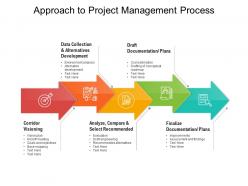
Approach to project management process





Try Before you Buy Download Free Sample Product
 Impress Your
 Audience
 100%
100% Editable
 Save Hours
 of Time


There are many different approaches to project management, and the most appropriate approach depends on the specific project. However, there are some general principles that can be applied to any project. The first step is to define the scope of the project. This includes identifying the objectives and goals, as well as defining the deliverables. Once the scope is defined, it is important to create a project plan. This plan should include a timeline, as well as milestones and tasks. In order to be successful in project management, it is important to have a process that can be adapted and adjusted as needed. The SlideTeam project management PowerPoint presentations can help you get started with the right approach. Our templates are easy to use and customizable, so you can make them your own. Plus, they’re free to download so you can get started today. So start building better projects with the help of SlideTeam.
People who downloaded this PowerPoint presentation also viewed the following :
Approach to project management process with all 5 slides:
Our Approach To Project Management Process guarantee applause. The audience will definitely clap for you.


FAQs for Approach to
So there are five main phases you'll go through. First is initiation - basically defining what you're doing and getting the green light. Planning comes next where you map out timelines and figure out who's doing what. Then execution hits, which is honestly where everything gets chaotic and you're just trying to keep your head above water. While that's happening, you're also monitoring progress and tweaking things constantly. Closing wraps it all up with final deliverables and a post-mortem. Oh, and these phases totally overlap - don't expect them to happen in neat little boxes like the textbooks suggest!
Dude, stakeholder engagement is literally make-or-break for projects. You keep everyone in the loop and suddenly those random curveballs that kill your timeline just... don't happen as much. Getting stakeholders involved early means better requirements, quicker decisions, and way less of that annoying scope creep nonsense. Plus they'll actually fight for you when you need budget or approvals later - which is honestly worth its weight in gold. The trick is figuring out who really calls the shots (not always obvious btw) and then setting up regular check-ins. I'd start with your top 5 people and do quick weekly touchpoints.
Honestly, just grab Asana or Monday for project management - I've bounced between like 10 of these and they're all basically the same thing. You'll need Slack for team chat too, obviously. Google Drive handles file sharing fine unless you're stuck with corporate SharePoint (ugh). If you're tracking billable hours, Toggl's solid. Miro's great for those brainstorming sessions where everyone's throwing ideas at the wall. My advice? Start simple with just one PM tool and Slack. Don't go crazy adding everything at once or your team will hate you. Build up from there once people actually use what you've got.
Okay so the main thing is scope, time, and budget are all connected - change one and you'll mess with the others. Get your stakeholders to be super clear about priorities right from the start. When scope creep happens (because it will), don't just agree to everything. Figure out how it'll affect your timeline and money, then give them options. I do weekly check-ins to catch problems early. Honestly, showing people visual trade-offs works way better than just explaining it. Sometimes you gotta say no when changes would tank the whole project.
Ugh, scope creep is the worst - seriously, it kills like half my projects. Budget overruns and missed deadlines come right after that. Teams stop talking to each other too, which gets messy fast. Set boundaries early or you'll hate yourself later. I always pad my timelines now because something *always* goes wrong. Regular team check-ins help catch problems before they explode. Document every single scope change - I learned this the hard way when a client conveniently "forgot" they'd asked for three extra features. Oh, and do a proper risk assessment upfront. Keeps stakeholders happy without them breathing down your neck constantly.
Okay so basically waterfall is super linear - you plan everything upfront then just execute step by step. Can't really go backwards once you start. Agile though? You work in these short bursts, build something quick, show people, then pivot based on feedback. Agile's honestly way more fun to work with since you're not locked into decisions you made months ago. Plus stakeholders stay involved the whole time instead of disappearing until launch day (which... let's be real, never goes well). If your project requirements are gonna change or you need lots of input from users, agile's definitely the move.
Dude, communication really is everything in project management. Without it, your best-laid plans just crumble. I've watched so many projects crash because people thought everyone was aligned - plot twist, they definitely weren't. You've gotta keep your team updated on goals, deadlines, and any changes that pop up. Otherwise they can't deliver what they don't even understand, right? Regular check-ins are clutch. Also, write down the important stuff - I know it seems obvious but trust me on this one. It stops scope creep and cuts down on those awkward "wait, what?" moments with stakeholders.
Honestly, start with making people feel safe to screw up without getting blamed. I do regular check-ins where everyone can actually speak up - but you gotta listen for real, not just nod along. Pair people up on stuff so they're sharing knowledge naturally instead of in those boring formal meetings. Oh and celebrate team wins, not just individual ones - that makes a huge difference. Next meeting, try asking "what's blocking you right now?" then actually help fix it. Trust me, removing obstacles beats motivational speeches every time.
Honestly, just focus on the big three: schedule variance, budget variance, and scope creep. Those tell you if you're hitting deadlines, staying within budget, and actually delivering what you promised. Team velocity is useful too, but it's kinda hard to measure consistently - same with stakeholder satisfaction scores. Oh, and quality stuff like defect rates if you're building software or anything with tight specs. But seriously, don't go overboard tracking every little thing. Pick maybe 4-5 metrics that'll actually help you make decisions and review them weekly. More than that just becomes noise.
Set up a proper change control process right away - seriously, this will save your sanity. Create a change request form that forces people to think about timeline and budget impact before asking for "quick additions." I used to just agree to changes in meetings like an idiot, then wonder why projects went sideways. Your stakeholders need to understand changes cost time and money, period. Check in regularly so you catch scope creep before it gets out of hand. Honestly, just make that template this week. You'll thank yourself later when you're not scrambling to explain budget overruns.
Oh man, cultural diversity will totally mess with your timelines if you're not ready for it. Different cultures handle deadlines, hierarchy, and feedback completely differently. Something that sounds direct to you might feel super rude to your teammate from another country. Time zones suck obviously, but honestly? The communication styles are way trickier. Like, some people need way more context before making decisions. Set up your communication rules early - which platforms to use, meeting norms, how to give feedback without stepping on toes. And build in extra time for all the back-and-forth clarifications you didn't expect.
Honestly, the biggest thing is getting everyone aligned on scope, timeline, and what you're actually delivering - sounds boring but trust me on this. Hunt down all the key people who matter and get them in that room, even if you have to bug them. Go over who's doing what so you don't get those awkward "wait, I thought YOU were handling that" situations later. Ask questions instead of just lecturing at people. Oh, and whatever you do, send out notes within 24 hours while people still remember what happened. I've seen too many projects go sideways because someone "forgot" what they agreed to do.
Don't wait till the end to check if stuff's working - that's where I totally screwed up on my last big project. Get your team together upfront and nail down what "good" actually looks like. Then scatter review points throughout your timeline so you can catch problems while they're still fixable. Honestly, the whole "quality is QA's problem" mentality is such BS. Make it everyone's thing. Write down your acceptance criteria clearly (trust me, you'll forget otherwise), and schedule those check-ins now before life gets crazy.
Honestly, start with breaking everything down into smaller tasks first - like a Work Breakdown Structure if you wanna get fancy about it. Gantt charts are pretty solid for seeing your timeline, or go with Kanban boards if that's more your vibe. Critical Path Method sounds intimidating but it's just figuring out which tasks will screw you over if they're late. Always - and I mean always - pad your estimates by 15-20% because Murphy's Law is real. Time blocking works great, plus doing regular check-ins keeps things from going off the rails. Pick whatever system clicks with your team though, consistency matters way more than being perfect.
Look, it really depends on what kind of work you're doing. Agile works great for tech stuff since requirements change every five minutes anyway. Construction? They stick with Waterfall because - well, you can't exactly build the roof before the foundation, right? Manufacturing teams love Lean Six Sigma for cutting waste. Marketing usually goes with Kanban for their campaigns, though honestly I think they just like the visual boards. The trick is figuring out how predictable your project is and how much your stakeholders want to be involved. Oh, and don't forget regulatory stuff if that applies to you.
No Reviews