

Governance Deck Powerpoint Presentation Slides





Try Before you Buy Download Free Sample Product
 Impress Your
 Audience
 100%
100% Editable
 Save Hours
 of Time


Explore our Governance Deck PowerPoint Presentation Slides for project initiation and planning. The project scoping PowerPoint complete deck contains various content ready slides such as project brief and description, project management lifecycle, project process, risk identification, risk management report, project team, budgeting and time management, timeline, work breakdown structure, activities sequence, project risk and communication plan cost and human resource management, quality management and progress summary etc. It has templates with professional background images and relevant content. Demonstrate roles and responsibilities and work plan using project governance framework PPT visuals. The presentation can be used as a project management tool to enhance the knowledge of your team. Showcase project status report planned and actual performance comparison, project health card with project control PowerPoint templates. Outline all the important aspects without any hassle Download governance structure Presentation design for project execution and task management.
People who downloaded this PowerPoint presentation also viewed the following :
Content of this Powerpoint Presentation
Slide 1: This slide introduces Governance Deck. State Your Company Name and begin.
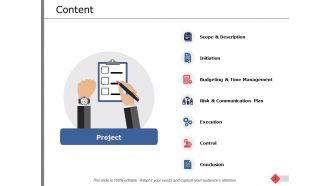
Slide 2: This slide shows Content of the presentation.
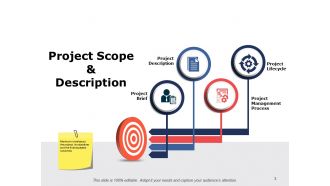
Slide 3: This slide presents Project Scope & Description with imagery describing- Project Brief, Project Description, Project Lifecycle, Project Management Process.
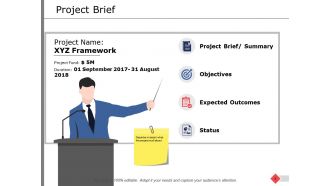
Slide 4: This slide displays Project Brief describing- Project Brief/ Summary, Objectives, Expected Outcomes, Status.
Slide 5: This slide showcases Project Description with related imagery and text boxes to show information.
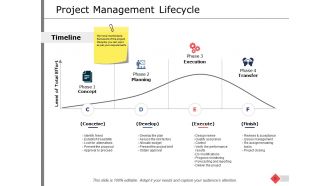
Slide 6: This slide represents Project Management Lifecycle describing- Finish, Conceive, Develop, Execute.
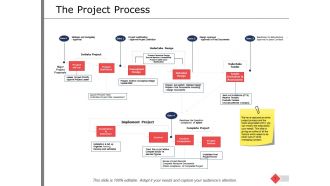
Slide 7: This slide shows The Project Process as- Initiate Project, Undertake Design, Undertake Tender, Implement Project, Complete Project.
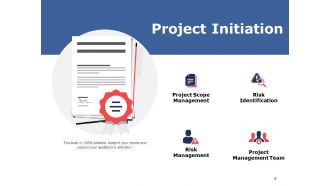
Slide 8: This slide presents Project Initiation with- Project Scope Management, Risk Management, Risk Identification, Project Management Team.
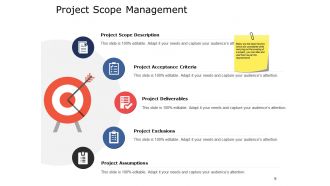
Slide 9: This slide represents Project Scope Management describing- Project Deliverables, Project Assumptions, Project Exclusions, Project Scope Description, Project Acceptance Criteria.
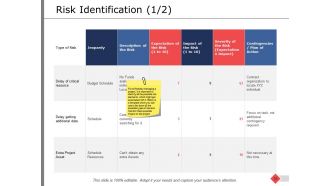
Slide 10: This slide displays Risk Identification in a table form describing- Tyoe of risk, Delay of critical resource, delay getting additional data and extra project asset.
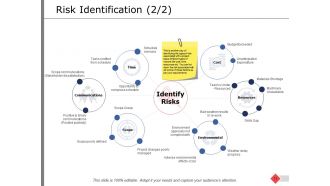
Slide 11: This is another slide on Risk Identification describing- Cost, Resources, Environmental, Scope, Communications, Time.
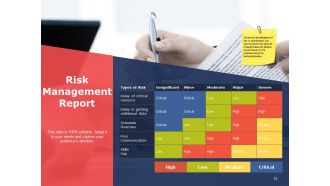
Slide 12: This slide gives Risk Management Report describing types and degree of risk.
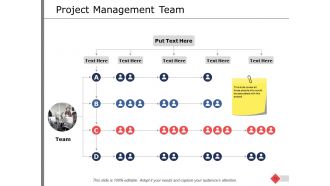
Slide 13: This slide shows Project Management Team in a hierarchy for to show employees with their designation.
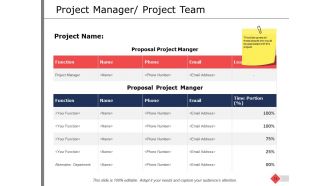
Slide 14: This slide presents Project Manager/ Project Team with functions, name, phone, email etc.
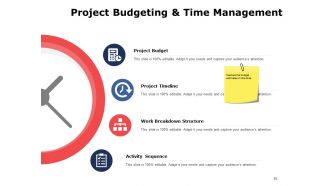
Slide 15: This slide displays Project Budgeting & Time Management with- Project Budget, Project Timeline, Work Breakdown Structure, Activity Sequence.
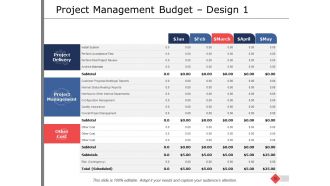
Slide 16: This slide represents Project Management Budget with project delivery, project management and other costs.
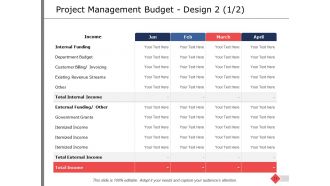
Slide 17: This is another slide on Project Management Budget with internal and external income.
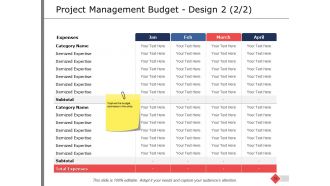
Slide 18: This is another slide continuing Project Management Budget describing expenses.
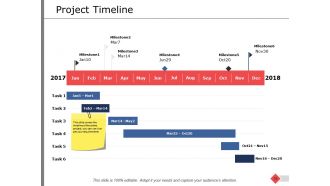
Slide 19: This slide showcases Project Timeline with months, milestones etc.
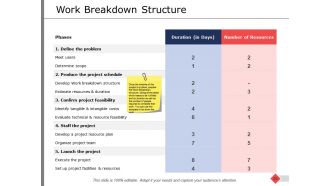
Slide 20: This slide shows Work Breakdown Structure with Phases, duration and number of resources.
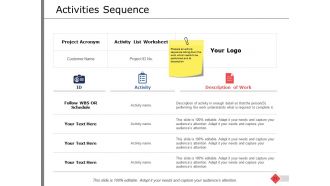
Slide 21: This slide presents Activities Sequence with Project Acronym, Activity list worksheet, ID, Activity, Description of Work.
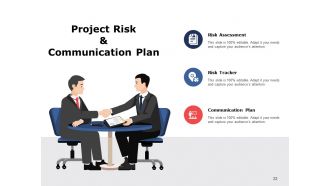
Slide 22: This slide displays Project Risk & Communication Plan with- Risk Assessment, Risk Tracker, Communication Plan.
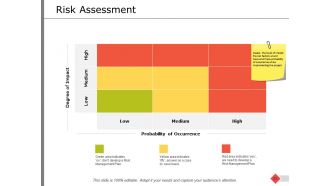
Slide 23: This slide represents Risk Assessment in a graph form with low, medium and high as degree of impact.
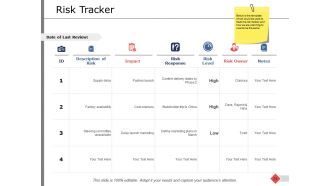
Slide 24: This slide showcases Risk Tracker describing- ID, Description of Risk, Impact, Risk Response, Risk Level, Risk Owner, Notes.
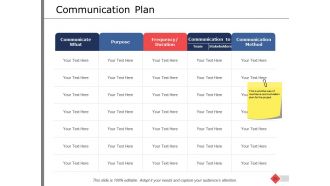
Slide 25: This slide shows Communication Plan describing- Communicate What, Purpose, Frequency/ Duration, Communication to Team/Stakeholders, Communication Method.
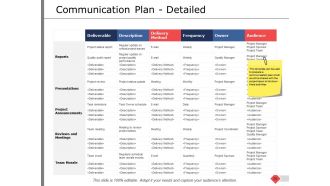
Slide 26: This slide presents Communication Plan - Detailed ina a table form with related text boxes to show information.
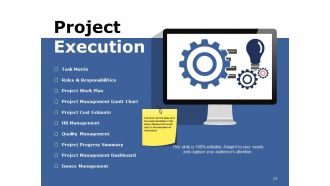
Slide 27: This slide displays Project Execution describing- Task Matrix, Roles & Responsibilities, Project Work Plan, Project Management Gantt Chart, Project Cost Estimate, HR Management, Quality Management, Project Progress Summary, Project Management Dashboard, Issues Management.
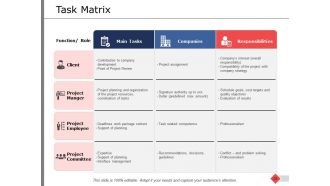
Slide 28: This slide represents Task Matrix describing- Main tasks, functions, responsibilities, client, project manager, project employee, project committee.
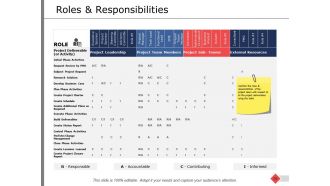
Slide 29: This slide showcases Roles & Responsibilities with related text to show information.
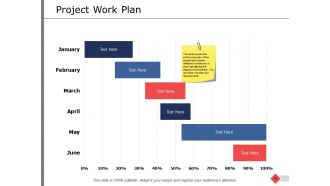
Slide 30: This slide shows Project Work Plan in a graph form with months and percentage. Put relevand data accordingly.
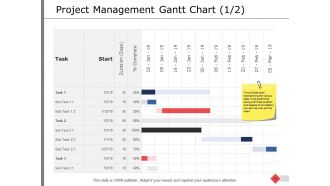
Slide 31: This slide presents Project Management Gantt Chart with additional text boxes to show information.
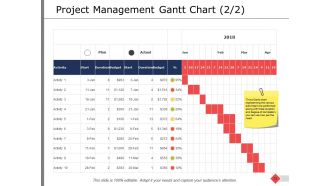
Slide 32: This is another slide presenting Project Management Gantt Chart with related information and text.
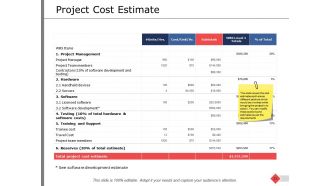
Slide 33: This slide displays Project Cost Estimate in a table form with related text to show information.
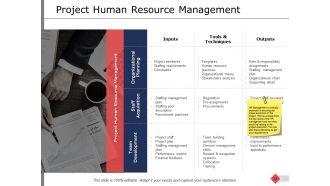
Slide 34: This slide represents Project Human Resource Management describing- Team development, Staff acquisition, organisational planning, Inputs, Tools and techniques, outputs.
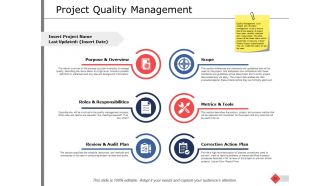
Slide 35: This slide showcases Project Quality Management describing- Purpose & Overview, Corrective Action Plan, Metrics & Tools, Review & Audit Plan, Scope, Roles & Responsibilities.
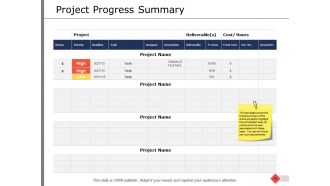
Slide 36: This slide shows Project Progress Summary with related table and text boxes.
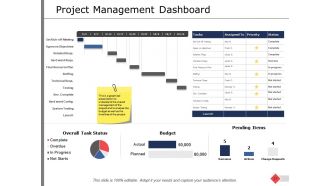
Slide 37: This slide presents Project Management Dashboard with graphs, pie chart etc. to show information.
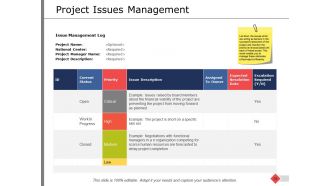
Slide 38: This slide represents Project Issues Management with- ID, current status, priority, issue description etc.
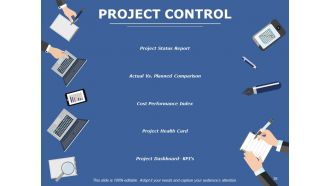
Slide 39: This slide showcases PROJECT CONTROL describing- Project Status Report, Actual Vs. Planned Comparison, Cost Performance Index, Project Health Card, Project Dashboard- KPI’s.
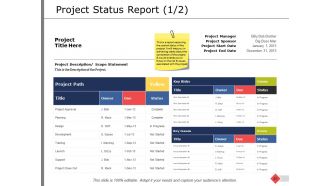
Slide 40: This slide shows Project Status Report in a table form with related text to show information.
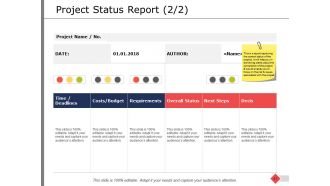
Slide 41: This is another slide presenting Project Status Report with Deadlines, costs/budget, requirements, overall status etc.
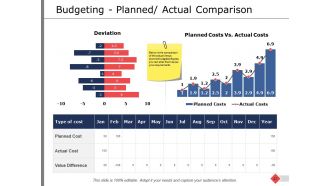
Slide 42: This slide displays Budgeting - Planned/ Actual Comparison with the help of graphs and table.
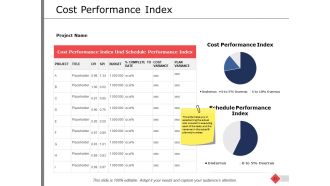
Slide 43: This slide represents Cost Performance Index with pie chart to show information.
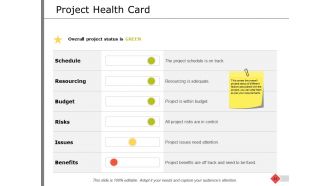
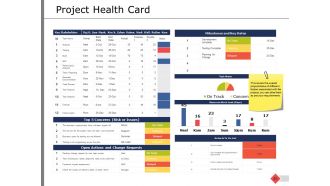
Slide 44: This slide showcases Project Health Card with schedule, resourcing, Budget, risks, issues and benefits.
Slide 45: This is another slide on Project Health Card with pie chart, status and other information.
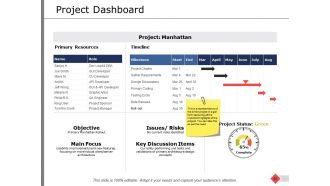
Slide 46: This slide shows Project Dashboard describing- Name, role, milestone etc.
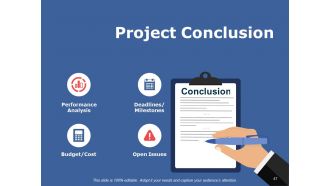
Slide 47: This slide presents Project Conclusion with- Deadlines/ Milestones, Open Issues, Performance Analysis, Budget/ Cost.
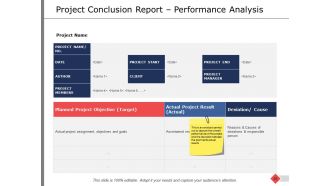
Slide 48: This slide displays Project Conclusion Report – Performance Analysis with project name, members, project manager, start and end date etc.
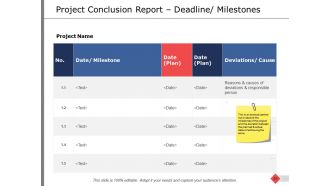
Slide 49: This slide represents Project Conclusion Report – Deadline / Milestones with milestone, date, deviation, causes etc.
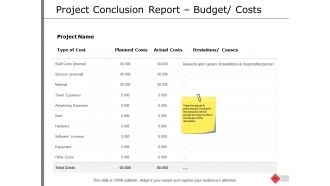
Slide 50: This slide showcases Project Conclusion Report–Budget/ Costs describing- Type of cost, planned costs, actual costs, deviations/causes.
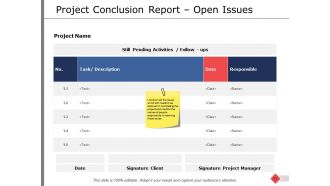
Slide 51: This slide shows Project Conclusion Report – Open Issues with task/description, date and responsible.
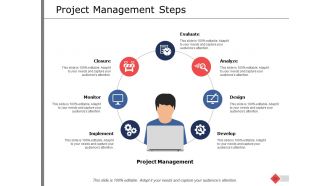
Slide 52: This slide presents Project Management Steps describing- Evaluate, Closure, Monitor, Implement, Develop, Design, Analyze.
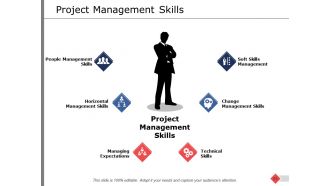
Slide 53: This slide displays Project Management Skills including- People Management Skills, Technical Skills, Horizontal Management Skills, Soft Skills Management, Managing Expectations, Change Management Skills.
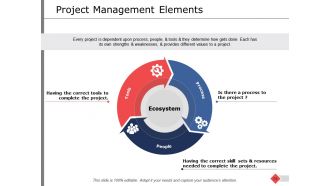
Slide 54: This slide represents Project Management Elements including- Tools, process, people.
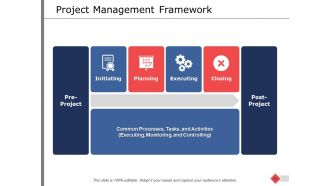
Slide 55: This slide displays Project Management Framework including- Initiating, Planning, Executing, Closing.
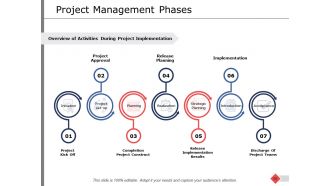
Slide 56: This slide showcases Project Management Phases which includes- Project Kick Off, Project Approval, Completion Project Construct, Release Planning, Release Implementation Results, Implementation, Discharge of Project Teams.
Slide 57: This slide shows Governance deck Icons.
Slide 58: This slide is titled as Additional Slides for moving forward.
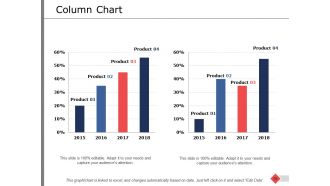
Slide 59: This slide shows two column charts with four products comparison.
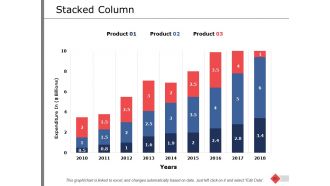
Slide 60: This slide presents Stacked column chart with three products comparison.
Slide 61: This slide shows Our Mission and Vision with imagery and text.
Slide 62: This is Our Team slide with names and designation.
Slide 63: This is About Us slide to show company specifications etc.
Slide 64: This is a Timeline slide. Show information related with time period here.
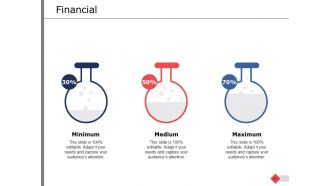
Slide 65: This is a Financial slide. Show finance related stuff here.
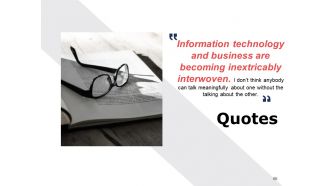
Slide 66: This is a Quotes slide to highlight or state anything specific.
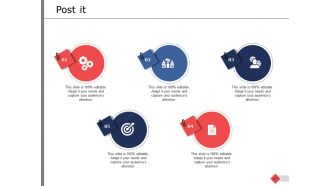
Slide 67: This slide is titled as Post it. Post your important notes here.
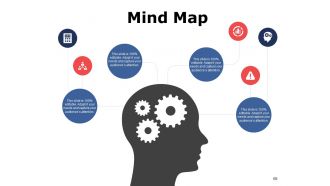
Slide 68: This slide shows Mind Map for representing entities.
Slide 69: This is a Creative Idea slide to state a new idea or highlight specifications, information etc.
Slide 70: This is a Thank You slide with address, contact number, email address.
Governance Deck Powerpoint Presentation Slides with all 70 slides:
Develop your hard core with our Governance Deck Powerpoint Presentation Slides. Get the best in your group acting for you.

FAQs for Governance Deck
So basically you want transparency, accountability, and clear decision-making. Map out who's actually making what decisions right now - that's your starting point. Define everyone's roles so there's no confusion about responsibilities. Set up regular check-ins to spot problems before they blow up. Honestly, most places I've worked just wing it with governance and then act shocked when things go sideways. Your leadership team needs different viewpoints, not just people who agree with each other all the time. Document your processes (I know, sounds boring) but then stick to them. Otherwise what's the point?
So basically it's all about who you answer to. Public sector? You're dealing with taxpayers and citizens, which means everything's transparent but slow as hell. Private companies just care about profits, so decisions happen way faster. Nonprofits are weird - they've got boards, donors, AND the people they're helping all wanting different things. Can get pretty chaotic honestly. The reporting stuff varies like crazy too. My advice? Figure out who actually makes the final call before you do anything. Trust me, it'll save you from looking like an idiot when you pitch the wrong approach.
Look, engaging stakeholders isn't just some corporate buzzword - it actually makes your governance way better. You get real insights from employees, customers, investors, whoever's affected by what you're doing. These people spot risks you'd totally miss on your own. Plus they trust you more when you actually listen, which honestly saves you headaches later. The trick is making it genuine though, not just going through the motions. Map out who really matters first. Then set up regular ways to get their input that don't feel like a waste of everyone's time.
Honestly, tech can be a game-changer here. Open data portals let you see government info in real-time - budget spending, meeting recordings, the works. Blockchain keeps records tamper-proof, which is pretty cool when you think about it. AI can spot weird patterns that might signal corruption. Citizens can report problems directly through apps and actually track if anything gets done about it. The trick is picking tools that genuinely help people, not just fancy-looking stuff that impresses nobody. I'd say figure out what transparency issues bug you most first, then find tech that tackles those specific problems.
Oh man, unclear roles are the worst - nobody knows who's supposed to decide what, so either everyone's fighting over the same thing or stuff just sits there forever. Honestly, decision-making gets painfully slow when you don't have clear paths. What's helped me is mapping out who owns which decisions first, then setting up regular check-ins so the different levels actually talk to each other. Document the processes too because otherwise you'll be explaining the same workflow to every new person. Also create simple escalation rules - like, this goes here if it's under $X, goes there if it's bigger. Start by figuring out where decisions currently get stuck.
Honestly, governance is like the backbone of your whole company vibe. Transparent decision-making? People feel respected and actually want to stick around. Sketchy, inconsistent leadership just pisses everyone off - I've watched entire teams check out mentally when they don't understand how or why decisions get made. Good governance lets people speak up without fear. The bad stuff creates that toxic "why bother" attitude that spreads like wildfire. My advice? Look at how decisions happen in your company right now. Do people get the reasoning behind changes, or are they just expected to roll with whatever comes down from above?
Look, risk management is what keeps boards from making stupid decisions based on wishful thinking. You identify problems before they blow up in your face. Otherwise you're just crossing your fingers and hoping for the best - which honestly never works out well. It helps you figure out where to spend money, keeps stakeholders happy, and makes sure you don't get in trouble with regulations. The trick is actually using it for big decisions instead of just filling out forms to say you did it. Nobody wants to be that company that got hit by something everyone saw coming.
Start by auditing your current governance docs to see where you can weave in sustainability requirements. Create dedicated sustainability committees and make ESG reporting mandatory in board meetings. Tie exec compensation to environmental and social targets - that's when companies actually start caring, tbh. Build sustainability risks right into your risk management framework too. The whole point is making this stuff a governance requirement, not just some feel-good side project. Though honestly, plenty of companies still use it as window dressing. You'll also want clear accountability structures so people can't just pass the buck when things go sideways.
So basically these global standards act like a floor that companies have to meet - think minimum safety rules but for how businesses should run. OECD guidelines and ISO standards push for transparency and ethical stuff, which filters down to your company's actual policies. Honestly it's like good peer pressure at work. Leadership adopts these practices to stay competitive and dodge regulatory headaches (which makes sense). You end up seeing more consistent reporting and clearer oversight processes. Even caught myself using some of these frameworks at my last job. Bottom line - stronger compliance no matter where you're located.
So there's a few ways to track this stuff. Decision-making speed is huge - like how fast does your team actually solve problems? Then you've got the usual suspects: stakeholder satisfaction, compliance rates, financial metrics like ROI. Employee engagement surveys tell you way more than people realize though. Also check if info actually moves around your company or just gets stuck somewhere. Oh, and here's something most orgs mess up - are you updating governance policies or just pretending they exist? I'd honestly just pick 3-4 things that match your biggest headaches right now and start there.
Honestly, start with your board recruitment - stop just asking "who do we know" and actually reach out to diverse networks. Set real targets for board composition and put D&I requirements right in your bylaws. That way it's not just nice-to-have fluff. Make your leaders accountable with actual metrics during evaluations. Advisory roles work great too if you can't change the whole board structure right away. Oh, and rotating seats bring in fresh perspectives without the politics. The trick is making it mandatory policy, not something you'll "try to remember" during hiring season.
Honestly? Most governance disasters boil down to boards that don't do their job. Look at Enron, WeWork - same story every time. Directors just nod along instead of asking the hard questions. They get too buddy-buddy with executives and stop challenging stupid decisions. Then you've got compensation structures rewarding quarterly bumps over actual sustainability, which is backwards if you think about it. My advice? Stack your board with people who'll push back on management - like, actually push back. And tie executive pay to long-term wins, not just hitting next quarter's numbers.
So your board basically has to watch how the company affects society now, not just make money. Environmental stuff, how you treat workers, community investments - all that matters for governance too. It's wild how much this has changed honestly. You'll see it pop up in board committees and executive pay gets tied to ESG goals. Risk management covers it now too. The main thing? Your governance structure needs real ways to track and guide this social responsibility stuff. Can't just approve whatever and move on.
Honestly, start with a code of ethics that people actually follow - not just something gathering dust on the wall. Get your board some real diversity and independence from management. Regular compliance audits are crucial, plus you'll want solid whistleblower protections. The culture piece is huge though. Reward good behavior and actually punish violations, or nobody takes it seriously. Document your risk assessments properly. Leadership has to walk the walk or it's all pointless theater. Pick one area first and build momentum from there - trying to fix everything at once usually backfires.
Policy changes hit corporate governance hard - new board rules, pay caps, audit stuff. After big scandals especially, lawmakers go crazy with regulations and you're scrambling to update compliance systems fast. More paperwork, obviously, but it does force better transparency which isn't terrible. Watch for regulatory updates in your space and actually budget for this stuff ahead of time. Way less stressful than panicking when new rules drop. Trust me on that one - I've seen companies get blindsided and it's messy.
No Reviews