


Aspects self concept ppt powerpoint presentation infographics backgrounds cpb




Try Before you Buy Download Free Sample Product
 Impress Your
 Audience
 100%
100% Editable
 Save Hours
 of Time


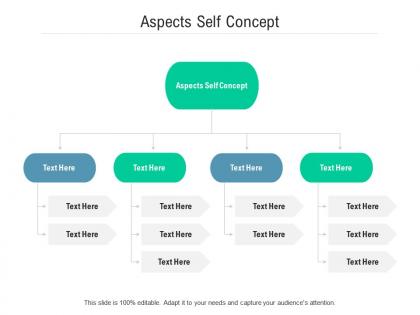
Our Aspects Self Concept Ppt Powerpoint Presentation Infographics Backgrounds Cpb are topically designed to provide an attractive backdrop to any subject. Use them to look like a presentation pro.
People who downloaded this PowerPoint presentation also viewed the following :
Aspects self concept ppt powerpoint presentation infographics backgrounds cpb with all 2 slides:
Use our Aspects Self Concept Ppt Powerpoint Presentation Infographics Backgrounds Cpb to effectively help you save your valuable time. They are readymade to fit into any presentation structure.

FAQs for Aspects self concept ppt powerpoint presentation
Self-concept comprises self-image, self-esteem, and ideal self, along with personal identity, social roles, and core values. These components work together by shaping how individuals perceive their capabilities, relationships, and goals, with many professionals finding that strong self-awareness enhances leadership effectiveness, team collaboration, and career advancement in increasingly dynamic work environments.
Self-concept significantly influences personal decision-making by shaping how individuals perceive their capabilities, values, and identity, ultimately guiding choices that align with their self-image. Through consistent self-evaluation and belief systems, people make decisions that reinforce their perceived strengths and avoid situations conflicting with their identity, with many finding that stronger self-awareness enhances confidence and strategic life choices.
Societal norms and cultural background shape self-concept through values, expectations, social roles, family structures, and community standards that define acceptable behavior and success. These influences create frameworks for identity formation, with individuals from collectivist cultures often emphasizing group harmony and interdependence, while individualistic societies prioritize personal achievement and autonomy, ultimately determining how people view themselves within their social context.
Self-reflection aids healthier self-concept development by enabling honest self-assessment, identifying limiting beliefs, recognizing personal strengths, and understanding behavioral patterns that impact relationships and performance. Through regular introspective practices, individuals can challenge negative thought cycles, align actions with core values, and build authentic confidence, ultimately delivering improved decision-making and stronger interpersonal connections.
Self-esteem serves as the evaluative foundation of self-concept, influencing how individuals perceive their worth, capabilities, and potential for growth. Higher self-esteem enables more resilient self-concepts that adapt positively to challenges, while lower self-esteem can limit personal development, with many finding that building confidence through achievements ultimately enhances overall self-perception and professional effectiveness.
Self-concept evolves through continuous interaction with changing roles, experiences, and developmental challenges across life stages. During childhood and adolescence, identity formation accelerates through social feedback and exploration, while adulthood brings refinement through career achievements, relationships, and major life transitions, with many individuals finding that self-awareness deepens significantly through reflection and accumulated life experiences.
Social media platforms significantly influence self-concept through constant social comparison, curated self-presentation, and real-time feedback mechanisms that shape personal identity formation. While these platforms enable enhanced self-expression and community building, they also present challenges around authenticity and self-worth validation, with many individuals finding that strategic digital wellness approaches help maintain healthier self-perception in increasingly connected environments.
Mindfulness practices enhance self-concept by increasing self-awareness, reducing negative self-judgment, and promoting emotional regulation through present-moment focus and non-judgmental observation. These techniques enable individuals to recognize thought patterns, develop self-compassion, and build resilience, with many organizations finding that mindfulness training ultimately delivers improved employee well-being and enhanced workplace performance.
Peer feedback significantly influences self-concept development by providing external perspectives on abilities, behaviors, and social standing, creating opportunities for self-reflection and adjustment. Through consistent interactions, individuals internalize peer evaluations regarding academic performance, social skills, and personal traits, with many students and professionals finding that constructive peer input enhances self-awareness and drives personal growth initiatives.
Self-concept significantly influences academic and professional performance by shaping confidence levels, goal-setting behaviors, persistence through challenges, and willingness to take on complex tasks. Students and professionals with positive self-concepts typically demonstrate higher achievement rates, stronger problem-solving abilities, and greater career advancement, with many organizations finding that employees who understand their strengths consistently deliver superior results and adapt more effectively to changing workplace demands.
Strategies to enhance adolescent self-concept include encouraging goal-setting and achievement recognition, promoting skill development through extracurricular activities, fostering supportive peer relationships, and providing consistent positive reinforcement from mentors and family members. These approaches work by building competence, social connection, and identity formation, with many schools and youth programs finding that structured mentoring and achievement-based activities deliver improved confidence and self-awareness.
Self-concept discrepancies significantly impact mental health by creating psychological tension, lowering self-esteem, and increasing anxiety when individuals perceive gaps between their actual and ideal selves. These disparities often manifest in workplace stress, relationship difficulties, and decreased performance across professional settings, with many organizations finding that addressing employee self-perception through coaching and development programs ultimately enhances both individual wellbeing and organizational productivity.
Positive affirmations reshape self-concept by rewiring negative thought patterns, reinforcing desired beliefs about personal capabilities, and creating consistent internal dialogue that supports growth. Through regular practice, individuals in therapy, sports psychology, and professional development programs gradually replace self-limiting beliefs with empowering perspectives, ultimately enhancing confidence, resilience, and self-worth across personal and professional contexts.
Self-concept intersects with identity formation by providing the foundational framework through which individuals evaluate their beliefs, values, capabilities, and social roles. These psychological processes work together by enabling personal awareness, facilitating behavioral consistency, and supporting adaptive decision-making, with many organizations finding that employees with strong self-concept demonstrate enhanced leadership capabilities and collaborative effectiveness.
Self-concept and emotional intelligence are deeply interconnected, as understanding yourself forms the foundation for recognizing, managing, and responding to emotions effectively. Individuals with strong self-awareness can better regulate their emotional responses, navigate interpersonal relationships, and make strategic decisions, while those developing emotional intelligence simultaneously strengthen their self-understanding, ultimately enhancing both personal effectiveness and professional leadership capabilities.
-
Professional and unique presentations.
-
Use of icon with content is very relateable, informative and appealing.