

Asset Based Financing Powerpoint Presentation Slides Fin CD V





Try Before you Buy Download Free Sample Product
 Impress Your
 Audience
 100%
100% Editable
 Save Hours
 of Time


Our Asset Based Financing Powerpoint Presentation Slides Fin CD V are topically designed to provide an attractive backdrop to any subject. Use them to look like a presentation pro.
People who downloaded this PowerPoint presentation also viewed the following :
Content of this Powerpoint Presentation
Slide 1: This slide introduces Asset-based financing. State your company name and begin.
Slide 2: This slide states Agenda of the presentation.
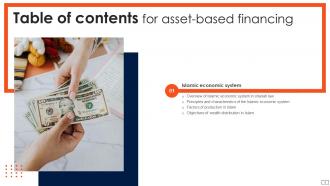
Slide 3: This slide shows Table of Content for the presentation.
Slide 4: This slide highlights title for topics that are to be covered next in the template.
Slide 5: This slide shows Overview of Islamic finance.
Slide 6: This slide presents Historical presence of Islamic finance.
Slide 7: This slide displays Financial prohibitions and permissions in Islamic law.
Slide 8: This slide represents Penalty and compensation in Islamic finance.
Slide 9: This is another slide continuing Penalty and compensation in Islamic finance.
Slide 10: This slide showcases Differences between Islamic and Conventional finance.
Slide 11: This slide shows Investment instruments offered in Islamic finance.
Slide 12: This slide presents Digital transformation in Islamic finance industry.
Slide 13: This is another slide continuing Digital transformation in Islamic finance industry.
Slide 14: This slide displays Analysis of global Islamic fintech market.
Slide 15: This slide represents Global Islamic finance industry analysis.
Slide 16: This slide showcases Distribution of global Islamic financial assets.
Slide 17: This is another slide continuing Distribution of global Islamic financial assets.
Slide 18: This slide highlights title for topics that are to be covered next in the template.
Slide 19: This slide covers the details related to Islamic funds, an investment vehicle that adheres to the principles of Islamic finance.
Slide 20: This slide presents types of Islamic funds used in investment vehicles that adhere to the principles of Islamic finance.
Slide 21: This is another slide continuing Types of Islamic Funds.
Slide 22: This slide displays Components of Islamic finance – Specialized Financial Institutions.
Slide 23: This is another slide continuing Components of Islamic finance – Specialized Financial Institutions.
Slide 24: This slide represents Components of Islamic finance – Islamic Banking.
Slide 25: This is another slide continuing Components of Islamic finance – Islamic Banking.
Slide 26: This slide showcases Overview of Islamic banking.
Slide 27: This is another slide continuing Overview of Islamic banking.
Slide 28: This slide shows Types of Islamic banking and finance.
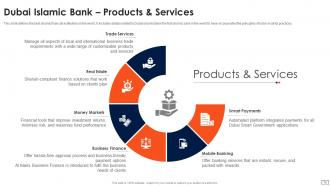
Slide 29: This slide presents Different Islamic banking products and services.
Slide 30: This slide displays Compound annual growth rate of Islamic banks.
Slide 31: This slide represents Components of Islamic finance – Islamic Insurance.
Slide 32: This slide showcases Islamic Insurance- Principles of Takaful.
Slide 33: This slide shows Features of different Takaful model.
Slide 34: This slide presents Structure of Takaful - Mudaraba Model.
Slide 35: This slide displays Structure of Takaful - Wakala Model.
Slide 36: This is another slide continuing Structure of Takaful - Wakala-Waqf Model.
Slide 37: This slide covers the details related to the Islamic capital market, where investment activities do not contradict the principles of Shariah.
Slide 38: This slide displays Components of Islamic finance – Islamic Capital Markets.
Slide 39: This slide represents Components of Islamic finance – Islamic Money Market.
Slide 40: This slide showcases Components of Islamic finance – Islamic Money Market (Cont.).
Slide 41: This slide shows Table of Content for the presentation.
Slide 42: This slide covers the details related to the Murabaha, a type of Islamic financing transaction that is widely used in the Islamic finance industry.
Slide 43: This is another slide continuing Islamic financing structure – Murabaha.
Slide 44: This is another slide continuing Islamic financing structure – Murabaha.
Slide 45: This slide presents Different types of Murabaha.
Slide 46: This slide covers the details related to the commodity murabaha also known as Tawarruq Arrangement a part of Islamic financing transactions.
Slide 47: This slide displays Structure of Commodity Murabaha.
Slide 48: This slide represents Structure of Commodity Murabaha.
Slide 49: This slide showcases Parallel Commodity Murabaha.
Slide 51: This is another slide continuing Structure of Parallel Commodity Murabaha .
Slide 52: This slide covers the details related to the equity murabaha Islamic financing structure.
Slide 53: This slide showcases Structure of Equity Murabaha.
Slide 54: This is another slide continuing Structure of Equity Murabaha.
Slide 55: This slide covers the details related to the ijara lease.
Slide 56: This slide presents Structure of Ijara Lease.
Slide 57: This is another slide continuing Structure of Ijara Lease.
Slide 58: This slide covers the details related to the istisna a sales contract whereby a manufacturer agrees to deliver a made-to-order asset at a pre-determined future time at an agreed price.
Slide 59: This slide covers the details related to the istisna a sales contract whereby a manufacturer agrees to deliver a made-to-order asset.
Slide 60: This slide covers the details related to the istisna a sales contract.
Slide 61: This slide covers the details related to the Islamic derivatives also known as Shariah-compliant derivatives.
Slide 62: This is another slide continuing Islamic financing structure – Islamic Derivatives.
Slide 63: This slide displays Structure for Islamic Derivatives.
Slide 64: This slide represents Islamic Derivatives - Primary Term Murabaha.
Slide 65: This slide showcases Structure for Primary Term Murabaha.
Slide 66: This slide shows Islamic Derivatives - Secondary Reverse Murabaha.
Slide 67: This is another slide continuing Islamic Derivatives - Secondary Reverse Murabaha.
Slide 68: This slide presents Structure for Secondary Reverse Murabaha.
Slide 69: This slide highlights title for topics that are to be covered next in the template.
Slide 70: This slide displays Fixed income investments in Islamic finance.
Slide 71: This is another slide continuing Fixed income investments in Islamic finance.
Slide 72: This is another slide continuing Fixed income investments in Islamic finance.
Slide 73: This slide covers the details related to the sukuk, a Shariah-compliant bond-like instrument used in Islamic finance.
Slide 74: This is another slide continuing Fixed income investments in Islamic finance – Sukuk.
Slide 75: This slide shows Fixed income investments in Islamic finance – Structure of Sukuk.
Slide 76: This slide presents Fixed income investments in Islamic finance – Structure of Sukuk.
Slide 77: This slide displays Differences between Sukuk and Traditional Bonds.
Slide 78: This slide represents Types of Islamic Capital Markets – Sukuk Al Murabaha.
Slide 79: This slide showcases Types of Islamic Capital Markets – Sukuk Al Murabaha.
Slide 80: This slide shows Structure of Sukuk Al Murabaha.
Slide 81: This slide presents Types of Islamic Capital Markets – Sukuk Al Ijara.
Slide 82: This slide displays Structure of Sukuk Al Ijara.
Slide 83: This slide represents Structure of Sukuk Al Ijara.
Slide 84: This slide showcases Types of Islamic Capital Markets – Sukuk al Istisna’a.
Slide 85: This slide covers the details related to the steps followed by Sukuk al Istisna’a (Project) a form of sukuk derived from the istisna'a lease financing structure.
Slide 86: This is another slide continuing Structure of Sukuk al Istisna’a.
Slide 87: This slide shows Types of Islamic Capital Markets – Sukuk al Musharaka.
Slide 88: This slide presents Structure of Sukuk al Musharaka.
Slide 89: This is another slide continuing Structure of Sukuk al Musharaka.
Slide 90: This slide displays Types of Islamic Capital Markets – Sukuk al Istithmar.
Slide 91: This slide represents Structure of Sukuk al Istithmar.
Slide 92: This is another slide continuing Structure of Sukuk al Istithmar.
Slide 93: This slide highlights title for topics that are to be covered next in the template.
Slide 94: This slide covers the details related to equity-based investments and funds provided based on Islamic law guidelines.
Slide 95: This slide presents Profit and loss sharing – Equity based investments and funds.
Slide 96: This slide displays Differences between Mudarabah and Musharakah.
Slide 97: This slide represents Profit and loss sharing – Structure of Mudarabah.
Slide 98: This slide showcases Profit and loss sharing – Structure of Musharakah.
Slide 99: This slide highlights title for topics that are to be covered next in the template.
Slide 100: This slide covers the details related to the league tables used for ranking companies based on Islamic financial metrics.
Slide 101: This slide presents League tables in Islamic debt.
Slide 102: This slide displays League tables in Islamic debt - Sukuk & Islamic Financing.
Slide 103: This is another slide continuing League tables in Islamic debt - Sukuk & Islamic Financing.
Slide 104: This slide highlights title for topics that are to be covered next in the template.
Slide 105: This slide represents Challenges and opportunities in Islamic financing.
Slide 106: This slide showcases Standardization and harmonization of Islamic finance practices.
Slide 107: This slide shows Regulatory organizations for Islamic finance.
Slide 108: This slide presents Dispute resolution mechanisms in Islamic finance.
Slide 109: This slide displays Opportunities for growth and development in Islamic finance.
Slide 110: This slide represents Future outlook for Islamic financing.
Slide 111: This is another slide continuing Future outlook for Islamic financing.
Slide 112: This slide contains all the icons used in this presentation.
Slide 113: This slide is titled as Additional Slides for moving forward.
Slide 114: This slide provides Clustered Column chart with two products comparison.
Slide 115: This slide provides 30 60 90 Days Plan with text boxes.
Slide 116: This is an Idea Generation slide to state a new idea or highlight information, specifications etc.
Slide 117: This slide presents Roadmap with additional textboxes.
Slide 118: This slide showcases Magnifying Glass to highlight information, specifications etc
Slide 119: This is a Thank You slide with address, contact numbers and email address.
Asset Based Financing Powerpoint Presentation Slides Fin CD V with all 129 slides:
Use our Asset Based Financing Powerpoint Presentation Slides Fin CD V to effectively help you save your valuable time. They are readymade to fit into any presentation structure.
















FAQs for Asset Based Financing Powerpoint Presentation Slides
Asset-based financing offers greater accessibility, faster approval processes, higher loan amounts, and more flexible terms compared to traditional lending options. This financing method enables businesses with strong assets but weaker credit profiles to secure capital by leveraging inventory, equipment, or receivables, ultimately delivering improved cash flow and competitive advantages in rapidly changing markets.
Lenders assess asset value through professional appraisals, market analysis, liquidation value calculations, and advance rate determinations based on asset type and quality. Financial institutions typically apply conservative valuation methods, with inventory receiving 50-80% advance rates and equipment 70-90%, while conducting regular revaluations to ensure collateral adequacy and minimize lending risk throughout the financing relationship.
Eligible assets for asset-based financing typically include accounts receivable, inventory, equipment, real estate, and marketable securities. These tangible and liquid assets serve as collateral, with lenders advancing funds based on asset value, enabling businesses across manufacturing, retail, and distribution sectors to access working capital while maintaining operational flexibility and competitive advantage.
Asset-based financing impacts balance sheets by increasing both assets and liabilities simultaneously, while typically improving liquidity ratios and working capital positions. This financing method enhances debt-to-equity ratios and cash flow metrics, with many manufacturing and retail companies finding that leveraging inventory and receivables delivers improved operational efficiency, reduced borrowing costs, and ultimately stronger financial flexibility for growth initiatives.
Common misconceptions about asset-based financing include that it's only for distressed companies, carries extremely high costs, requires perfect collateral, and signals financial weakness to stakeholders. However, many healthy businesses across manufacturing, retail, and distribution sectors utilize asset-based financing strategically to enhance cash flow, support growth initiatives, and maintain competitive advantage while preserving traditional credit lines.
Businesses typically prefer asset-based financing over equity financing when they want to retain full ownership control, have valuable collateral like inventory or receivables, and need faster access to capital. This approach works particularly well for established manufacturing, retail, or distribution companies that can leverage existing assets, ultimately avoiding dilution of ownership stakes while maintaining strategic decision-making autonomy.
Economic downturns significantly impact asset-based financing by reducing collateral values, tightening borrowing bases, and increasing lender scrutiny of inventory turnover and receivables quality. While these conditions present challenges, many businesses find that asset-based financing remains more accessible than traditional credit lines during recessions, with lenders adjusting advance rates and monitoring requirements to maintain strategic lending relationships.
Financial covenants in asset-based financing serve as protective mechanisms that establish borrowing limits, collateral requirements, financial reporting standards, and performance benchmarks throughout the loan term. These agreements enable lenders to monitor business health while providing borrowers structured access to capital, with many companies finding that well-designed covenants actually enhance operational discipline and strategic financial planning.
Companies improve their chances of securing asset-based financing by maintaining accurate asset valuations, demonstrating strong cash flow management, and ensuring proper documentation of all collateral assets. Through comprehensive financial reporting, strategic inventory management, and established relationships with specialized lenders, businesses can streamline the approval process while securing more favorable terms, ultimately delivering enhanced working capital flexibility and competitive operational advantages.
Asset-based financing presents risks including asset valuation fluctuations, restrictive covenants that limit operational flexibility, potential asset seizure during defaults, and higher interest rates compared to traditional loans. While these challenges require careful consideration, many businesses find that strategic asset management, maintaining adequate cash flow buffers, and working with experienced lenders ultimately delivers access to capital that enables growth and competitive advantage.
Asset-based loan interest rates typically range from 5-15%, often higher than traditional bank loans but lower than unsecured financing options like credit cards or merchant cash advances. While these rates reflect the operational complexity of monitoring collateral, they deliver competitive advantages through faster approval processes, larger credit limits, and greater accessibility for businesses with fluctuating cash flows, ultimately providing strategic financing flexibility.
Industries with substantial physical assets, including manufacturing, construction, retail, transportation, and agriculture, are most likely to benefit from asset-based financing. These sectors typically maintain significant inventory, equipment, or receivables that serve as collateral, with many growing companies in these industries finding that asset-based financing enables faster expansion and improved cash flow compared to traditional lending options.
Asset-based financing evaluates collateral value and cash flow potential rather than primarily credit scores and financial history like traditional loans. This approach enables faster approvals, higher borrowing limits based on asset values, and more flexible terms, with many businesses finding that inventory, equipment, or receivables can unlock capital even when conventional credit requirements present challenges, ultimately delivering enhanced liquidity and growth opportunities.
Legal considerations for asset-based financing include collateral documentation requirements, personal guarantees, UCC filing compliance, loan covenant restrictions, and asset valuation standards. These legal frameworks protect both lenders and borrowers by establishing clear asset ownership rights, repayment terms, and default procedures, with many businesses finding that proper legal preparation streamlines approval processes and reduces long-term compliance risks.
Technology enhances asset-based financing through automated asset valuation, real-time monitoring systems, blockchain-based transparent record-keeping, and AI-driven risk assessment algorithms. These innovations streamline verification processes, reduce operational costs, and minimize fraud risks, with financial institutions finding that blockchain ensures immutable collateral records while AI accelerates loan approvals and enhances portfolio management efficiency.
-
Happy to found you SlideTeam. You guys are value for money. Amazing slides.
-
The templates are handy and I can personalize them as per my needs. Glad to be your subscriber!