


Auto Industry Business Plan Powerpoint Presentation Slides





Try Before you Buy Download Free Sample Product
 Impress Your
 Audience
 100%
100% Editable
 Save Hours
 of Time


The automotive industry holds a prominent global position, and within this industry, car dealerships play a crucial role in offering both new and used vehicles. Our Auto Industry Business Plan provides a comprehensive overview of the current state of car dealerships and presents a growth plan for the next five years. Additionally, this Car Dealership Business Plan outlines the business goals and strategies to achieve them, supported by thorough market research. It analyzes the competitive landscape, industry insights, emerging trends, growth and revenue drivers, and identifies the target market. Moreover, our Trends shaping car dealership industry PPT applies Porters framework to assess its impact on car dealerships, identifies market gaps, proposes solutions, and highlights opportunities. It also includes market sizing analysis, such as TAM, SAM, and SOM. The financial overview demonstrates a well structured proposition, including a revenue model, balance sheet, cash flow statement, break-even analysis, discounted cash flow valuation, and profit and loss statement. Gain instant access to our comprehensive Auto Industry Business Plan and seize the opportunities in the car dealership industry.
People who downloaded this PowerPoint presentation also viewed the following :
Content of this Powerpoint Presentation
Slide 1: This slide introduces Auto Industry Business Plan. Commence by stating Your Company Name.
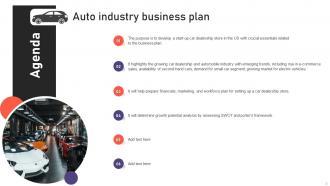
Slide 2: This slide depicts the Agenda of the presentation.
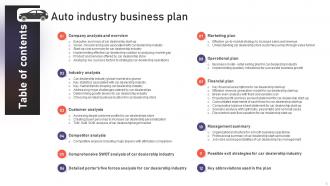
Slide 3: This slide includes the Table of contents.
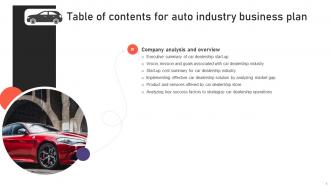
Slide 4: This slide highlights the Title for the Topics to be covered further.
Slide 5: This slide presents the Executive summary of car dealership start-up.
Slide 6: This slide covers the car dealership industry's vision, mission, and goals.
Slide 7: This slide states the Start-up cost summary for car dealership industry.
Slide 8: This slide deals with Implementing effective car dealership solution by analyzing market gap.
Slide 9: This slide highlights the Product and services offered by car dealership store.
Slide 10: This slide focuse son Analyzing key success factors to strategize car dealership operations.
Slide 11: This slide indicates the Heading for the Contents to be discussed in the following template.
Slide 12: This slide portrays the Car dealership industry global market at a glance.
Slide 13: This slide highlights the thorough assessment of a market within the car dealership industry.
Slide 14: This slide continues the Key statistics associated with car dealership industry.
Slide 15: This slide further continues the Key statistics associated with car dealership industry.
Slide 16: This is yet another slide continuing the Key statistics associated with car dealership industry .
Slide 17: This slide also continues the Key statistics associated with car dealership industry.
Slide 18: This slide highlights the key market trends that have the potential to change the current market scenario.
Slide 19: This slide deals with Addressing major challenges catered by car dealerships.
Slide 20: This slide focuses on Determining growth drivers for car dealership industry.
Slide 21: This slide emphasizes on Choosing an ideal business location for car dealership store.
Slide 22: This slide displays the Title for the Ideas to be further discussed.
Slide 23: This slide covers an assessment of how the company's products will fit into a particular market.
Slide 24: This slide provides a glimpse of how to better understand the target audience.
Slide 25: This slide depicts the TAM SAM SOM analysis of car dealership target market.
Slide 26: This slide includes the Heading for the Ideas to be covered in the forthcoming template.
Slide 27: This slide reveals the Competitive analysis including major players with attributes comparison.
Slide 28: This slide shows the Title for the Contents to be discussed enxt.
Slide 29: This slide highlights the Comprehensive SWOT analysis of car dealership industry.
Slide 30: This slide contains the Heading for the Topics to be discussed further.
Slide 31: The slide highlights porter’s five forces model and its implications in the US car dealership industry.
Slide 32: This slide indicates the Title for the Topics to be covered in the following template.
Slide 33: This slide presents the Effective go-to-market strategy to increase sales and revenue.
Slide 34: This slide continues the Effective go-to-market strategy to increase sales and revenue.
Slide 35: This slide further continues the Effective go-to-market strategy to increase sales and revenue.
Slide 36: This slide also continues the Effective go-to-market strategy to increase sales and revenue.
Slide 37: This slide focuses on Understanding car dealership store customer journey through sales funnel.
Slide 38: This slide displays the Heading for the Contents to be discussed further.
Slide 39: This slide exhibits the Business model of Retail selling plan for car dealership industry.
Slide 40: The slide covers particular objectives or goals that the organization intends to attain as part of its business plan.
Slide 41: This slide indicates the Title for the Ideas to be covered in the upcoming template.
Slide 42: This slide shows the Key financial assumptions for car dealership start-up.
Slide 43: This slide reveals the Effective revenue generation model for car dealership start-up.
Slide 44: This slide highlights the Break-even analysis with fixed and variable cost.
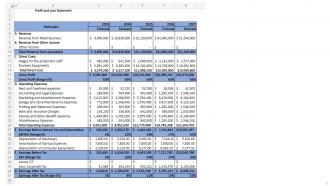
Slide 45: This slide displays the Projected profit and loss account statement for car dealership start-up.
Slide 46: This slide continues the Projected profit and loss account statement for car dealership start-up.
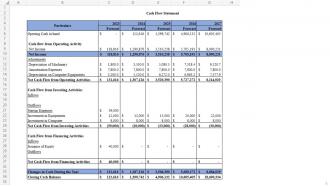
Slide 47: This slide displays the Consolidated statements of cash flows for car dealership start-up.
Slide 48: This slide continues the Consolidated statements of cash flows for car dealership start-up.
Slide 49: This slide further continues the Comparative balance sheet statement for car dealership start-up.
Slide 50: This is yet another slide continuing the Comparative balance sheet statement for car dealership start-up.
Slide 51: This slide depicts the Scenario analysis with optimistic, pessimistic and nominal cases.
Slide 52: This slide continues the Scenario analysis with optimistic, pessimistic and nominal cases.
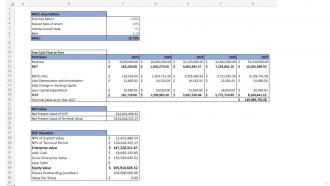
Slide 53: This slide's purpose is to calculate the amount of money an investor would get from an investment after adjusting for the time value of money.
Slide 54: This slide contains the Heading for the Ideas to be discussed next.
Slide 55: The slide highlights the organizational hierarchy in the company.
Slide 56: This slide portrays the Professional summary of car dealership start-up founder.
Slide 57: This slide exhibits the Job roles and responsibilities of car dealership key management.
Slide 58: This slide continues the Job roles and responsibilities of car dealership key management.
Slide 59: This slide further continues the Job roles and responsibilities of car dealership key management.
Slide 60: This slide shows the Title for the Contents to be covered further.
Slide 61: This slide represents exit strategies.
Slide 62: This slide includes the Heading for the Topics to be discussed next.
Slide 63: This slide highlights the Key abbreviations used in the plan.
Slide 64: This is the Icons slide containing all the Icons used in the plan.
Slide 65: This slide is used for depicting some Additional information.
Slide 66: This is the Puzzle slide with related imagery.
Slide 67: This is the Venn diagram slide.
Slide 68: This is the Idea generation slide for encouraging fresh ideas.
Slide 69: This slide is used for the purpose of Comparison.
Slide 70: This slide exhibits the organization's Timeline.
Slide 71: This is the Thank You slide for acknowledgement.
Auto Industry Business Plan Powerpoint Presentation Slides with all 81 slides:
Use our Auto Industry Business Plan Powerpoint Presentation Slides to effectively help you save your valuable time. They are readymade to fit into any presentation structure.











































































FAQs for Auto Industry Business Plan
Dude, the whole car industry is flipping upside down right now. Companies are moving away from just selling cars to offering services - like Tesla's FSD subscriptions or those predictive maintenance deals. Instead of buying a car, people might just pay for rides when they need them. It's wild how much this changes everything. Traditional automakers better start partnering with tech companies fast, or they'll get crushed by the Teslas and Apples of the world. Even Ford's trying to catch up with software updates now. The money's shifting from one big sale to ongoing monthly payments.
Dude, start with figuring out who's actually gonna buy your cars - income, age, what makes them tick. The auto industry is insane competitive so dig deep into what other companies are doing. Market trends are huge too - like how fast EVs are taking off and all the new regulations coming down. Different regions want totally different things, which is kind of obvious but easy to overlook. Manufacturing costs and dealer networks create massive barriers, btw. Oh and grab some industry reports first to get a baseline - saves you from starting blind. Geographic stuff matters way more than people think.
Look, sustainability isn't optional anymore - it completely changes how you run things. R&D money has to shift toward EVs and alt fuels, which is honestly a huge investment. Your whole supply chain gets flipped too. Instead of regular suppliers, you're suddenly dealing with battery companies and sourcing totally different materials. Sometimes feels like starting over from zero, but whatever - customers and government rules are forcing everyone's hand anyway. I'd say figure out what sustainability stuff matches what you can actually do right now, then map out where to spend money next.
Dude, supply chain will literally make or break you in automotive. We're talking thousands of parts that need perfect timing - one hiccup and your whole production line stops. Those parts are like 60-70% of your vehicle cost too, so any mess-ups kill your profits fast. The chip shortage was brutal proof of this! Strong supplier relationships are everything. Diversify where you source from and always have backup plans. Honestly, most people treat it like boring operations stuff, but it's actually your competitive edge if you do it right. Start building those connections now.
Honestly, consumer trends are everything in auto development - you've gotta stay on top of them constantly. People suddenly care about the environment? Time to push EVs hard. They want their car to feel like their phone? Better start adding screens everywhere. The annoying part is trends move way faster than the usual 4-year development timeline. You can't just chase what's popular right now though - that's how you end up behind. Instead, try to guess where people's heads will be in 3-5 years and build for that. Oh, and set up regular check-ins with actual consumers so you're not blindsided when preferences shift.
Honestly, figure out what makes you special first - maybe it's killer tech, amazing service, or hitting some gap nobody else cares about. Look at Tesla, they went all-in on the tech angle and it worked. Pick something competitors can't just copy in six months. Maybe partner with tech companies or do crazy transparent manufacturing (customers love that stuff). Don't try being everything to everyone though, that's how you end up being nothing to anyone. Focus on 1-2 things you'll absolutely nail. Start by checking what the current players suck at - there's your opening.
Dude, regulations are everywhere in automotive - they're literally driving every major call you'll make. Safety standards, emissions, trade stuff, EV incentives. The compliance costs? Brutal. Can totally crush smaller companies. But plot twist - smart companies actually use this stuff to their advantage. New emission rules create EV demand. Safety requirements help tech-heavy companies shine. Government incentives basically pay for your R&D, which is pretty sweet if you ask me. You've gotta bake regulatory tracking into your planning right from the start though. Can't just wing it later.
Honestly, you're gonna need rock-solid 5-year projections - revenue, manufacturing costs, R&D, cash flow, the whole deal. Auto investors are brutal about numbers since we're talking massive capital here. Funding-wise, think VC money, partnerships with big automakers, government grants (especially EV stuff), maybe IPO down the road. Here's the thing though - you'll be hemorrhaging cash for years before any real revenue hits. I'd start backwards from your unit economics. How many cars do you actually need to move, at what price, to finally turn a profit? Build everything around that timeline. It's a brutal industry but the numbers don't lie.
Honestly, partnering with tech companies is a smart move because they've got all the fancy stuff your auto team doesn't - AI for self-driving, software platforms, AR interfaces, you name it. Way faster than building it yourself from scratch. These tech guys move at lightning speed compared to how slow car companies usually are, which actually forces you to pick up the pace too. Just make sure you find partners who want to go in the same direction as you. Oh, and definitely nail down the IP stuff early or you'll be dealing with legal drama later.
Honestly, you're looking at some serious headaches. Regulatory stuff is brutal - every country has different safety standards and emission rules that'll mess with your costs big time. Supply chain issues are everywhere right now too. Local competitors aren't gonna roll over either, they'll fight dirty to keep you out. Currency swings and political drama add another layer of risk. Oh, and you'll need crazy amounts of capital for manufacturing or dealer networks. My take? Do your homework first and maybe find local partners who know the game. Way less risky than going it alone.
Start with focus groups early on, then add digital surveys after test drives. Online communities work great too - owners love sharing their actual experiences. The trick is being systematic about it instead of just waiting for angry emails (though honestly, those can be gold sometimes). Get your research team talking directly to the engineers and designers - otherwise nothing changes. I'd pick one channel first and nail that before adding more. Quarterly reviews help you spot trends and actually fix stuff for next year's models. Don't try to do everything at once.
Dude, branding is everything in cars. Think about it - people literally get into fights over Ford vs Chevy, so there's definitely some psychology at play here. Your brand tells customers whether you're fancy luxury or everyday affordable before they even test drive anything. It affects pricing too, obviously. Tesla can charge premium because of their brand, while Kia had to work years to shake that "cheap" reputation (though they've done pretty well lately). Pick your lane early - are you the soccer mom's reliable choice? The weekend racer's dream? The tree-hugger mobile? Then stick with it consistently across everything.
Honestly, batteries and charging partnerships are make-or-break for EVs. Building everything yourself is insanely expensive unless you're Tesla-rich. Partner with battery suppliers instead. Get charging network deals locked down early. Pick your lane - are you going after budget drivers, luxury market, or commercial fleets? "Going electric" isn't a strategy by itself. I'd probably start by retrofitting current platforms rather than designing from scratch (way cheaper). Map out 3-5 years with real milestones. Oh, and don't underestimate how long regulatory stuff takes - that always drags on forever.
Honestly, going niche is your best shot instead of fighting the big guys directly. Focus on stuff like electric delivery trucks or specialty parts - areas where you won't need crazy capital upfront. B2B partnerships work great too. Direct-to-consumer is possible but ugh, the regulatory mess in most states is insane. Find some specific problem the major players are ignoring, that's your opening. Start small, prove it actually works, then use those early wins to get investors or maybe even OEM deals. Much smarter than trying to be everything to everyone right away.
Honestly, data analytics is a game-changer for auto businesses. You can take all that messy vehicle and customer data and actually make sense of it. Perfect for inventory forecasting, figuring out maintenance schedules, stuff like that. The wild part? You'll catch trends way before your instincts do - like what customers really want vs what they claim they want. Predictive maintenance alone can save you tons on warranty costs. Plus you can personalize marketing without being creepy about it. I'd start with something simple like inventory optimization first, then build from there once you get the hang of it.
-
Awesomely designed templates, Easy to understand.
-
Thank you for offering such helpful pre-designed templates. They are really beneficial to me in my job.