


Shoe Industry Business Plan Powerpoint Presentation Slides




Try Before you Buy Download Free Sample Product
 Impress Your
 Audience
 100%
100% Editable
 Save Hours
 of Time


If you need to familiarize yourself with creating a shoe store business plan, you may think creating one will take time and effort. If youre going to start a shoe store or expand your current one, you need a business plan. Therefore, our team has created this Shoe Store Business Plan PPT that showcases the necessary information to write each essential component of your shoe store business plan. It explains the business goals and strategy for reaching them. It also includes market research to support your objectives, such as competitive environment, industry insights, industry trends, growth or revenue drivers, target market, etc. It also covers Porters framework and how it affects the shoe industry, the existing market gaps, solutions, opportunities, market sizing, including TAM, SAM, and SOM, go-to marketing strategy, sales funnel, etc. Additionally, the plan includes a financial overview that assures a well-thought and carefully considered proposition. It consists of the revenue model, balance sheet, cash flow statement, break-even analysis, DCF valuation, and profit and loss statement. Download this completely editable presentation to get our well-researched and expertly crafted offering.
People who downloaded this PowerPoint presentation also viewed the following :
Content of this Powerpoint Presentation
Slide 1: This slide displays the title Shoe Industry Business Plan.
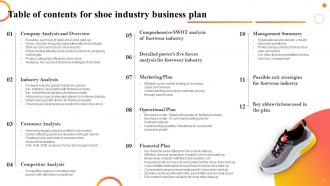
Slide 2: This slide exhibit table of content.
Slide 3: This slide displays the title Agenda.
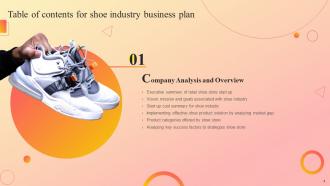
Slide 4: This slide exhibit table of content- Company Analysis and Overview.
Slide 5: This slide highlight Executive summary of retail shoe store start-up
Slide 6: This slide covers the shoe industry's vision, mission, and goals.
Slide 7: This slide provides information about start-up expenditures that incur during the process of establishing a shoe store.
Slide 8: This slide covers Implementing effective shoe product solution by analyzing market gap.
Slide 9: This slide highlight Product categories offered by shoe store.
Slide 10: This slide covers the essential points to be considered while selling shoe/footwear products in the market.
Slide 11: This slide exhibit table of content- Industry Analysis.
Slide 12: The purpose of this slide is to highlight the market size of the global footwear industry.
Slide 13: This slide highlights the thorough assessment of a market within the footwear industry.
Slide 14: This slide highlights the thorough assessment of a market within the skincare industry.
Slide 15: This slide highlights Key market trends shaping footwear industry.
Slide 16: This slide portrays details about various challenges catered by the footwear industry.
Slide 17: This slide caters to details about various growth drivers resulting in footwear industry progress.
Slide 18: This slide portrays an ideal business location for skincare products that minimize the risk of failure.
Slide 19: This slide exhibit table of content- Customer Analysis
Slide 20: This slide helps in Assessing target customer profile for shoe store.
Slide 21: This slide covers the important factors that people consider when buying a pair of shoes.
Slide 22: This slide provides a glimpse of how to better understand the target audience, to fine-tune marketing campaigns, and increase e-commerce personalization.
Slide 23: The purpose of this slide is to depict the market potential of footwear in terms of TAM, SAM, and SOM.
Slide 24: This slide exhibit table of content- Competitor Analysis.
Slide 25: The purpose of this slide is to provide a glimpse of major participants and key competitors of the industry.
Slide 26: This slide exhibit table of content- Comprehensive SWOT analysis of footwear industry
Slide 27: The purpose of this slide is to identify the industry' strengths, weaknesses, opportunities, and threats related to the business.
Slide 28: This slide exhibit table of content- Detailed porter’s five forces analysis for footwear industry.
Slide 29: The slide highlights porter’s five forces model and its implications in the US footwear industry.
Slide 30: This slide exhibit table of content- Marketing Plan
Slide 31: The purpose of this slide is to implement an effective go-to-market strategy.
Slide 32: The purpose of this slide is to implement an effective go-to-market strategy.
Slide 33: The purpose of this slide is to implement an effective go-to-market strategy.
Slide 34: The purpose of this slide is to implement an effective go-to-market strategy.
Slide 35: This slide helps in Understanding shoe store customer journey through sales funnel.
Slide 36: This slide exhibit table of content- Operational Plan
Slide 37: The purpose of this slide is to highlight Business model - Retail selling plan for footwear industry.
Slide 38: The purpose of this slide is to highlight Business model – E-commerce selling plan for footwear industry.
Slide 39: The slide covers particular objectives or goals that the organization intends to attain as part of its business plan.
Slide 40: This slide exhibit table of content- Financial Plan
Slide 41: This slide provides a Key financial assumptions for shoe store start-up.
Slide 42: The slide shows the effective revenue model of the footwear industry, which displays the cost incurred and the various sources of income.
Slide 43: The slides highlight the break-even analysis of the firm.
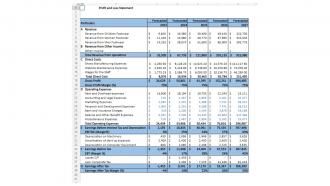
Slide 44: The slides provide a glimpse of the projected profit and loss statement to visualize the skincare store’s financial performance for the next five years.
Slide 45: The slides provide a glimpse of the projected profit and loss statement to visualize the skincare store’s financial performance for the next five years.
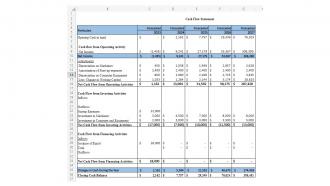
Slide 46: The slides highlight the company's cash flow statement Consolidated statements of cash flows for shoe store start-up.
Slide 47: The slides highlight the company's cash flow statement to provide a detailed picture of what happened to a business's cash during a specified period.
Slide 48: The slides highlight Comparative balance sheet statement for shoe store start-up.
Slide 49: The slides highlight Comparative balance sheet statement for shoe store start-up.
Slide 50: The purpose of this slide is to examine the effects of potential future events on the company’s performance.
Slide 51: The purpose of this slide is to examine the effects of potential future events on the company’s performance.
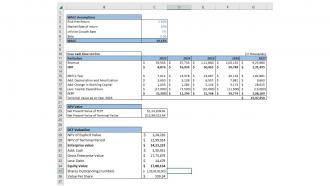
Slide 52: The purpose of this slide is to calculate the amount of money an investor would get from an investment after adjusting for the time value of money.
Slide 53: This slide exhibit table of content- Management Summary.
Slide 54: The slide highlights the organizational hierarchy in the company.
Slide 55: This slide highlights the founder’s biggest professional achievements and most valuable skills.
Slide 56: This slide highlights the job roles and responsibilities of shoe store key management people.
Slide 57: This slide highlights the job roles and responsibilities of shoe store key management people.
Slide 58: This slide exhibit table of content- Possible exit strategies for footwear industry.
Slide 59: This slide highlight Possible exit strategies for footwear industry.
Slide 60: This slide exhibit table of content- Key abbreviations used in the plan.
Slide 61: The purpose of this slide is to highlight the shorter version of existing words to save time and take up less space.
Slide 62: This is the icons slide.
Slide 63: This slide presents title for additional slides.
Slide 64: This slide shows details of team members like name, designation, etc.
Slide 65: This slide display Venn.
Slide 66: This slide display Our goal.
Slide 67: This slide depicts posts for past experiences of clients.
Slide 68: This slide display Column chart for two products.
Slide 69: This slide showcase Roadmap for process flow.
Slide 70: This slide showcase Comparison of male & female user.
Slide 71: This slide display Financial.
Slide 72: This slide exhibit Timeline
Slide 73: This slide depicts 30-60-90 days plan for projects.
Slide 74: This is thank you slide & contains contact details of company like office address, phone no., etc.
Shoe Industry Business Plan Powerpoint Presentation Slides with all 79 slides:
Use our Shoe Industry Business Plan Powerpoint Presentation Slides to effectively help you save your valuable time. They are readymade to fit into any presentation structure.






FAQs for Shoe Industry Business Plan
So sustainability is huge right now - people actually care about eco-friendly materials and ethical production. Athletic shoes are still killing it (I mean, when's the last time you wore dress shoes?). Customization is growing fast too, which makes sense. Direct-to-consumer brands are everywhere now thanks to COVID basically forcing everyone online. That's not changing anytime soon. Your business plan needs to tackle how you'll compete with all these brands selling directly and figure out your sustainability angle. Oh, and athleisure isn't going anywhere either.
Honestly, it all comes down to what people actually want to buy. You've got to stay on top of market research - comfort, sustainability, that whole versatile style thing is huge right now. Your design team needs to juggle those priorities while manufacturing adjusts everything from materials to production based on demand. The real challenge? Predicting what's next before it hits, since development takes forever. I mean, nobody wants to be that brand scrambling to catch up. Set up feedback loops with actual customers and keep monitoring trends. Way better than guessing what'll sell.
Pick a specific niche first - sustainable materials, weird sizing, athletic stuff, whatever. Don't try to appeal to everyone because you'll just blend in. Build your brand around something real, not just "we're premium quality" like literally every other company says. Custom fitting tech could be cool, or maybe partner with local artists for limited drops. Pricing's tricky though - either go high-end with the quality to back it up, or find smart ways to undercut without killing your margins. Honestly, I'd start by figuring out what's actually missing in your area before doing anything else.
Dude, sustainability is everything in footwear right now. Young people literally won't buy from you if you don't have a clear eco story - I've seen it firsthand. Start with recycled plastics, plant-based leather alternatives, maybe organic cotton. Partner with ethical manufacturers too. Circular stuff works great - repair services, take-back programs. Set actual numbers in your business plan: carbon reduction targets, waste goals, percentage of sustainable materials. Don't try to do everything at once though. Pick 2-3 realistic initiatives first and build from there. The competition aspect alone makes this worth prioritizing.
Dude, 3D printing is totally changing the shoe game. You can scan someone's foot and have a custom sole ready in hours - pretty wild compared to waiting weeks with regular manufacturing. The coolest part? You can create these insane geometric patterns that would be impossible otherwise. Honestly, the waste reduction alone makes it worth considering since you're only printing what you actually need. No more guessing on inventory either - just print on demand. I'd say start with something simple like custom insoles to get your feet wet (pun intended). It's perfect for prototyping too.
Start with your revenue - figure out how many shoes you'll sell by type and season. Footwear is super seasonal, like back-to-school and holidays are huge. Then calculate your costs: materials, manufacturing, shipping, plus all the usual stuff like rent and marketing. Cash flow is tricky because you're paying suppliers way before customers pay you, which honestly sucks. I'd create a few different growth scenarios so you're prepared either way. Maybe start with 3 years and update quarterly once real numbers start coming in? Oh, and don't forget inventory storage costs - those add up fast.
Honestly, start by dumping some of your vendors - having too many is just chaos. Work with fewer suppliers but make sure they're actually reliable. Just-in-time delivery will save you warehouse space and you won't be stuck with tons of extra inventory sitting around. The real game-changer though? Better demand planning using your sales history and figuring out seasonal patterns. Oh, and nearshoring might cut your shipping costs way down. I'd audit your current suppliers first - find the three biggest money pits and fix those. Your forecasting probably needs work too, but that's where the biggest savings are hiding.
Look, e-commerce and social media are where it's at right now. Your own website plus Amazon will drive most sales, but Instagram and TikTok? Pure gold for connecting with younger buyers. Don't sleep on physical retail either - specialty stores and pop-ups still move product. The brands absolutely crushing it are nailing that whole omnichannel approach. My advice? Start with one killer website and pick ONE social platform to dominate first. I've seen too many people spread themselves thin trying to be everywhere - it never works out.
Dude, seasonal trends will absolutely destroy you if you don't plan ahead. I learned this the hard way - you're ordering boots in the middle of summer and flip-flops when it's snowing outside. Feels backwards but that's the game. Your money gets locked up for months betting on what people will actually buy. Look at last year's monthly sales, figure out the patterns. Find suppliers who'll do smaller batches more often instead of one giant order. Oh and start planning like 4-6 months out minimum. It's basically gambling but with better odds if you do your homework.
Honestly, quality should be your
-
Placing an order on SlideTeam is very simple and convenient, saves you a lot of your time.
-
Such amazing slides with easy editable options. A perfect time-saver.