

Clothing Line Business Plan Powerpoint Presentation Slides




Try Before you Buy Download Free Sample Product
 Impress Your
 Audience
 100%
100% Editable
 Save Hours
 of Time


A clothing store business is a place where clothing related to men, women, and children is sold. The store follows urban casual wear, western wear clothing, and traditional wear clothing. Check out our efficiently designed Clothing Line Business Plan Powerpoint Presentation. The presentation covers details regarding the company executive summary, the quick pitch providing information about the business, the clothing market, and the opportunities available with the business. It displays the key to success factors, mission, vision, and the start-up summary, including all the necessary expenses. The business plan document exhibits the growth potential analysis, including SWOT analysis and Porters five force analysis model, customer analysis, and market sizing, including TAM, SAM, and SOM. The presentation also has an offline and online marketing strategy, and sales funnel for customer retention. The financial summary includes scenario analysis, profit and loss statements, cash flow statements, and balance sheets. Also, it provides a DCF valuation model for the business after five years with a graphical representation of all three financial statements. Get access now.
People who downloaded this PowerPoint presentation also viewed the following :
Content of this Powerpoint Presentation
Slide 1: This slide introduces Clothing Line Business Plan. State your company name and begin.
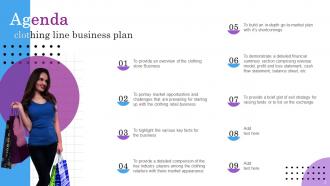
Slide 2: This slide states Agenda of the presentation.
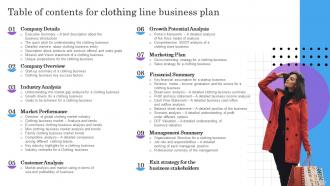
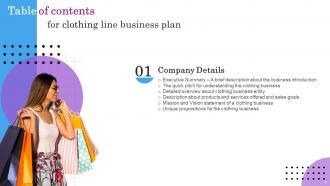
Slide 3: This slide presents Table of Content for the presentation.
Slide 4: This slide highlights title for topics that are to be covered next in the template.
Slide 5: This slide covers a brief glimpse of what the business will be offering to the customer.
Slide 6: This slide displays Quick Pitch for understanding the clothing business.
Slide 7: This slide represents Detailed overview about the clothing business entity.
Slide 8: This slide showcases Description about the products and services offered and sales goals.
Slide 9: This slide shows Mission and Vision statement of a clothing business.
Slide 10: This slide presents Unique Proposition for the clothing business.
Slide 11: This slide highlights title for topics that are to be covered next in the template.
Slide 12: This slide displays Start-up summary of a clothing store business.
Slide 13: This slide represents Clothing business key success factors.
Slide 14: This slide highlights title for topics that are to be covered next in the template.
Slide 15: This slide showcases Understanding the market gap analysis for a clothing business.
Slide 16: This is another slide continuing Understanding the market gap analysis for a clothing business.
Slide 17: This slide shows Growth drivers for a clothing business.
Slide 18: This slide presents Goals to be achieved for a clothing business.
Slide 19: This slide highlights title for topics that are to be covered next in the template.
Slide 20: This slide displays Overview of the global clothing market industry.
Slide 21: This slide represents Clothing business market – Analysis and trends.
Slide 22: This slide showcases E-commerce clothing business analysis and trends.
Slide 23: This slide shows Men clothing business market analysis and trends.
Slide 24: This slide provides a glimpse of industry overview concerning with the women clothing market.
Slide 25: This slide presents Family clothing business market trends.
Slide 26: This slide displays Competitive analysis – A detailed comparison among different clothing brands.
Slide 27: This slide represents Key industry highlights for a clothing business.
Slide 28: This is another slide continuing Key industry highlights for a clothing business.
Slide 29: This slide showcases Industry restraints for a Clothing business.
Slide 30: This slide shows Key industry restraints of a Clothing business.
Slide 31: This slide highlights title for topics that are to be covered next in the template.
Slide 32: This slide presents Market analysis and market sizing in terms of size and profitability of business.
Slide 33: This slide highlights title for topics that are to be covered next in the template.
Slide 34: This slide provides detailed information on porter’s framework.
Slide 35: This slide displays Comprehensive SWOT analysis of a clothing store business.
Slide 36: This slide highlights title for topics that are to be covered next in the template.
Slide 37: This slide shows Go-to-marketing strategy for a clothing business.
Slide 38: This is another slide continuing Go-to-marketing strategy for a clothing business.
Slide 39: This slide presents Sales strategy for a clothing business.
Slide 40: This slide highlights title for topics that are to be covered next in the template.
Slide 41: This slide displays Key financial assumption for a startup business.
Slide 42: This slide presents revenue model of clothing retail business.
Slide 43: This slide represents breakeven graph.
Slide 44: This slide showcases Break-even analysis as a detailed clothing business summary.
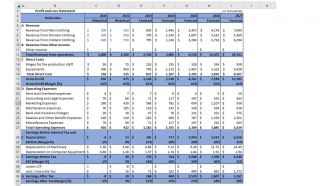
Slide 45: This slide represents profit and loss statement.
Slide 46: This slide showcases graphs of gross profit of the business and earnings before interest.
Slide 47: This slide shows graphs of total revenue from operations and earnings after tax.
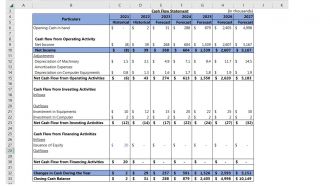
Slide 48: This slide represents the business’s historical and forecasted cash flow.
Slide 49: This slide showcases a graph on cash flow analysis and total assets.
Slide 50: This slide represents balance sheet statement.
Slide 51: This slide showcases a graph on cash flow analysis and total assets.
Slide 52: This slide shows the different scenarios for deriving final annual profit after tax.
Slide 53: This slide presents a scenario analysis of annual revenue break-even.
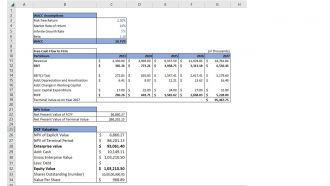
Slide 54: This slide represents the DCF valuation analysis of a business’s financials.
Slide 55: This slide highlights title for topics that are to be covered next in the template.
Slide 56: This slide showcases Organizational Structure for a clothing business.
Slide 57: This slide represents organizational structure of the business.
Slide 58: This slide shows Professional summary of the management.
Slide 59: This slide highlights title for topics that are to be covered next in the template.
Slide 60: This slide presents Exit strategy for the business stakeholders.
Slide 61: This slide contains all the icons used in this presentation.
Slide 62: This slide is titled as Additional Slides for moving forward.
Slide 63: This slide presents Roadmap with additional textboxes.
Slide 64: This slide shows SWOT describing- Strength, Weakness, Opportunity, and Threat.
Slide 65: This slide contains Puzzle with related icons and text.
Slide 66: This slide depicts Venn diagram with text boxes.
Slide 67: This is About Us slide to show company specifications etc.
Slide 68: This slide shows Post It Notes. Post your important notes here.
Slide 69: This is a Timeline slide. Show data related to time intervals here.
Slide 70: This is a Financial slide. Show your finance related stuff here.
Slide 71: This is a Thank You slide with address, contact numbers and email address.
Clothing Line Business Plan Powerpoint Presentation Slides with all 76 slides:
Use our Clothing Line Business Plan Powerpoint Presentation Slides to effectively help you save your valuable time. They are readymade to fit into any presentation structure.






FAQs for Clothing Line Business Plan
Okay so first figure out who's actually gonna buy your clothes and what makes your brand different. Product line and pricing come next - honestly the production planning is where things get messy quick. Marketing and sales channels are huge, plus you need financial projections (startup costs, cash flow, all that fun stuff). Operations covers sourcing to shipping. My advice? Start super lean with just the basics, test if people actually want what you're making, then flesh out each section once you know you're onto something. Way easier than writing a 50-page plan nobody reads.
Okay so first figure out who's actually buying your stuff - age, income, how they live, where they normally shop. Make detailed profiles but use real data, not just guessing. Honestly, I spend way too much time scrolling through competitors' Instagram to see who comments and likes their posts. Surveys help too, or just talk to people directly. Don't just look at basic demographics though - dig into why they actually buy things. What drives them? Once you've got that nailed down, everything else gets easier. Design, marketing, all of it. Just test small first before going all in.
So you'll definitely need 3-year revenue forecasts, startup costs, and cash flow projections. Break down revenue by product lines and seasonal stuff - also separate retail from online since the margins are totally different. Don't forget COGS, operational expenses like marketing and rent, plus inventory costs (fashion has crazy long lead times). A break-even analysis is crucial too. If you're pitching investors, include funding requirements but keep projections realistic - I've seen too many people torpedo their credibility with pie-in-the-sky numbers that make everyone roll their eyes.
Figure out what actually makes your stuff different first - sustainable materials, fits a specific body type better, whatever it is. Then look at what's pissing off your target customers that nobody else is fixing. Fast fashion falling apart? Sustainable clothes being ugly or crazy expensive? Your USP needs to hit those pain points directly. Be super specific too - "affordable luxury basics for busy professionals" is way better than just saying "high-quality clothes." Honestly, if you can't explain in one sentence why someone should pick you over everyone else, you're not there yet. Test it out and see if people actually get it.
Honestly, start by getting samples from a bunch of different suppliers - don't just go with the first one that looks good. I made that mistake early on and it was expensive! Look at both local and overseas options since they each have trade-offs. Test the waters with smaller local manufacturers first to see if people actually want your stuff. The suppliers who really work with you become like business partners, so focus on building those relationships. Oh, and hammer out payment terms and minimum orders before you commit to anything. Make super detailed spec sheets for each piece too - saves you from those "this isn't what I ordered" nightmares.
Start with cost-plus pricing - add up materials, labor, overhead, then tack on your profit margin. Most brands do a 2.5-4x markup from production to retail. Honestly though? It's total guesswork at first. Stalk your competitors online and figure out where you fit - budget, premium, or somewhere in between. I'd test different price points with small batches and see what converts. Your customers will roast you pretty fast if you're charging $200 for a basic tee, so pick something reasonable and tweak from there. The market feedback comes quick once you're actually selling.
Instagram and TikTok are total musts for fashion - they're just so visual. Email's actually crazy effective for getting people to come back and buy again. I'd also look into influencer partnerships since they don't cost a fortune but really get your stuff out there. Facebook and Pinterest hit different age groups too. Honestly, don't forget about fashion bloggers and local press - that whole PR thing still works. Pop-ups are fun if you can swing it, gives people a chance to actually touch your clothes. Oh, and seriously - pick like 2 or 3 things to focus on first. Better to crush a few channels than be mediocre everywhere.
Okay so fashion is all about visuals, right? Get some killer photos and behind-the-scenes stuff going. TikTok's algorithm is honestly insane for new brands - way better than Instagram sometimes. Pick maybe 2-3 platforms though, don't spread yourself crazy thin. Post regularly and actually respond to comments (people notice when you ignore them). Micro-influencers are your best bet over big ones. Oh and definitely get customers to tag you - that user-generated content hits different. Maybe throw in some styling videos too? Just keep it consistent and engage with people who comment.
Honestly, start small and track everything - even if it feels like overkill right now. Nobody wants to get stuck with a pile of XL purple hoodies that won't move. Figure out what sizes and styles actually sell first, then scale up those winners fast. Cash flow's gonna be your biggest headache, so watch your sell-through rates like a hawk. Get some basic inventory software to track stock levels and set alerts when you're running low. Oh, and make friends with your suppliers - faster restocks can save your butt when something takes off unexpectedly. Trust me, the data you collect now will save you serious money later.
Definitely check for certifications like GOTS or Fair Trade first - that's your baseline. If you can swing it, actually visit the facilities because photos can be deceiving. Organic and recycled materials are obviously better, plus look for renewable energy use. The best suppliers won't hesitate to share details about their labor practices and processes. Yeah, it costs more upfront but people genuinely care about this stuff now. I'd focus on building real partnerships instead of just going with whoever's cheapest. Oh, and smaller local suppliers might be worth considering - easier to keep tabs on them and less shipping involved.
So first things first - get your business registered and grab whatever licenses your state needs. Trademark your brand name ASAP because people will totally steal it if it takes off. Manufacturing contracts are essential, plus you gotta deal with all those annoying labeling rules (like fabric content and care stuff). Liability insurance is smart since you're making stuff people actually wear on their bodies. Oh, and supplier agreements too. Honestly, just bite the bullet and talk to a business lawyer upfront - way cheaper than fixing mistakes later.
Watch your revenue, units sold, and profit margins against what you planned - those are make-or-break numbers. Customer acquisition costs matter too, obviously. Monthly check-ins work way better than quarterly since trends change so fast in fashion. Inventory turnover and returns can totally sink you if you're not careful. The first year's basically about not dying and figuring out what people actually want to buy lol. If you're missing targets by 20%+ consistently, don't just cross your fingers - time to switch things up.
Honestly, branding is everything for a clothing line. You're competing against thousands of other brands, plus all the cheap stuff on Amazon. Without solid branding, you're just another t-shirt company, you know? Good branding lets you charge more because people actually connect with your story and what you represent. It affects your logo, colors, how you talk on social, packaging - basically everything. The key is figuring out your brand personality first. Sounds cheesy but it'll guide every decision later. Trust me, skipping this step always bites people in the ass.
Honestly, find people who vibe with your brand but aren't direct competitors - think influencers, other designers, or even random brands that match your aesthetic. Those unexpected collabs can be gold! Don't jump straight into business mode though. Build actual relationships first, then see if working together makes sense. Test things out with smaller projects before you go all-in. And seriously, hash out the details upfront - who does what, how you'll split money, creative control stuff. Trust me, you don't want that drama later when things get messy.
Honestly, cash flow and inventory are gonna be your biggest nightmares - pick the wrong trend or overproduce and you're toast. Competition is brutal too. Supply chains constantly mess up, plus you're starting with zero brand recognition which sucks. Quality issues can wreck you fast if a batch goes bad. Fashion changes so damn quickly you'll feel like you're always behind. Oh and building customer trust takes forever. Start with just a few products, test what people actually want first, and save up like 6 months of expenses minimum. Trust me on that last part.
-
Thank you for offering such helpful pre-designed templates. They are really beneficial to me in my job.
-
You can rely on SlideTeam whenever you run out of designs for your presentation. Thank you so much SlideTeam!