


Retail Business Plan Powerpoint Presentation Slides




Try Before you Buy Download Free Sample Product
 Impress Your
 Audience
 100%
100% Editable
 Save Hours
 of Time


The retail store sector is one of the worlds fastest growing industries and is witnessing many newcomers. Grab our insightfully designed Retail Business Plan to effectively and efficiently start your business. It will help you implement the necessary requisites for a successful business. Our Retail Store Business Plan deck covers sections like the executive summary, the entity, and the industry analysis. It incorporates different sectors for the retail industry, challenges, and solutions that an individual can face during business operations. The presentation further exhibits SWOT, PESTEL, and Porters five force analysis to measure the risks and opportunities. It will assist you in determining the market size and the regional analysis to understand the industry better. Additionally, our Retail Sector module showcases the forecasted financial analysis to help an organization know its financial position. Lastly, it contains the management summary, including the number of employees required, their designations, and critical roles for the smooth functioning of the business. Download this 100 percentage editable presentation and get access to our highly researched and skillfully designed product.
People who downloaded this PowerPoint presentation also viewed the following :
Content of this Powerpoint Presentation
Slide 1: This slide introduces the Retail Business Plan. Commence by stating Your Company Name.
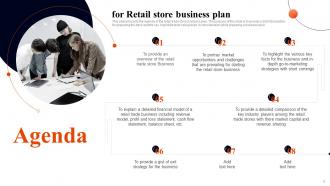
Slide 2: This slide depicts the Agenda of the presentation.
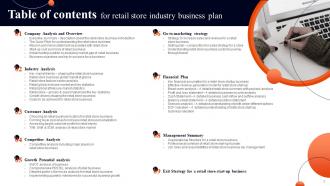
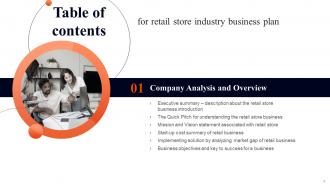
Slide 3: This slide incorporates the Table of contents.
Slide 4: This slide highlights the Title for the Topics to be covered in the upcoming template.
Slide 5: This slide covers a brief glimpse of what the business will be offering to the customer with market information.
Slide 6: This slide deals with the The Quick Pitch for understanding the retail store business.
Slide 7: This slide elucidates the Mission and Vision statement of a retail store business.
Slide 8: This slide provides a gist of company start-up summary.
Slide 9: This slide provides detailed information about the business objectives and the key success drivers for the purpose of expanding the business.
Slide 10: This slide exhibits the Detailed overview about the retail store business.
Slide 11: This slide focuses on Implementing solution by analyzing market gap of retail store business.
Slide 12: This is yet another slide continuing the Implementing solution.
Slide 13: This slide presents the Heading for the Components to be discussed further.
Slide 14: This slide highlights the thorough assessment of a market within the grocery or supermarket along with the key stats.
Slide 15: This slide gives a glimpse of industry overview of the retail trade business trends.
Slide 16: This slide emphasizes on the retail fashion industry business trends.
Slide 17: This slide reveals the thorough assessment of a market within the skincare industry.
Slide 18: This slide portrays the thorough assessment of a market within the athleisure market.
Slide 19: This slide incorporatess the thorough assessment of a market within the grocery or supermarket along with the key stats.
Slide 20: This slide exhibits information about the Growth drivers shaping the retail store business.
Slide 21: This is yet another slide continuing the Growth drivers.
Slide 22: This slide states the Goals to be achieved for retail store business.
Slide 23: This slide shows the Title for the Ideas to be covered in the next template.
Slide 24: This slide highlights the thorough assessment of a business location within country.
Slide 25: This slide focuses on Forming buyer personas to increase retail store personalization.
Slide 26: This slide represents Assessing target customer profile for retail stores.
Slide 27: The purpose of this slide is to depict the market potential of retail stores in terms of TAM, SAM, and SOM.
Slide 28: This slide portrays the Heading for the Ideas to be discussed next.
Slide 29: This slide displays the Competitive analysis including major players in retail store business.
Slide 30: This slide elucidates the Title for the Components to be covered further.
Slide 31: This slide showcases the Comprehensive SWOT analysis of retail store business.
Slide 32: The slide highlights porter’s five forces model and its implications in the retail store business industry.
Slide 33: The purpose of this slide is to identify the industry’ political, economic, social, technological, environmental and legal effects that can influence the growth of the business.
Slide 34: This slide emphasizes on Implementing quarterly milestones for successful retail store business growth.
Slide 35: This slide exhibits the Heading for the Topics to be discussed in the upcoming template.
Slide 36: This slide outlines the Strategy to increase sales and revenue for a retail store business.
Slide 37: The purpose of this slide is to implement an effective go-to-market strategy for bringing the company's products or services to an end customer taking into consideration various elements.
Slide 38: This slide focuses on Understanding retail store business customer journey through funnel.
Slide 39: This slide depicts the Title for the Topics to eb discussed next.
Slide 40: This slide represents financial assumptions of the clothing store business plan.
Slide 41: This slide presents revenue model of retail store business.
Slide 42: This slide showcases the breakeven analysis.
Slide 43: This slide reveals the breakeven graph.
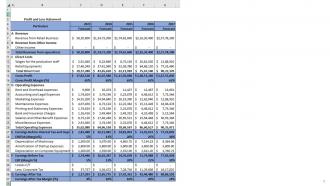
Slide 44: This slide elucidates the profit and loss statement.
Slide 45: This is yet another slide continuing the Profit and loss statement.
Slide 46: This slide is an extension of the Profit and loss statement.
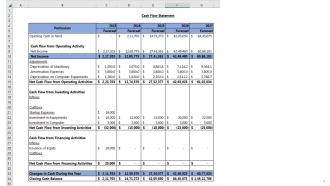
Slide 47: This slide elucidates the Organziation's Cash Flow Statement.
Slide 48: This slide continues the Cash Flow Statement.
Slide 49: This slide shows the balance sheet statement.
Slide 50: This slide is the continuation of the Balance sheet statement.
Slide 51: This slide exhibits the different scenarios for deriving final annual profit after tax on the basis of best case, nominal case and worst case.
Slide 52: This slide presents a scenario analysis of annual revenue break-even, annual profit after tax and break-even analysis.
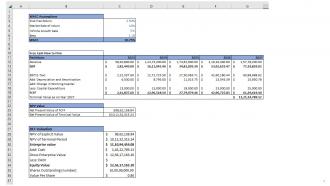
Slide 53: This slide highlights the DCF valuation analysis of a business’s financials based on the free cash flow to firm.
Slide 54: This slide mentions the Heading for the Contents to be discussed further.
Slide 55: This slide represents organizational structure of the business.
Slide 56: This slide emphasizes on the Professional summary of retail store start-up founder.
Slide 57: This slide lists the Job roles and responsibilities of retail store business key management.
Slide 58: This slide is an extension of the Job roles and responsibilities.
Slide 59: This slide incorporates the Title for the Ideas to be covered next.
Slide 60: This slide reveals the Exit strategy for retail store business stakeholders.
Slide 61: This is the Icons slide containing all the Icons used in the plan.
Slide 62: This slide is used for the purpose of depicting some Additional information.
Slide 63: This sldie incorporates the Column chart.
Slide 64: This is the 30 60 90 days plan slide for efficient planning.
Slide 65: This slide elucidates information on the Financial topic.
Slide 66: This is the Venn diagram slide.
Slide 67: This is Our Team slide for showcasing information related to the team members.
Slide 68: This slide contains the Post it notes for reminders and deadlines.
Slide 69: This slide incorporates the Organization's mission and vision.
Slide 70: This is the Ideas Generation slide for encouraging fresh ideas.
Slide 71: This is the Thank You slide for acknowledgement.
Retail Business Plan Powerpoint Presentation Slides with all 76 slides:
Use our Retail Business Plan Powerpoint Presentation Slides to effectively help you save your valuable time. They are readymade to fit into any presentation structure.










FAQs for Retail Business Plan
So for your retail business plan, hit the basics first - market research, who you're selling to, what competitors are doing. Financial stuff is huge too, like startup costs and cash flow projections. Don't skip the boring operational parts either (staffing, inventory management) - I swear that's where most people mess up because it's not as fun as brainstorming marketing campaigns. Also cover your product mix, pricing, location strategy. Oh, and marketing approach obviously. Honestly? Just grab a template online and work through it piece by piece instead of staring at a blank page forever.
Honestly, start with surveys and focus groups - they're boring but super helpful for understanding what customers actually want. Then go spy on your competitors lol. Walk around their stores, check prices, see what's buzzing. Social media's where it's at though - Facebook groups and Instagram will show you real conversations people are having. Oh, and if you can swing it, track foot traffic at potential spots. Don't put all your eggs in one research basket - mix online stuff with actually getting out there. Give yourself like 2-3 weeks minimum before you commit to anything big.
Dude, you absolutely have to nail down your target audience first - everything else flows from there. Like, are you selling to college kids or soccer moms? Totally different worlds. Your location, pricing, inventory, marketing... it all hinges on knowing your customer inside and out. I learned this the hard way when I helped my cousin with her boutique - we were all over the place until we focused on who we actually wanted to serve. Create those detailed customer profiles with real demographics and shopping habits. Trust me, it'll save you from making expensive guesses later on.
Dude, financial projections are honestly a game-changer for your retail proposal. Investors want to see actual numbers - revenue forecasts, costs, when you'll turn a profit. Can't just wing it with "trust me, this'll work." Going through the math also helps you catch problems early, like those brutal winter sales slumps that always seem to surprise new retailers. I'd definitely run three scenarios: realistic, optimistic, and the dreaded worst-case situation. Oh, and be conservative with your estimates - I've seen too many people get burned by overly rosy projections.
Honestly, experiential stuff is where it's at right now. Pop-up events, workshops where people can actually touch your products - that kind of thing. Micro-influencers are crushing it way more than celebrities too, which is kinda wild but makes sense. Oh, and gamification! People love earning points and doing challenges - makes shopping feel less transactional. You can also do location-based targeting when customers are near your competitors (sneaky but effective). I'd probably start with whatever fits your budget best and see how it goes before trying everything at once.
Dude, location is everything - seriously can't stress this enough. Walk around at different times, check out foot traffic, see who's already there competing with you. The cheapest rent might seem tempting but it's usually cheap for a reason, you know? Talk to other business owners nearby, they'll give you the real scoop. Demographics matter too - make sure your target customers actually live/work in that area. Oh and don't forget practical stuff like parking and transit access. I've watched so many good businesses tank just because they picked a dead zone.
Start by checking out who you're up against - both brick-and-mortar shops and online competitors. I'd make a simple spreadsheet (yeah, I know, boring but helpful) comparing maybe 5-10 of them. Look at their prices, what they're selling, who they're targeting, where they're located. The big chains are obvious, but honestly? Those little local boutiques might teach you more about your specific area. Figure out what they're doing right and where they're screwing up. Then find those gaps where you can do something different. Trust me, there's always something they're missing that you can jump on.
Honestly, inventory is make-or-break for retail - it hits your cash flow, storage costs, everything. Hold too much? You're stuck with dead stock eating your money (trust me on this one). Not enough and customers get pissed when you're out of what they want. You've gotta match your buying to sales forecasts and seasonal stuff. Investors will definitely look at your working capital needs here. Lead times from suppliers matter too - some take forever. I'd start by checking turnover rates for different product categories. That'll tell you what's actually moving and what isn't.
Hey! So for the legal stuff - start with your business structure (LLC or corp) and grab all the basic licenses like retail and sales tax permits. Food handling too if you're doing that. Lease terms are honestly where people mess up the most, so really dig into those details. You'll want liability insurance for sure, plus product coverage. Employment law gets complicated fast if you hire anyone. Oh and don't skip the consumer protection stuff - return policies, data privacy, all that. Definitely worth paying a lawyer upfront to review everything.
Dude, start small - pick like a good POS system and maybe inventory software first. Don't try to do everything at once or you'll go crazy. Real-time sales tracking is clutch, and anything that stops you from running out of popular stuff pays for itself pretty quick. Mobile payments are basically expected now (learned that the hard way). Customer relationship tools are solid too for figuring out what people actually buy vs what you think they want. The setup can be a pain initially but honestly the ROI usually makes sense once you're past that phase. Automated reordering is amazing if you can swing it.
Track sales per square foot first - it's weirdly one of the most telling metrics. Inventory turnover shows if stuff's actually moving or just sitting around forever. Gross margin's obvious but crucial since it shows real profit after your costs. Oh, and customer acquisition cost will save you from burning cash on bad marketing. Average transaction value matters too. Honestly, conversion rates sound fancy but start with these basics first - you can always dive deeper into foot traffic analysis once you've got these down. Customer lifetime value's the other big one I'd focus on.
Okay so for staffing, figure out your basic roles first - managers, sales people, maybe cashiers depending on your setup. Map this against your store hours and how busy you think you'll be. Honestly, everyone underestimates how insane retail gets during holidays, so build in extra help for those periods. You'll want to budget for training costs and benefits too. Oh, and people quit retail jobs ALL the time, so factor in turnover when you're doing your numbers. Just make sure you can actually afford the payroll while having enough bodies to keep the place running smoothly. Check your local minimum wage laws too obviously.
So funding a retail startup - there's actually tons of options. Bank loans are solid if your credit doesn't suck and you've got a decent business plan. Angels and VCs might bite if you're doing something that can scale big, though honestly VCs are kinda snobby about retail lately. Kickstarter's perfect for unique products - I've seen some crazy success stories there. Your own savings, family money, even equipment financing for inventory all work too. Oh, and figure out your exact number first. That'll help you pick which route makes sense for your timeline. Some are way faster than others.
Look, customers are super into this sustainability thing now - way more than even a few years back. Start with your sourcing - find vendors who actually do eco-friendly stuff, not just greenwashing. Cut down packaging waste where you can. Energy-efficient store ops help too, though that's kinda boring. Set actual numbers like "30% sustainable products" or whatever makes sense for your budget. The tricky part? Making it profitable while staying legit green. Yeah, upfront costs suck, but loyal customers and lower energy bills down the road usually balance it out. Oh, and definitely use it in your marketing - people eat that up.
So basically you need to nail down who's actually gonna buy your stuff and why they'd choose you. Digital marketing is huge - social media, email lists, all that. But don't ignore old school methods if your customers are older. Investors eat up that omnichannel thing where you're everywhere at once (though honestly it can get expensive fast). Retention stuff like loyalty programs are gold since keeping customers costs way less than hunting for new ones. Just make sure you back everything up with real numbers and timelines - nobody wants to see pie-in-the-sky projections.
-
They saved me a lot of time because they had exactly what I was looking for. Couldn’t be happier!
-
Use of icon with content is very relateable, informative and appealing.