


Retail Shoe Store Business Plan Powerpoint Presentation Slides





Try Before you Buy Download Free Sample Product
 Impress Your
 Audience
 100%
100% Editable
 Save Hours
 of Time


If you need to familiarize yourself with creating a shoe store business plan, you may think creating one will take time and effort. If youre going to start a shoe store or expand your current one, you need a business plan. Therefore, our team has created this Retail Shoe Store Business Plan PPT that showcases the necessary information to write each essential component of your shoe store business plan. It explains the business goals and strategy for reaching them. It also includes market research to support your objectives, such as competitive environment, industry insights, industry trends, growth revenue drivers, target market, etc. It also covers Porters framework and how it affects the shoe industry, the existing market gaps, solutions, opportunities, market sizing, including TAM, SAM, and SOM, go to marketing strategy, sales funnel, etc. Additionally, the plan includes a financial overview that assures a well thought and carefully considered proposition. It consists of the revenue model, balance sheet, cash flow statement, break even analysis, DCF valuation, and profit and loss statement. Download this completely editable presentation to get our well researched and expertly crafted offering.
People who downloaded this PowerPoint presentation also viewed the following :
Content of this Powerpoint Presentation
Slide 1: This slide introduces Retail Shoe Store Business Plan. State your company name and begin.
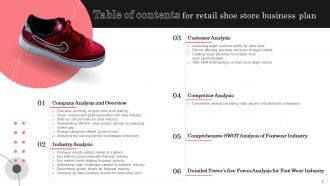
Slide 2: This slide shows Table of Content for the presentation.
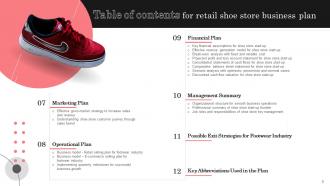
Slide 3: This is another slide continuing Table of Content for the presentation.
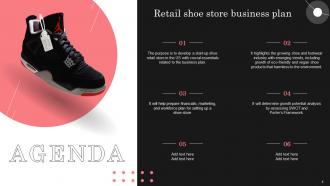
Slide 4: This slide states Agenda of the presentation.
Slide 5: This slide highlights title for topics that are to be covered next in the template.
Slide 6: This slide highlight Executive summary of retail shoe store start-up
Slide 7: This slide covers the shoe industry's vision, mission, and goals.
Slide 8: This slide provides information about start-up expenditures that incur during the process of establishing a shoe store.
Slide 9: This slide covers Implementing effective shoe product solution by analyzing market gap.
Slide 10: This slide highlight Product categories offered by shoe store.
Slide 11: This slide covers the essential points to be considered while selling shoe/footwear products in the market.
Slide 12: This slide exhibit table of content- Industry Analysis.
Slide 13: The purpose of this slide is to highlight the market size of the global footwear industry.
Slide 14: This slide highlights the thorough assessment of a market within the footwear industry.
Slide 15: This slide highlights the thorough assessment of a market within the skincare industry.
Slide 16: This slide highlights Key market trends shaping footwear industry.
Slide 17: This slide portrays details about various challenges catered by the footwear industry.
Slide 18: This slide caters to details about various growth drivers resulting in footwear industry progress.
Slide 19: This slide portrays an ideal business location for skincare products that minimize the risk of failure.
Slide 20: This slide exhibit table of content- Customer Analysis
Slide 21: This slide helps in Assessing target customer profile for shoe store.
Slide 22: This slide covers the important factors that people consider when buying a pair of shoes.
Slide 23: This slide provides a glimpse of how to better understand the target audience, to fine-tune marketing campaigns, and increase e-commerce personalization.
Slide 24: The purpose of this slide is to depict the market potential of footwear in terms of TAM, SAM, and SOM.
Slide 25: This slide exhibit table of content- Competitor Analysis.
Slide 26: The purpose of this slide is to provide a glimpse of major participants and key competitors of the industry.
Slide 27: This slide exhibit table of content- Comprehensive SWOT analysis of footwear industry
Slide 28: The purpose of this slide is to identify the industry' strengths, weaknesses, opportunities, and threats related to the business.
Slide 29: This slide exhibit table of content- Detailed porter’s five forces analysis for footwear industry.
Slide 30: The slide highlights porter’s five forces model and its implications in the US footwear industry.
Slide 31: This slide exhibit table of content- Marketing Plan
Slide 32: The purpose of this slide is to implement an effective go-to-market strategy.
Slide 33: The purpose of this slide is to implement an effective go-to-market strategy.
Slide 34: The purpose of this slide is to implement an effective go-to-market strategy.
Slide 35: The purpose of this slide is to implement an effective go-to-market strategy.
Slide 36: This slide helps in Understanding shoe store customer journey through sales funnel.
Slide 37: This slide exhibit table of content- Operational Plan
Slide 38: The purpose of this slide is to highlight Business model - Retail selling plan for footwear industry.
Slide 39: The purpose of this slide is to highlight Business model – E-commerce selling plan for footwear industry.
Slide 40: The slide covers particular objectives or goals that the organization intends to attain as part of its business plan.
Slide 41: This slide exhibit table of content- Financial Plan
Slide 42: This slide provides a Key financial assumptions for shoe store start-up.
Slide 43: The slide shows the effective revenue model of the footwear industry, which displays the cost incurred and the various sources of income.
Slide 44: The slides highlight the break-even analysis of the firm.
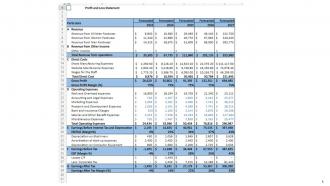
Slide 45: The slides provide a glimpse of the projected profit and loss statement to visualize the skincare store’s financial performance for the next five years.
Slide 46: The slides provide a glimpse of the projected profit and loss statement to visualize the skincare store’s financial performance for the next five years.
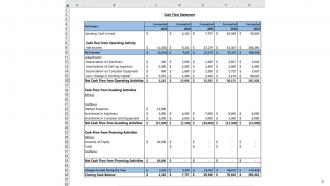
Slide 47: The slides highlight the company's cash flow statement Consolidated statements of cash flows for shoe store start-up.
Slide 48: The slides highlight the company's cash flow statement to provide a detailed picture of what happened to a business's cash during a specified period.
Slide 49: The slides highlight Comparative balance sheet statement for shoe store start-up.
Slide 50: The slides highlight Comparative balance sheet statement for shoe store start-up.
Slide 51: The purpose of this slide is to examine the effects of potential future events on the company’s performance.
Slide 52: The purpose of this slide is to examine the effects of potential future events on the company’s performance.
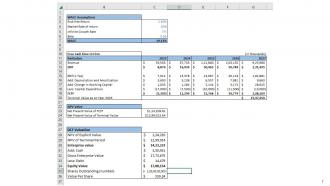
Slide 53: The purpose of this slide is to calculate the amount of money an investor would get from an investment after adjusting for the time value of money.
Slide 54: This slide exhibit table of content- Management Summary.
Slide 55: The slide highlights the organizational hierarchy in the company.
Slide 56: This slide highlights the founder’s biggest professional achievements and most valuable skills.
Slide 57: This slide highlights the job roles and responsibilities of shoe store key management people.
Slide 58: This slide highlights the job roles and responsibilities of shoe store key management people.
Slide 59: This slide exhibit table of content- Possible exit strategies for footwear industry.
Slide 60: This slide highlight Possible exit strategies for footwear industry.
Slide 61: This slide exhibit table of content- Key abbreviations used in the plan.
Slide 62: The purpose of this slide is to highlight the shorter version of existing words to save time and take up less space.
Slide 63: This slide contains all the icons used in this presentation.
Slide 64: This slide is titled as Additional Slides for moving forward.
Slide 65: This is About Us slide to show company specifications etc.
Slide 66: This is a Location slide with maps to show data related with different locations.
Slide 67: This is Our Target slide. State your targets here.
Slide 68: This slide presents Roadmap with additional textboxes.
Slide 69: This slide shows Post It Notes. Post your important notes here.
Slide 70: This slide contains Puzzle with related icons and text.
Slide 71: This slide describes Line chart with two products comparison.
Slide 72: This is a Thank You slide with address, contact numbers and email address.
Retail Shoe Store Business Plan Powerpoint Presentation Slides with all 77 slides:
Use our Retail Shoe Store Business Plan Powerpoint Presentation Slides to effectively help you save your valuable time. They are readymade to fit into any presentation structure.





FAQs for Retail Shoe Store Business Plan
So you'll want to start with the usual stuff - market research, who your customers are, where you're setting up shop. The financial part is honestly gonna be a pain but super important - startup costs, cash flow, when you'll break even. Product mix and sourcing matter tons since shoe inventory gets pricey fast. Don't sleep on the competition research either. Your operational plan needs staffing details, store layout, how you'll handle customer service. Marketing's huge too - gotta figure out how you're competing with Amazon and FootLocker. Oh, and definitely nail down what makes you different from every other shoe store.
Dude, survey people in your area first - what styles do they actually buy? Athletic, dress shoes, trendy stuff? Don't just stock what you personally like (I've seen that backfire so many times). Check out what your competitors are selling and look at the local demographics. Are you in a college town or more business district? Price points matter too. Seasonal trends are huge - boots in winter, sandals in summer, obviously. Start with what the data shows, then tweak your inventory once you see what's actually flying off the shelves.
Okay so you definitely need 3-5 year projections - revenue forecasts, cash flow, P&L stuff. Break down revenue by shoe categories and seasonal patterns since that industry has crazy cycles. Startup costs, inventory investment, rent, staff - all that goes in there. Honestly, the cash flow part is probably most critical because retail inventory swings will absolutely wreck you if you mess it up. Back everything with actual market research, not just guesses. Oh and create three scenarios - best case, worst case, realistic. Investors want to see you've actually thought through what could go wrong.
Honestly, track your sales data like crazy - see what sells fast vs what just sits there. I made the mistake of ordering way too many neon sneakers once and they just collected dust! The 80/20 thing really works though. Stock up deep on your top 20% sellers since that's where the money is. For everything else, order smaller amounts but more often. Set those reorder alerts for your core sizes and popular brands so you don't run out. Oh and definitely negotiate return policies upfront - being stuck with dead inventory will kill your cash flow fast.
Your best bet is nailing the personal touch - good rewards program, expert fitting help, all that stuff Amazon can't do. Let people try things on first, obviously. Post your new shoes on social media with styling ideas. Partner up with local gyms or running clubs too. Honestly, I'd probably focus most on making the in-store experience really good since shoe sizes are so weird between brands. You don't want people using your store as a showroom then just ordering online later. That's the worst.
Dude, location is literally everything. High foot traffic spots are your best bet - think shopping centers or busy strip malls where people are already spending money. Downtown areas work too if there's decent parking. You gotta match your spot to who you're selling to though. Office district for dress shoes, near campus for sneakers, that kind of thing. I'd honestly camp out at a few potential spots during different hours just to see how busy they actually get. Oh and check what other stores are around - you want foot traffic but not three other shoe stores right next door. Trust me on this one.
Dude, customer experience is literally everything in shoe retail. Anyone can sell shoes online for cheaper, but you've got the edge with personal service. Train your staff on foot health and fitting - that expertise matters way more than people think. Comfy seating areas help too, plus maybe throw in free adjustments or minor repairs. Make people feel confident about their purchase, you know? Sure, you might cost more than Target, but if the experience rocks, they'll keep coming back. It's all about making browsers into regulars who actually enjoy shopping there.
Put your bestsellers right up front - don't waste that entrance space on random stuff. I'd do the "racetrack" thing where people naturally walk around the perimeter, then stick clearance items way in back (kinda manipulative but it works). Wide aisles are clutch so people aren't constantly bumping into each other while they browse. Honestly, lighting makes or breaks everything so spend money there. Group shoes by lifestyle instead of just throwing brands together. Oh, and keep sight lines open - customers should be able to see most of the store from wherever they're standing.
Look, people basically expect every business to be online now - it's just weird when you're not, you know? Your website becomes like having someone working for you 24/7, showing off inventory and letting customers see what's actually in stock before they drive over. Social media helps you build up a local crowd too. I'd honestly just start with Google My Business and Instagram since those two will boost your local visibility the most. You can use your site to promote store events or new stuff that just came in. Shows your personality better than just having a storefront.
Honestly, I'd hit up local gyms and dance studios first - they're perfect for referrals if you give their members some kind of discount. Fashion bloggers are solid too, way cheaper than actual ads. Cross-promotions with clothing stores work really well, though I always forget about accessories shops for some reason. Your supplier relationships matter more than people think. Better wholesale terms can totally save your margins. Oh, and sports teams! They're always looking for gear partnerships. I'd start small - maybe reach out to 2-3 places nearby and pitch a simple referral swap. Nothing fancy.
Start planning seasonal stuff like 4-6 months out - winter boots, spring sandals, back-to-school gear. Look at last year's monthly sales to see patterns, though weather screws everything up anyway! My biggest mistake early on was overstocking seasonal items. You get stuck with them forever. Build good relationships with suppliers who can be flexible with delivery dates. Run clearance sales before new seasonal inventory arrives - nobody wants last season's boots taking up space. If something isn't selling, mark it down early. Better to move it than let it sit there collecting dust.
Start with a solid POS system - that's your backbone for everything. It'll track inventory automatically and ping you when you're running low on sizes. CRM software is clutch for keeping tabs on customer purchases and sending targeted deals. Oh, and get online scheduling tools for staff - trust me, manually doing shifts is a nightmare. Digital price tags are pretty cool too since you can change prices instantly without running around with a label maker. Honestly the POS system should be first priority, then build from there.
Honestly, start small with one or two things that won't break your budget. Partner with brands using recycled materials or ethical manufacturing - customers eat that stuff up. A shoe recycling program is genius too - let people drop off old pairs for donation or proper disposal. Maybe offer like 10% off when they bring in old shoes? Energy-efficient lighting saves money long-term anyway. Oh, and local brands cut down on shipping emissions plus support your community. I'd probably focus on whatever your customers already care about first, then build from there once you see what works.
Location is everything - seriously, I've watched amazing stores die because they picked wrong. Cash flow will bite you harder than expected since shoes just sit there eating up money. Don't stock everything day one, trust me on this. Pick your crowd first, then grow from there. Traffic patterns matter way more than rent prices when you're scouting spots. Get tight with suppliers early and nail down your inventory system before opening. Oh, and budget like double what you think for startup costs - shoes aren't cheap to stock.
Get feedback flowing from everywhere - surveys, review sites, plus just eavesdropping on customers trying stuff on. I swear the best intel comes from hearing people grumble about sizing or chat with their friends about what's missing. Track the biggest complaints and requests weekly (don't get fancy with it). Then actually use that info when you're buying for next season or tweaking what's on the floor now. The whole thing's pointless if you collect feedback but never do anything with it, you know?
-
Very unique and reliable designs.
-
Excellent products for quick understanding.