


Apparel Business Plan Powerpoint Presentation Slides




Try Before you Buy Download Free Sample Product
 Impress Your
 Audience
 100%
100% Editable
 Save Hours
 of Time


An apparel store business is a place where clothing related to men, women, and children is sold. The store follows urban casual wear, western wear clothing, and traditional wear clothing. Check out our efficiently designed Apparel Business Plan PowerPoint Presentation. The presentation covers details regarding the company executive summary, the quick pitch providing information about the business, the clothing market, and the opportunities available with the business. It displays the key to success factors, mission, vision, and the start-up summary, including all the necessary expenses. The business plan document exhibits the growth potential analysis, including SWOT analysis and Porters five force analysis model, customer analysis, and market sizing, including TAM, SAM, and SOM. The presentation also has an offline and online marketing strategy, and sales funnel for customer retention. The financial summary includes the basic assumptions which are used for estimating the future, scenario analysis showing nominal, optimistic, and pessimistic cases, profit and loss statement, cash flow statement, balance sheet, and providing a DCF valuation model for the business after five years with a graphical representation of all the three financial statements. Get access now.
People who downloaded this PowerPoint presentation also viewed the following :
Content of this Powerpoint Presentation
Slide 1: This slide introduces Apparel Business Plan. State your company name and begin.
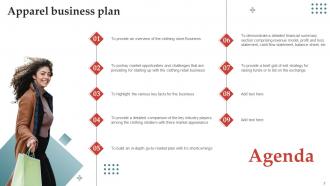
Slide 2: This slide states Agenda of the presentation.
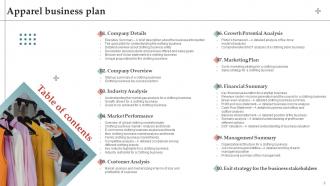
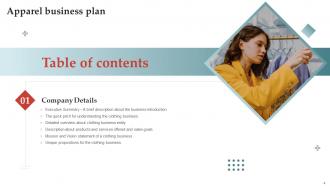
Slide 3: This slide shows Table of Content for the presentation.
Slide 4: This slide highlights title for topics that are to be covered next in the template.
Slide 5: This slide covers a brief glimpse of what the business will be offering to the customer with market information.
Slide 6: This slide covers a brief glimpse of what the quick pitch of the business to the customers with market information.
Slide 7: This slide provides a detailed information about the business’s incorporation, location, web-address, target market, and about the business.
Slide 8: This slide provides a list of products and services which the business will offer along with the revenue assumptions for the future growth of the business.
Slide 9: This slide provide a gist about the business mission and vision.
Slide 10: This slide provides a gist for the customers, why to buy products from the store.
Slide 11: This slide highlights title for topics that are to be covered next in the template.
Slide 12: This slide provides a gist of company start-up summary.
Slide 13: This slide provides a gist of company key to success.
Slide 14: This slide highlights title for topics that are to be covered next in the template.
Slide 15: This slide highlights the market gap which the industry is undergoing.
Slide 16: This slide also highlights the market gap which the industry is undergoing.
Slide 17: The business website plays an essential role in success.
Slide 18: This slide provides a detailed information about the business’s milestone, the business’s five year growth plan and it’s sales assumption to achieve.
Slide 19: This slide highlights title for topics that are to be covered next in the template.
Slide 20: This slide provides a glimpse of industry overview of the global clothing market.
Slide 21: This slide provides a glimpse of market overview concerning with the US clothing market, its growth, demand and future forecast.
Slide 22: This slide provides a glimpse of industry overview concerning with the US clothing e-commerce market, its growth, demand in future.
Slide 23: This slide provides a glimpse of industry overview concerning with the US clothing e-commerce market, its growth, demand in future.
Slide 24: This slide provides a glimpse of industry overview concerning with the women clothing market, its growth, demand in future.
Slide 25: This slide provides a glimpse of industry overview concerning with the family clothing market, its growth, demand in future.
Slide 26: This slide provides a competitive framework of clothing brand competitive analysis within the already existing market in the USA.
Slide 27: This slide provides a glimpse of industry highlights of the clothing market.
Slide 28: This slide provides a glimpse of industry highlights of the clothing market.
Slide 29: This slide provides a brief gist of industry restraints of the US clothing market.
Slide 30: This slide provides a brief gist of industry restraints of the US clothing market.
Slide 31: This slide highlights title for topics that are to be covered next in the template.
Slide 32: This slide provides a brief gist of customer analysis of the clothing store business.
Slide 33: This slide highlights title for topics that are to be covered next in the template.
Slide 34: This slide provides detailed information on porter’s framework.
Slide 35: The slide highlights a swot analysis of the clothing business.
Slide 36: This slide highlights title for topics that are to be covered next in the template.
Slide 37: This slide provides a brief of go-to-marketing strategies which the company will follow to capture the market.
Slide 38: The user's enjoy worldwide purchasing experience is just as crucial as the previous point.
Slide 39: This slide provides a brief of sales strategies which the business will follow to retain and attract the customers.
Slide 40: This slide highlights title for topics that are to be covered next in the template.
Slide 41: This slide represents financial assumptions of the clothing store business plan.
Slide 42: This slide presents revenue model of clothing retail business.
Slide 43: This slide represents breakeven graph.
Slide 44: This slide represents breakeven graph.
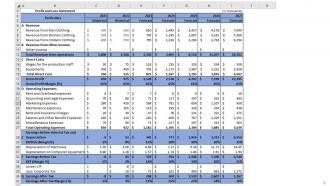
Slide 45: This slide represents profit and loss statement.
Slide 46: This slide represents graphs of gross profit of the business and earnings before interest tax & depreciation.
Slide 47: This slide represents graphs of total revenue from operations and earnings after tax.
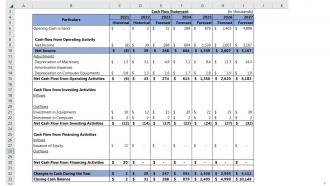
Slide 48: This slide represents the business’s historical and forecasted cash flow results and the amount of cash the business will introduce to starts its operations.
Slide 49: This slide represents a graph on cash flow analysis and total assets.
Slide 50: This slide represents balance sheet statement.
Slide 51: This slide represents a graph on cash flow analysis and total assets.
Slide 52: This slide represents the different scenarios for deriving final annual profit after tax on the basis of best case, nominal case and worst case.
Slide 53: This slide presents a scenario analysis of annual revenue break-even, annual profit after tax and break-even analysis.
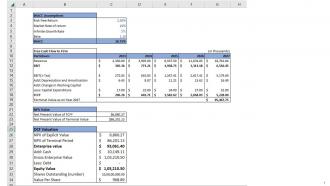
Slide 54: This slide represents the DCF valuation analysis of a business’s financials based on the free cash flow to firm.
Slide 55: This slide highlights title for topics that are to be covered next in the template.
Slide 56: This slide represents organizational structure of the business.
Slide 57: This slide represents organizational structure of the business.
Slide 58: The slide highlights the professional summary section of the café.
Slide 59: This slide highlights title for topics that are to be covered next in the template.
Slide 60: This slide represents exit strategy for stakeholders such as venture capitalists, private offerings and initial public offer.
Slide 61: This slide contains all the icons used in this presentation.
Slide 62: This slide is titled as Additional Slides for moving forward.
Slide 63: This slide showcases Magnifying Glass to highlight information, specifications etc
Slide 64: This slide provides 30 60 90 Days Plan with text boxes.
Slide 65: This slide depicts Venn diagram with text boxes.
Slide 66: This is a Financial slide. Show your finance related stuff here.
Slide 67: This is Our Goal slide. State your firm's goals here.
Slide 68: This slide shows Post It Notes. Post your important notes here.
Slide 69: This is an Idea Generation slide to state a new idea or highlight information, specifications etc.
Slide 70: This slide presents Roadmap with additional textboxes.
Slide 71: This is a Thank You slide with address, contact numbers and email address.
Apparel Business Plan Powerpoint Presentation Slides with all 76 slides:
Use our Apparel Business Plan Powerpoint Presentation Slides to effectively help you save your valuable time. They are readymade to fit into any presentation structure.





































































FAQs for Apparel Business Plan
Start with the basics - executive summary, market analysis, target customers. Product details and sourcing come next, plus your pricing strategy. Financial projections are non-negotiable (spreadsheet heaven for investors). Marketing plans, operational stuff like manufacturing and inventory, distribution channels. Competitive analysis is huge - gotta know your competition inside out. Brand positioning matters way more in fashion than people realize. Templates help but you'll need to tweak everything for fashion-specific headaches. Don't overthink the order too much, just make sure nothing major gets left out.
Dude, you absolutely need market research before doing anything else. It shows you who'll actually buy your stuff and what they're willing to spend. I've seen so many people skip this step and just wing it - total disaster. Your research tells you market size, what competitors are doing, the right price points, plus seasonal stuff that affects your whole product line. Honestly, focus groups and surveys might seem boring but they're gold. Way better than launching something "cool" that just sits there because nobody wants it.
Yeah so demographics are a good starting point - age, income, that stuff. But honestly? Psychographics are where it's at for fashion. What do they actually care about? Are they the type who'll pay extra for sustainable brands, or do they just want to look expensive? Social media analytics will show you who's engaging with similar brands. Surveys help too, though people don't always tell the truth about their shopping habits lol. Create some buyer personas but don't try to please everyone - you'll end up pleasing no one. Oh and definitely scope out your competitors' audiences. You might find a gap nobody's filling.
Honestly, start with researching what similar brands are charging and how much they're selling. That'll give you realistic numbers to work with. Your materials and manufacturing costs will probably eat up 30-50% of your revenue - fashion margins can be rough. Build three scenarios: conservative, moderate, and optimistic because this industry is so unpredictable. Oh, and don't forget about returns and markdowns - they add up fast. Track everything monthly once you launch so you can adjust when you see what actually moves. The projections are just educated guesses until real customers start buying.
Dude, branding is everything in apparel. Without it, you're just another generic t-shirt company competing on price - which sucks. Your brand is what makes people choose Nike over some random athletic wear, you know? It's the whole vibe - your logo, colors, the lifestyle you're selling. People buy into that emotional connection way more than they admit. Whether you're going luxury or budget doesn't matter - you still need that clear identity. I'd honestly figure out who your customer is and what personality you want before you even think about designs. Otherwise you'll just get lost in the noise.
Don't just stick your marketing stuff in one section - spread it throughout the whole plan. Figure out who your customers actually are first, what pisses them off, how they shop. Then build your brand around solving their problems. Map out all your channels - social, influencers, retail, direct sales, whatever works for your business. Here's the key part: tie every marketing dollar to your financials with real customer acquisition costs. I see so many people skip this step and wonder why investors aren't buying in. Set up KPIs for each channel so you can prove you're not just randomly spending money hoping something sticks.
Honestly, supply chain stuff comes down to four big things. Research your suppliers like crazy - bad ones will screw you over fast. Build in extra time for everything because delays are inevitable (learned this the hard way). Don't just check quality at the end - test throughout the process. For shipping and storage, you gotta find that sweet spot between cheap and fast. Oh, and draw out your whole supply chain first. Sounds nerdy but you'll catch problems way earlier. The visual thing actually works better than spreadsheets for spotting where things might go wrong.
Okay so first thing - vet your suppliers hard for fair labor and eco materials like organic cotton or recycled stuff. People can smell greenwashing from a mile away now, so don't even try it. Be real about your practices on your site and audit your manufacturing partners regularly. Design clothes that actually last instead of falling apart after three washes (pet peeve of mine). Maybe look into circular design too - stuff that can be recycled easily. The whole thing needs to be built into your business from the start, not just slapped on later as an afterthought.
Track your gross margin per item and inventory turnover - that turnover rate is honestly the most brutal metric in fashion since dead stock will destroy you. Customer acquisition cost matters too. For operations, watch your return rates and how long it takes to get from design to shelf. Sell-through percentages by product line are huge. Oh and definitely track customer lifetime value - repeat buyers are gold compared to constantly chasing new customers. Start simple with these, then you can get fancier later.
So for your apparel biz, definitely start with a mobile-friendly online store - seriously, everyone's shopping on their phones these days. Instagram and TikTok are absolute must-haves for fashion marketing. Get some inventory software so you're not guessing what's in stock. Customer analytics help you figure out what people actually want to buy. Oh, and those AR try-on features? They cut down returns like crazy. My cousin's brand uses one and swears by it. Don't go overboard though - pick maybe two tech things that'll solve your biggest headaches first, then add more later.
Honestly, the cash flow thing will hit you first - suppliers want money upfront but stores pay you like a month later. Super annoying. Finding manufacturers who won't screw up your quality is harder than you'd think too, especially at whatever budget you're working with. Oh and everyone thinks they're the next big fashion brand, so competition is insane. My advice? Start with just a few items instead of going crazy with options. Keep way more cash on hand than seems reasonable - you'll burn through it fast. Maybe work with local manufacturers first even if it costs more, then go overseas once you actually know what you're doing.
You'll want to check out both direct competitors (same price/customers) and indirect ones who could steal your market share. I'd start with their pricing, product lines, and marketing - see what they're doing well vs. where they're screwing up. Social media engagement is huge too since it shows real customer loyalty. Try digging into their distribution methods if you can find that info (sometimes easier said than done). The whole point is spotting market gaps you can actually fill. Make a basic spreadsheet comparing everyone's strengths and weaknesses - sounds boring but it really helps you see your opening.
So first things first - get your business registered and grab that EIN for tax stuff. Trademark your name and logo ASAP before some random person steals it (seriously, this happens more than you'd think). All your clothes need proper labels showing care instructions, where they're made, and what fabric you used. Kids' stuff has way stricter safety rules if you go that route. You'll need sales tax permits for wherever you're selling, plus the usual business licenses. Manufacturing overseas? Customs regulations are gonna be your new nightmare. Honestly just find a good fashion attorney upfront - they're worth every penny.
Build feedback loops right into your planning - customer surveys, social media monitoring, sales data analysis to catch trends early. Honestly, I scroll Instagram and TikTok way more than I'd like to admit now! Update your product roadmap quarterly, not just once a year. The trick is keeping your inventory and production flexible enough to pivot when customers start wanting something totally different. Oh, and reserve like 20-30% of your budget for trend-responsive pieces instead of committing everything upfront to your original designs.
Okay so financing options - you've got a few good paths here. Bank loans are solid if your credit's decent and you have a real business plan put together. SBA loans have better rates but man, they take forever to approve. Angel investors or VCs are worth pursuing if you've got something unique or your online game is already strong. Crowdfunding's been insane for clothing brands lately - I literally saw three different startups hit six figures on Kickstarter last month. There's always bootstrapping with your own money too, obviously. I'd say nail down your financial projections first, then pick whatever matches how fast you want to grow and how much risk you can handle.
-
Professionally designed slides with color coordinated themes and icons. Perfect for enhancing the style of the presentations.
-
SlideTeam is the best in the business. Their templates are engaging and customizable. You can rely on them.